
Wet vs. dry ball milling: which process yields a higher gold recovery rate? In gold processing, the efficiency of the ball milling stage is a primary determinant of both final recovery rates and production costs. However, when choosing between the two mainstream technologies, wet and dry processes, this is a core issue many mine owners and mineral processing engineers repeatedly face when selecting equipment. Wet ball milling uses a liquid medium to minimize over-grinding, improving recovery of fine gold particles. Conversely, dry ball milling eliminates the need for a water supply system, offering a distinct advantage in arid regions or areas where water resources are scarce. We will break down the key differences between wet and dry milling across six critical dimensions: process principles, recovery rates, operating costs, equipment suitability, finished product quality, and environmental/maintenance requirements, helping you make a choice that is both more cost-effective and hassle-free.
What is Wet Ball Milling?
(1) Definition:
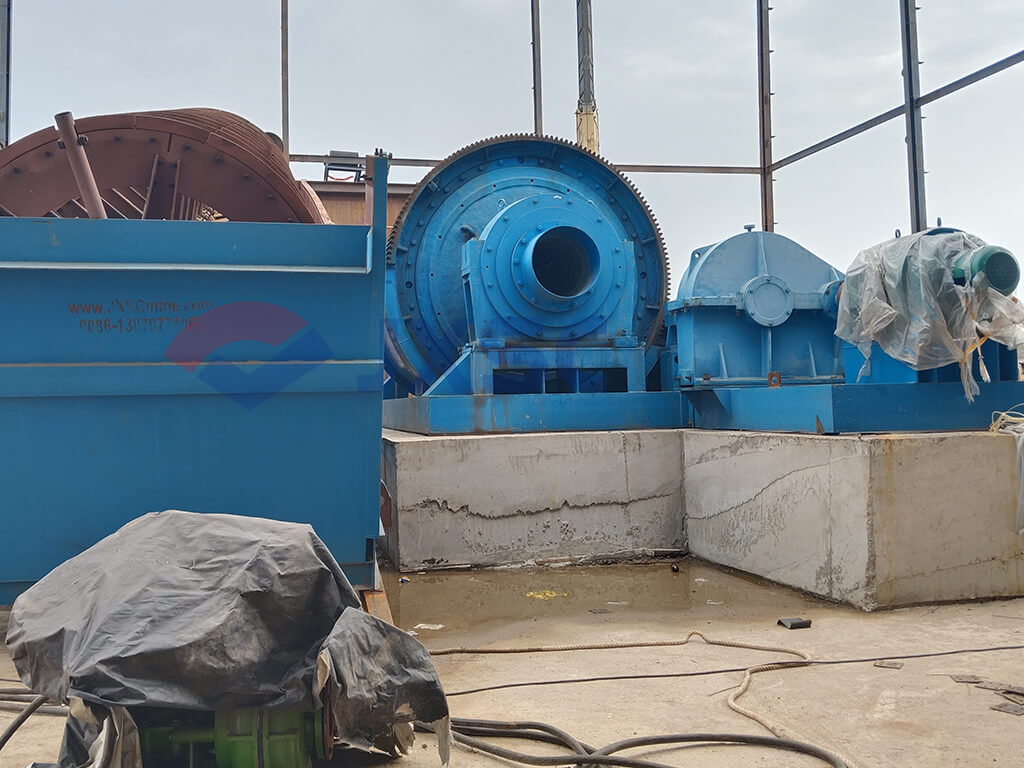
Wet ball milling is a process in which water is added as a medium during the grinding process, so that the ore and grinding media can be crushed and refined in a slurry state. This process is widely used in the beneficiation of metallic ores, such as those containing gold, copper, or iron.
(2) Principle:
As the mill cylinder rotates, steel grinding balls are lifted by the internal liners to a certain height before falling back down. The ore is pulverized through the resulting impact and attrition, while the water acts as both a buffer and a transport medium. Controlling the slurry concentration is critical to grinding performance; it must be maintained within an optimal range to ensure efficient mineral liberation and a uniform particle size distribution in the mill discharge.
(3) Structure:
Wet ball mills typically feature either an overflow or a grate-discharge design. The cylinder is equipped with specialized liners and high-strength steel grinding balls. The mill is usually integrated with a spiral classifier or a hydrocyclone to form a closed-circuit grinding system. Coarse particles are returned by the classification equipment for further grinding, while the properly sized slurry proceeds to subsequent processing stages (such as gold extraction).
(4) Advantages:
Wet grinding offers superior mineral liberation and more uniform product particle size, which can significantly enhance gold recovery rates. It is also dust-free, making it an environmentally friendly option.
(5) Disadvantages:
A wet grinding system relies on water management and necessitates subsequent dewatering stages. Furthermore, it entails higher initial capital investment. Long-term wet operation also accelerates the wear of liners and grinding balls, requiring more frequent maintenance.
What Is Dry Ball Milling?
(1) Definition:
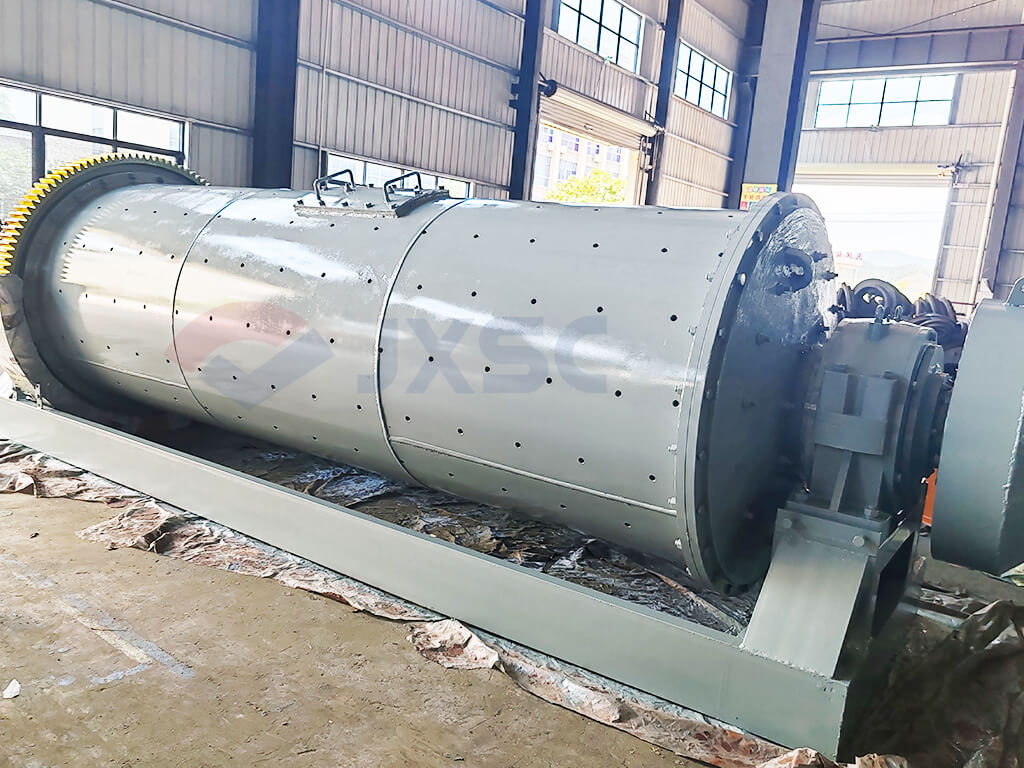
Dry ball milling is a grinding process that operates without the addition of water, relying on friction and impact between steel balls and the material. The process yields dry powder directly, eliminating the need for slurry transport and dewatering. It is well-suited for processing moisture-sensitive ores or for operations in arid regions, and is particularly effective for grinding materials such as cement, coal, and quartz sand.
(2) Principle:
As the mill cylinder rotates, steel balls and ore collide and compress one another in an environment devoid of liquid media. The material is transported out of the mill through its own movement combined with the action of an airflow. Because the entire process requires the material to remain dry, the equipment is typically equipped with an induced-draft system and dust collection devices to prevent the escape of dust from the grinding chamber.
(3) Structure:
Dry ball mills often feature a grate-discharge design. The discharge end is typically cylindrical and connected to ventilation ductwork and a baghouse dust collector. The cylinder also has stepped lining plates inside, but compared to the wet type, it emphasizes sealing and negative pressure operation to prevent fine powder from escaping, and the overall structure is relatively compact.
(4) Advantages:
The primary advantage of dry ball milling is that it requires neither a water supply nor subsequent dewatering stages. This simplifies infrastructure requirements and lowers initial capital investment. The resulting dry powder can be captured via baghouse dust collectors or fed directly into the next stage of the production process.
(5) Disadvantages:
Dry milling presents significant challenges regarding dust control and must meet stringent environmental regulations. The discharge product tends to have a coarser particle size, and grinding efficiency is generally lower, which can negatively impact downstream processes such as flotation or leaching. Furthermore, it is rarely the preferred choice for gold mining operations that prioritize high recovery rates.
6 Key Differences of Gold Wet and Dry Ball Milling
1. Grinding Principles and Process Mechanisms
● Wet Ball Milling:
The operating principle of wet ball milling involves using water as a medium to mix ore material into a fluid slurry. As the mill rotates, the buoyancy and fluidity provided by the water allow the steel grinding media to achieve more effective impact and attrition. Water acts as a buffer, mitigating direct collisions between the steel media and the mill liners; it also dissipates heat generated within the grinding chamber, preventing the material from clumping due to localized overheating. Furthermore, fine particles remain uniformly suspended in the slurry and are discharged smoothly with the flow. This results in more consistent liberation of minerals, creating favorable conditions for downstream processes such as cyanidation leaching or gravity separation.
▶ Dry Ball Milling:
Dry grinding relies entirely on interactions between solids, with the entire process taking place in the absence of water. Ore is broken down primarily through direct collisions and friction between the grinding media. Due to the lack of water—which would otherwise facilitate transport and provide a cushioning effect—the material exhibits poor fluidity and tends to accumulate within the grinding chamber. This leads to higher energy consumption and makes it difficult to obtain a uniform final product. However, this method is better suited for processing specific minerals that are sensitive to moisture or must be kept away from water.
2. Efficiency and Recovery Rate
● Wet Ball Milling
The primary advantage of wet milling is that the aqueous medium facilitates the thorough dispersion and liberation of mineral particles during the grinding process. Water reduces unnecessary friction, allowing the energy from the steel balls to be focused more effectively on fragmentation, which results in a finer and more uniform product particle size. Furthermore, the high fluidity of the mineral slurry enhances the exposure of valuable minerals, thereby significantly improving the recovery rate in subsequent gold beneficiation stages.
▶ Dry ball milling:
Dry grinding is more efficient when processing ores with low moisture content that are not suitable for contact with water. By eliminating the need for water treatment and dewatering, the process chain is shortened, making it especially suitable for mining operations in arid regions or areas with limited water resources. However, the absence of water introduces a significant drawback: the generation of dust. Fine gold particles can be lost along with this dust, resulting in “invisible” recovery losses. Consequently, in the context of gold mining, dry milling is generally considered an alternative for specific, specialized conditions rather than the preferred method.
3. Applicable Ore Types and Scenarios
● Wet Grinding:
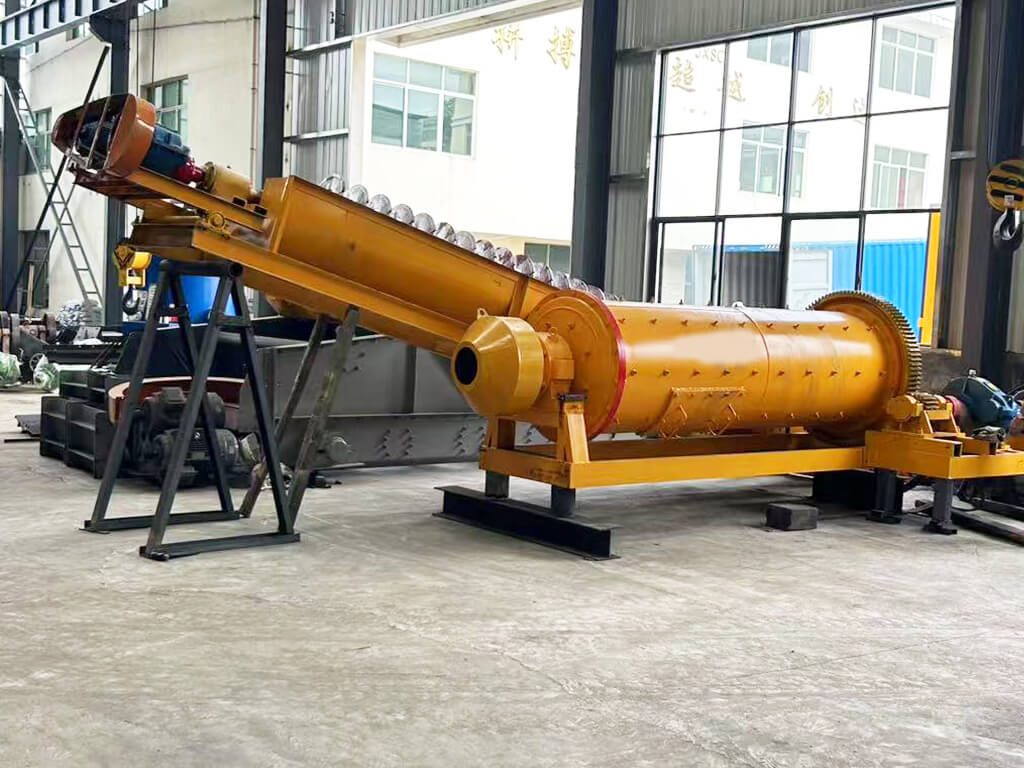
Various types of equipment can be selected based on specific process requirements. Overflow-type wet mills allow the ore pulp to discharge via natural overflow; this results in a longer residence time for the material within the grinding chamber, producing a fine and uniform grind. This type is particularly well-suited for CIL/CIP (carbon-in-leach/carbon-in-pulp) gold processes, which typically require over 90% of the product to be finer than 200 mesh, and is highly effective at capturing free gold. In contrast, grate-discharge wet mills utilize forced discharge to ensure that properly ground material exits the chamber promptly, thereby preventing over-grinding and delivering significantly higher throughput. These mills are frequently used for primary (coarse) grinding and are typically operated in a closed circuit with a classifier. Grate-discharge mills offer a distinct advantage in mining operations that handle large tonnages and require high processing speeds.
▶ Dry Grinding:
In arid regions or at mining sites with strict water constraints, dry grinding eliminates water consumption. Dry powder materials such as cement and lime are inherently susceptible to water damage. Dry grinding can directly produce finished products and save on subsequent powder drying costs. It should be noted, however, that ores with a high clay content require pre-drying before the grinding process.
4. Product Particle Size and Quality
● Wet Ball Milling:
Wet milling is known for producing a fine and uniform product. The slurry environment allows for more thorough grinding, with the fraction of material finer than 200 mesh often reaching approximately 80%. This level of fineness is ideal for cyanide leaching, as it ensures that gold particles are sufficiently exposed, leading to significantly higher recovery rates for processing plants that prioritize high leaching efficiency.
▶ Dry Ball Milling:
Compared to wet milling, dry milling often results in a less uniform particle size distribution, with some coarse particles potentially remaining in the final product. Dry milling systems are primarily suited for materials that contain no free moisture and have less stringent requirements for fineness.
5. Energy Consumption and Operating Costs
● Wet Ball Milling:
While the grinding process itself is more energy-efficient in wet milling, the system requires additional equipment for classifying and dewatering, which entails higher electricity consumption. Furthermore, the consumption of water resources and the need for wastewater treatment add to the overall costs.
▶ Dry Ball Milling:
Dry milling eliminates the need for pumps and dewatering equipment, resulting in significantly lower capital expenditure for infrastructure. However, the requirement for high-efficiency dust collection and sealing systems represents a substantial fixed cost. Additionally, material loss in the form of dust can increase total costs, though it does not affect the recovery rate.
6. Environmental, Safety, and Maintenance Considerations
● Wet Ball Milling:
The primary challenges are wear and corrosion. Because the equipment operates within a slurry, liners and grinding media (steel balls) experience accelerated wear and require regular replacement. Moreover, wastewater management is critical; effluent must meet discharge standards to avoid the risk of environmental regulatory penalties.
▶ Dry Ball Milling:
The main concern is dust pollution. If not effectively controlled, dust can accelerate equipment wear and pose health risks to operators. Consequently, the installation of high-efficiency dust collection systems and negative-pressure sealing is essential for safe operation in dry milling processes.
Conclusion
Both wet and dry ball milling processes offer distinct advantages in gold mineral processing. In summary, wet milling, with its higher degree of dissociation and finer particle size, better meets the mainstream requirements of alloy ore cyanide leaching and CIL/CIP processes, making it the preferred choice for most gold processing plants. Dry milling, by contrast, is better suited for dry powder materials or specific, specialized applications. There is no single “correct” answer when selecting equipment; the key is to align your choice with the specific characteristics of your ore, energy consumption goals, environmental regulations, and investment budget. If you are planning a new gold processing solution or looking to optimize select grinding equipment, the expert team at JXSC can provide professional assessments and customized solutions.
 English
 Spanish
 French
 Russian