
Do you know what journey chromite, which supports the global stainless steel industry, has to go through to transform from ore buried deep underground into a high-value industrial raw material? Chromite is not only a core ingredient in stainless steel production but is also widely used in alloy manufacturing, the chemical industry, and the production of refractory materials. In fact, approximately 70% of the world’s stainless steel relies on chromite supplies, with South Africa alone holding 80% of global reserves. However, the path of transforming “ore” into “concentrate” is far more complex than it appears on the surface. Factors such as ore grade, the presence of impurities, and the chromium-to-iron ratio directly impact the final product’s commercial value and recovery rate. This article will take you on an in-depth exploration of the entire life cycle of chromite, from mining to processing. Let’s break down this complete link from ore to concentrate together.
What Is Chromite and Why Is It Important?
Characteristics:
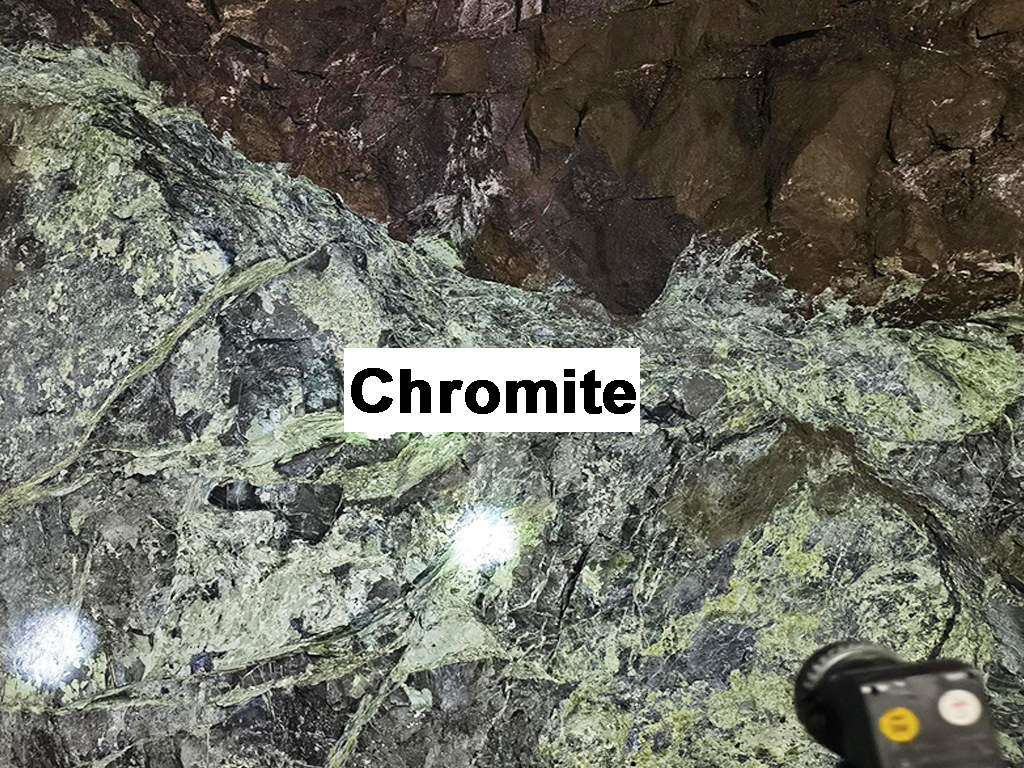
Chromite is essentially an oxide of iron and chromium, with the chemical formula FeCr₂O₄. It belongs to the spinel group of minerals and is naturally often associated with magnesium and aluminum. These minerals possess high hardness (Mohs scale 5.5–6), appear black or brownish-black, and have high density; they are also resistant to high temperatures as well as acid and alkali corrosion. These properties form the foundation of its long-standing role in the metallurgical and refractory industries.
Distribution:
Global chromite resources are highly concentrated. South Africa holds over 70% of global chromite reserves, followed by Kazakhstan, India, and Turkey. Furthermore, the characteristics of the ore vary by region, a factor that directly influences the selection and configuration of subsequent beneficiation processes.
The Importance of Chromite Mining and Processing
● Requirements for metallurgical-grade ore:
High-quality chromite must have a Cr₂O₃ content of at least 45% and a Cr/Fe ratio exceeding 2.5:1 to be viable for industrial smelting. If the ore falls below these standards, beneficiation is required to upgrade its quality.
● Uses of chromite:
Chromite is primarily used to produce ferrochrome alloys, which are essential raw materials for stainless steel manufacturing. It is also utilized in the production of ferrochrome alloys, refractory bricks, and chemical products. Furthermore, “chromium” plays a vital role in everything from everyday stainless steel kitchenware to high-temperature, heat-resistant components in the aerospace industry.
5 Steps in Chromite Mining and Processing
Step 1 – Mining and Ore Extraction
(1) Open-pit vs. Underground Mining:
The choice of mining method for chromite depends primarily on the depth of the ore body. Open-pit mining is typically used for large, shallow deposits; the overburden is stripped away, allowing the ore to be directly excavated and hauled out at a low cost. Deep-seated ore bodies require underground mining, involving access via shafts or adits; this process is complex and entails stringent safety requirements. The selection of a method involves a comprehensive assessment of geological occurrence conditions and economic viability.
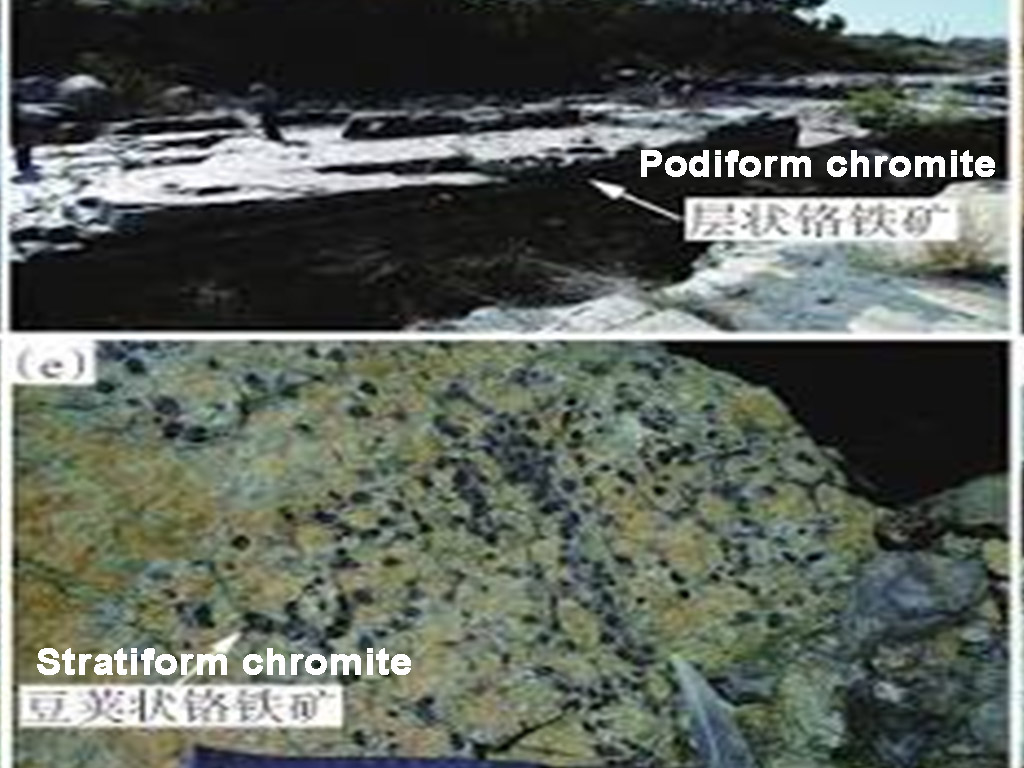
(2) Differences Between Podiform and Stratiform Deposits:
Podiform deposits are characterized by irregular shapes and small scales but high ore grades; they are commonly found in ophiolites within orogenic belts, such as those in Turkey and Albania. Stratiform deposits originate from large layered intrusions and are notable for their extensive distribution and vast reserves; the Bushveld Complex in South Africa is a prime example. These two types of deposits differ significantly in terms of mining planning and the complexity of ore processing.
Step 2 – Pre-Treatment
(1) Washing and Screening:
Run-of-mine (ROM) ore often contains significant amounts of soil and sticky impurities that must be removed through washing. Common equipment includes trommel screens and rotary scrubbers, which effectively strip away the clay layers adhering to the ore surface.
After washing, the ore is screened and classified using vibrating or trommel screens to separate it into size fractions. Ore particles that meet the required size specifications proceed directly to the next crushing stage, while oversized material is returned for further processing, laying the groundwork for the next steps.
(2) Crushing and Grinding
Crushing is a critical stage in mineral processing. The ROM ore first undergoes primary crushing in a jaw crusher to reduce the size of large ore blocks, followed by secondary crushing—typically using cone or roll crushers—to further refine the particle size.
Grinding follows crushing to achieve true liberation of the disseminated chromite from the gangue minerals. Ball mills and rod mills utilize grinding media to apply impact forces, ensuring thorough mineral dissociation; achieving the optimal grinding fineness is a prerequisite for maximizing recovery rates.
Step 3 – Gravity Separation
(1) Principles of Gravity Separation
Gravity separation is the most commonly used method for beneficiating chromite; it relies fundamentally on the difference in density. Chromite has a density of approximately 4.5 to 4.8 g/cm³, whereas silicate gangue ranges from only 2.6 to 3.2 g/cm³—a significant disparity. It is precisely this density difference that allows gravity separation equipment to utilize water flow and vibration to effectively separate the heavy minerals from the light gangue.
(2) Advantages of the Spiral Chute
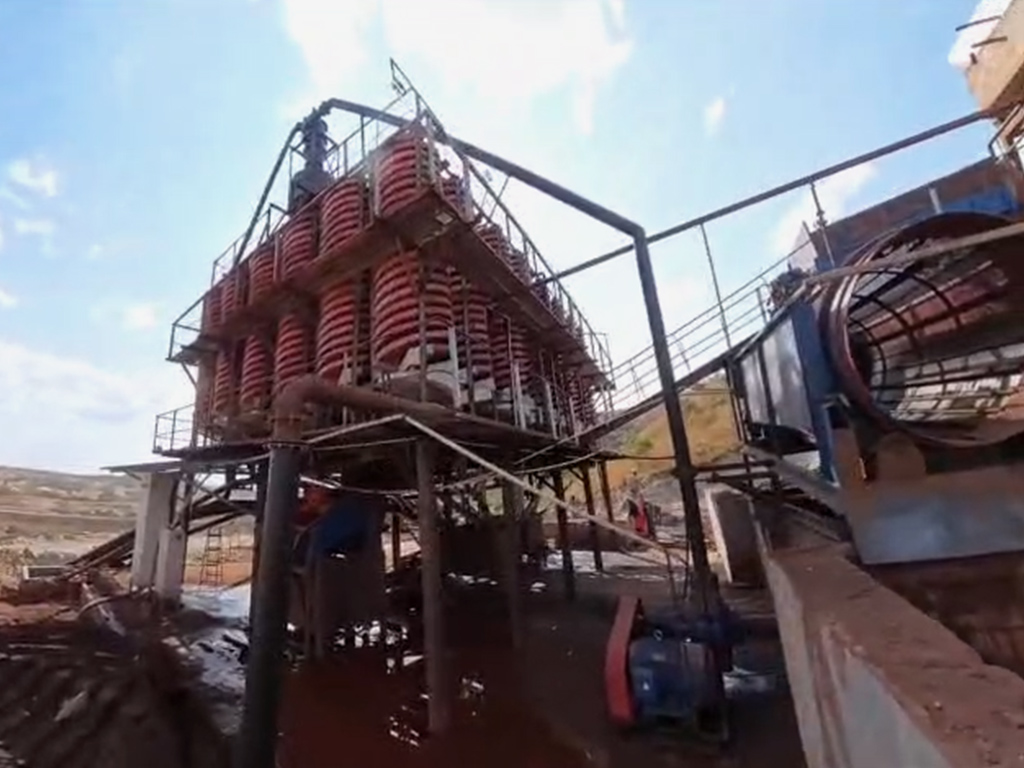
The spiral chute is highly favored due to its simple structure, high processing capacity, and low energy consumption. It utilizes the interplay of centrifugal force and gravity as minerals move along the spiral surface to achieve continuous stratification of particles based on weight. Capable of handling high-throughput preliminary enrichment of fine-grained materials, it serves as a key piece of equipment in large-scale processing plants, bridging the gap between roughing and cleaning stages.
(3) Fine Cleaning via Shaking Table
Following preliminary enrichment, fine separation is performed using a shaking table. By combining the reciprocating motion of the deck with a cross-flowing water stream, the shaking table precisely segregates minerals according to density to produce high-grade chromium concentrate; this method is particularly well-suited for fine-grained materials.
Step 4 – Magnetic Separation
Chromite is only weakly magnetic, whereas iron minerals such as magnetite are strongly magnetic; this results in a significant difference in magnetic response. The process begins with low-intensity magnetic separation to recover the strongly magnetic magnetite, yielding an iron concentrate as a by-product, followed by high-intensity magnetic separation of the tailings. High-intensity magnetic separation utilizes a strong magnetic field to concentrate fine-grained chromite, thereby enabling the comprehensive recovery of both iron and chromium.
Step 5 – Tailings Recovery and Environmental Management
Beneficiation processes generate large volumes of tailings containing residual fine-grained chromium; stockpiling these materials not only wastes resources but also creates potential hazards. Modern processing plants are increasingly prioritizing the secondary recovery of chromium from tailings, utilizing methods such as magnetic scavenging or shaking tables. Concurrently, environmental compliance has become a critical necessity. Chromium compounds are potentially toxic, especially hexavalent chromium, which poses a high risk. Therefore, it is essential to strictly control the leachate, dust, and wastewater from tailings ponds.
Conclusion
From mining, pretreatment, gravity and magnetic separation to tailings recovery, the five key steps in chromite mining and processing are interconnected, and each step directly affects the grade and recovery rate of the final concentrate. Optimizing this entire value chain is essential to ensuring efficient resource utilization while balancing environmental compliance and economic profitability. Given the unique characteristics of ores across different mining sites, maximizing value requires site-specific, tailored solutions. JXSC‘s professional team can provide customized services throughout the entire process, from process design to equipment selection, based on your ore characteristics, helping you to start production efficiently and operate steadily.

 English
  Spanish
  French
  Russian