We were established as the most specialized mineral processing equipment company since 1985.

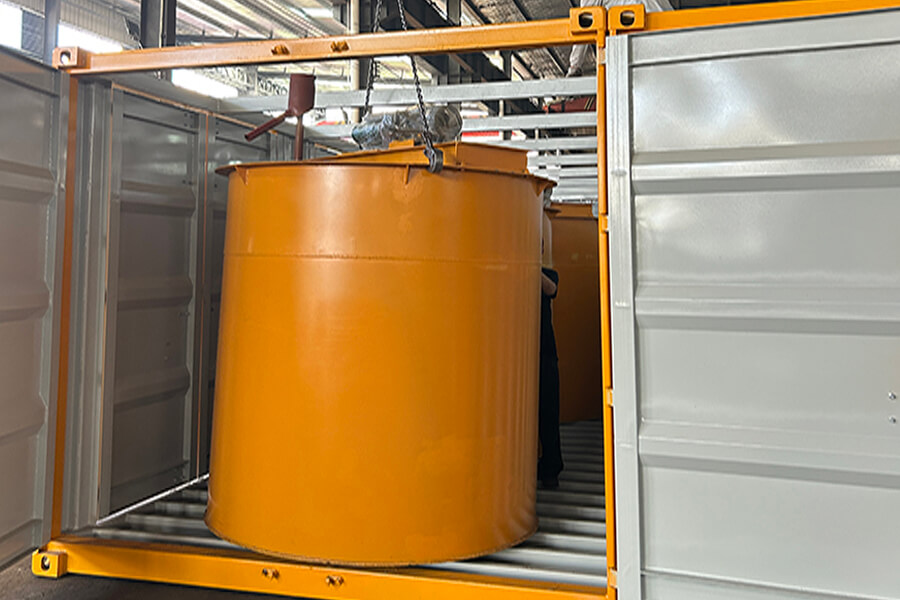
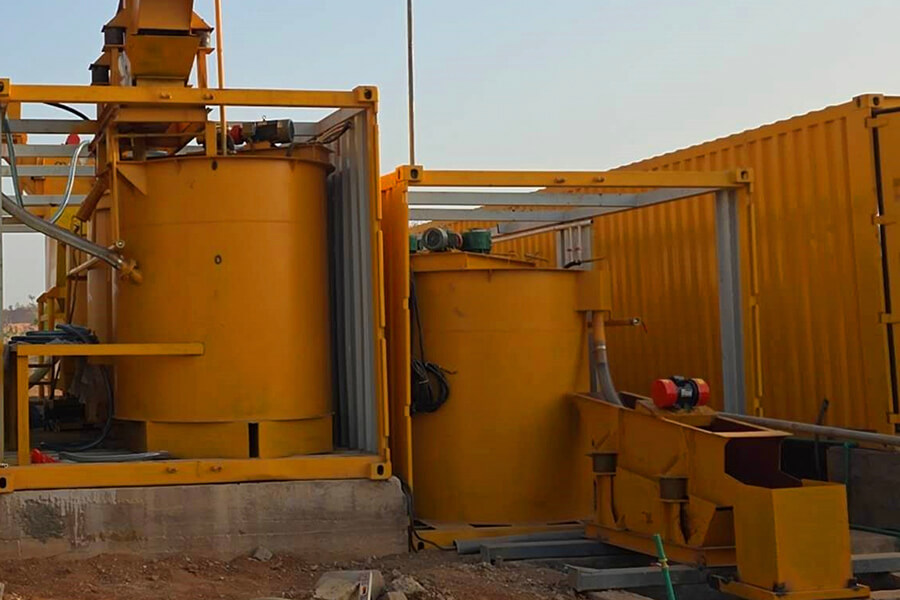
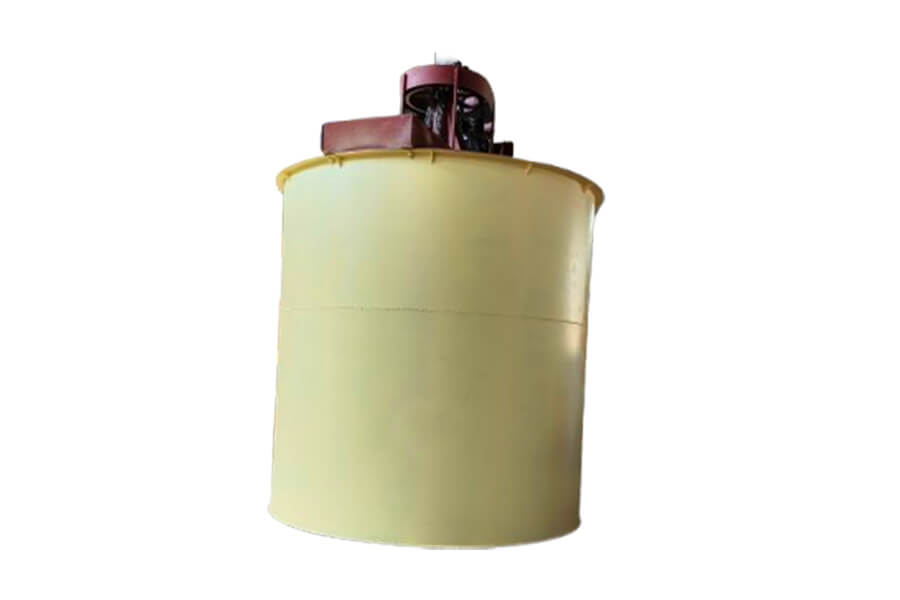
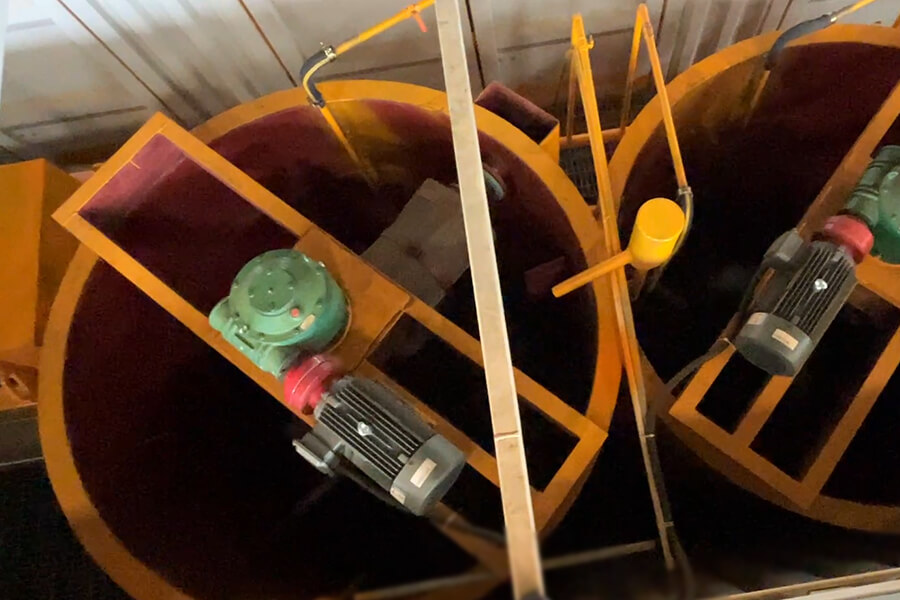
The leaching tank is a critical reaction vessel in gold cyanidation production lines; it facilitates the continuous agitation and mixing of ore pulp with cyanide reagents under conditions of ample oxygen supply, thereby dissolving gold and silver from ore particles into the solution. It features a dual-layer impeller for uniform agitation and a hollow shaft for effective aeration and oxygen supply. It can effectively process complex ores such as clay-containing oxide gold ore, fine-grained disseminated gold ore, and sulfide-encapsulated gold, and is adaptable to various mainstream CIP and CIL gold extraction processes. It is a key support equipment for gold extraction production lines in large-scale concentrators.
The leaching tank is the core reaction equipment in gold beneficiation and extraction processes. It facilitates the dissolution of gold and silver from ore by ensuring thorough contact between the slurry, cyanide reagents, and oxygen through agitation. Its task is to continuously stir the slurry in a closed tank so that leaching agents such as sodium cyanide can fully contact the ore particles and replenish the oxygen required for dissolution; thereby transferring gold and silver from the solid-phase ore particles into the liquid phase and creating conditions for subsequent adsorption, desorption, and electrolytic extraction. As indispensable core equipment in cyanide leaching processes for gold (including CIP and CIL methods) as well as for silver and other precious metals, the leaching tank’s performance directly determines both the metal leaching rate and the overall recovery rate.
Dual-impeller design:
A dual-layer impeller structure enhances slurry flow and mixing.
Hollow-shaft aeration:
Air is introduced through the bottom of the hollow shaft, ensuring uniform distribution of fine bubbles.
Large-diameter impeller:
Operates at low speeds, reducing both power consumption and wear.
Wear-resistant lining:
Both the tank and the impeller are lined with wear-resistant rubber, providing resistance to corrosion and abrasion.
1. High leaching rate: Uniform pulp suspension ensures gold particles are fully exposed to the reaction medium, achieving a cyanide leaching rate of over 95%.
2. High carbon adsorption rate: Moderate agitation intensity combined with consistent pulp density and particle size distribution enhances activated carbon adsorption efficiency.
3. Energy efficiency: Large-diameter, low-speed design reduces power consumption per unit of throughput.
4. High oxygen utilization: Hollow-shaft aeration combined with impeller shearing produces fine bubbles, ensuring ample oxygen supply.
5. Long service life: Wear-resistant rubber lining offers corrosion and abrasion resistance, ensuring durability.
6. Prevents Sedimentation: The dual-layer impeller ensures a wide agitation range, eliminating mineral particle settling and dead zones.
7. High Adaptability: Capable of processing complex gold ores, including those with high clay content, finely disseminated particles, or arsenic-bearing sulfides.
8. Easy Maintenance: Features a compact structure with replaceable impellers, enabling quick repairs and minimizing downtime.
9. Wide Application: Compatible with mainstream gold extraction processes, such as CIP, CIL, and oxidative pre-treatment, as well as agitation leaching across various industries.
10. High Processing Capacity: Offers effective volumes ranging from 6 to 268 m³, meeting the needs of small, medium, and large-scale processing plants.
The operation of the leaching tank is based on hydrodynamic principles combining mechanical agitation and aeration. Driven and agitated by a dual-layer impeller system, the slurry flows downward through the center of the tank and disperses via peripheral baffles, creating a continuous, large-scale circulating flow pattern. At the same time, air is supplied to the bottom of the tank through the hollow shaft of the transmission or the surrounding air-filling pipe, and after being fully mixed with the slurry, it circulates upward.
Model | Specifications | Effective capacity(m3) | Rotary Speed of Impeller(r/min) | Diameter of Impeller(mm) | Diameter of feeding pipe(mm) | Diameter of Discharging pipe(mm) | Planet cycloid reducing motor | Weight(kg) | ||
Model | Speed ratio | Motor Power(kw) | ||||||||
φ2.5x2.5 | 2500x2500 | 6 | 65 | 800 | 2-φ133 | 2-φ133 | XLD2.2-4-29 | 29 | 2.2 | 2800 |
φ2.5x3.15 | 2500x3150 | 13 | 57 | 935 | 2-φ125 | 2-φ125 | XLD2.2-4-29 | 29 | 2.2 | 3120 |
φ3x3.15 | 3000x3150 | 18.93 | 51 | 1130 | 2-φ150 | 2-φ150 | XLD4-5-35 | 35 | 4 | 5300 |
φ3.15x3.55 | 3150x3550 | 24 | 43 | 1260 | 2-φ150 | 2-φ150 | XLD4-5-35 | 35 | 4 | 5488 |
φ3.5x3.5 | 3500x3500 | 29 | 46 | 1310 | 2-φ150 | 2-φ150 | XLD5.5-5-29 | 29 | 5.5 | 7820 |
φ3.55x4.0 | 3500x4000 | 35 | 36.3 | 1310 | 2-φ150 | 2-φ150 | XLD4-5-35 | 35 | 4 | 6646 |
φ4.0x4.5 | 4000x4500 | 50 | 33.5 | 1500 | 2-φ150 | 2-φ150 | XLD7.5-7-43 | 43 | 7.5 | 8285 |
φ4.5x5.0 | 4500x5000 | 71.67 | 33.5 | 1750 | 2-φ159x6 | 2-φ159x6 | XLD7.5-7-43 | 43 | 7.5 | 10800 |
φ5.0x5.6 | 5000x5600 | 98 | 31 | 1900 | 2-φ159x8 | 2-φ159x8 | XLD11-8-47 | 47 | 11 | 13340 |
φ5.5x6.0 | 5500x6000 | 112 | 31 | 2100 | 2-φ159x8 | 2-φ159x8 | XLD11-8-47 | 47 | 11 | 18745 |
φ7.5x8.0 | 7500x8000 | 268.6 | 21 | 2900 | 2-φ159x8 | 2-φ159x8 | XLD22-10-47 | 47 | 22 | 32796 |
φ8.0x8.0 | 8000x8500 | 342 | 16.4 | 3200 | 2-φ159x8 | 2-φ159x8 | XLD22-11-59 | 59 | 22 | 42467 |
It is the core reaction vessel for metal dissolution in hydrometallurgy. Responsible for agitating the slurry, mixing reagents, and supplying oxygen to dissolve gold and silver from the ore, it serves as a critical component of modern CIP and CIL gold processing plants.
It is suitable for high-clay oxidized gold ores, fine-grained disseminated gold ores, arsenic-bearing sulfide-encapsulated gold ores, and low-grade complex ores; it is also used for leaching and carbon adsorption operations involving materials with low specific gravity and low viscosity, at a pulp density of less than 45%.
The tank body is constructed from corrosion-resistant material and lined with wear-resistant rubber, while the impeller is also rubber-coated; the unit operates at low speeds with minimal wear, ensuring a long service life, and the design of key wear parts allows for quick replacement, guaranteeing stable, long-term operation.
Available in a range of effective volumes from 6 m³ to over 268 m³, the tanks can be flexibly selected or customized based on actual requirements, such as the processing plant’s daily throughput and leaching time.