
What is the difference between ore and waste rock? Every day in the global mining industry, millions of tons of rock are extracted from the ground, only to face two vastly different fates: some are sent to processing plants to be refined into precious metals and industrial raw materials, while others are dumped onto waste piles, discarded as unwanted “waste.” In essence, true ore contains valuable minerals that can be industrially extracted, whereas waste rock is an unavoidable “byproduct” of the mining process. Yet, their fates are determined by far more than just chemical composition; they differ fundamentally across a range of factors, from mineral content and economic value to processing methods. This article examines 7 key dimensions that distinguish ore and waste rock, helping you avoid “hidden pitfalls” in mining operations and maximize resource utilization.
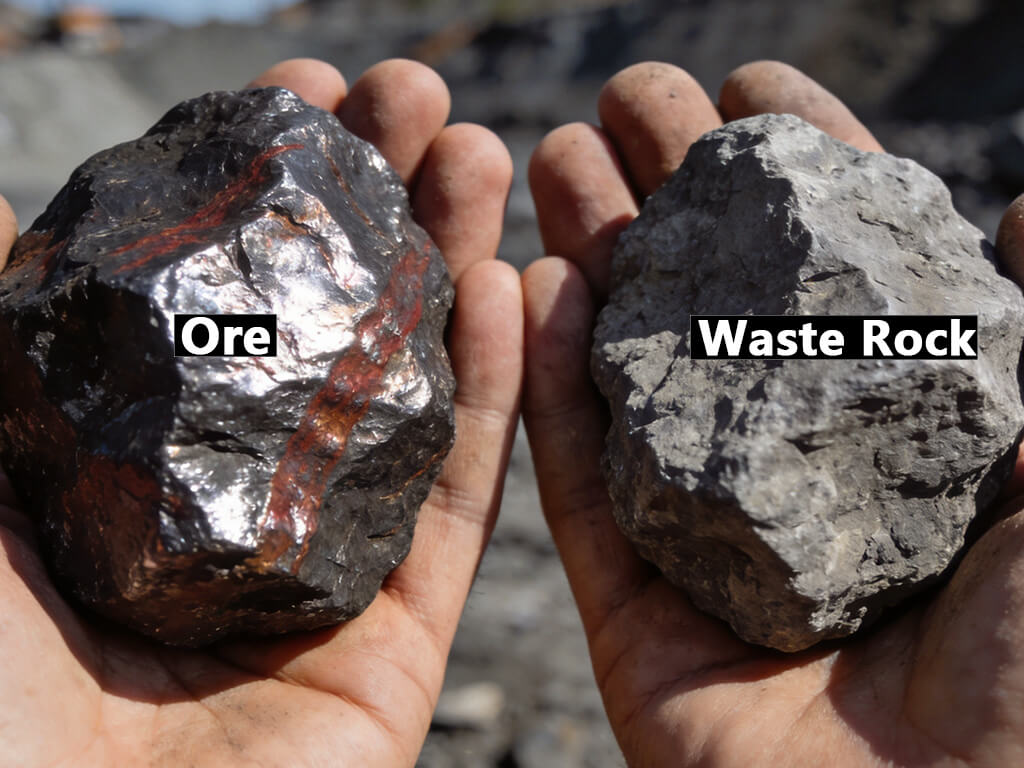
What Is Ore?
(1) Definition Of Ore
Ore refers to a naturally occurring aggregate of minerals containing minerals or metals of economic value. From the perspective of economic geology, the defining characteristic of ore is whether it can be mined profitably under current technological conditions. A rock formation qualifies as ore only when the content of the target mineral meets or exceeds the cost of extraction. Whether a specific rock is classified as ore depends on prevailing technology and metal market prices; consequently, the definition of ore is constantly evolving.
(2) Key Indicators for Identifying Ore
Ore grade refers to the proportion of valuable minerals within a given quantity of ore—for instance, the number of grams of gold per tonne. A higher grade means a greater yield of valuable material per tonne of rock and a more straightforward beneficiation process. The “cut-off grade,” however, serves as the threshold distinguishing ore and waste rock: material exceeding this grade enters the processing stream, while material falling below it is classified as waste. This threshold fluctuates based on market conditions, including metal prices, extraction costs, and technological capabilities.
(3) Types of Ore
High-grade ore contains a rich concentration of valuable elements, allowing for relatively simple processing and offering higher profit margins for the mine.
Low-grade ore contains a lower concentration of valuable elements, requiring more complex beneficiation processes and incurring higher processing costs.
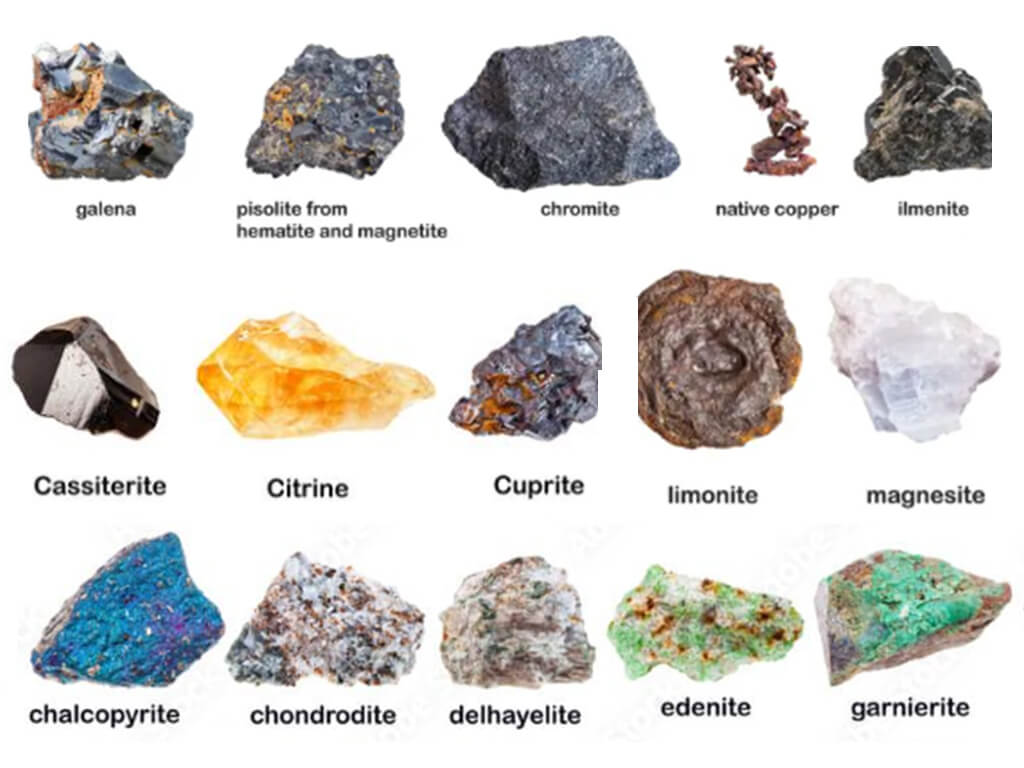
What Is Waste Rock?
(1) Definition of Waste Rock
Waste rock refers to country rock or interburden material lacking economic value, that is removed during the mining process. It is essentially a “by-product” that must be cleared away to access the ore. Unlike ore, the content of valuable elements in waste rock falls far below the cut-off grade. Under current technical and economic conditions, it cannot be utilized industrially—primarily due to excessively low grades or prohibitive processing costs—and is typically deposited in waste rock dumps or used for backfilling.
(2) Sources of Waste Rock
Waste rock originates primarily from overburden stripping in open-pit mines or excavation work in underground mines. Open-pit mining requires the removal of vast quantities of topsoil and low-grade rock to access deeply buried ore. In underground mines, waste rock is generated during the excavation of tunnels and the development of stopes.
(3) Waste Rock vs. Tailings
Waste rock consists of coarse rock fragments generated during the extraction phase; the particles are large, and the material undergoes no processing.
Tailings, in contrast, are the fine, powdery waste residues remaining after ore has undergone crushing, grinding, and beneficiation. They often contain residual chemical reagents and require strict management and disposal protocols.
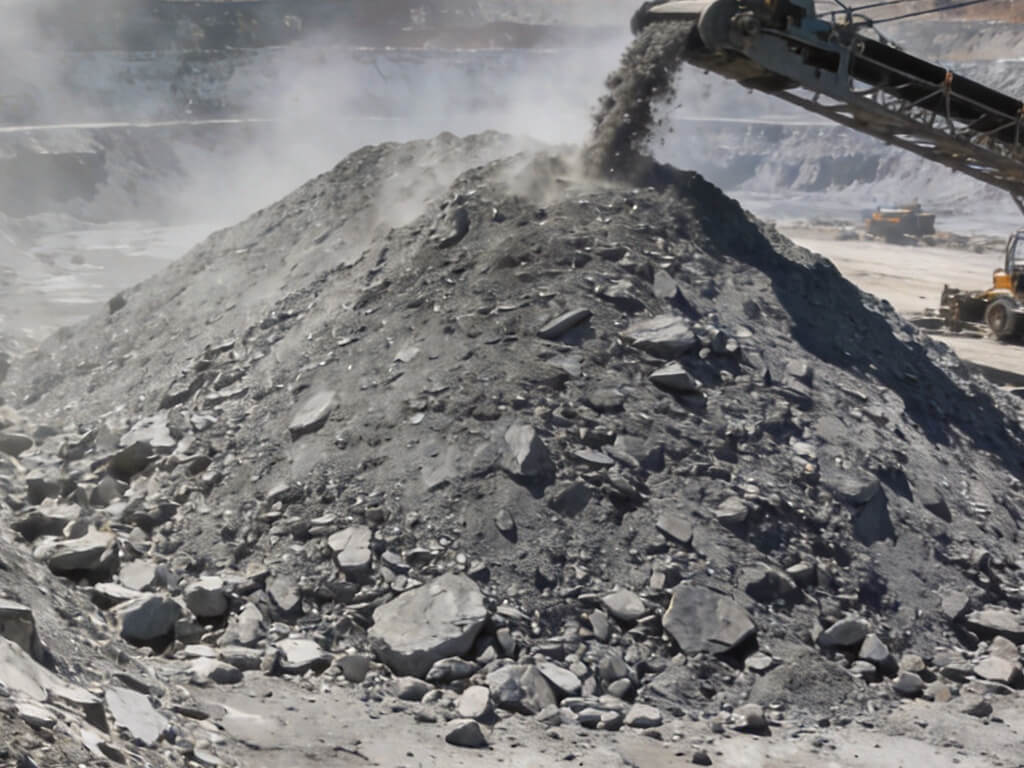
7 Difference Of Ore and Waste Rock
1. Geological Context and Formation
● Ores are formed through processes such as the cooling and precipitation of hydrothermal fluids within rock fractures, the concentration of valuable minerals via magmatic differentiation, and the gradual accumulation of sediments on the seafloor; collectively, these processes create mineable ore bodies.
● Waste rock, on the other hand, consists of the ordinary rock surrounding the ore body. While adjacent to the ore, it has not undergone significant mineralization or enrichment. Simply put, ore is the gold sifted out, whereas waste rock is the sand and gravel left behind on the sieve.
The shape of the ore body directly determines the volume of waste rock that must be excavated. Thick, regular ore bodies require the removal of relatively little surrounding rock to expose the ore, whereas thin, contorted veins necessitate the excavation of large amounts of waste rock to gain access. Consequently, the morphology of the ore body is a critical factor in mine design and extraction operations.
2. Mineral Composition
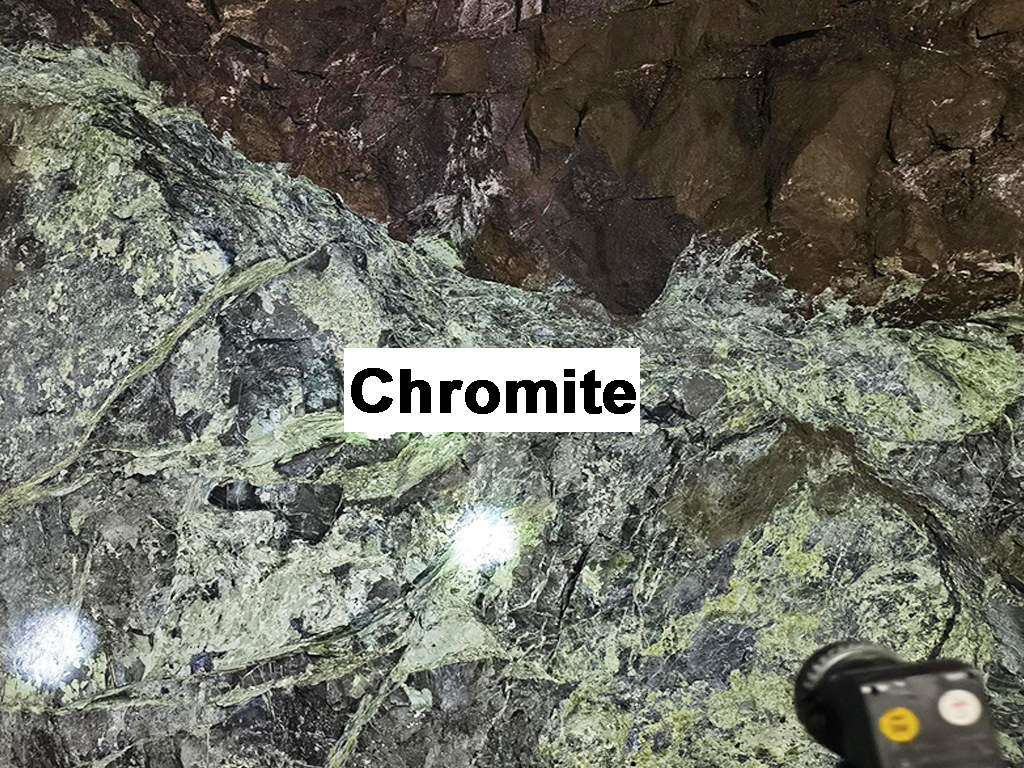
● The value of an ore lies in its content of useful minerals. Minerals such as chalcopyrite in sulfide ores and malachite in oxide ores are typical industrial minerals; these are the actual targets of mining operations.
● Waste rock is predominantly composed of gangue minerals, such as quartz, calcite, and feldspar. Although metal elements may sometimes be detected, their concentrations fall far below the threshold for economic extraction. Consequently, such waste rock would only acquire economic value in the event of technological breakthroughs or rising market prices.
3. Grade Standards
Ores must meet specific grade standards to be economically viable for extraction. The higher the grade, the greater the yield of valuable material per tonne of rock, and the larger the potential profit margin for the mine. Conversely, the grade of waste rock falls far below the threshold for economic extraction.
However, these grade standards are not fixed. If metal prices rise, material previously classified as waste rock may be upgraded to low-grade ore; conversely, if extraction costs increase, some ore may be reclassified as waste rock.
4. Processing and Extraction
● Mining the ore is merely the first step. Once transported from the mine, the ore undergoes processes such as crushing, grinding, flotation, or other ore beneficiation stages. Each stage aims to separate valuable minerals from the waste rock (gangue), ultimately yielding a concentrated product.
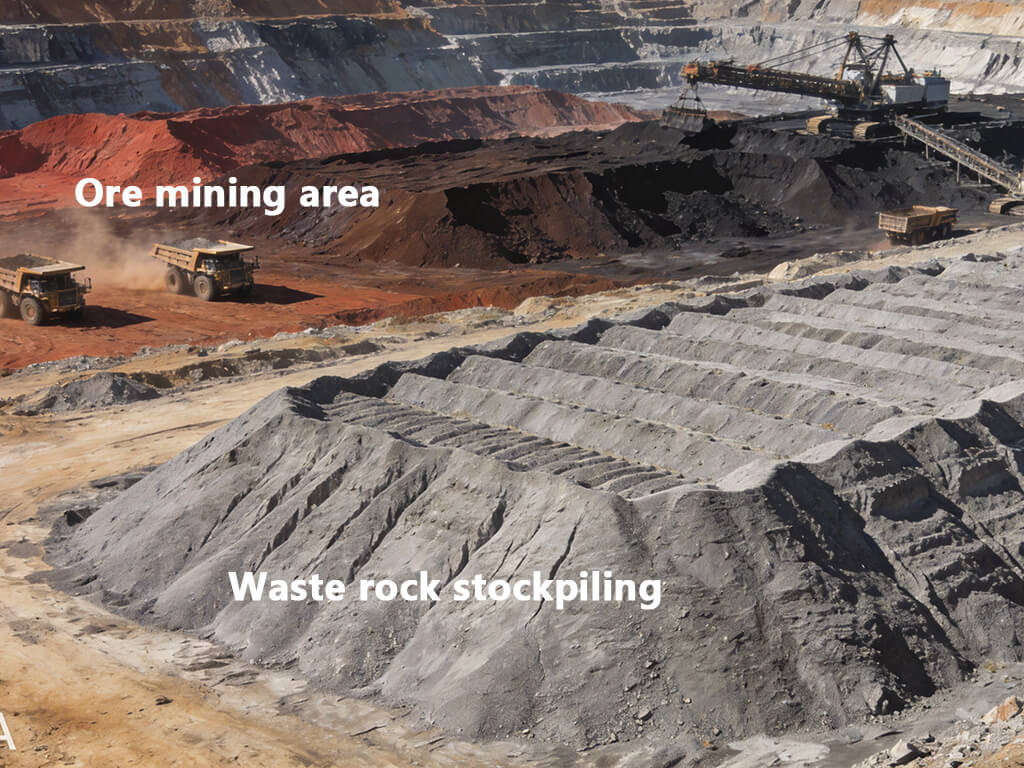
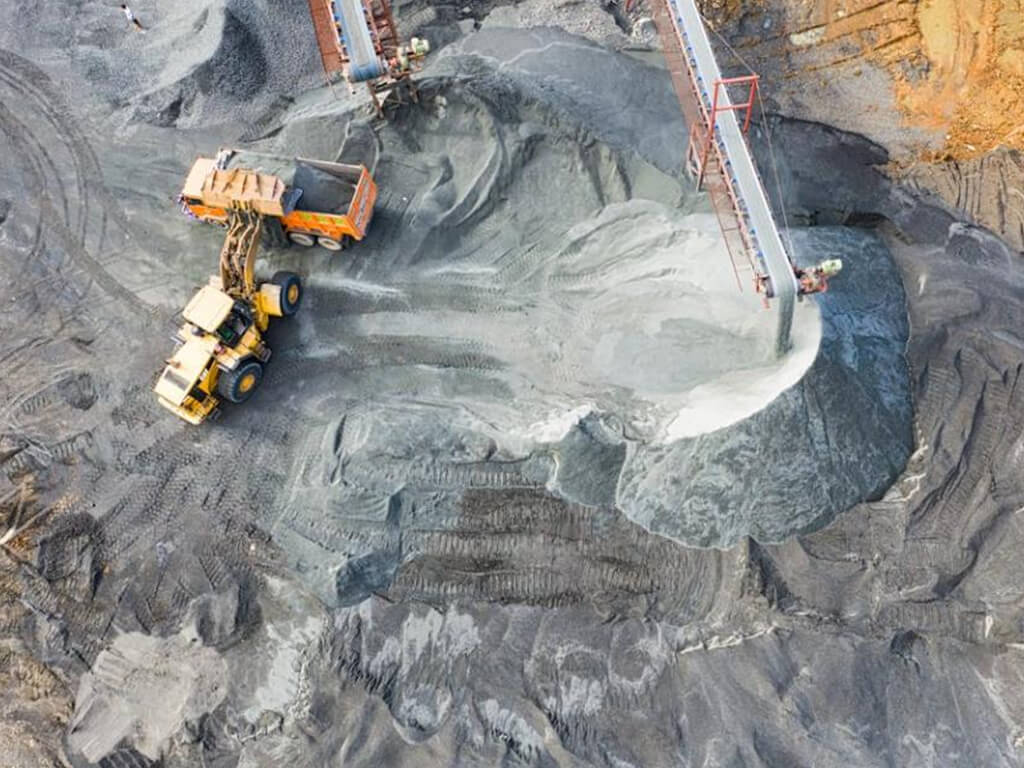
● As waste rock holds no economic value, it bypasses the processing stage entirely. Trucks haul it directly to a waste dump, where it is typically either stockpiled or used to backfill exhausted mine pits.
Mineral recovery rate measures the efficiency of extracting valuable minerals from the ore, whereas the comprehensive utilization rate of waste rock tracks the proportion of waste converted into construction materials or other useful products.
5. Environmental Impact
● The environmental risks associated with ore processing are concentrated at tailings storage facilities. The fine waste residues resulting from beneficiation have a high water content and require dammed storage; should the dam fail, the resulting massive release of slurry could have catastrophic consequences.
● Long-term exposure of waste rock piles can lead to acid drainage, potentially contaminating groundwater and rivers. Tailings storage facilities, meanwhile, pose a risk of dam failure and require specialized management.
However, modern mining operations can mitigate waste rock risks through scientifically sound facility design. For instance, covering piles with soil and vegetation can isolate the material from the air to prevent oxidation, while dry stacking technology can reduce the generation of leachate.
6. Potential for Reprocessing
With advancements in mineral processing technology, the treatment of waste rock is gradually becoming economically viable. For instance, gold can be recovered from gold mine waste rock through heap leaching, while waste rock with high silica content is suitable for processing into construction materials.
7. Economic Value
Ultimately, the fundamental distinction between ore and waste rock boils down to a single concept: profitability. Ore can be processed into products that generate profit, whereas waste rock cannot.
However, the boundary between ore and waste rock is never static. For instance, technological breakthroughs or rising prices can lower the economic cut-off grade. This dynamic nature compels mining companies to continuously re-evaluate the value of their resources.
Ore and Waste Rock: A Comparative Summary
| Comparison Dimension | Ore | Waste Rock |
|---|---|---|
| Geological Origin | Enriched through mineralization | Country rock / interburden |
| Grade Standard | Above cut-off grade | Below cut-off grade |
| Economic Value | Positive return, profitable | No economic value |
| Mineral Composition | Enriched with valuable minerals | Predominantly gangue minerals |
| Processing Method | Enters beneficiation process | Directly stockpiled or used for backfill |
| Environmental Impact | Tailings pond risk, processing tailings require proper management | Acid mine drainage, heavy metal leaching |
| Environmental Impact | Tailings pond risk, processing tailings require proper management | Acid mine drainage, heavy metal leaching |
| Potential for Reuse | Sold as concentrate | Used as construction material or backfill |
Conclusion
While ore and waste rock may appear to be simply natural forms of rock, they differ fundamentally across dimensions such as geological origin, mineral composition, processing methods, environmental impact, and economic value. Fluctuations in metal prices or breakthroughs in mineral processing technology can redefine the boundary between ore and waste rock. Understanding these 7 key differences helps mining professionals optimize extraction decisions and enables investors to more accurately assess a mine’s true value. Please feel free to contact us for professional support if you wish to further optimize your mine resource assessment or develop customized mineral processing solutions.
 English
  Spanish
  French
  Russian