
- Home
- Blog
- Mineral Solution
- How to Extract Coltan Ore? Processing Methods & Equipment Guide
Properties of Coltan
Physicochemical Properties
Coltan is a rare metal mineral containing niobium and tantalum. It usually refers to a symbiotic mineral of tantalite (FeTa₂O₆) and columbite (FeNb₂O₆). Its main components are niobium oxide and tantalum oxide, and its appearance is mostly iron-black to brownish-red. It has a Mohs hardness of 5.5-6.5 and a density of 6.5-8.2 g/cm³. It possesses a high melting point (~3000°C) and excellent resistance to acid and alkali corrosion. It is a weakly magnetic mineral and is chemically stable.
Deposit Types
● Primary Deposits: Primarily found in granite pegmatite veins, with ore bodies buried at depths of 10-50 meters, suitable for underground mining. Tantalum grade is typically high, ranging from 0.01% to 0.05%, but the scale is small.
● Place Coltan Deposits: Mostly formed by the weathering, erosion, and deposition of primary deposits, distributed in river valleys and alluvial deposits. The grade is relatively low and easy to mine, but it is often associated with cassiterite, which requires sorting.
Currently, over 70% of the world’s recoverable reserves are concentrated in the eastern region of the Democratic Republic of Congo.
Strategic Value After Extraction and Processing
After combined beneficiation, the coltan concentrate can meet the core material requirements for manufacturing high-tech products such as 5G base-station capacitors, AI-server heat-dissipation components, aerospace high-temperature alloys, and military guidance devices. For example, tantalum concentrate from compliant beneficiation can be electrolyzed into capacitor-grade tantalum powder (99.95% purity), and 1 gram of tantalum powder can manufacture 200 mobile phone chip capacitors. Niobium concentrate can significantly enhance the thermal stability of alloys and is used in MRI magnets. Furthermore, tailings recycling technology also provides secondary value to beneficiation waste (e.g., yttrium).
Coltan Mining Methods
(1) Manual mining
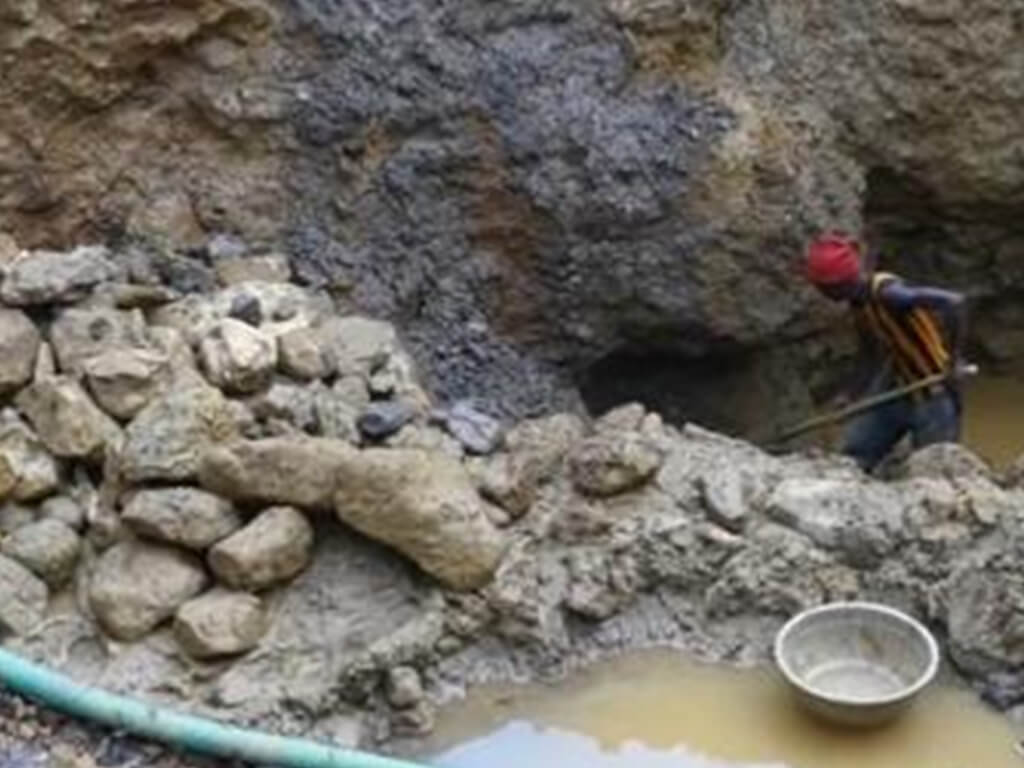
Currently, most small-scale mines in the main producing areas of the eastern Democratic Republic of the Congo still use manual mining, which is most suitable for scattered, high-grade small veins at extremely low cost. Miners manually extract the ore with simple handheld chisels, followed by preliminary sorting on a panning plate. This method carries extremely high safety risks, with an average resource recovery rate of only about 20%, is non-compliant, and yields very little profit.
(2) Mechanized mining
● Open-pit mining is suitable for alluvial placer deposits and shallow primary veins with shallow ore bodies (<20 meters). Core equipment includes excavators and ton-class loaders. It can be adapted to columbine-tantalite mining scenarios with a daily processing capacity of thousands of tons.
● Underground mining is used for high-grade primary pegmatite veins with a burial depth of more than 20 meters. It requires a scraper loader and underground rail transport vehicles, resulting in high mining efficiency. The ore grade is more stable, but the investment is high.
Coltan Ore Extraction Processing Methods & Equipment
1. Preatment (Crushing & Grinding, Washing)
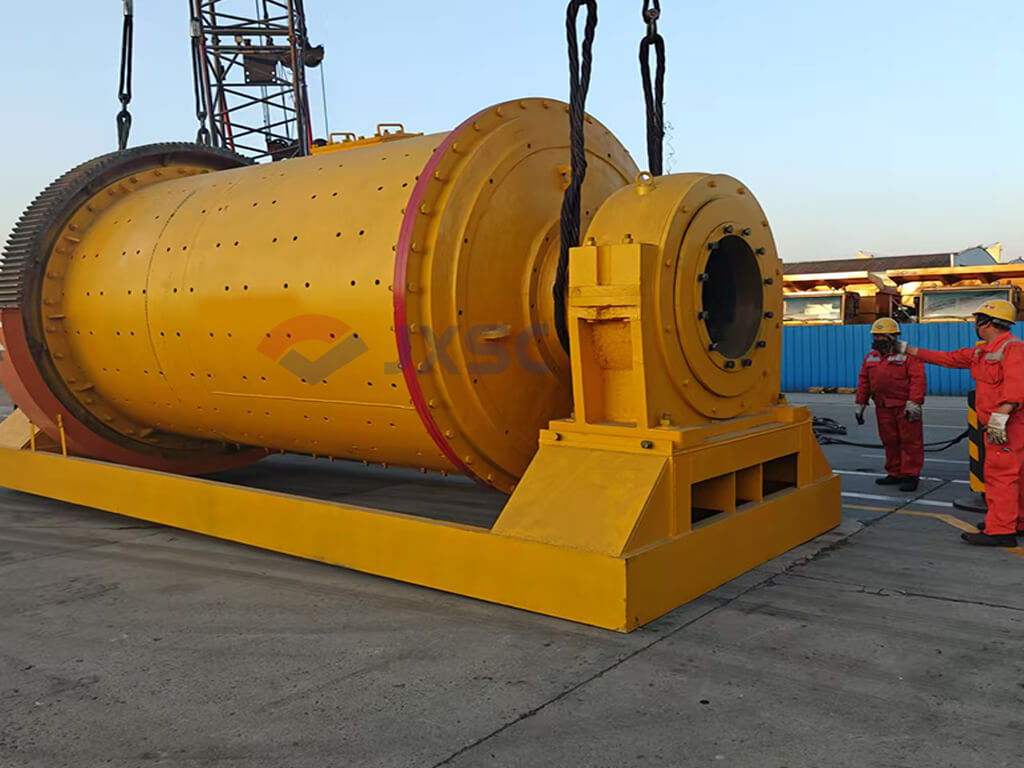
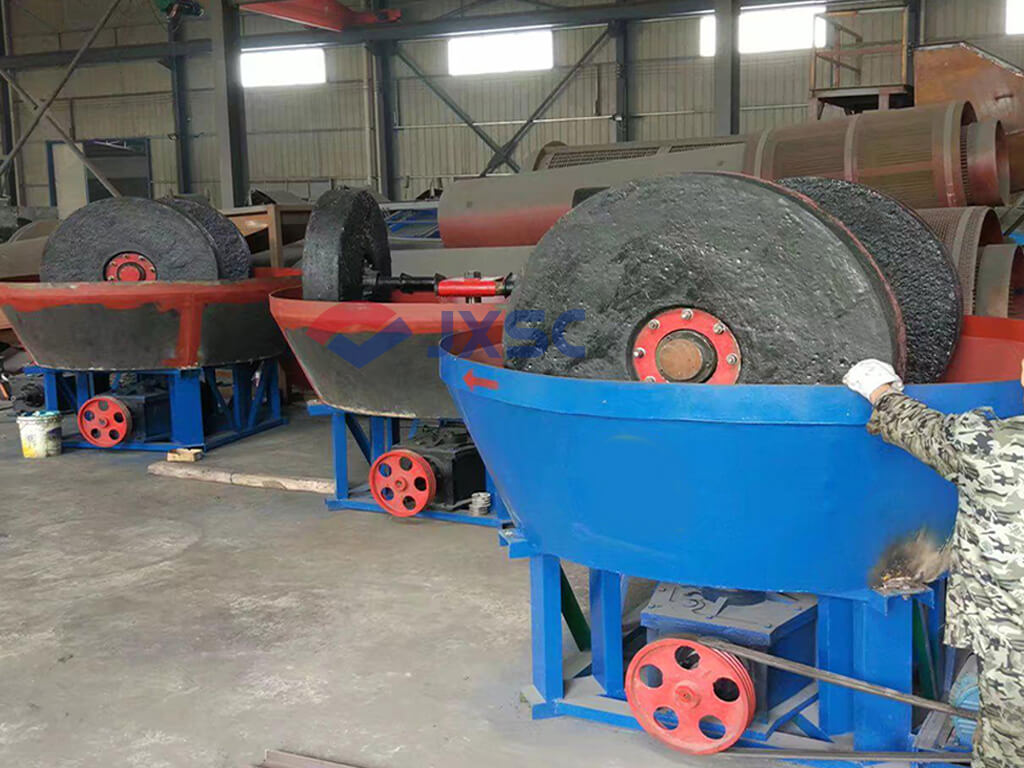
The raw ore is first fed into a crusher for coarse crushing, with the product particle size controlled to be below 50mm. It is then further crushed to below 12mm by a cone crusher and finally fed into a ball mill/rod mill to achieve the target particle size for separation.
Equipment Selection:
● Crushing & Grinding: Strict matching with beneficiation capacity is required. For example, at a 100 t/d scale, a PE250*400 jaw crusher and a single-cylinder cone crusher are recommended. For small to medium-sized coltan ore extraction plants, hammer crushers or double-roll crushers can be considered for fine crushing. For tantalum ore with coarser embedded particles, ball mills are preferred. High-chromium alloy liners should be selected for grinding wear parts to reduce replacement costs for vulnerable parts by 30%. Furthermore, it is best to use a spiral classifier unit to form a closed-loop circulation, ensuring that the -0.074mm particle size accounts for ≥65%.
● Washing: For alluvial/placer coltan ore, pre-treatment with a trommel scrubber for desliming and impurity removal should also be considered.
2. Gravity Separation (The Core Coltan Ore Processing Method)
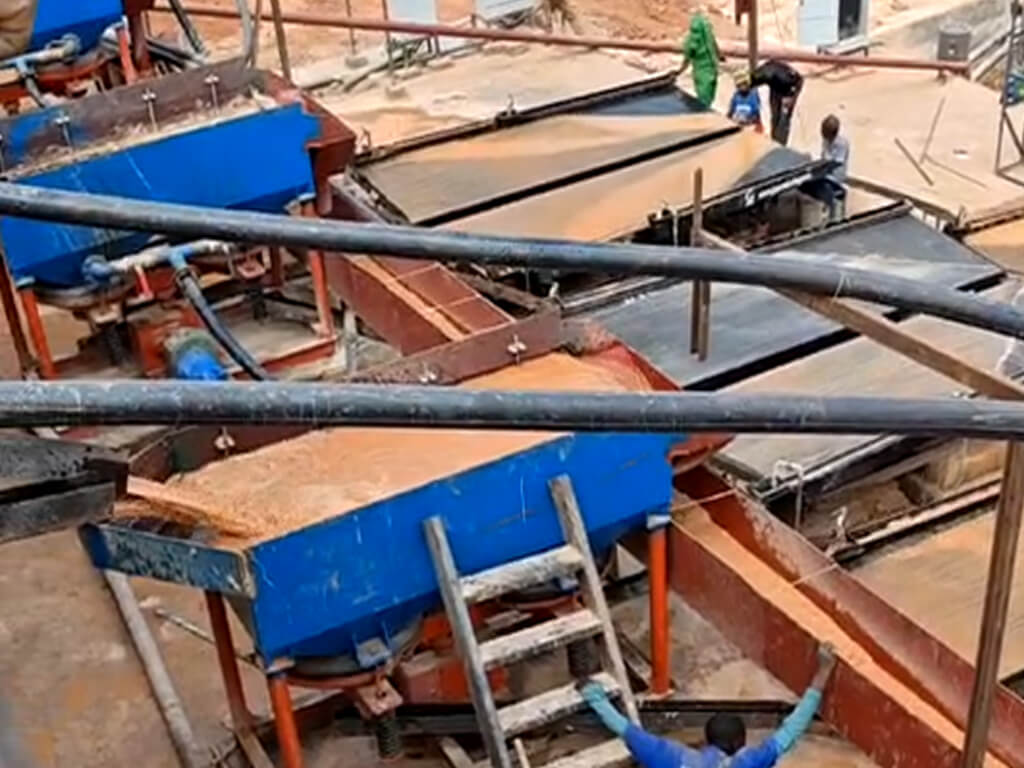
Gravity separation is the lowest-cost pre-enrichment step in coltan ore extraction, primarily suitable for coarse-grained (0.5-5mm) ore. Its purpose is to remove over 80% of low-grade gangue in a single pass, significantly reducing the processing load on subsequent steps.
Equipment Selection:
Jig separator: Separates ore through pulsating water flow; tantalum-niobium ore in the slurry, due to its high density, settles to the bottom for recovery. Processing capacity can reach 1-20 tons/hour; multiple jigs can be used in parallel to increase output and efficiency.
Spiral Chute: Suitable for fine particles, separating minerals through centrifugal force and friction. Adjustment of the inclination angle (10°-15°) and screw pitch ratio is required during configuration.
Shaking Table: Offers high separation accuracy for 0.02-2mm particles; adjusting the stroke and frequency can improve recovery rate.
3. Magnetic Separation
Due to the weak magnetic properties of coltan, a high-intensity magnetic separator must be used for separation.
Equipment Selection:
A three-disc dry magnetic separator is typically used: the first disc removes strongly magnetic impurities; the second disc recovers coarse-grained coltan; and the third disc recovers fine-grained coltan. However, this achieves efficient, one-time separation of tantalite from non-magnetic gangue such as feldspar and quartz.
4. Flotation Method
Flotation is primarily used for deep purification of magnetic separation rough concentrates, for example, increasing concentrate grade from 30% to 60%+. Coltan ore flotation requires fatty acid collectors (such as sodium oleate), with optimal selectivity at an acidic pH of 2-4. In the actual coltan ore extraction process, fine particles (-0.074mm) can be recovered first by flotation, followed by gravity separation to process coarse particles.
Equipment Selection:
SF-type mechanically agitated flotation machines are preferred, as their single-cell volume matches the throughput, reducing reagent consumption by 15% compared to self-priming flotation machines. The challenge lies in slime interference; water glass can be added to suppress silicate gangue. New chelating collectors (such as benzohydroxyxamic acid) offer significantly higher recovery rates for fine-grained tantalum ore.
5. Tailings Treatment
Coltan beneficiation wastewater contains heavy metals (such as lead and arsenic) and flotation reagents, requiring precipitation, dewatering, or re-beneficiation treatment. Additionally, it is necessary to improve water recycling rates to reduce operating costs.
Equipment Selection:
● High-grade tantalum concentrate produced by flotation can be sent to a thickener for thickening. Overflow water can be recycled back to the grinding and flotation stages for reuse, reducing production water consumption by 65%.
● Tailings dry discharge technology can be integrated, such as using a plate and frame filter press. The filter cake moisture content can be reduced to below 12%, reducing the risk of dam failure and simultaneously meeting environmental protection requirements. No additional drying is required before direct feeding into the hydrometallurgical process, adapting to downstream smelter feed standards.
● Furthermore, gravity separation, flotation, and other beneficiation machines can be used to recover valuable minerals such as feldspar and quartz from the tailings, improving resource utilization.
Factors To Consider In Configuring Coltan Ore Extraction Solutions
✔ Ore Source Attributes: First, confirm whether the raw ore is primary ore/placer ore, grade, occurrence state, and particle size distribution, then match the corresponding process combination. For example, jig gravity separation is preferred for coarse-grained ore, while flotation can efficiently recover fine-grained tantalum and niobium minerals; weak magnetic characteristics are suitable for strong magnetic separation equipment.
✔ Site Conditions: Dry magnetic separation is preferred in arid and water-scarce areas; overseas mines prioritize models that are easy to maintain and have readily available spare parts, adapting to local power supply, transportation, and other infrastructure conditions.
✔ Capacity Requirements: Configure a 1.2 times redundancy coltan ore extraction plant based on daily processing capacity. For example, small-scale mining uses economical gravity beneficiation equipment; medium-scale mining focuses on cost-effective solutions; large-scale mines are equipped with intelligent automation systems. Avoid insufficient capacity or equipment idleness and waste.
✔ Compliance Requirements: Simultaneously configure tailings dry discharge and water recycling systems, while ensuring a water reuse rate >85%. Strictly control wastewater pH, heavy metal content, and other indicators to comply with environmental regulations, avoiding the risk of production shutdowns due to violations.
✔ Cost-Benefit: Prioritize energy-saving equipment with low-wear-resistant parts and high recovery rates. Taking into account both investment costs and operational efficiency, the payback period is calculated to maximize overall project returns.
Conclusion
The rational configuration of coltan ore extraction solutions directly affects metal recovery rates and economic benefits, requiring a scientific match between ore characteristics, beneficiation flows, and environmental requirements. Optimizing crushing and grinding, and combining gravity separation, magnetic separation, and flotation processes can significantly improve concentrate grade and recovery rates. JXSC Mine Machinery Factory provides comprehensive and reliable beneficiation solutions, from process design and equipment selection to technology optimization, ensuring your project achieves efficient, environmentally compliant, and low-cost operation!

 English
  Spanish
  French
  Russian