Plate And Frame Filter Press

Eco-Friendly Filtration Equipment For Solid-Liquid Separation Solution

Our plate and frame filter press is an intermittent pressure filtration system, a highly efficient solid-liquid separation device suitable for tailings dry discharge and sludge dewatering. Driven by pressure difference, it achieves high-efficiency filtration and is widely used in mineral processing, chemical, and municipal applications. Its core value lies in converting high-moisture-content materials into low-moisture-content filter cakes, reducing waste volume and facilitating wastewater discharge compliance and resource recycling. With its superior dewatering efficiency, stable operating performance, and wide adaptability, the plate and frame filter press has become an indispensable core equipment in tailings treatment and concentrate dewatering processes.

Brief Intro

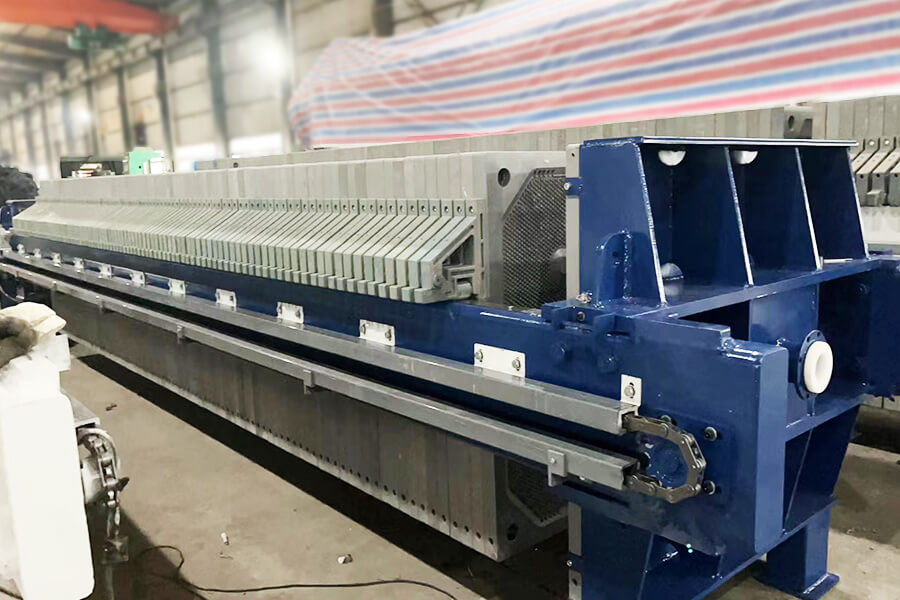
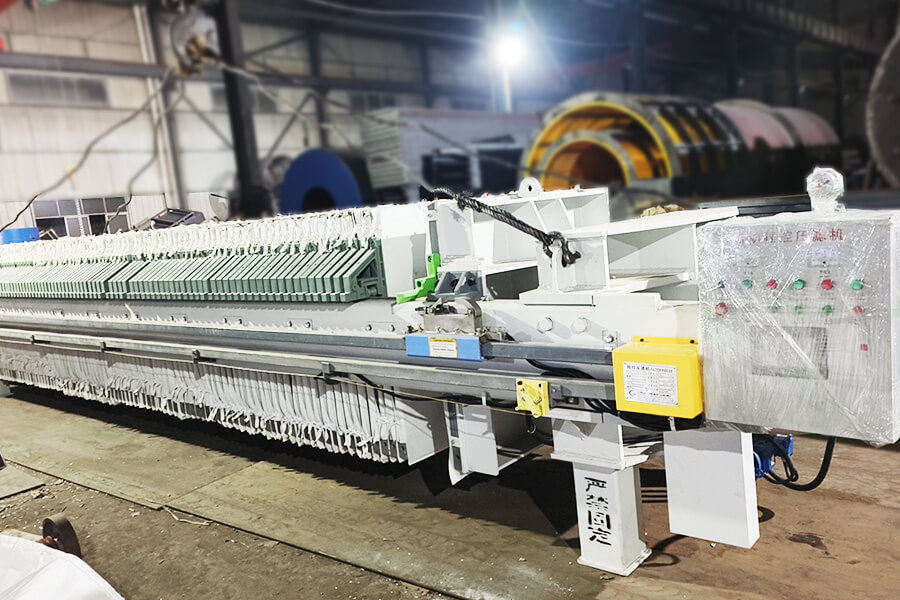
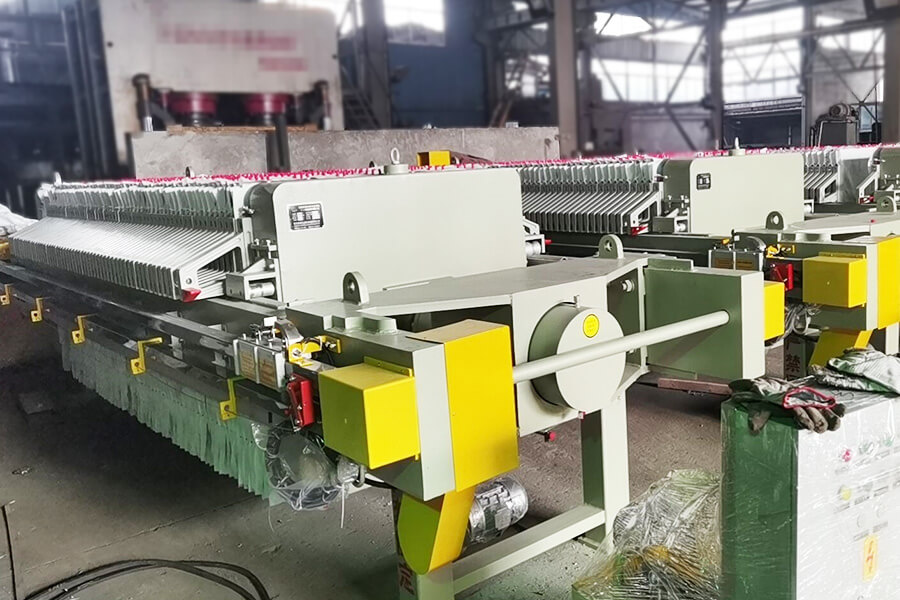
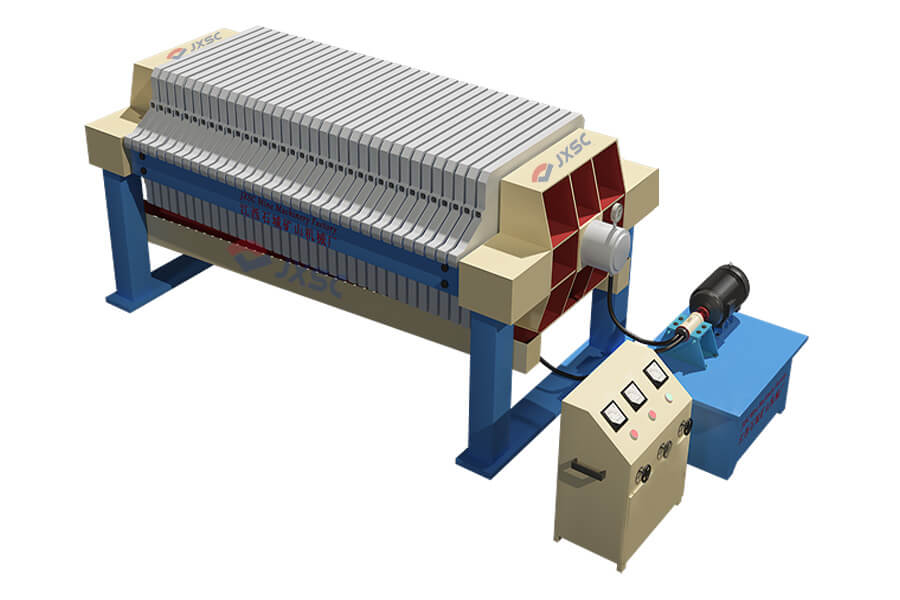
A plate and frame filter press is a widely used solid-liquid separation device in industrial fields. It effectively separates solid particles from liquid in suspension by high-pressure compression of the filter cloth between the filter plates and frames. It consists of multiple alternately arranged filter plates and frames, with the filter cloth serving as the filtration medium. Under hydraulic pressure, the material is rapidly dewatered and a filter cake is formed. It is particularly suitable for processing high-viscosity, high-concentration materials in industries such as chemical, mining, and municipal wastewater treatment, including tailings dewatering, concentrate filtration, municipal sludge, and chemical waste. This filter press integrates a PLC control system, enabling fully automated operation of the pressing, feeding, filtration, and unloading processes, making it suitable for large-scale continuous production. It can still achieve deep dewatering of viscous slurries, such as highly viscous flotation tailings, fine-particle magnetic concentrates, and cyanide slag containing corrosive agents. The final filter cake moisture content can be reduced to 15%-25%, significantly reducing subsequent disposal costs and creating resource recovery value.

The JXSC plate and frame filter press, characterized by its high separation accuracy, excellent dewatering effect, strong adaptability, stable operation, and large processing capacity, is typically used as a key dewatering machine in the final stage of mineral processing. In mineral processing scenarios, it is often linked with thickeners, dewatering screens, hydrocyclones, and other equipment to form a highly efficient dewatering system. Furthermore, thanks to its high-pressure filtration technology, modular design, and wear-resistant properties, it is also the optimal dewatering solution for industrial solid-liquid separation and purification, tailings dry disposal, and wastewater treatment.

Why Choose Our Plate And Frame Filter Press

Plate And Frame Filter Press

Filter Plates And Frames:

Alternating arrangements form a filtration unit, with filter frames sandwiched between the filter plates to form a sealed filter chamber. The material is mostly polypropylene or cast iron.

Filter Cloth:

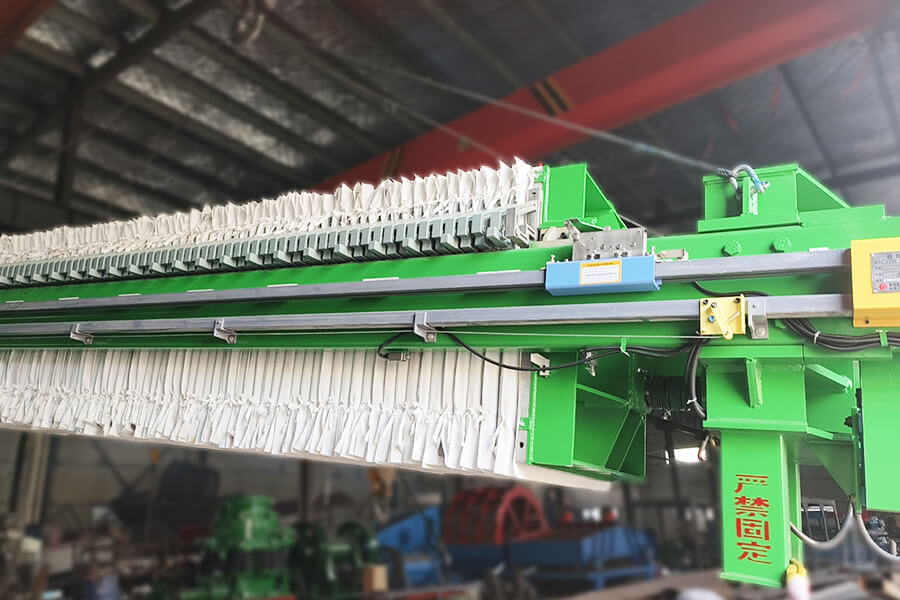
The core filtration medium, selected from polyester, polypropylene, or nylon depending on the material characteristics. It intercepts solid particles while allowing liquids to pass through.

Frame:

A steel structural frame supporting the filter plates and hydraulic system.

Control System:

PLC operation, regulating pressure, feeding, and cake discharge processes.

Advantages

Excellent dewatering effect: The moisture content of the filter cake is as low as 15-25%, which is far superior to belt filter presses, reducing subsequent processing costs.

● High filtrate quality: High-precision filter cloth and a closed structure trap micron-sized particles, resulting in low solids content in the filtrate, suitable for recycling.

Highly adaptable: By changing the filter cloth or adjusting the pressure, it can handle slurries with high viscosity, fine particles, and strong corrosiveness, covering scenarios from fine particles to coarse particles.

● Automated operation: PCL intelligent control with pull plate, hydraulic clamping, etc., supports one-button start/stop, remote monitoring, and fault alarms, reducing manual intervention and improving efficiency.

Customizable and flexible: Filtration area available from 50㎡ to 500㎡; size, material, and control system can be adjusted according to needs.

Stable operation: Minimal impact from slurry fluctuations; no material spillage or vibration issues; adaptable to the harsh environment of continuous 24-hour operation in mineral processing plants.

● Energy saving: Filtrate recovery rate of over 90%, reducing water waste; filter cake can be recycled.

Low operating costs: Low energy consumption; filter cloth lifespan of 1-2 years; made of wear-resistant and anti-clogging materials, with long replacement cycles.

● Environmentally compliant: Closed operation; excellent filtrate clarity; meets national solid waste/wastewater discharge standards, contributing to green mineral processing production.

Working Principle Of Plate And Frame Filter Press

JXSC plate and frame filter press uses a hydraulic system to compress filter plates and frames, forming a sealed filtration chamber with filter cloth sandwiched in between. Material is injected into the chamber via a feed pump; under pressure, the liquid passes through the filter cloth and is discharged, while solid particles are trapped to form a filter cake. The liquid (filtrate) is discharged through the grooves of the filter plates. As the pressure increases, the filter cake is further compacted. After completion, the plates and frames are pulled apart to remove the filter cake, and the filter cloth is cleaned, allowing for repeated cycles. The entire process can be operated intermittently or automatically, suitable for various process requirements.

Plate And Frame Filter Press

Specification

Specification Model

Filter area

Outside
dimensions
of the
board
(mm)

Cake thickness
(mm)

Filter
chamber
volume
(L)

Number
of filter
plates
(pcs)

Filter
pressure
(Mpa)

Overall
quality
(Kg)

Dimensions
(L*W*H)(mm)

Foundation size

L

B

C

XAMZ50/1000-30UBK

50

1000*1000

30

750

28

≤ 0.6

4128

4040*1500*1400

3120

560

1100

XAMZ60/1000-30UBK

60

900

34

4636

4460*1500*1400

3540

XAMZ70/1000-30UBK

80

1303

40

3740

4760*1500*1400

3840

XAMZ80/1000-30UBK

90

1468

46

4040

5120*1500*1400

4100

XAMZ100/1000-30UBK

100

1635

57

4360

5780*1500*1400

4750

XAMZ120/1000-30UBK

120

1966

69

4960

6500*1500*1400

5480

XAMZ100/1250-30UBK

100

1250*1250

1500

36

≤ 0.6

8307

5170*1850*1600

3990

900

1360

XAMZ120/1250-30UBK

120

1800

43

6600

5625*1850*1600

4350

XAMZ140/1250-30UBK

140

2120

51

7200

6145*1850*1600

4820

XAMZ160/1250-30UBK

160

2280

58

7500

6600*1850*1600

5250

XAMZ180/1250-30UBK

180

2400

65

7750

7055*1850*1600

5870

XAMZ200/1250-30UBK

200

2720

72

8500

7510*1850*1600

6330

XAMZ220/1250-30UBK

220

3000

80

9000

8030*1850*1600

6850

XAMZ250/1250-30UBK

250

3800

91

10500

8745*1850*1600

7560

XAMZ200/1500-30UBK

200

1500*1500

3000

49

≤ 0.6

20030

6640*2100*1820

5360

1150

1700

XAMZ250/1500-30UBK

250

3760

61

17680

7480*2100*1820

6200

XAMZ300/1500-30UBK

300

4480

74

19200

8390*2100*1820

7110

XAMZ350/1500-30UBK

350

5250

86

21300

9230*2100*1820

7950

XAMZ400/1500-30UBK

400

5960

99

23300

10140*2100*1820

8860

XAMZ450/1500-30UBK

450

6740

111

25400

10980*2100*1820

9700

XAMZ500/1500-30UBK

500

7510

123

27500

11820*2100*1820

10540


Frequently Asked Questions

Plate and frame filter presses are widely used for dewatering various materials in the mineral processing industry.

These include: ① Flotation tailings: copper, lead-zinc, and gold ore flotation tailings; ② Magnetic separation concentrates: iron, manganese, and titanium magnetic separation concentrates; ③ Gravity separation concentrates: tungsten and tin gravity separation concentrates; ④ Cyanide leaching residue: gold ore cyanide residue; ⑤ Ball mill discharge slurry, etc.

Note: Different materials require matching filter cloth material and filter press parameters.

The throughput depends on the filtration area, material concentration, and filtration speed. It is recommended to provide a material sample for a small-scale test before selecting a model.

JXSC also offers laboratory-scale plate and frame filter presses to test filtration speed and filter cake moisture content, avoiding the selection of an oversized or undersized model.

Pulp characteristics are required: ① Particle size distribution, ② Solid-liquid density difference, ③ pH range, ④ Viscosity.

Plate and frame filter presses offer higher dewatering rates and produce drier filter cakes, but have longer cycle times. Belt filter presses are suitable for continuous processing of low-concentration sludge, but have slightly higher moisture content.

Usually, every 6-12 months, depending on the abrasiveness of the material (sharp particles will shorten the lifespan) and the frequency of cleaning.

PP is suitable for weak acids and alkalis, cast iron is resistant to high pressure, and stainless steel is resistant to strong corrosion. For specific configuration based on the characteristics of the media, please contact JXSC.

It includes pressure monitoring, automatic plate pulling, filter cloth cleaning, fault alarms, etc., and parameters can be set via a touch screen.

JXSC LOGO dark

Speak to Our Experts Today

Contact Us

    search Products