We were established as the most specialized mineral processing equipment company since 1985.

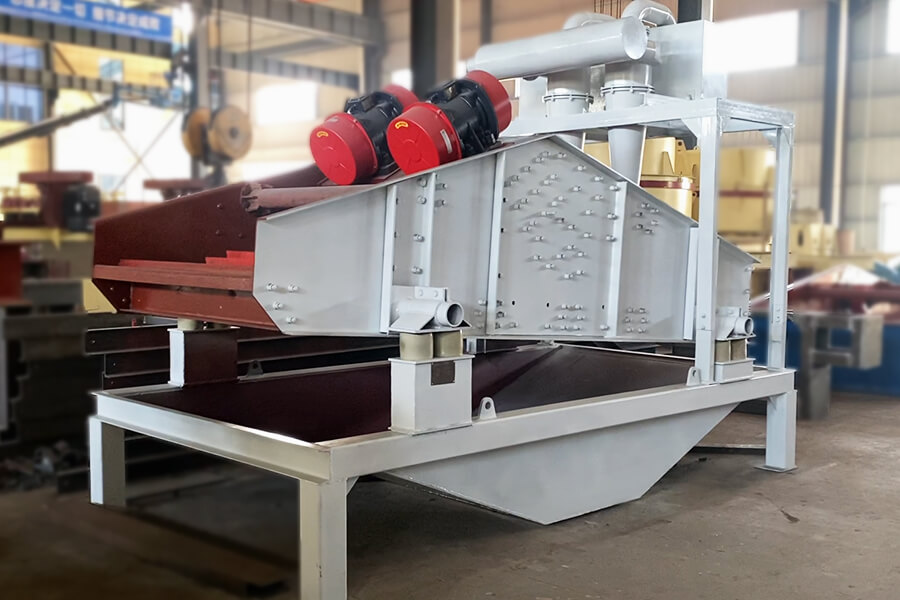
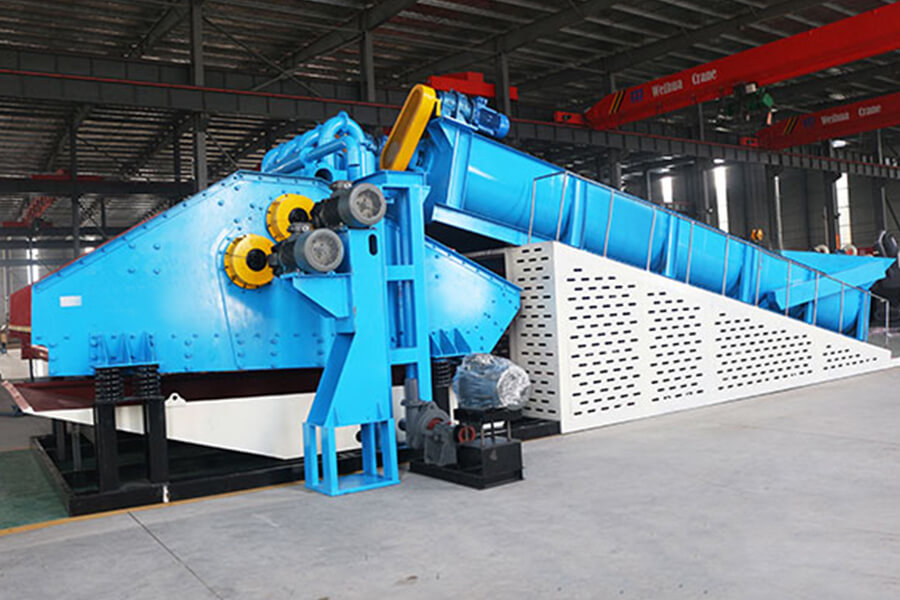
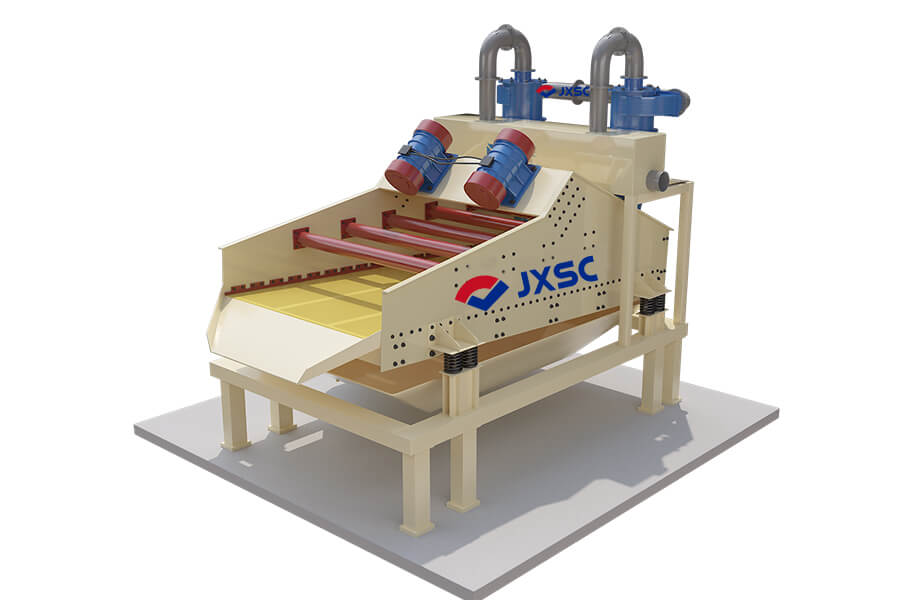
Fine sand recovery machines are mainly used to recover fine sand lost from sand washing wastewater or mining tailings slurry. They are widely applicable to construction sand, metal ore beneficiation plants, hydropower projects, and other fields. Integrating a combination of hydraulic cyclone separation and high-frequency vibrating dewatering screen technology, it can complete sand-water separation in a short time, achieving a recovery rate of over 90%. Its closed-loop water circulation design significantly reduces water waste and environmental pollution while improving resource utilization. The JXSC fine sand recovery machine boasts a high degree of automation and is an indispensable environmentally friendly and energy-saving piece of equipment for modern sand making industries to address the pain point of fine sand loss.
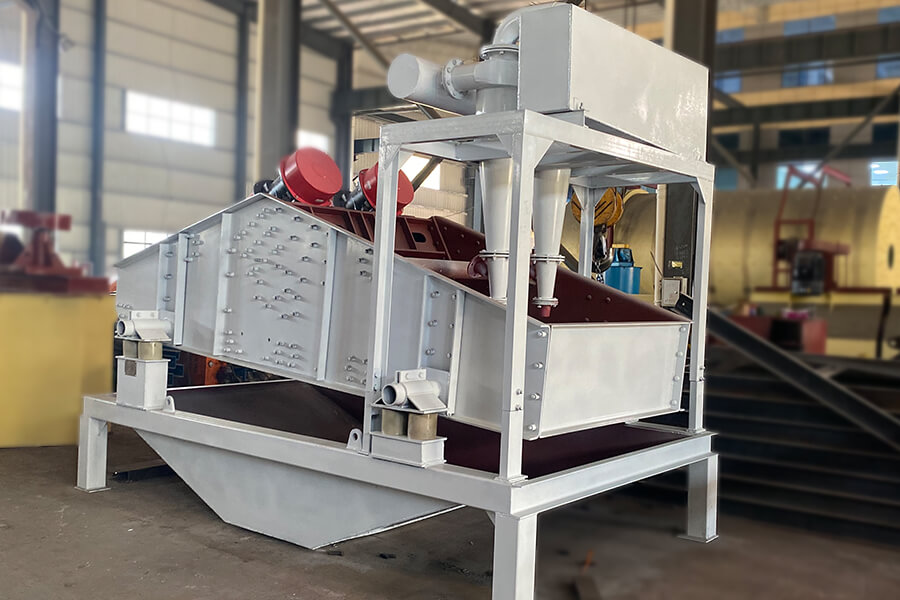
Fine sand recovery machine, also known in the industry as tailings recovery machine, sand recycling system, fine sand extractor, mud-sand separator, or sand-water mixture treatment system, primarily combines hydrocyclones, dewatering screens, and slurry pumps to complete sand-water separation in a short time. They are specialized industrial equipment developed for dewatering, demediuming, and desliming slurry materials in sand and gravel production, mineral processing, and other fields. They can control fine sand loss rate to within 5%-10%, with screening efficiency reaching over 90%.
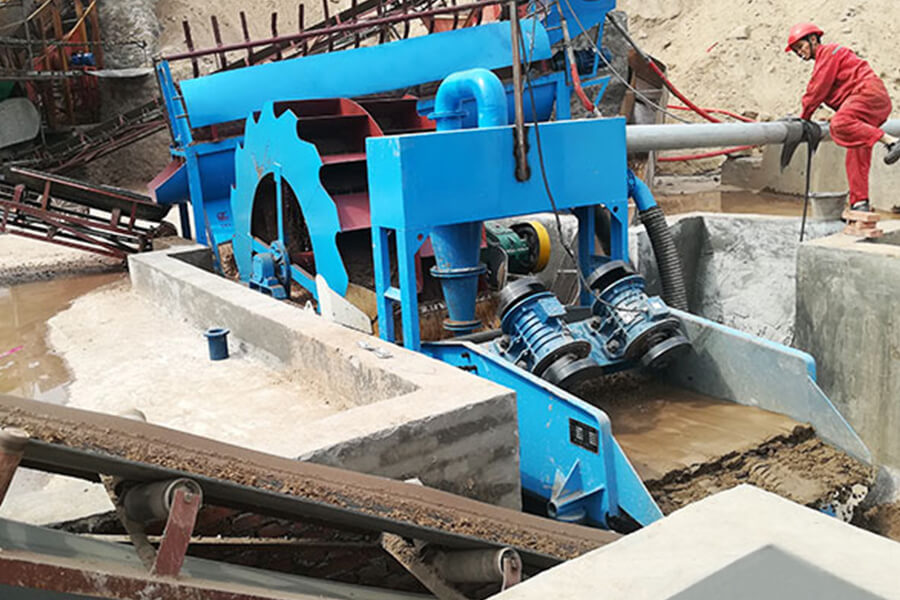
The JXSC fine sand recovery machine can be paired with a sand washer to form an integrated closed-loop system for sand washing, dewatering, and recovery. The finished product directly meets construction sand standards, significantly improving sand and gravel quality and yield by 10%-15%, directly increasing project revenue, and complying with current environmental policies regarding tailings treatment and resource recovery. Fine sand recovery machines are widely used in sand and gravel aggregate production, mineral processing, hydropower station construction, and ceramic raw material processing. Examples of applications include fine particles such as quartz sand, river sand, silica sand, iron ore tailings, and copper ore slime. This fine sand recovery machine is easy to expand or relocate and is one of the standard equipment in current sand and gravel aggregate production lines.
Washing Tank:
Used to store the sand-water mixture to be treated, and also to receive the fine sand slurry returned from the dewatering screen, ensuring that the sand and water are mixed evenly.
Hydrocyclone:
A sediment separator with a highly wear-resistant polyurethane lining, offering excellent wear and corrosion resistance. It achieves efficient separation of sand, mud, and water based on the principle of centrifugal sedimentation.
Dewatering Screen:
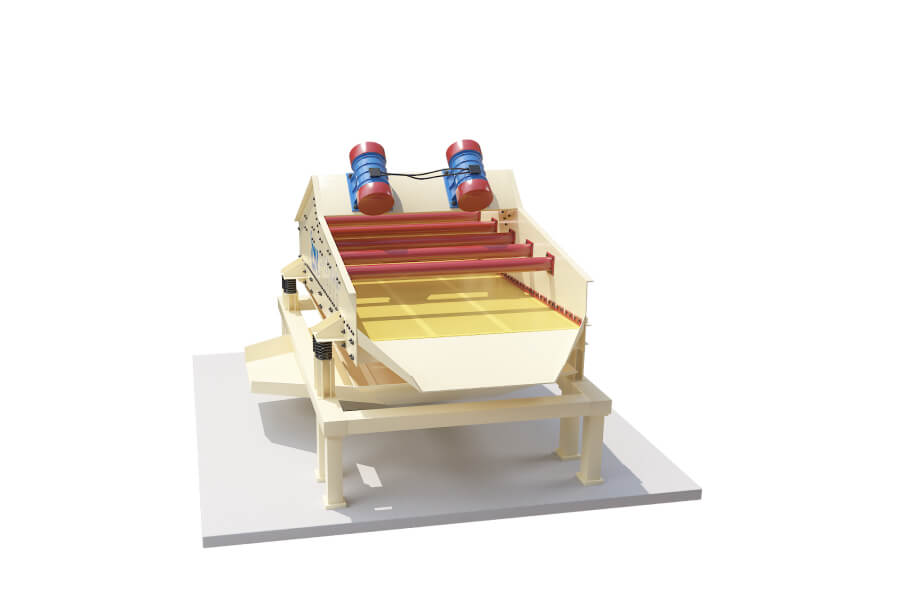
Composed of a vibrating motor, screen frame, polyurethane screen, and composite springs. It uses a stainless steel screen frame and polyurethane screen, offering good self-cleaning properties, preventing clogging, and producing finished sand with low moisture content.
Return Material Box:
This belongs to the circulation and return unit. It is used to receive the overflow wastewater discharged from the hydrocyclone and send it back to the washing tank to achieve secondary recovery of fine sand.
Vibration Motor:
drives the vibrating screen to operate at high frequency with a low energy consumption design.
1. High fine sand recovery rate: It can reduce the fine sand loss rate to within 5%-10%, and the overall sand and gravel recovery rate reaches 90%+, significantly improving the production line’s profitability.
2. Significant environmental benefits: The closed-loop design has a high water resource utilization rate, reduces consumption and pollution, and is suitable for use in water-scarce areas.
3. High-quality finished product: The fineness modulus of recycled materials can be flexibly adjusted to optimize the gradation of finished sand, reduce the stone powder content and moisture content of finished sand, and meet the national standards for construction sand.
4. Low operating costs: The core components are all made of highly wear-resistant materials, the polyurethane screen has a service life of 8-10 times that of ordinary screens, and the energy consumption of the whole machine is 10%-20% lower than that of similar equipment, which greatly reduces long-term operation and maintenance costs.
5. Highly adaptable: with a processing capacity ranging from 30 to 250 T/H, equipment parameters can be flexibly adjusted according to capacity requirements and material characteristics, making it widely applicable to the treatment of various types of sand and mine tailings.
6. Operational stability: Adopting a high-efficiency composite spring damping structure, the fine sand recovery machine operates with low vibration and low noise, and can support continuous and stable operation 24/7 with a low failure rate.
7. Short investment return cycle: The equipment investment cost can usually be recovered in 3-6 months through the increased sand and gravel production, making the project highly economical.
8. Flexible customization: It can be configured with a sand washing machine to integrate sand washing and recycling, perfectly adapting to modern sand washing production lines and offering convenient expansion.
The fine sand recovery machine operates based on the principles of centrifugal sedimentation and mechanical dewatering. Wastewater containing fine sand first flows into the equipment’s cleaning tank, and is then pumped into a hydrocyclone by a slurry pump. Through centrifugal sedimentation, the denser fine sand is discharged from the bottom of the hydrocyclone and falls onto a dewatering screen. The underflow sand is dewatered by vibration to obtain finished sand with a moisture content of less than 15%; the slurry and wastewater overflow from the top of the hydrocyclone and return to the cleaning tank for secondary recycling.
Model | Dewatering Screen | Motor Power | Hydrocyclone | Slurry Pump | Power of Slurry Pump | Capacity(t/h) |
DN1224 | 1200*2400 | 2.2kw*2 | φ250*2 | 4/3AH | 15kw | 30-50 |
DN1530 | 1500*3000 | 3kw*2 | φ300*2 | 4/3AH*2 | 11kw*2 | 50-80 |
DN1840 | 1800*4000 | 5.5kw*2 | φ350*2 | 4/3AH*2 | 15kw*2 | 80-120 |
DM2045 | 2000*4500 | 11kw*2 | φ500*2 | 6/4AH*2 | 30kw*2 | 120-150 |
DN2245 | 2200*4500 | 15kw*2 | φ500*3 | 6/4AH*2 | 30kw*2 | 150-200 |
DN2445 | 2400*4500 | 18.5kw*2 | φ500*4 | 6/4AH*2 | 37kw*2 | 200-250 |
It is suitable for recovering fine sand ranging from 0.075mm to 0.5mm. However, the optimal recovery particle size varies slightly depending on the model. It is recommended to contact a JXSC engineer to select the appropriate equipment configuration based on specific production needs.
The processing capacity of a single fine sand recovery machine is typically 30–250 tons/hour. In large production lines, multiple units can be connected in parallel to increase the overall processing capacity. JXSC provides customized design solutions.
No, they don’t necessarily have to be. A fine sand recovery machine can be used independently for tailings recovery, ceramic raw material dewatering, and other applications. However, in a sand production line, using it in conjunction with a sand washing machine yields the highest returns, maximizing the recovery of fine sand from the washing wastewater. Alternatively, an integrated sand washing and recovery unit can be purchased directly for easier installation.
Wear parts mainly include polyurethane screens, hydrocyclone liners, slurry pump flow components, and seals. Under normal use, screens should be inspected and replaced every 6-8 months, hydrocyclone liners every 2-3 years, slurry pump components every 1-2 years, and seals every 6 months to 1 year.
Yes. The moisture content of the produced fine sand is usually below 15%, which meets the standards for construction sand. If a higher moisture content is required, the dewatering screen parameters can be adjusted to reduce the moisture content to around 10%. In addition, a drying process can be added to some building material production processes.
Normally, clogging will not occur. The dewatering screen uses a self-cleaning polyurethane screen, and the high-frequency vibration prevents material from getting stuck. Furthermore, you can inform our engineers of the mud content, and we will adjust the parameters according to your needs, adding a mixing device to prevent mud clots from settling.