
- Home
- Blog
- Mineral Solution
- How To Design A High-Yield Tin Processing Flow?
Preliminary Preparations For A Tin Processing Flow Design
1. Ore Characterization Analysis
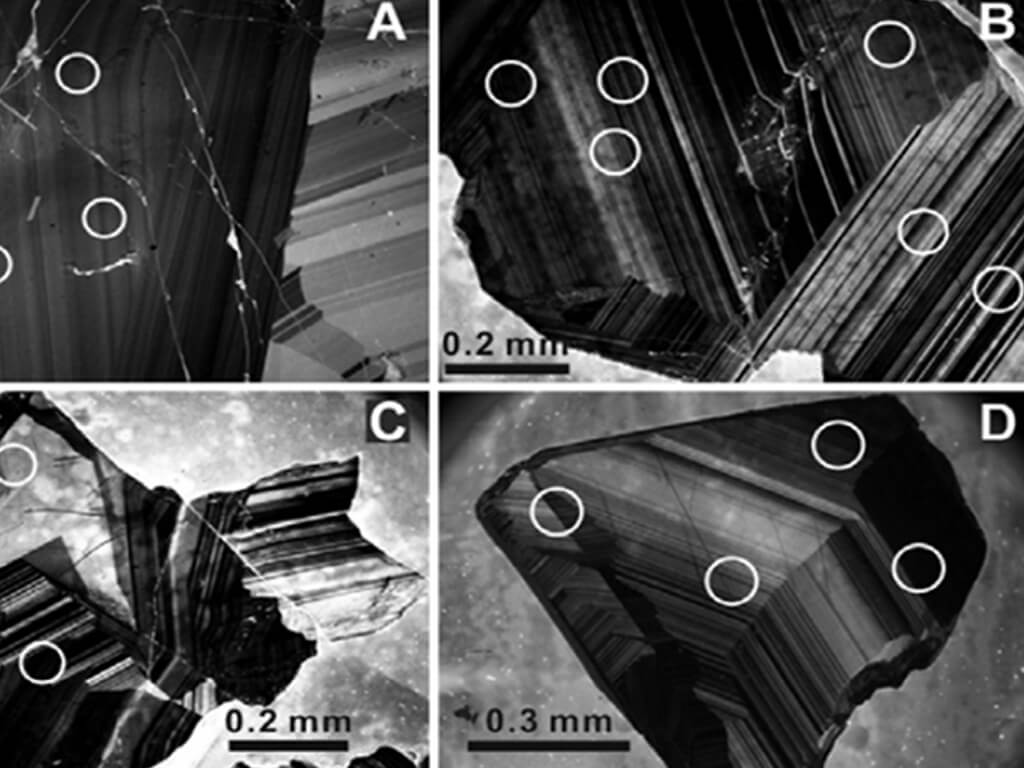
Ore characterization analysis is the primary step in designing the mineral processing flow chart, directly determining the selection of the process route and the final profitability. X-ray diffraction (XRD) can accurately detect the mineral composition, clarifying the cassiterite content and the occurrence state of associated minerals such as iron, tungsten, lead, and zinc. If cassiterite is closely associated with magnetite, magnetic separation should be considered for pre-concentration. If a large amount of gangue minerals is present, gravity separation may be more cost-effective.
A laser particle size analyzer can efficiently obtain particle size distribution data, with the industry generally requiring a fineness of ≤75 μm. If the particle size is too coarse, it will lead to intergrowth of cassiterite and gangue minerals, reducing the recovery rate.
In addition, elements such as arsenic (As) and antimony (Sb) can not only affect reagent selection during the mineral processing process but also increase subsequent smelting costs. Their content needs to be strictly monitored, and if necessary, removal processes should be added during the mineral processing stage.
2. Setting Target Indicators
- Setting reasonable mineral processing targets directly impacts production efficiency and return on investment. The concentrate grade is generally required to be ≥60% Sn. If the cassiterite is finely disseminated or the associated minerals are complex, the standard can be appropriately lowered to 50%-55%. However, this needs to be adjusted in conjunction with the smelter’s purchasing requirements.
- Recovery rate is another key indicator, with the industry benchmark typically being 85%-90%. For high-grade tin processing, a higher target can be set (e.g., ≥92-95%).
- Production capacity needs to be precisely matched with the investment budget. For example, small and medium-sized mines (50-200 tons/hour) are suitable for modular plant design, which has lower investment costs and higher flexibility. However, large mines (over 200 tons/hour) can adopt a fully automated continuous process, which, although requiring a larger initial investment, results in lower long-term operating costs. The specific tin processing capacity design should be based on the ore beneficiation test report and budget requirements to avoid wasting resources due to overcapacity or insufficient capacity.
Core Process Selection: Design Tin Processing Flow Based On Ore Type
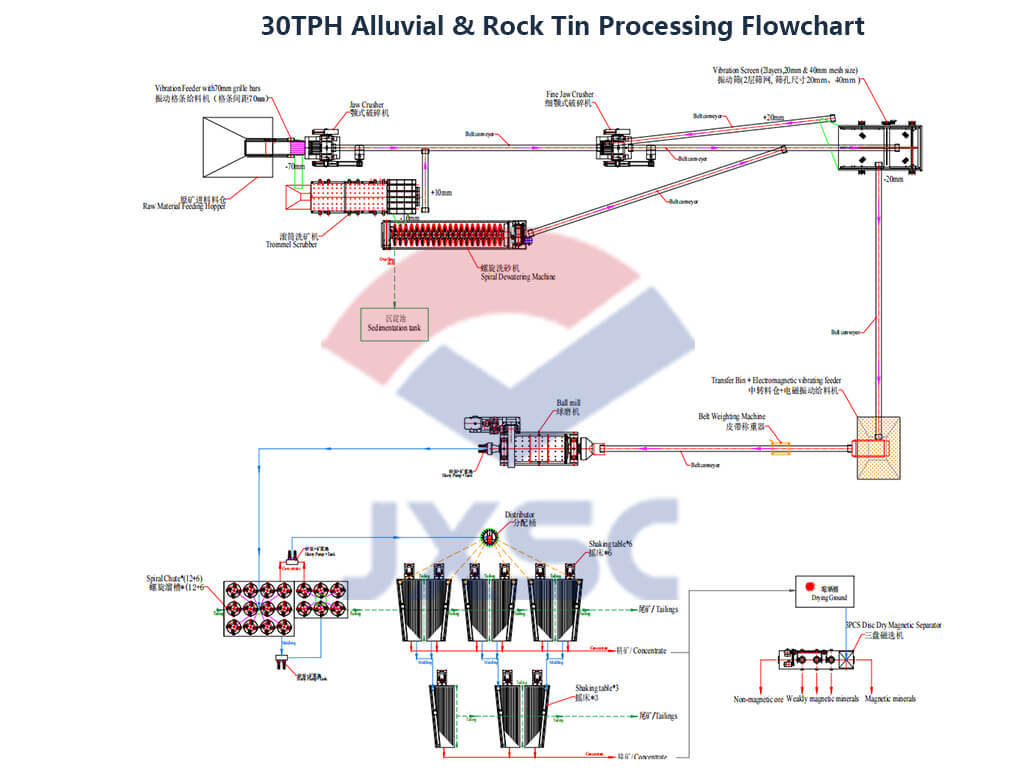
Main Process of Alluvial Tin Processing Flow

(1). Pre-treatment (Washing and Screening)
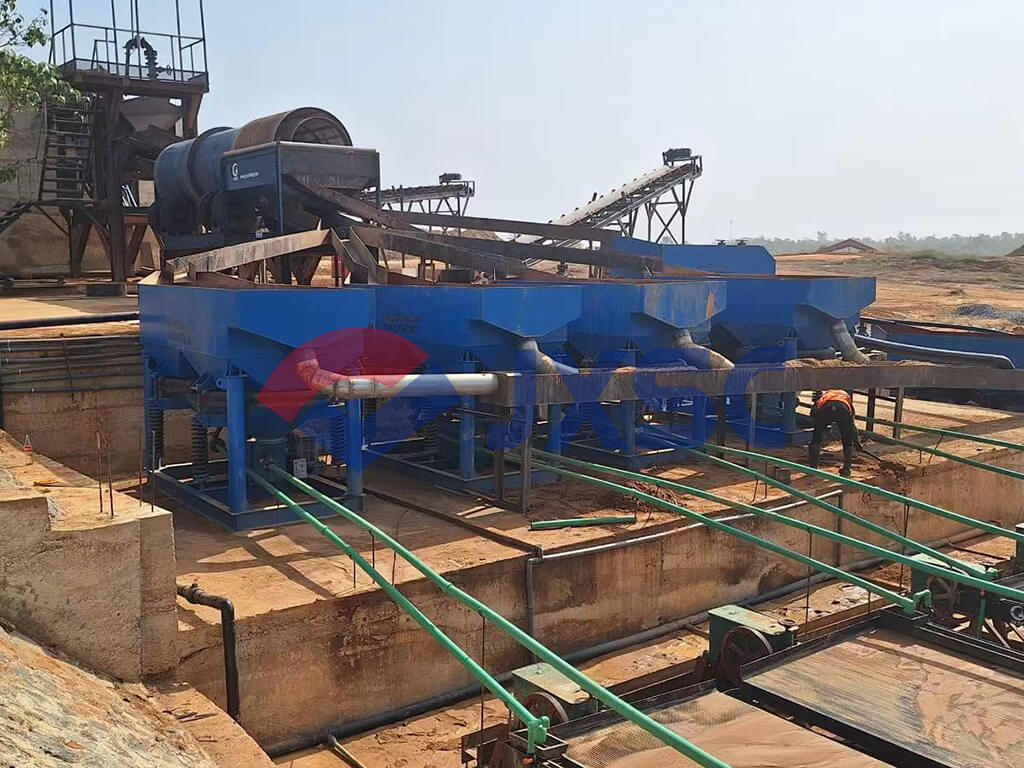
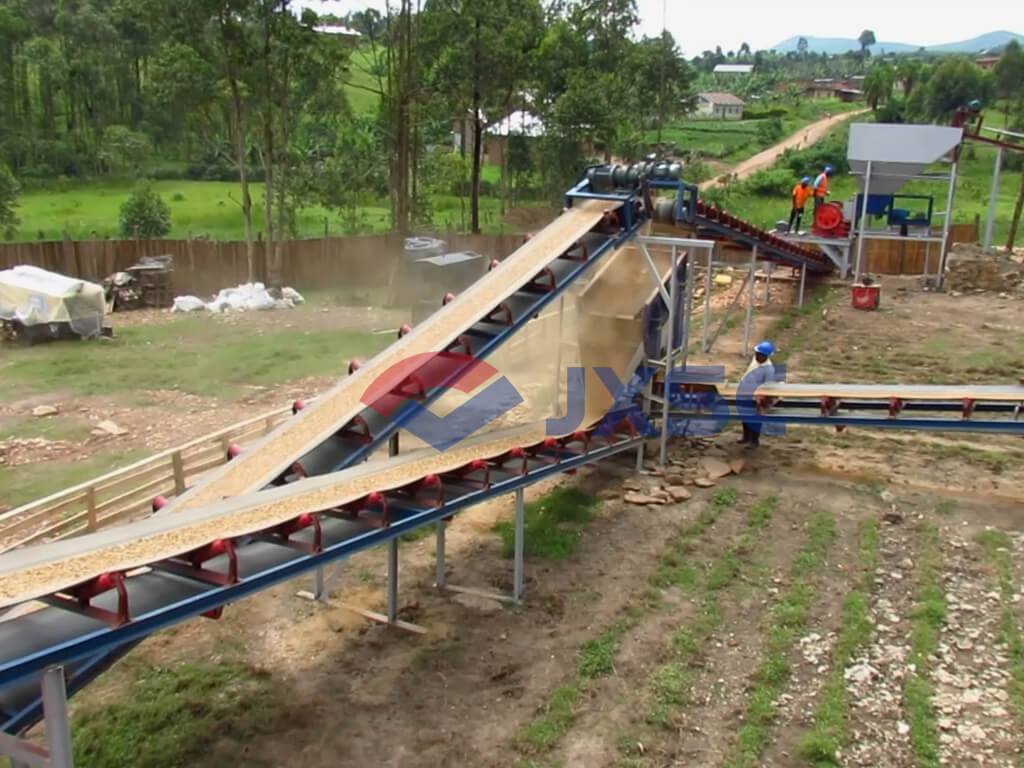
Washing and screening are the primary steps in the placer tin ore processing flow. Through vigorous agitation and water flushing in a rotary scrubber or trommel screen, clay minerals and mud surrounding the cassiterite can be effectively removed. Vibrating screens then separate gravel from the valuable minerals. Typically, three screen layers (2mm, 0.5mm, and 0.1mm) are used to achieve precise particle size control at four levels. Materials of different particle sizes are fed into dedicated separation equipment, preventing the loss of fine-grained materials in coarse separation equipment and reducing wear on fine separation equipment caused by coarse particles.
(2). Rough Concentration
Jig machines are the preferred method for rough concentration of placer tin deposits due to their large processing capacity (1-25 t/h) and high enrichment ratio (3-5 times). The tin grade of the rough concentrate after jigging can reach 8-15%, with a stable recovery rate of 90-93%.
For tin ores with high clay content, a “jig separator + spiral chute” combination process can be used to improve the recovery efficiency of fine-grained particles.
(3). Fine Selection and Purification
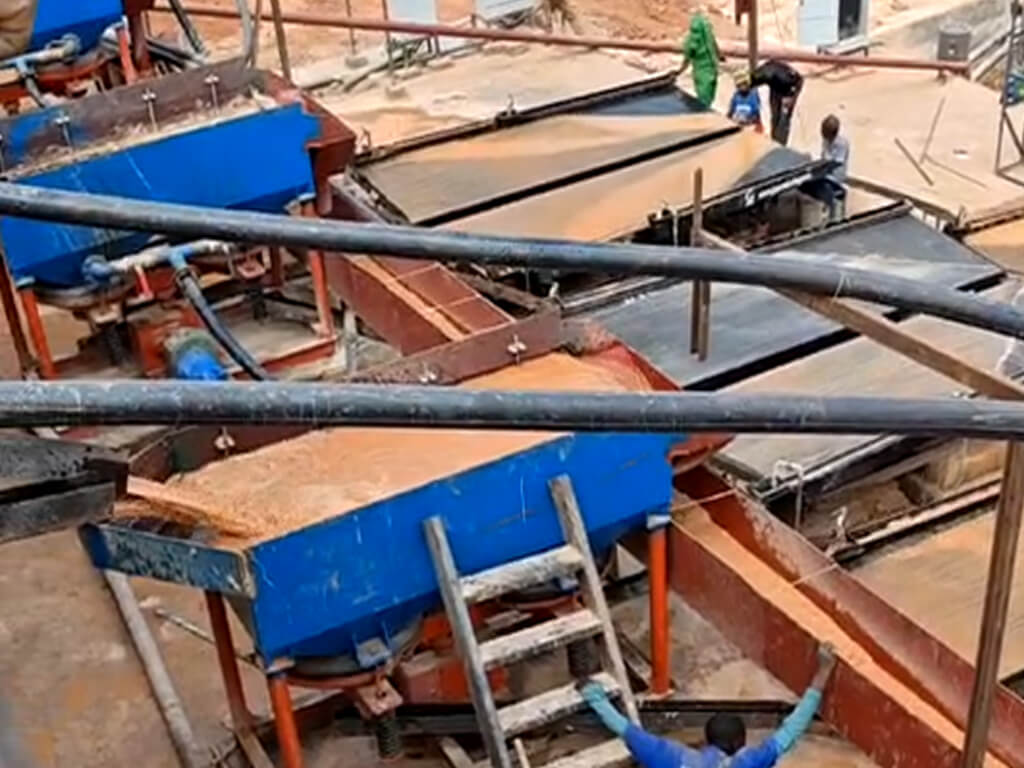
● Multi-stage shaking table fine refinement is a key step in improving the grade of concentrate. Through the combined action of multiple horizontal and vertical water flows, gangue minerals and cassiterite are gradually separated, and the grade of rough concentrate can be increased to over 50%. The recovery rate in this concentration stage reaches 92-95%.
● Using a high-intensity magnetic separator effectively separates magnetic minerals such as iron ore (magnetite) and wolframite, achieving an impurity removal rate of ≥95%.
● For non-magnetic heavy minerals such as scheelite and ilmenite, electrostatic separation is required. This method utilizes the differences in mineral conductivity to achieve precise separation, bringing the final concentrate grade to over 60%, meeting industry standards.
High-efficiency Process For Rock Tin Processing Flow
(1). Crushing and grinding
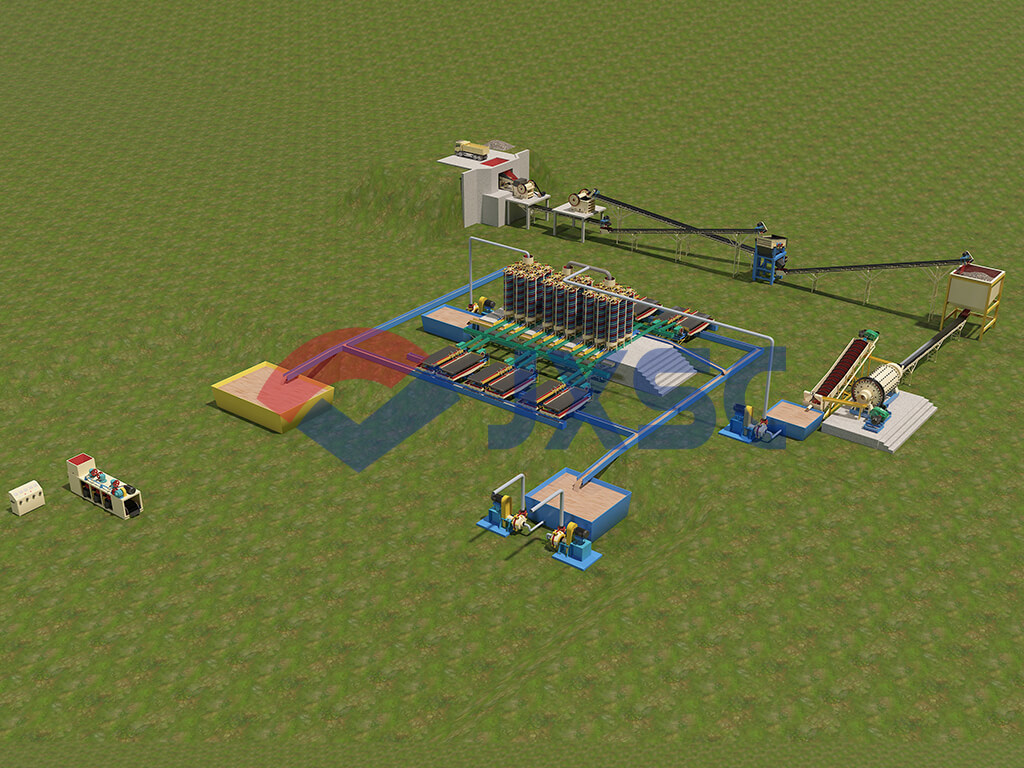
Rot tin ore typically has a fine particle size, requiring multi-stage crushing to ensure liberation of individual particles. For example, a jaw crusher is used for coarse crushing, reducing the ore size from 1000mm to below 200mm. This is followed by further crushing to 20-30mm using a cone crusher or hammer mill. Finally, a vibrating screen is used to ensure uniform particle size of the crushed product.
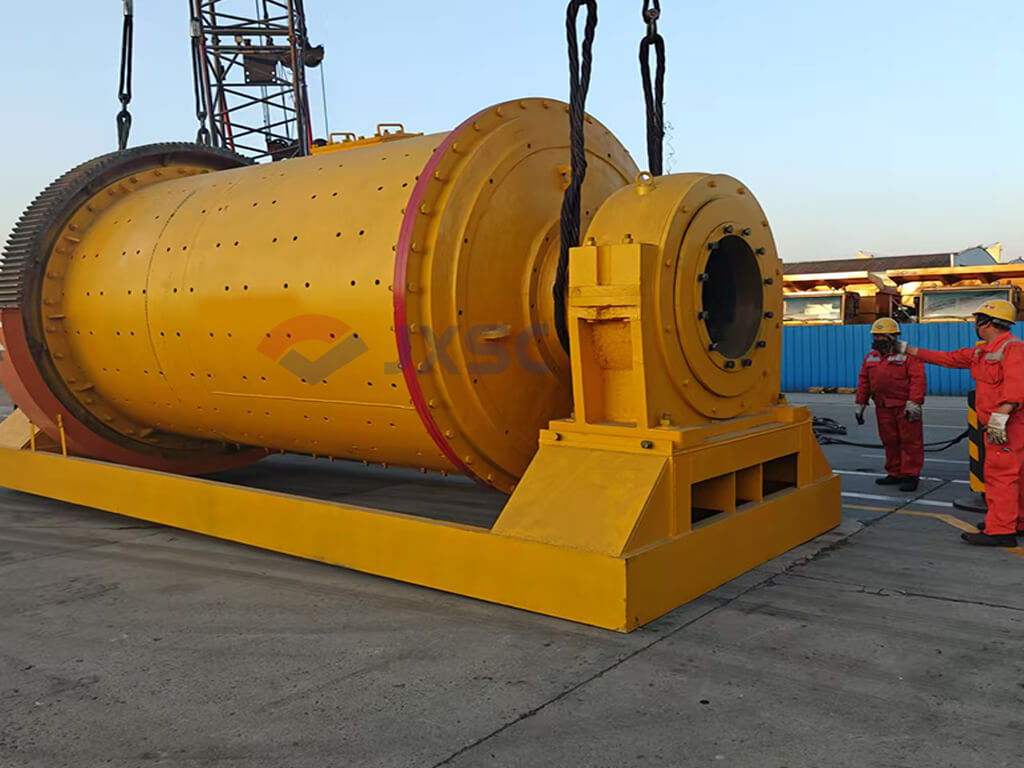
The grinding operation utilizes a closed-circuit system consisting of a ball mill and a spiral classifier. By adjusting the ball mill speed, media ratio, and classifier overflow concentration, the grinding fineness is ensured to meet the industry standard of below 200 mesh, creating favorable conditions for subsequent flotation enrichment. If the mineral distribution is uneven, a staged grinding and staged separation strategy can be employed.
(2). Flotation Enrichment
Flotation is the core process in the processing of tin (cassiterite) ore, especially suitable for the enrichment of fine-grained cassiterite. A closed-circuit circulation of “two stages of roughing → one stage of scavenging → three stages of cleaning” is commonly used. The roughing operation can quickly recover more than 80% of the cassiterite. The scavenging operation recovers the remaining cassiterite from the roughing tailings. Multiple cleaning stages then upgrade the tin concentrate grade to over 60%.
(3). Fine Separation
● Fine separation is an important supplementary step to improve the recovery rate of rock tin ore. Flotation tailings usually contain some coarse-grained cassiterite ore that has not been completely dissociated. Using shaking tables for cleaning can effectively recover this portion of the tin resources. Specifically, a blanket concentrator is used for preliminary concentration of the flotation tailings; the concentrate is sent to the shaking table, while the tailings are discharged into the tailings pond. The shaking table is divided into two stages: the first stage shaking table is used to further concentrate the concentrate produced by the blanket concentrator; the second stage shaking table is used to further concentrate the intermediate concentrate produced by the first stage shaking table. All tailings from the blanket concentrator and shaking tables are discharged into the tailings pond, and the treated water can be recycled.
● Electrostatic/Magnetic Separation for Impurity Removal: If the concentrate contains high-density impurities such as tungsten and iron, high-voltage electrostatic separation or strong magnetic separation is added for final purification.
The combined flotation-gravity separation process can achieve an overall recovery rate of over 90% for tin ore, especially suitable for complex associated ores, such as tin-tungsten-sulfide co-existing ores.
Comprehensive Recovery of Complex Polymetallic Tin Ores
● Complex tin ores are often associated with sulfide minerals such as lead, zinc, and copper. Selective flotation can be used to recover these valuable elements in advance. By adjusting the pulp pH to weakly acidic and adding xanthate-type collectors, efficient separation of sulfide minerals from cassiterite can be achieved.
● The flotation tailings of cassiterite often contain significant resources of wolframite, which must be recovered through magnetic separation due to its strong magnetic properties.
High-Yield Tin Processing Flow Optimization
Environmental Compliance Key Points
● Wastewater generated during the tin processing flow contains pollutants such as suspended solids and chemical residues, which require treatment through a combination of thickener sedimentation and filter press dewatering. The thickener removes more than 90% of the suspended solids, and the filter press dewaters the sludge to a moisture content of ≤20%. The clean water is then returned to the production system for recycling, achieving a water recycling rate of 93%.
● Traditional tailings ponds not only occupy a large amount of land but also pose a risk of dam failure. Dewatering the tailings to a moisture content of less than 15% allows them to be directly used for backfilling mined-out areas.
Production Cost Optimization
● Energy consumption of equipment such as grinding and flotation in the tin processing flow accounts for over 60%. Replacing conventional motors with variable frequency drives allows for automatic speed adjustment based on the load, and energy-efficient equipment, such as high-efficiency ball mills and pneumatic flotation machines, can improve energy utilization efficiency.
● For preventative equipment maintenance, regular inspection, maintenance, and repair of crushers, gravity separation equipment, etc., can effectively prevent sudden equipment failures.
Building a High-Profit Tin Processing Plant
Accurate ore property analysis is fundamental.
Customized process route design is key.
Intelligent equipment and process optimization are guarantees.
Environmental protection and cost control are long-term competitive advantages.
Conclusion
Through in-depth analysis of the properties of tin ore (mineral composition, embedding characteristics, and symbiotic relationships), we customize a scientifically quantified target for you, aiming for a tin recovery rate of ≥90% and a concentrate grade of ≥60%. Our high-yield tin processing technology covers the entire process, including washing, screening, crushing, grinding, gravity separation, flotation, and tailings treatment, providing comprehensive recovery solutions for complex multi-metal tin ores.
JXSC Mining Machinery Factory offers a comprehensive range of technical services, encompassing ore testing, process design, intelligent upgrades, and environmental compliance. We can provide a customized, economical, efficient, and high-yield tin processing flow tailored to the characteristics of your ore deposit. Contact us today to get your exclusive technical solution and equipment selection recommendations!
 English
  Spanish
  French
  Russian