
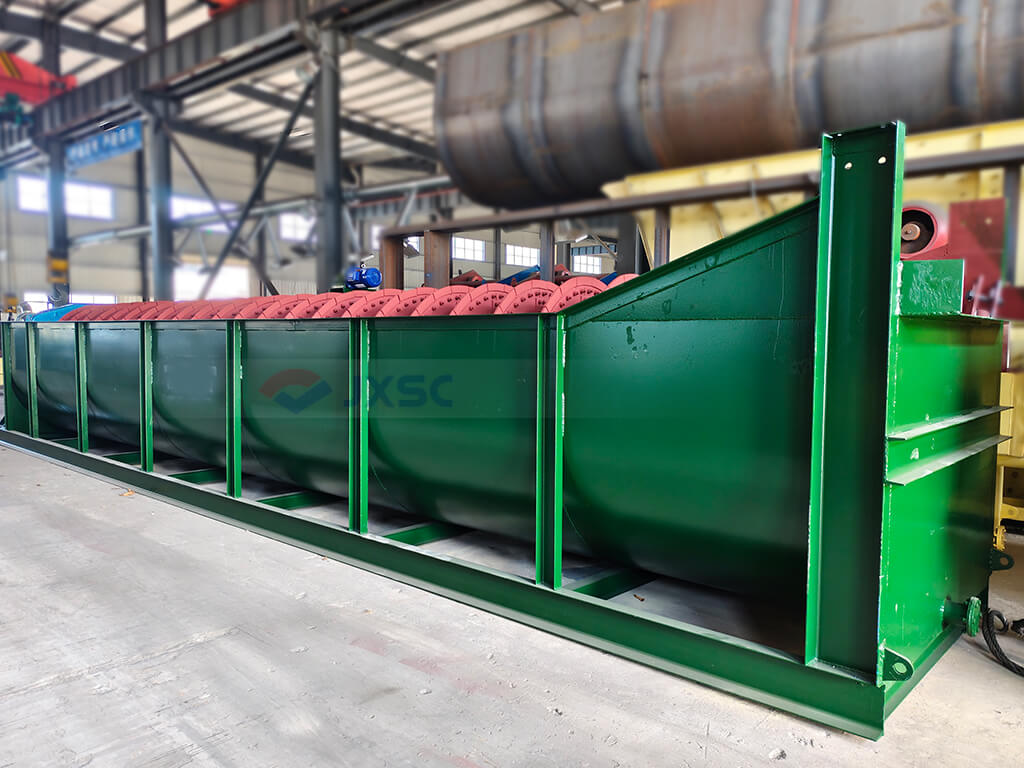
9 Key Checklists for Buying Spiral Classifiers
1. Matching of Classification Efficiency and Processing Capacity
In actual mineral processing, accurately calculating the processing capacity of the spiral classifier is crucial for ensuring the efficient operation of the production line. First, a detailed understanding of the characteristics of the ore to be processed is necessary, including basic data such as ore particle size distribution and target overflow particle size requirements. Then, a preliminary estimate is made using the empirical formula: Processing Capacity Q = K × A × d (where K is the ore density coefficient, A is the settling zone area, and d is the overflow particle size). The settling zone area is a core indicator of processing capacity, encompassing three dimensions: tank length, width, and liquid level. A larger area results in a longer slurry residence time and more thorough classification, but it must also be matched to the available installation space.
In practical mineral processing applications, factors such as ore viscosity and mud content must also be considered. Generally, a lower rotation speed is selected when processing fine-grained materials, while a higher rotation speed can be used for coarse-grained classification. Different types of ores will also have different bulking coefficients and settling velocities.
Recommendation:
Provide suppliers with detailed ore screening reports and daily capacity requirements to avoid selection errors due to discrepancies between theoretical values and actual operating conditions. Before buying spiral classifiers, be sure to conduct ore sample tests and require the contract to guarantee processing capacity based on actual ore data! Allow a 15%-20% margin during operation to cope with fluctuations in ore properties and temporary increases in production demand.
2. Equipment Material and Wear Resistance Analysis
The core component of the spiral classifier is the blades, which endure severe wear and impact during operation. Three main wear-resistant material options are used: high manganese steel, rubber liners (polyurethane), and ceramic composite plates. High manganese steel has a hardness of HB500, suitable for processing high-hardness and coarse-grained ores, but its effectiveness is limited for fine-grained minerals. Rubber liners offer good noise reduction but are not resistant to high temperatures. Ceramic composite plates offer the best wear resistance and are suitable for highly abrasive conditions, but they are brittle and not resistant to severe impacts, requiring avoidance of direct impact from large-diameter ores, and are expensive. The key selection factor is the hardness of the mineral. For example, ceramic is preferred for quartz ores, while rubber is a suitable choice for clay ores.
Recommendation:
When buying spiral classifiers, the selection should be tailored to the ore’s hardness, acidity/alkalinity, particle size distribution, and on-site operating conditions. Furthermore, the authenticity of the materials can be verified through multiple dimensions, and a material identification certificate issued by a third-party testing institution can be requested to prevent the seller from using inferior materials.
3. Rationality of Spiral Blade Structure Design
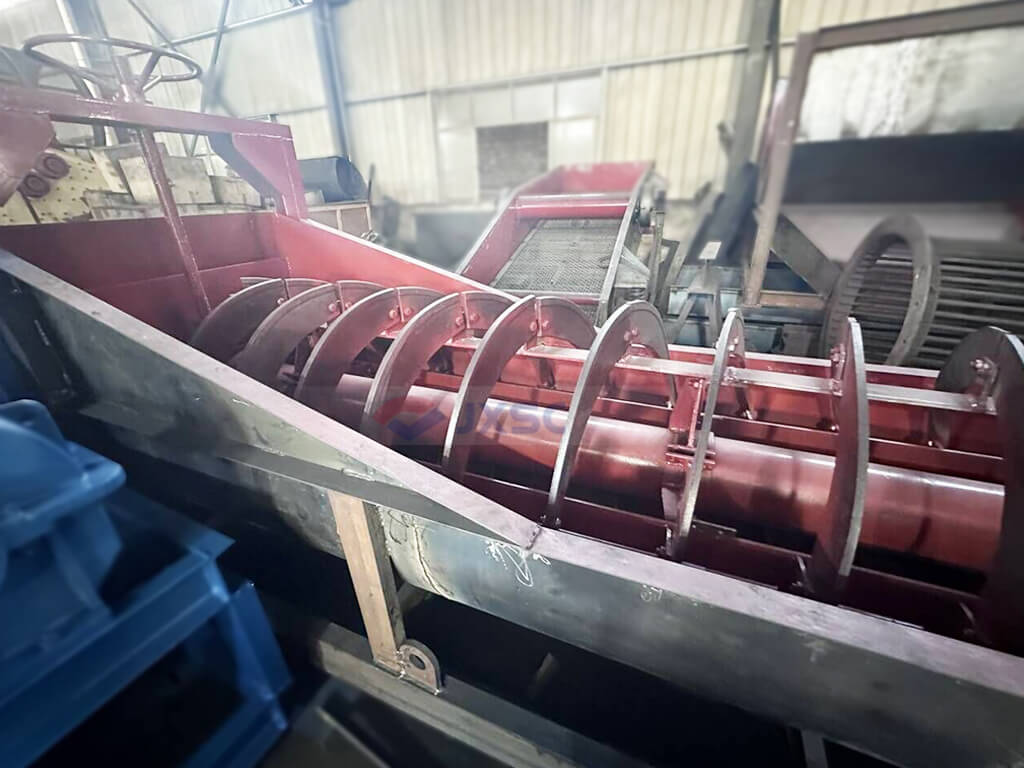
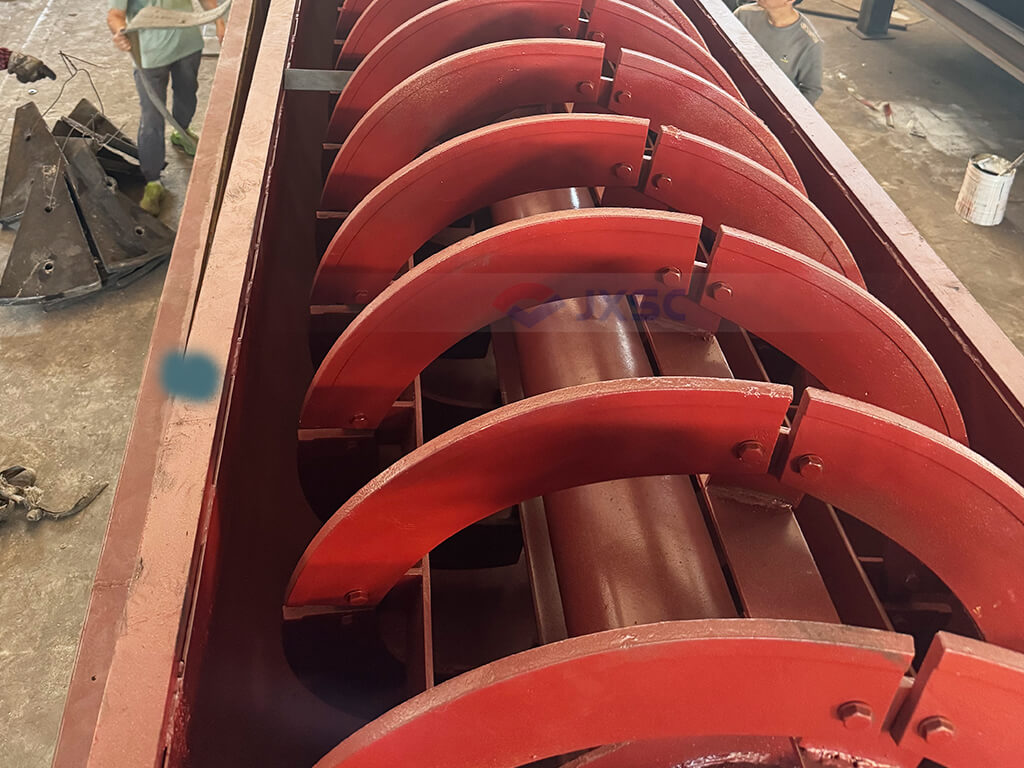
The blade inclination angle directly affects the sand discharge rate: an excessively large inclination angle accelerates sand discharge, suitable for coarse particle classification, but reduces accuracy. A smaller inclination angle prolongs slurry settling time, improving fine particle classification accuracy, but easily leads to sand accumulation. Larger screw pitches result in higher capacity but lower classification accuracy, while smaller screw pitches offer higher accuracy but limited throughput. Single-spiral classifiers have a simple structure, small footprint, and low initial investment, making them suitable for medium and small-sized concentrators. Furthermore, double-spiral designs are suitable for classifying high-viscosity, high-concentration slurries.
Recommendation:
Anti-clogging design is crucial to avoiding downtime. For example, blade perforations allow fine slurry to pass through, reducing coarse particle adhesion and accumulation. During inspection, ensure the perforations are uniform in size and free of burrs. The screw pitch design should be matched to the processing capacity.
4. Drive System and Energy Consumption Control
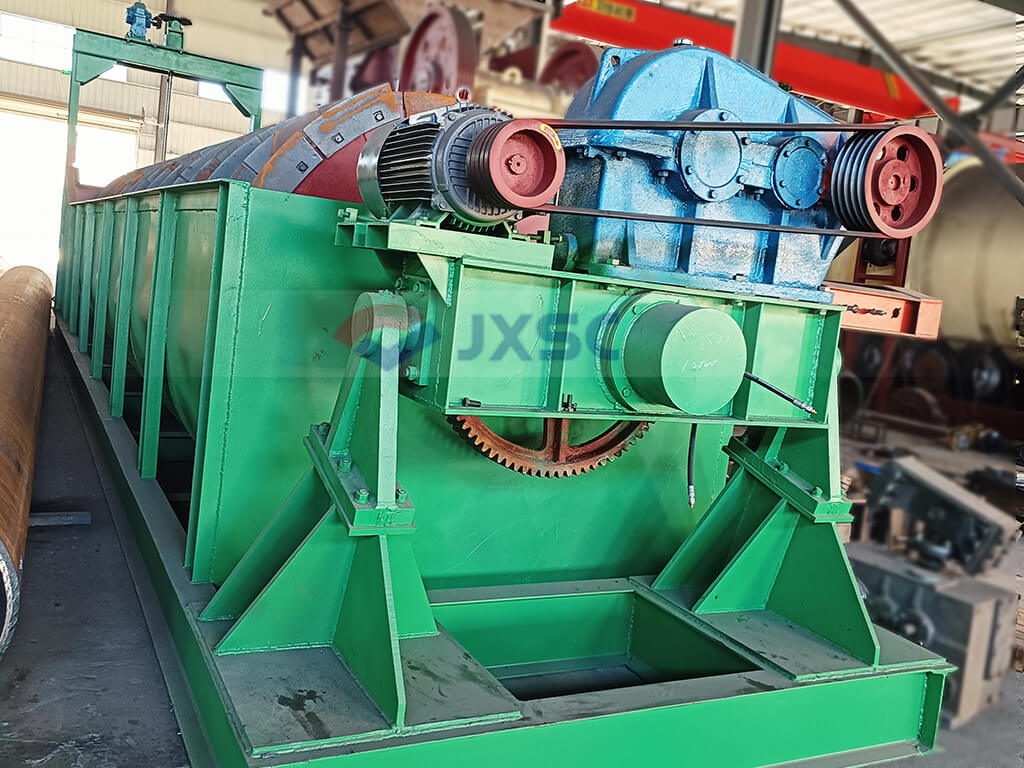
The motor power needs to be calculated comprehensively based on the throughput, ore specific gravity, and screw running resistance. Insufficient power can easily lead to overload and burnout, while excessive power results in wasted energy (like a “powered engine pulling a small cart”). The core of modern energy-saving systems is variable frequency speed control technology, which dynamically adjusts the screw based on slurry concentration and throughput.
Recommendation:
When buying spiral classifiers, provide the operating parameters to JXSC mineral processing experts to verify the energy-saving effect and ensure accurate model selection.
5. Installation Space and Maintenance Convenience
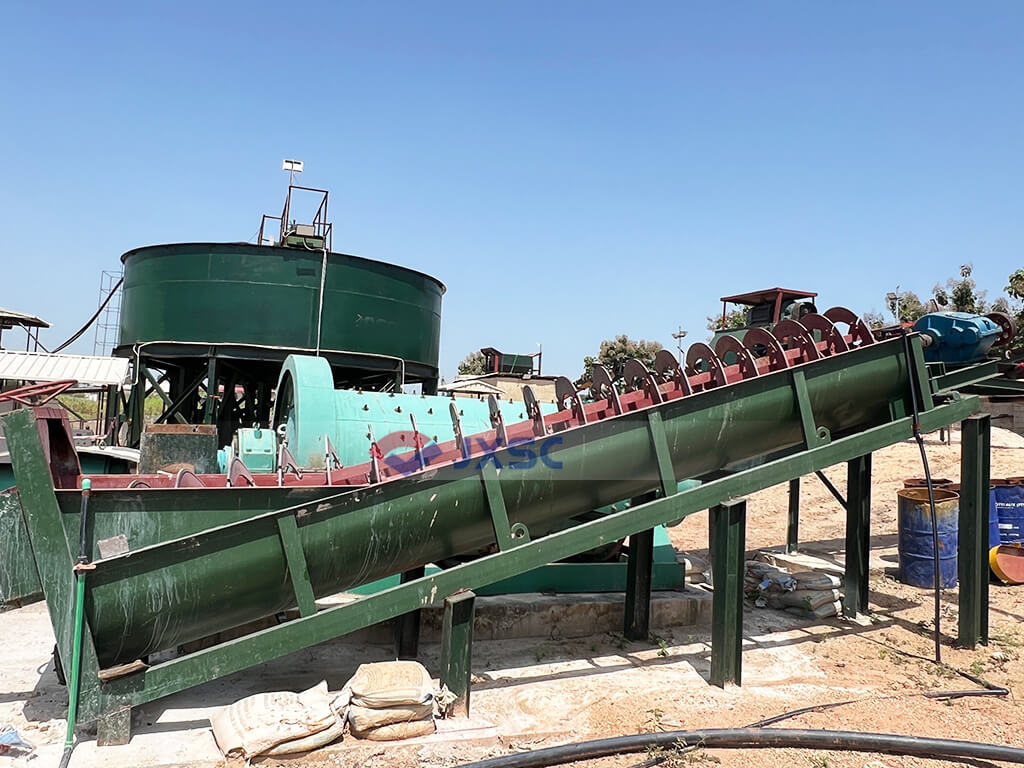
Before buying spiral classifiers, the length, width, and height of the installation foundation must be accurately measured. The length of the spiral classifier trough is typically 6-8 times its diameter, requiring at least 1.5 meters of maintenance space on both sides and a top hoisting passage. The height of the inlet and outlet must be compatible with the preceding and following equipment, such as ball mills, screening machines, and slurry tanks, to avoid excessive pipe drop leading to slurry splashing or blockage. The difficulty of replacing vulnerable parts must also be considered, such as the blade replacement connection method and whether the bearings have side maintenance windows.
Recommendation:
If site space is limited, choose a model with an inclined trough arrangement. Furthermore, check the universality of spare parts, prioritizing standard models readily available in the market to reduce inventory and subsequent maintenance costs for vulnerable parts. Sufficient maintenance space must also be prioritized.
6. Brand Reputation and After-Sales Service System
JXSC Mine Machinery Factory, a Chinese manufacturer with 40 years of experience in mineral processing equipment R&D, boasts a core advantage in its fully independent manufacturing chain, achieving independent control from wear-resistant material R&D to complete machine assembly. 100% factory-direct pricing ensures high cost-effectiveness. Globally, we have served over 40 mineral processing solutions and completed over 1000 mineral processing projects. Our spiral classifiers have been successfully sold to copper, gold, manganese, tin, and lithium mining areas in Zimbabwe, Zambia, Nigeria, Ghana, Congo, Niger, Guinea, Kenya, and Tanzania. All our equipment is ISO certified. We welcome factory visits and inspections at any time. We also offer customized, mature mineral processing solutions tailored to different ore characteristics. Furthermore, we have offices in Nigeria and Indonesia, providing 24-hour remote technical support and excellent after-sales service, enabling us to quickly respond to the needs of overseas customers.
7. Customer Case Studies and On-site Inspection Recommendations
When buying spiral classifiers, it is best to ask the manufacturer to provide case studies of similar mineral types and capacities for reference. This will more accurately reflect the equipment’s actual capacity, maintenance frequency, and long-term stability.
8. Environmental and Safety Compliance Inspection
Environmental compliance must meet national and local standards. For example, wastewater discharge must meet international integrated wastewater discharge standards, with a recycling rate of ≥90% to avoid direct discharge and pollution. Dust control requires the installation of high-efficiency dust collection devices, with workshop dust emission concentration ≤10mg/m³. Furthermore, you can install an online monitoring system to ensure compliance with emission standards and avoid hefty environmental fines.
9. Customization Capability
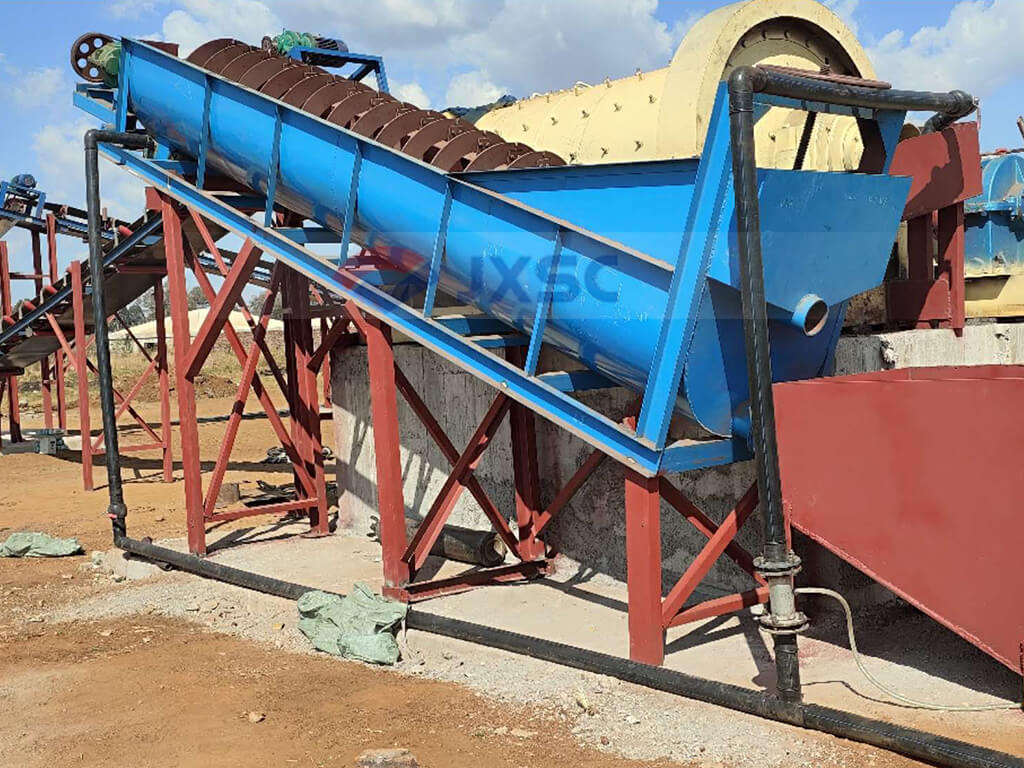
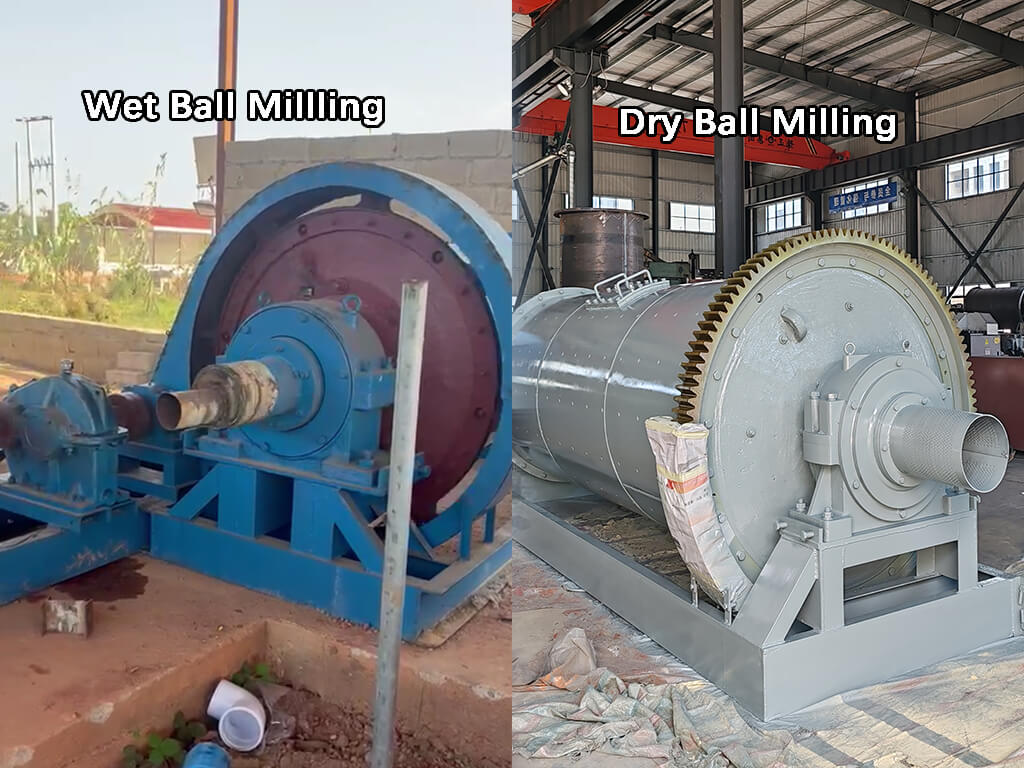
When buying spiral classifiers, it is best if the manufacturer can customize a solution specifically for the particular ore requirements. For example, when processing sticky ores, the opening ratio of the spiral blades needs to be increased, and a high-pressure flushing device needs to be installed at the bottom of the tank to prevent sludge accumulation. When processing fine-grained materials, the screw pitch needs to be reduced, and an inclined plate settling zone needs to be added to improve classification accuracy and ensure that the overflow particle size meets the standards. Spiral classifiers are often used in conjunction with ball mills to form a closed-loop annular mill system. When docking, the height of the feed inlet must match the discharge outlet of the ball mill to avoid slurry splashing.
Buying spiral classifiers that is 100% compatible with your ore
| Consideration Category | Core Focus Points |
|---|---|
| Equipment Performance Matching | Match capacity with throughput; optimize blade structure for ore type; prioritize energy-efficient drives. |
| Brand & After-sales Service | Choose certified brands; check service response speed; verify via third-party reviews. |
| Cost & Cost-Effectiveness | Compare price tiers; avoid hidden fees (transport/installation); use 3 evaluation benchmarks. |
| Customer Cases & On-site Check | Reference peer industry cases; inspect equipment operation status; validate operator feedback. |
| Environmental & Safety Compliance | Ensure emission standards meet regulations; confirm safety guards; check ISO certifications. |
| Customization Support | Request tailored solutions for special ores; ensure compatibility with existing production lines. |
Conclusion
Selecting the right spiral classifier is crucial to the efficiency of your mineral processing production line! When buying spiral classifiers, consider key factors such as structural rationality, energy consumption control, installation space, ease of maintenance, brand after-sales service, and environmental and safety compliance. We recommend visiting our factory for on-site inspection or reviewing industry case studies to verify operational data, paying particular attention to energy consumption and maintenance costs. JXSC boasts a professional selection team and customized service capabilities, tailoring the optimal equipment model to your ore characteristics and production capacity. Whether it’s a small mineral processing plant or a large production line, we can find a suitable solution to achieve stable and efficient production. If you are planning to purchase or upgrade equipment, contact our engineers now for the best mineral processing solution!
 English
  Spanish
  French
  Russian