
As an indispensable strategic metal in modern industry, antimony plays a critical role in flame retardants, lead-acid batteries, and semiconductor materials. However, the transformation of raw ore into high-purity products is a highly challenging process. For instance, while some processing plants achieve an antimony recovery rate of over 90%, others remain stuck at around 70%. What factors truly dictate the trajectory of an antimony processing operation? This is not a question with a single-variable answer; rather, it is the result of five interdependent conditions: ore type, impurities and associated valuable minerals, environmental regulations, downstream product requirements, and cost efficiency. The following sections will examine each of these 5 decisive factors, explaining how they individually influence the direction of the antimony processing flow.
Why Is Your Antimony Processing Flow Non-Standard?
Types and Complexity of Antimony Ores:
Antimony ores are categorized into three types based on their mode of occurrence: sulfide ores (primarily stibnite), oxide ores (mostly cervantite and stibiconite), and mixed ores (containing both sulfide and oxide minerals within the same ore body). These types often appear interchangeably within a single mining area, with no clear-cut boundaries between them.
● A common characteristic is the uneven distribution of mineral grain sizes; coarse and fine grains are intermixed within the same ore zone, which complicates the conditions required for mineral liberation.
● Impurities such as arsenic, lead, and iron frequently occur as fine-grained inclusions or encapsulated particles, making them difficult to separate through simple grinding.
● Furthermore, ore bodies containing gold and silver are not uncommon. In these cases, the precious metals are closely associated with sulfides, necessitating a strategic adjustment to the sequence of mineral recovery.
Antimony ore is generally characterized by uneven particle size distribution, associated arsenic, lead, iron, and gold and silver content, which directly affects the beneficiation scheme and makes it difficult to apply similar drawings to the process. Instead, each antimony deposit requires a bespoke antimony processing solution tailored to its specific mineralogical composition.
Differences in Processing Approaches for Sulfide, Oxide, and Mixed Ores
(1) Antimony Sulfide Ores:
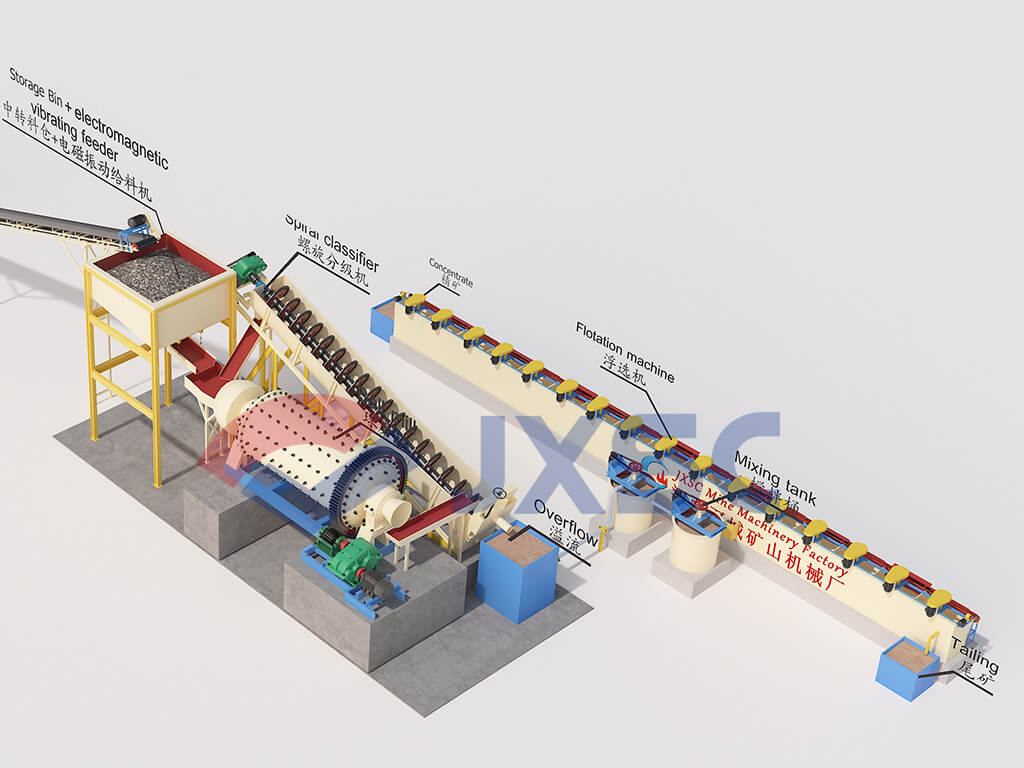
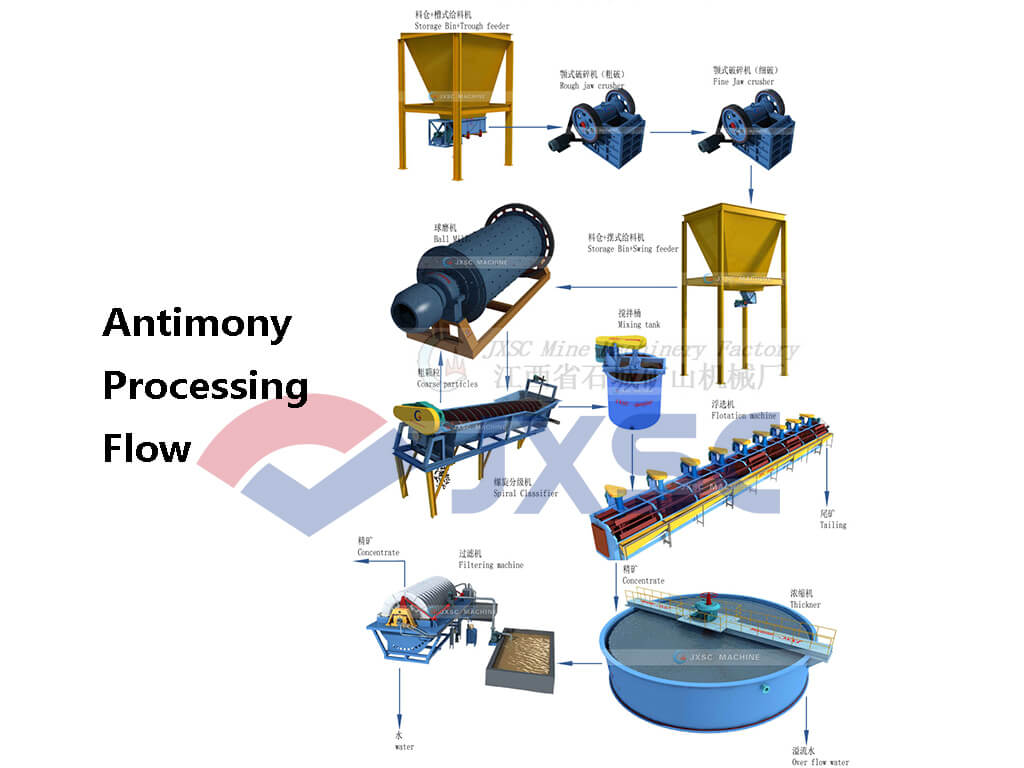
Дробление is best done in two stages, with fine particles screened out before primary crushing to minimize over-grinding. Grinding and classification are integrated into a closed circuit, where the coarse fraction (sand) is returned for further grinding to prevent “sliming” (excessive pulverization) of antimony minerals, which would otherwise cause losses. Before флотация, the pulp must be conditioned to a specific pH; activators and selective collectors are added, while depressants are used to suppress arsenopyrite and pyrite. The processing flowsheet for antimony sulfide ores employs a closed-circuit configuration—comprising roughing, cleaning, and scavenging—with intermediate products (middlings) returned to the circuit in a controlled manner to manage the circulating load.
(2) Antimony Oxide Ores:
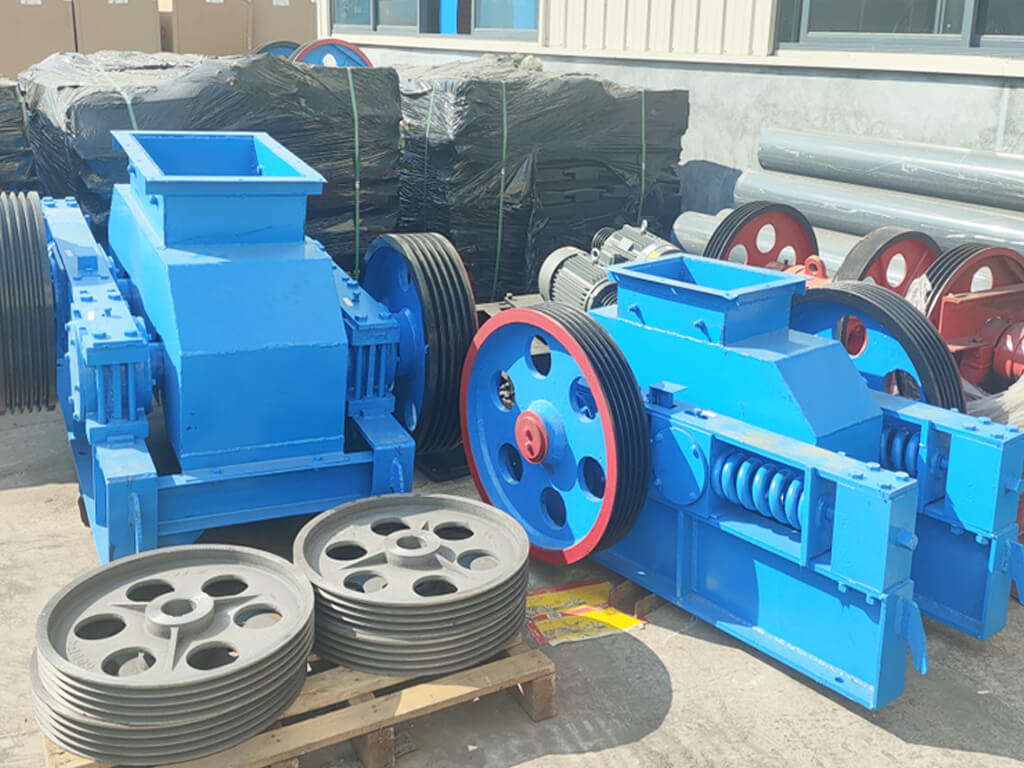
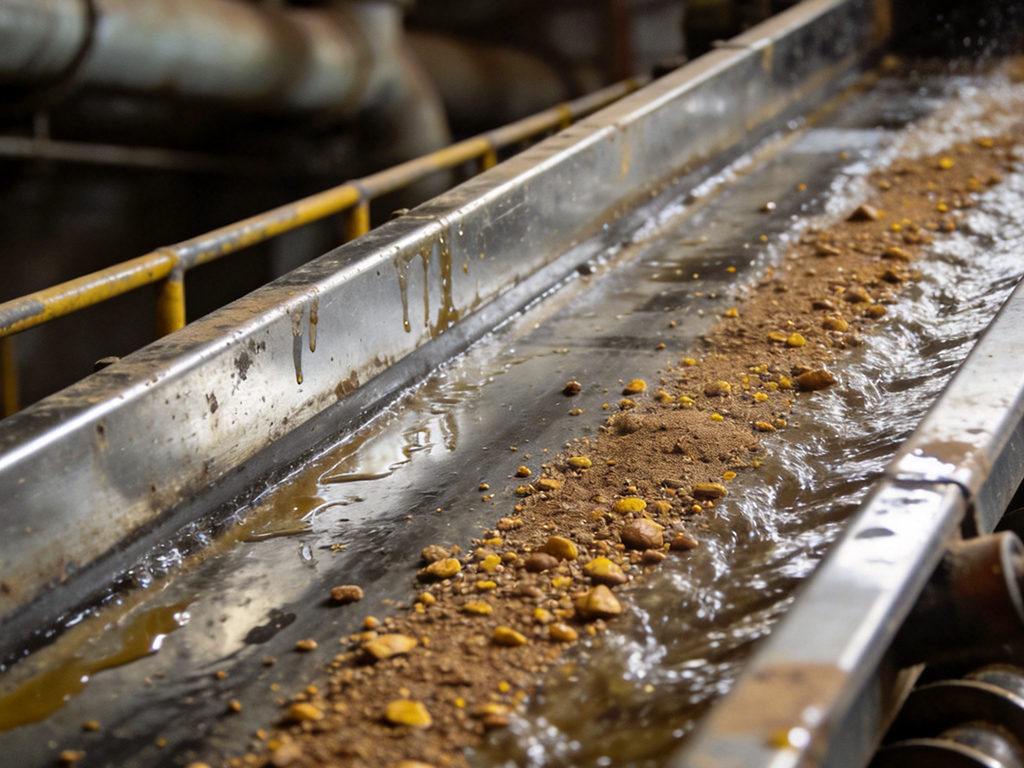
Due to a high degree of weathering and significant clay content, an initial ore-washing stage is essential; a rotary scrubber (drum washer) equipped with high-pressure water jets is used to detach and remove clayey material. The primary challenge is poor floatability, which results in high reagent consumption and unstable metallurgical performance; consequently, гравитационное разделение serves as the core of the process. After washing, a portion of the lump ore can be sold directly, while the remainder is processed using jigs and shaking tables. Fine particles, which are prone to being lost in the overflow, are recovered using spiral chutes or high-gradient magnetic separation. Ore slimes are thickened separately to avoid interfering with the main processing circuit.
(3) Mixed Antimony Ore:
Two types of minerals coexist. Processing units should be divided according to grain size and mineral properties. The order of processing—heavier minerals first, then floaters, and coarser minerals first, then finer minerals—should not be reversed. Coarse fractions are first recovered via jigging and spiral chutes; the tailings from this gravity separation are then reground and subjected to flotation to recover antimony sulfides. Fine-grained antimony oxides are subsequently recovered from the flotation tailings using shaking tables. Collectors for the sulfide and oxide recovery stages must be specified separately and never interchanged. The processing flow for mixed antimony ores involves numerous interconnected stages, requiring careful optimization and a longer commissioning period; the primary objective throughout is to prevent the loss of valuable minerals.
Comparison Dimension | Sulfide Ore | Oxide Ore | Mixed Ore |
Main minerals | Predominantly stibnite | Stibiconite, cervantite, etc. | Both present together |
Separability | Good natural floatability | Poor floatability, prone to sliming | Highly variable, requires stage-wise processing |
Core process | Flotation as the main route, gravity separation for coarse fractions | Washing plus gravity separation as the core | Combination of gravity separation and flotation |
Key difficulties | Reagent regime and impurity suppression | Slime interference and loss of fine particles | Complex circuit integration, great difficulty in equipment matching |
5 Key Factors Determining the Antimony Processing Flow
Factor 1: Ore Type
Ore type serves as the starting point for process design and dictates the fundamental structure of the processing flowsheet. Antimony ore is divided into three main categories: primary sulfide ore, secondary oxide ore, and mixed ore. Each type of ore requires a specific processing procedure. For sulfide ores, the primary challenge lies in the separation of arsenic and sulfur, making the selection of flotation reagents particularly critical. Oxide ores, often heavily weathered and possessing poor floatability, necessitate optimized ore washing and gravity separation. For mixed ores, the process must be customized based on specific mineralogical characteristics; a combination of gravity separation for coarse fractions and flotation for fine fractions typically yields good results.
In general, the dissemination size of antimony minerals varies significantly and is often complex, requiring beneficiation schemes that balance the recovery of the target metal with the maximization of economic value. It is essential to conduct mineral phase analysis и bench-scale testing to clearly define the ore’s characteristics before establishing the overall process framework.
Factor 2: Impurities and Associated Valuable Minerals
Common impurities such as arsenic and sulfur can hinder the extraction efficiency of antimony. The recycling of associated valuable metals such as золото и silver should be considered simultaneously. The paragenetic relationships between minerals determine whether pre-enrichment or integrated processing techniques are required. If impurity levels exceed specified limits, additional purification steps become necessary, which increases both the complexity and the cost of the processing workflow.
Factor 3: Environmental Constraints
Environmental requirements serve as a threshold for the viability of any process, rather than as an afterthought or an “end-of-pipe” add-on. The roasting of sulfide-bearing ores generates sulfur dioxide-rich flue gas, necessitating the integration of desulfurization and advanced purification systems. Wastewater containing antimony and arsenic requires a multi-stage treatment approach, typically involving precipitation, ion exchange, and reverse osmosis. When the burden of water treatment becomes excessive, the appeal of hydrometallurgical processing diminishes. When water treatment loads are high, the attractiveness of wet processing routes decreases. Mining areas with limited tailings dam capacity are forced to use backfilling or dry stacking, which in turn affects particle size and dewatering design. Consequently, environmental pressures compel enterprises to implement cleaner antimony processing technologies и highly efficient pollution control equipment.
Factor 4: Downstream Product Requirements
The specifications of the end product determine the depth of the antimony processing flow. If the target product is antimony concentrate, the process concludes at the mineral processing stage, with a focus on grade and impurity control. When the target is antimony concentrate, the process ends at the beneficiation stage, with the focus on grade and impurity control. For high-purity antimony used in semiconductors and infrared detection, further purification via electrolysis or zone refining is necessary, which leads to a manifold increase in investment costs.
Factor 5: Cost and Efficiency
The length of an antimony processing flow is directly linked to the intensity of capital investment. Gravity separation, for instance, consumes little energy but requires significant space and manual labor; flotation offers high adaptability but entails substantial maintenance costs. Large-scale mining enterprises, possessing greater resilience, tend to favor comprehensive, multi-stage processes that ensure high recovery rates, prioritizing long-term stability and a comfortable margin for regulatory compliance. Small and medium-sized mining enterprises have limited funds and personnel, so they tend to choose shorter process flows and prioritize calculating the investment payback period. When evaluating these options, it is essential to consider a holistic range of factors, such as energy consumption, reagent usage, and labor costs—rather than relying solely on recovery rates.
Заключение
There is no single factor that determines the antimony processing flow. The type of ore, impurities and associated valuable ores, environmental constraints, downstream product requirements, and cost efficiency all define the boundaries of each process. Whether employing flotation for sulfide ores, gravity separation for oxide ores, or a combined process for mixed ores, every approach must be evaluated based on both technical feasibility and economic viability. A sound process design begins with a thorough characterization of the ore, incorporates regulatory compliance and product requirements, and is ultimately validated by the input-output ratio.
JXSC Mining Machinery Factory advocates for data-driven rather than experience-based flow design and is happy to provide process customization, equipment configuration, cost, and recovery rate calculations based on your ore samples and target products. Feel free to contact us for customized antimony processing solutions.
 English
 Spanish
 French
 Russian