
- Главная
- Блог
- Информация об оборудовании
- Mineral Shaking Table: Zero Pollution Mineral Processing Method
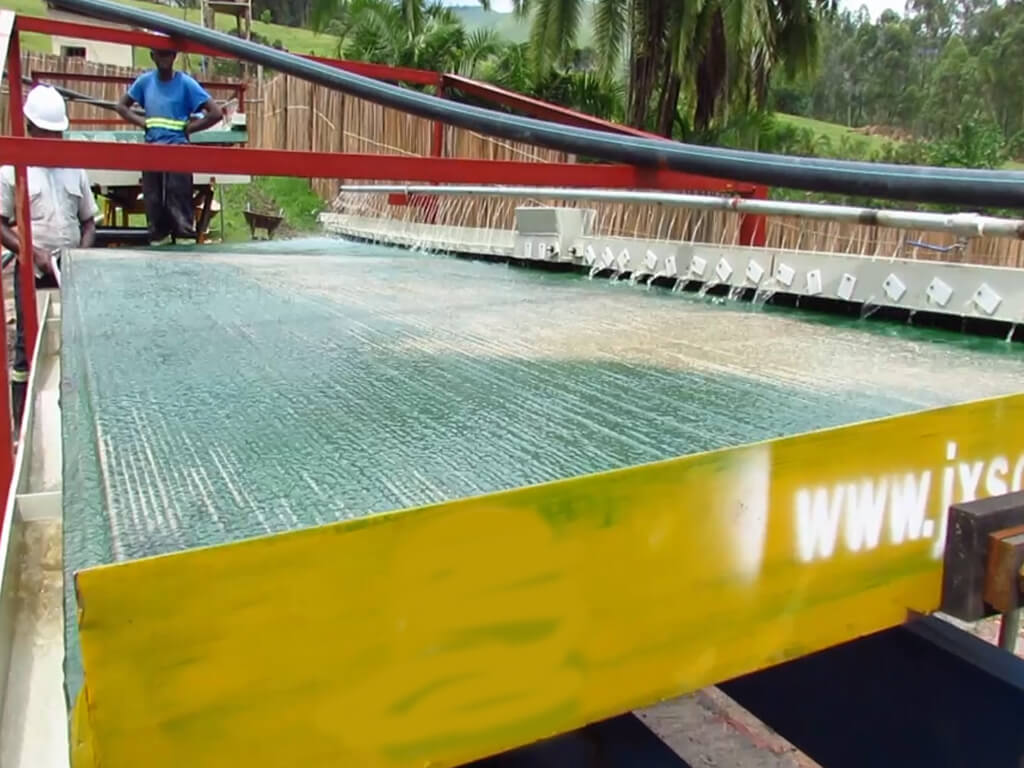
What Is A Mineral Shaking Table?
The mineral shaking table is a gravity separator that utilizes differences in specific gravity to separate minerals; it represents a traditional yet highly efficient gravity-based beneficiation technology. By applying physical-mechanical principles to separate mineral particles of varying densities, it operates entirely without the use of chemical reagents, thereby fundamentally eliminating pollution issues. Compared to methods such as flotation or magnetic separation, the shaker table is particularly well-suited for processing fine-grained minerals—specifically those ranging from 0.074 to 2 mm in size—including gold, tungsten, tin, and chromium. Characterized by its high separation precision and strong adaptability, it stands as one of the core pieces of equipment in environmentally friendly mineral processing.
Basic Structural Components
The main structure of a mineral shaking table consists of five core components: the head motion mechanism, the deck, the slope adjustment device, the feed launder, and the wash water launder.
● Deck: Typically constructed from fiberglass or wood, the deck surface is fitted with wear-resistant riffles or grooves to facilitate the stratification of mineral particles based on their density.
● Drive Mechanism: Provides a regular reciprocating motion, enabling mineral particles to gradually separate under the combined influence of vibrational forces and water flow.
● Slope Adjustment Device: Allows for the adjustment of the deck’s lateral slope within a range of 0° to 10°; when coordinated with the control of the wash water flow rate, this feature accommodates the mineral sorting requirements for materials of varying particle sizes and specific gravities.
Separation Principle
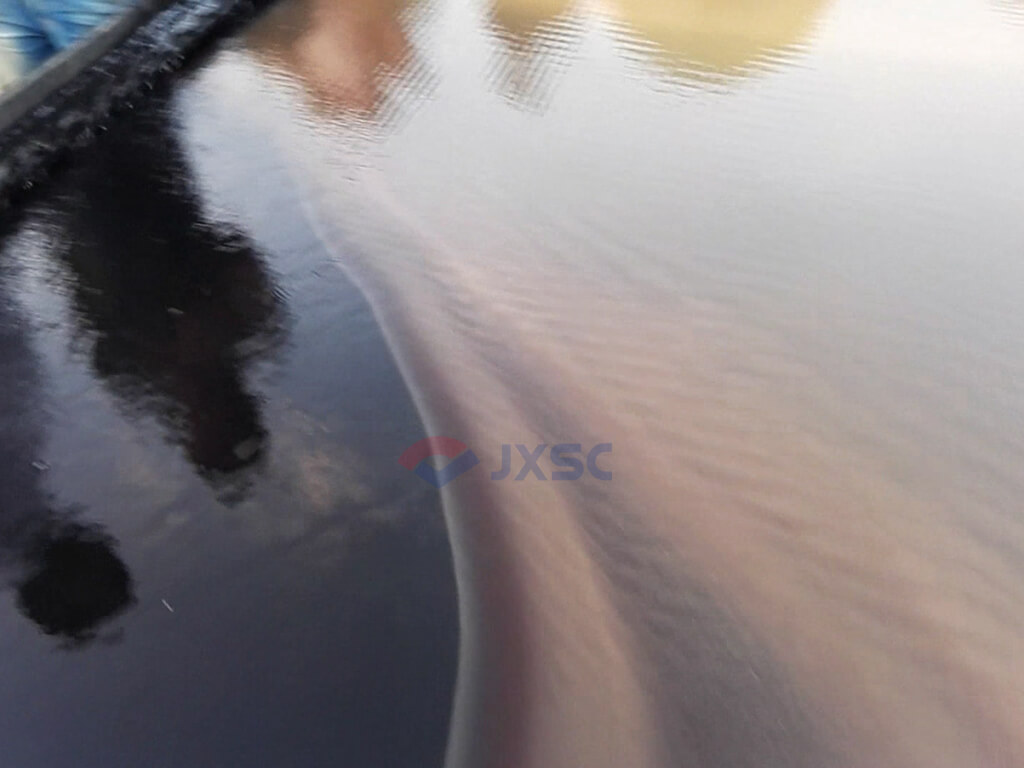
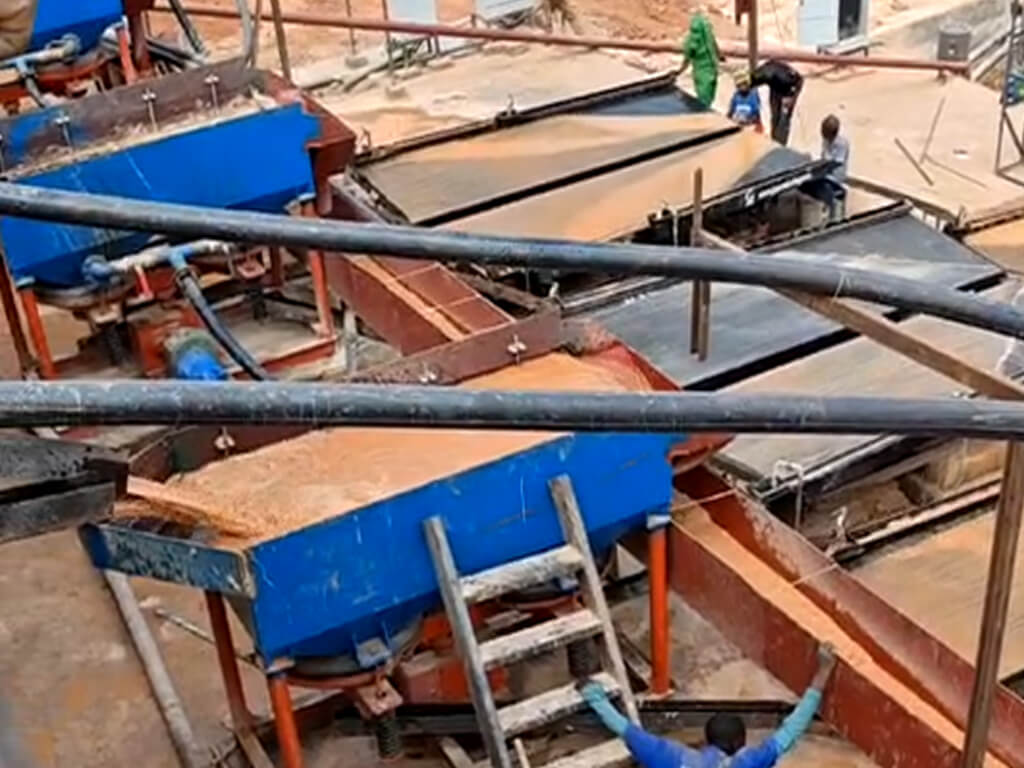
During operation, mineral slurry flows uniformly from the feed trough onto the deck of the mineral shaking table. Under the combined action of transverse water flow and mechanical vibration, the mineral particles stratify according to their density differences. Heavier, valuable minerals settle to the bottom of the deck’s riffles and migrate longitudinally toward the concentrate discharge end, while lighter gangue minerals are washed away by the water flow toward the tailings end for discharge. This precise and controllable stratification-separation process ultimately yields three distinct products: concentrate, middlings, and tailings.
Why is it referred to as zero-pollution mineral processing?
4 Environmental Advantages Of Mineral shaking Table
Chemical-Free Operation:
Mineral separation is achieved entirely through physical gravity differentiation. The entire production process requires no flotation reagents, cyanide, or other toxic chemical additives, thereby eliminating the risk of chemical residue contamination at the source.
No Waste Discharge During The Process:
Only ordinary clean water is used as the sorting medium. The production water can be 100% recycled after simple sedimentation, and no toxic waste gas, hazardous waste, or residue is produced. Tailwater can be directly reused or discharged in compliance with environmental standards, realizing truly clean production.
Low-Carbon Operation:
Operational energy consumption is merely one-fifth that of flotation equipment with equivalent processing capacity, with the power consumption of a single mineral shaking table dropping as low as 1.1 kW. This significantly reduces indirect carbon emissions associated with thermal power consumption, aligning perfectly with the “Green Mine” standards mandated by dual-carbon policies.
No Secondary Contamination Risk from Tailings:
The separation process does not alter the chemical structure of the minerals; consequently, the tailings can be safely stockpiled or repurposed. No additional hazardous waste treatment is required, ensuring zero environmental burden throughout the entire process—a true “clean mineral processing” technology.
Applications and Effect of Mineral Shaking Table
**Precious Metal Mineral Processing: Fine separation of placer gold and platinum-group metals, achieving recovery rates exceeding 90%.
**Rare Metal Beneficiation: Fine beneficiation of tungsten, tin, tantalum, and niobium ores, capable of increasing concentrate grades by up to 40%.
**Ferrous Metal Separation: Separation of chromium and manganese-iron ores; the re-processing of tailings can boost resource utilization efficiency by over 15%.
**Solid Waste Recovery: Recovery of valuable metals from slag, electronic waste, and mine tailings, ensuring no secondary pollution.
Mainstream Types Of Mineral Shaking Table
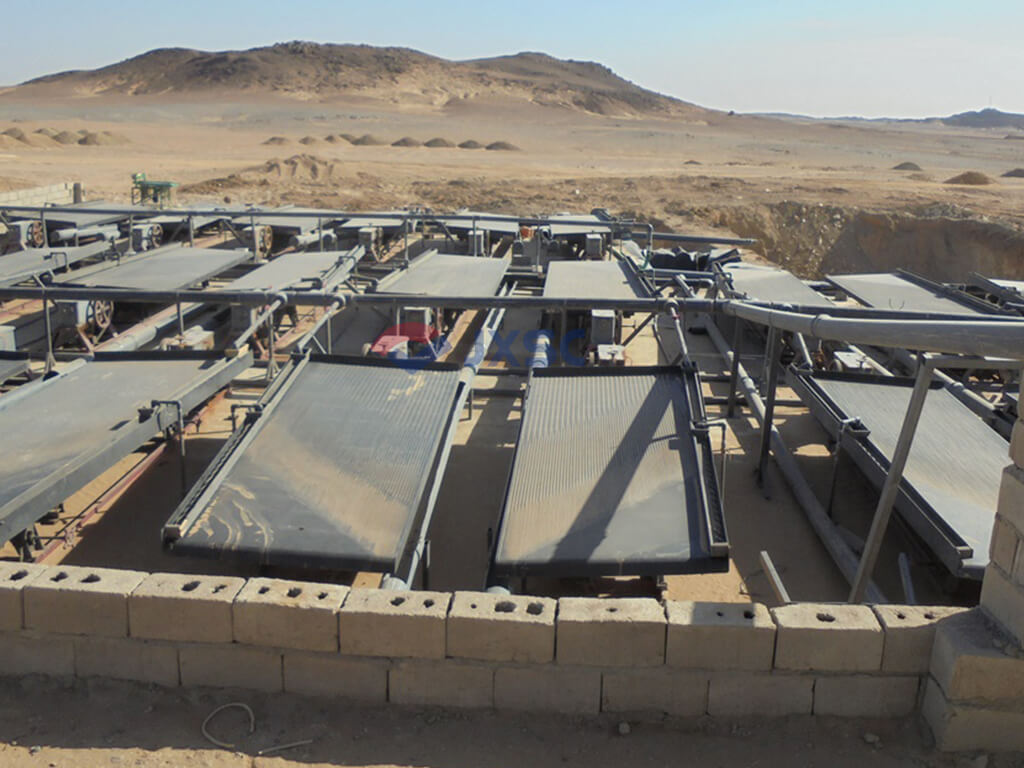
Model 6-S (General, hot model): Features a classic structural design suitable for sorting medium-to-fine-grained ores ranging from 0.074 to 2 mm—such as tungsten, tin, and gold. With a processing capacity of 10–20 tons per day and simple maintenance requirements, it is the preferred equipment for small-to-medium-scale mines with low-to-medium-grade deposits.
Fine Shaking Table (High-Precision Type): Employs advanced grooved-deck technology to achieve recovery rates exceeding 90%. It is particularly well-suited for processing ultra-fine mineral particles ranging from 0.02 to 0.5 mm (e.g., rare earth elements and ilmenite); however, it has a relatively lower processing capacity and is primarily utilized for the mineral processing of high-value minerals.
Double/Multi-Layer Shaking Table (High-Output Type): Optimizes layout through a multi-layered structure, offering customizable processing capacities suitable for large-scale production operations. However, it requires a larger footprint, consumes relatively more energy, and entails correspondingly higher investment costs.
Mineral Shaking Table Vs. Other Mineral Processing Methods
| Comparison Dimension | Mineral Shaking Table | Flotation Process | Magnetic Separation Process |
|---|---|---|---|
| Pollution Level | Zero pollution | High pollution, with large reagent residue and high wastewater treatment cost. | Low pollution, no chemical reagent added |
| Concentration Ratio | Up to 30 times or more | Usually 5-10 times | Usually 3-8 times |
| Applicable Ores | All ore types with density difference ≥1 | Strong adaptability, but customized reagent scheme is required for different ores. | Only applicable to magnetic minerals, such as iron, manganese, chromium, tin and other metal ores. |
| Operation & Maintenance Cost | Low overall cost, only includes energy consumption and wearing parts replacement cost | High cost, reagent cost accounts for more than 30% of total mineral processing plant cost. | Medium cost, with high operation energy consumption |
How To Choose The Best Mineral Shaking Table?
4 Key Selection Factors
➡︎ Matching Capacity Requirements:
Select the appropriate shaking table specifications based on the mine’s daily processing volume; the daily processing capacity of a single unit typically ranges from 10 to 20 tons. For large-scale mines, it is advisable to opt for multi-layer or parallel-configured equipment, while also considering integration with automated systems. This approach helps avoid issues of insufficient capacity or wasteful redundancy.
➡︎ Adapting to Ore Characteristics:
The optimal particle size range for effective separation is 0.074 to 2 mm. For coarser particles (>2 mm), it is recommended to utilize spiral chutes или jig separators for preliminary processing. For finer particles (<0.074 mm), the use of a центробежный концентратор may be required as an auxiliary measure; alternatively, consider selecting a table with a densely grooved deck surface. For minerals with minimal specific gravity differences, prioritize models featuring a wider stroke adjustment range to ensure high separation precision.
➡︎ Focusing on Core Components:
Prioritize products equipped with thickened fiberglass decks and motors featuring national-standard copper cores. These components offer a service life that is more than three times longer than that of standard models, thereby significantly reducing long-term maintenance costs.
➡︎ Meeting Concentrate Quality Standards:
When requirements for the concentrate product are not particularly stringent (e.g., during roughing operations), economical mineral shaking tables—such as the 6-S model—may be selected. However, when the objective is to produce high-grade concentrates (e.g., during final cleaning operations), high-precision equipment—such as the Yunxi-type shaking table—should be utilized. In practical mineral processing plants involving various mineral types, it is often effective to employ a “series” configuration involving different models of shaking tables.
Заключение
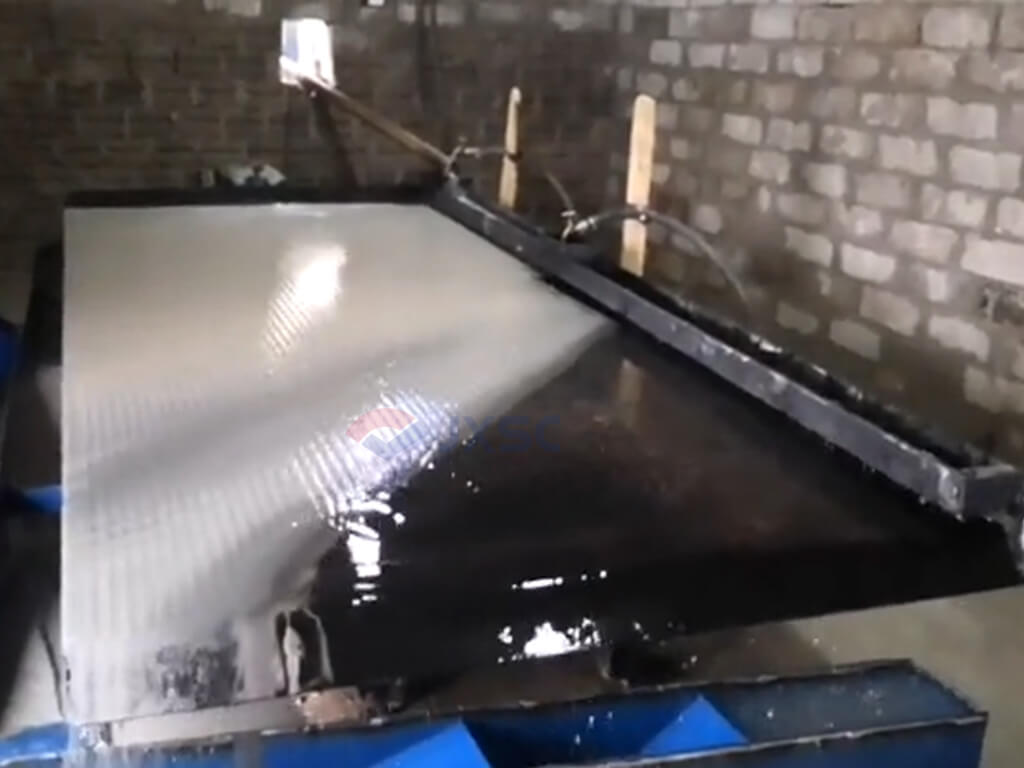
As a core piece of green gravity beneficiation equipment, the zero-pollution mineral shaking table has multiple advantages, including a high recovery rate, low operating cost, and no chemical pollution, making it the optimal choice for green beneficiation. Its modular design allows for the flexible adjustment of parameters (such as stroke length, inclination angle, and water flow), enabling it to meet the separation requirements of over 20 different types of minerals, including tungsten, tin, gold, tantalum-niobium, copper, chromium, and manganese.
For mineral separation projects ranging from small-scale operations involving fine-grained ores to large-scale tailings reprocessing initiatives, the mineral shaking table can achieve recovery rates exceeding 90%; they represent the ultimate value-for-money solution, effectively balancing economic profitability with environmental protection. Furthermore, equipment selection requires careful alignment with factors such as mineral particle size, processing capacity, budget constraints, and long-term production planning; it is highly recommended to conduct pilot tests to determine the most effective solution.
JXSC offers comprehensive services—including equipment selection assessments, production optimization recommendations, and customized оборудование для обогащения полезных ископаемых solutions—to ensure your mineral separation operations are both highly efficient and highly profitable!
 English
  Spanish
  French
  Russian