
Wolframite vs scheelite: do you truly understand the critical differences? As a globally recognized strategic metal, tungsten is indispensable, finding widespread application in high-end manufacturing sectors such as cemented carbides, specialty steels, military equipment, and photovoltaic cutting wire. Wolframite and scheelite are the only two tungsten ores of economic value worldwide, yet they differ vastly in chemical composition, physical properties, beneficiation processes, resource distribution, and industrial applications. Today, amidst tightening global tungsten supplies and strict export controls, selecting the right ore type and matching it with the appropriate processing technology is a pivotal factor determining a project’s economic viability.
Difference 1: Chemical Composition and Mineral Structure
● Chemical Composition:
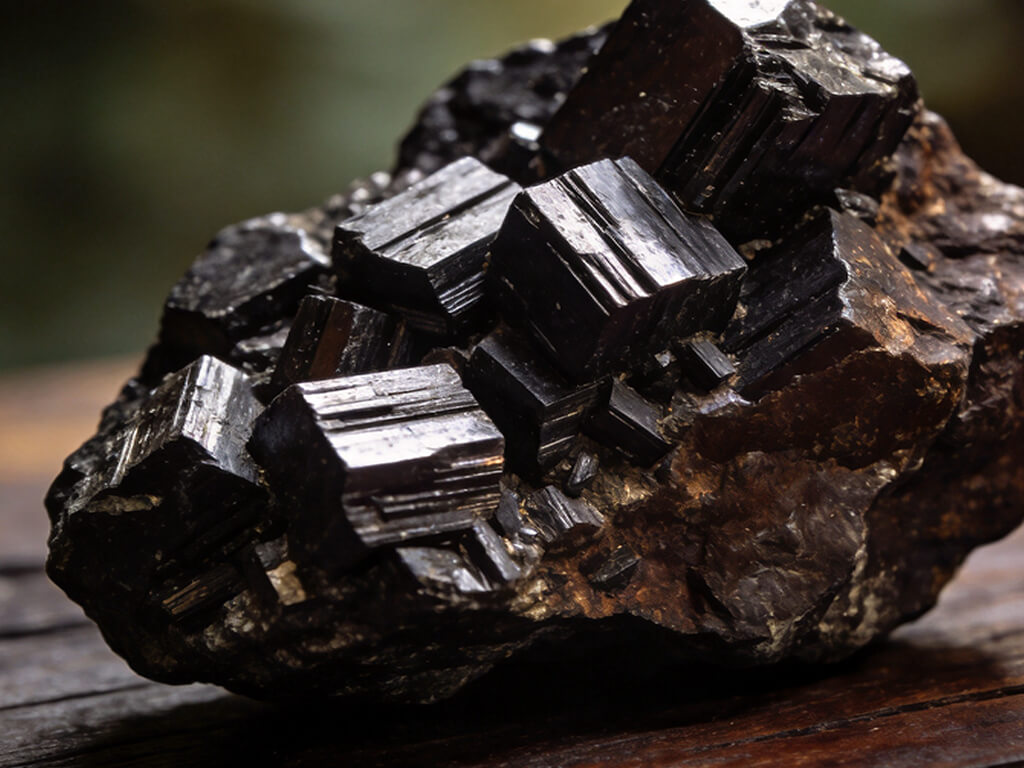
Wolframite has the chemical formula (Fe, Mn)WO₄ and belongs to the iron-manganese tungstate family. Fluctuations in the iron-to-manganese ratio directly influence the mineral’s color and magnetic properties; this compositional flexibility renders each batch of ore unique. For instance, when iron content dominates, the mineral tends to exhibit a deeper black color and stronger magnetism. Conversely, higher manganese content results in a lighter color and weaker magnetism.
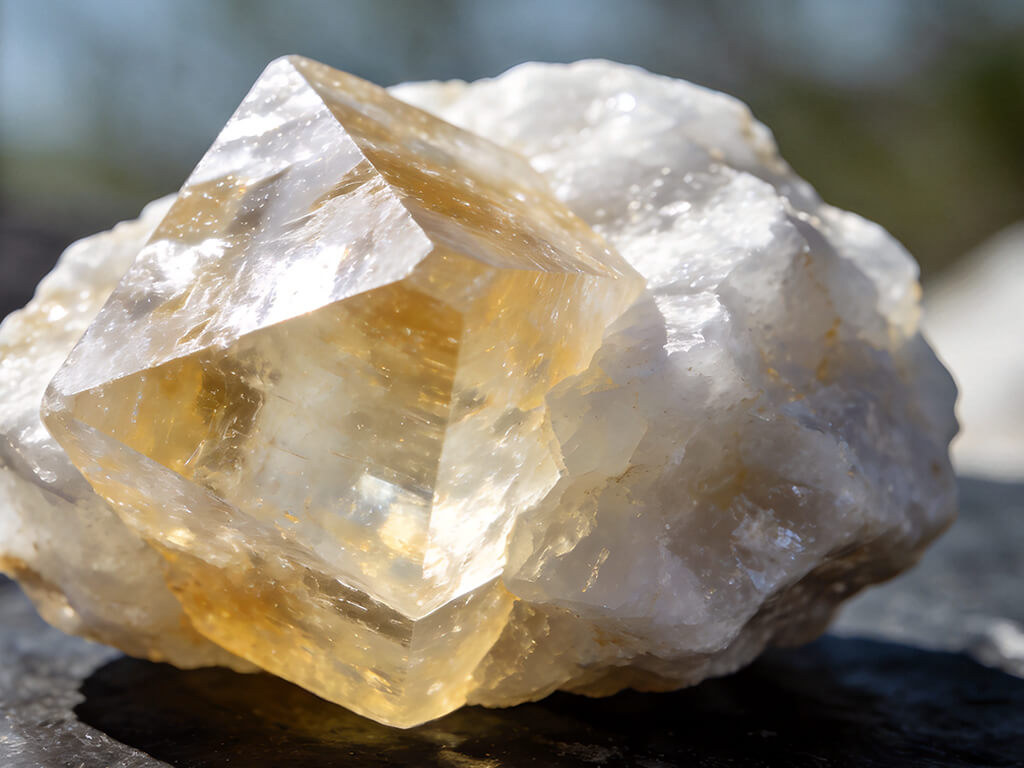
Scheelite has the chemical formula CaWO₄ and features a pure, stable structure. Calcium ions occupy fixed positions within the crystal lattice, lacking the flexibility for iron-manganese substitution; however, this results in greater consistency regarding its physical properties.
● Mineralization Environment:
Wolframite primarily occurs in high-temperature hydrothermal quartz veins associated with granite. It frequently co-occurs with cassiterite and molybdenite, with quartz serving as the dominant gangue mineral. Such deposits are commonly found in regions of intense crustal activity.
Scheelite is a typical skarn-type mineral formed in low-to-medium temperature environments. It is associated with contact metasomatism involving carbonate rocks and typically develops in the contact zones of igneous intrusions. It often co-occurs with minerals such as garnet and diopside, and its gangue composition is complex.
● Crystal Structure:
Wolframite belongs to the monoclinic crystal system; its crystals are typically thick and tabular, exhibiting good cleavage along specific directions. This structure facilitates the release of coarser mineral particles during crushing, thereby reducing over-grinding.
Scheelite belongs to the tetragonal crystal system, with crystals typically appearing bipyramidal or granular. Its dense structure tends to produce fine particles during grinding, complicating subsequent beneficiation processes.
Impact of Structure Differences on Beneficiation Strategies:
▶︎ Wolframite features coarse-grained dissemination, making it naturally suitable for гравитационное разделение processes. It exhibits weak magnetism, allowing magnetic separation to serve as an effective tool for purification.
▶︎ Scheelite features fine-grained dissemination, rendering gravity separation largely ineffective; it is often associated with fluorite and necessitates флотация. As it is non-magnetic, processing relies on the precise control of flotation reagents to overcome interference from calcium-bearing gangue minerals, resulting in a process complexity far greater than that of wolframite.
Wolframite vs Scheelite: What is it?
| Comparison Item | Wolframite | Scheelite |
|---|---|---|
| Химическая формула | (Fe,Mn)WO₄ | CaWO₄ |
| Mineral Category | Iron-Manganese Tungstate | Calcium Tungstate |
| Crystal System | Monoclinic | Tetragonal |
| Mohs Hardness | 4–4.5 | 4.5–5 |
| Цвет | Dark brown to black | Colorless to white, occasionally pale yellow |
| Common Associated Minerals | Quartz, Cassiterite, Molybdenite | Calcite, Fluorite, Pyroxene |
Difference 2: Physical Properties and Density
● Magnetic Properties
Wolframite is weakly magnetic; magnetic separation equipment (such as a three-disc magnetic separator) can be used to efficiently separate it from non-magnetic gangue minerals like cassiterite, quartz, and feldspar.
Scheelite, conversely, is non-magnetic; magnetic separation is completely ineffective, necessitating alternative purification methods.
● Density:
Wolframite has a high density of 7.1–7.5 g/cm³—comparable to cassiterite and two to three times that of common gangue minerals—making it exceptionally well-suited for gravity separation.
Scheelite has a density of only 5.9–6.1 g/cm³; the density difference between it and minerals like quartz or feldspar is minimal, limiting the efficiency of gravity separation.
● Exploration Methods:
Under short-wave ultraviolet light, scheelite emits a bright blue-white fluorescence, making this the most practical and rapid identification method for field exploration.
Wolframite does not fluoresce; exploration relies on traditional methods such as observing morphology and specific gravity.
Wolframite vs Scheelite: Key Impact of Physical Properties
Wolframite’s high density and weak magnetic properties point directly to gravity and magnetic separation schemes, enabling high recovery rates.
Scheelite’s low density and lack of magnetism leave flotation as the only viable processing route.
Wolframite processing is straightforward and efficient, whereas scheelite beneficiation is complex and requires precision; the processing strategy is essentially dictated by the nature of the mineral itself.
Difference 3: Beneficiation Process
Wolframite Beneficiation:
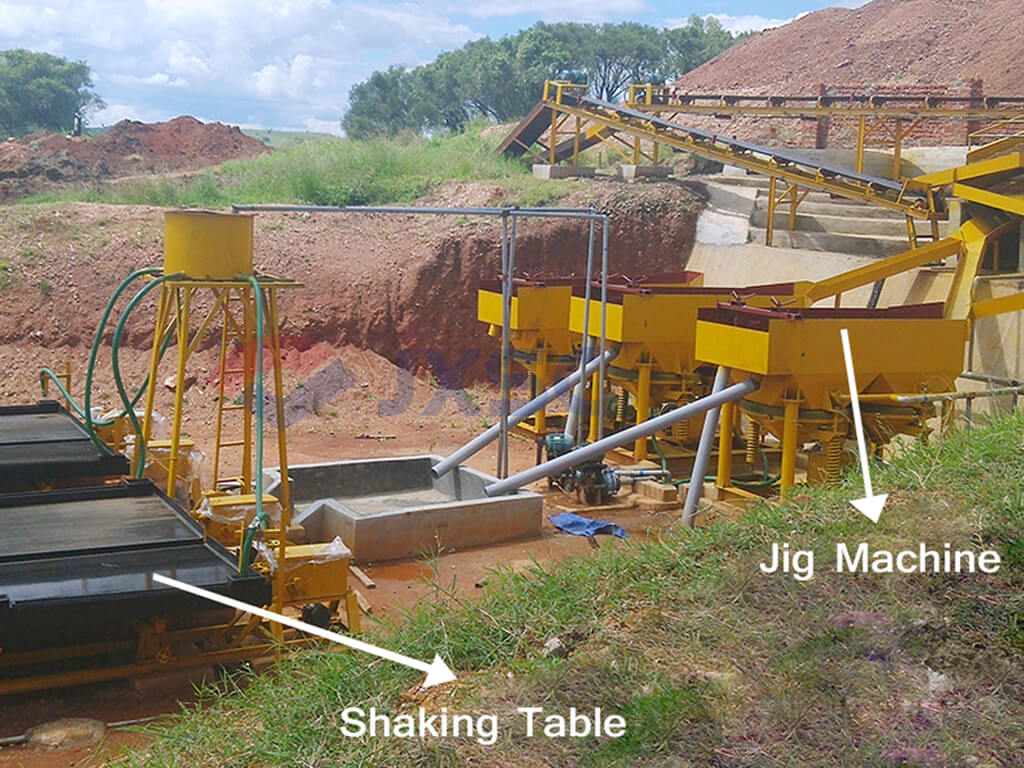
Wolframite beneficiation centers on гравитационное разделение, utilizing a streamlined and efficient process. It primarily adheres to the principles of “early and high recovery” and “size-fractionated processing.” Coarse particles are fed into a jig immediately after crushing, where density differences allow for rapid enrichment. Medium and fine particles are sent to shaking tables for further purification through the combined action of water flow and vibration. Finally, dry magnetic separation is employed to remove weakly magnetic impurities, yielding a high-quality concentrate.
Scheelite Processing:
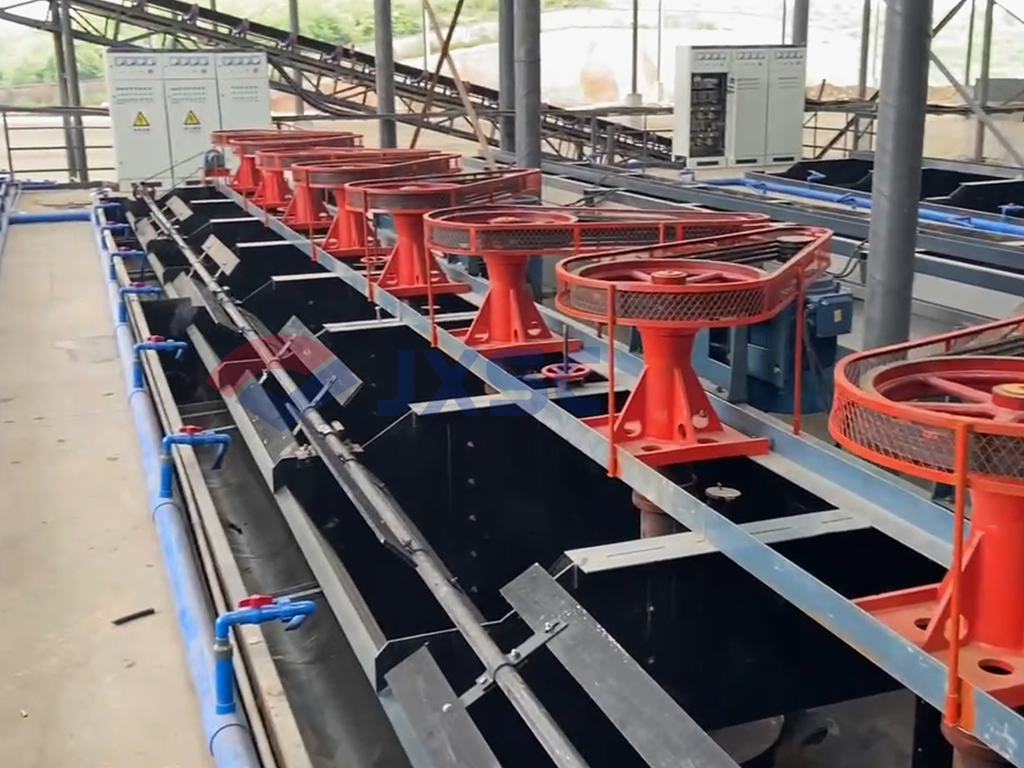
Scheelite processing relies primarily on флотация and involves a more complex process. Calcium-bearing gangue minerals (such as calcite and fluorite) share similar surface properties with scheelite, presenting the greatest challenge during the separation process.
The ore must first be finely ground, ensuring the majority of particles pass through a 200-mesh screen to achieve adequate mineral liberation. It then enters the flotation stage, where sodium oleate is added to render the scheelite surface hydrophobic. Simultaneously, sodium silicate is introduced to depress calcite and fluorite, preventing them from floating alongside the scheelite. The rougher concentrate undergoes a heated cleaning stage to further upgrade the product quality.
Wolframite vs Scheelite: Processing Solution Comparison
| Comparison Item | Wolframite | Scheelite |
|---|---|---|
| Core Process | Gravity separation + Magnetic purification | Флотация |
| Core Equipment | Jig, Shaking table, Magnetic separator | Flotation machine, Agitation tank |
| Operation Key Points | Sized feeding, Magnetic separation | Reagent control, Temperature management |
| Reagent Usage | No reagents required | Collectors and depressants required |
| Environmental Friendliness | High, no chemical pollution | Moderate, requires wastewater treatment |
| Process Complexity | Low, short flow | High, long flow |
Difference 4: Resource Distribution and Reserves
● Tungsten Resource Distribution:
Globally, tungsten resources consist of approximately 70% scheelite and 30% wolframite. China holds a dominant position in global tungsten production, followed by Russia and Canada.
Traditional wolframite production areas are concentrated in Ganzhou (Jiangxi Province), Guangdong, and Yunnan. After a century of mining, high-grade resources in these areas are becoming depleted. Overseas wolframite sources include Myanmar and Bolivia, though production volumes remain limited.
Major scheelite production areas are located at Shizhuyuan (Hunan) and Zhuxi (Jiangxi). The Zhuxi deposit boasts massive reserves, making it the world’s largest single tungsten deposit. Overseas scheelite projects include Bakuta (Kazakhstan) and Sangdong (South Korea); however, long development timelines make it difficult to achieve economies of scale in the short term.
● Trends:
As easily accessible wolframite resources diminish, the strategic importance of scheelite continues to rise. Advances in mineral processing technology have made the development of low-grade scheelite viable, further solidifying its role in the tungsten supply landscape.
Difference 5: Market Value and Industrial Application
● Value:
The new energy and electronics industries are driving growth in demand for high-end tungsten. Market data indicates that the price of scheelite concentrate (410,000–411,000 RMB/standard ton) is slightly lower than that of wolframite (411,000–412,000 RMB/standard ton). As wolframite resources dwindle, the stability of the scheelite supply chain has become a key factor influencing price fluctuations, leading to a narrowing price gap. While prices are primarily affected by tightened supply constraints and export controls, the overall price level has shifted significantly higher compared to previous years, with procurement largely driven by immediate demand.
Wolframite vs Scheelite: Downstream Applications
Wolframite is better suited for specialty steel smelting because its iron and manganese content allows it to participate directly in the alloying process.
Scheelite, due to its calcium-based chemical properties, is better suited as a raw material for cemented carbides and photovoltaic tungsten wire; it is particularly indispensable in the production of thin-coating materials.
Заключение
From mineral structure and physical properties to beneficiation pathways and resource distribution, these differences underscore a fundamental principle: maximizing value requires precisely matching the processing scheme to the specific ore type. Wolframite vs scheelite: understanding the 5 key differences is crucial for selecting the right processing method, controlling costs, and producing high-grade tungsten concentrate. Wolframite’s high density makes it suitable for gravity separation, whereas scheelite’s favorable floatability makes flotation the preferred method. In actual production, process parameters must be flexibly adjusted based on the characteristics of the raw ore. If you are facing challenges with tungsten (wolframite & scheelite) beneficiation or wish to optimize your existing process to improve recovery rates and concentrate quality, please contact us for customized оборудование для обогащения полезных ископаемых.
 English
  Spanish
  French
  Russian