
Does your crusher frequently “act up”? The cost of neglecting routine maintenance is far higher than you might imagine! Дробилки are indispensable core equipment in the mining, construction, and recycling industries; yet, many operators underestimate the value of daily maintenance, only to face deep regret when a machine suddenly breaks down, and the production line grinds to a halt. Even worse, a sudden failure entails not only the high cost of replacing parts but also the loss of tons of daily production capacity. In reality, most major mechanical failures do not occur out of the blue; they are the result of accumulated minor issues that were ignored over time. However, these problems can be completely avoided with a scientifically sound and reasonable crusher maintenance checklist! This article will reveal the complete process from daily quick checks and weekly tests to monthly deep maintenance, using the most practical steps to help you extend equipment life and save on maintenance costs.

Why Regular Crusher Maintenance Matters?
(1) Reduce unplanned downtime
An unexpected crusher shutdown can paralyze the entire production line, disrupting schedules and increasing the costs associated with manual coordination. Regular maintenance allows for the early detection of potential issues, transforming sudden breakdowns into manageable, scheduled repairs and ensuring continuous, efficient equipment operation.
(2) Extend the service life of critical components
Replacing jaw plates, bearings, and liners is costly. Regular lubrication, clearance adjustments, and wear monitoring can significantly slow the deterioration of these core components, maximizing the lifespan of each part and reducing the frequency of replacements.
(3) Improve crushing efficiency and product quality
Crushers suffering from inadequate lubrication or severe wear can produce uneven output particle sizes and excessive fines, negatively affecting downstream processing stages. Regular maintenance ensures the equipment remains in optimal working condition, enhancing output stability and the pass rate of the finished product.
(4) Lower operating costs and safety risks
Neglecting crusher maintenance not only increases energy consumption but also risks safety accidents caused by component failure, potentially leading to major overhauls or even the scrapping of the entire machine. Standardized maintenance procedures help control repair budgets and avoid unexpected expenses while ensuring the safety of operating personnel.
Daily Crusher Maintenance Checklist
1. Pre-start Checks
Oil level check: Ensure the oil level is between the upper and lower marks. Insufficient oil accelerates bearing and gear wear, leading to equipment failure.
Coolant level: Check that the fluid level in the reservoir meets specifications. Insufficient coolant causes system overheating and disrupts normal operation.
Belt tension and wear: Press the center of the belt to check its tension. Replace the belt immediately if cracks or delamination are found to prevent breakage during operation.
Bolt tightness: Spot-check critical bolts on the base and guards. Loose bolts can cause vibration and, in severe cases, lead to component detachment.
Safety device functionality: Test the emergency stop button to ensure it cuts off power correctly. Confirm that safety guards are securely installed to ensure safe operation.
2. Operational Monitoring
Abnormal noise and vibration: Normal operation produces a steady, low-pitched sound. Stop the machine immediately if metallic clanking is heard and inspect for internal faults.
Temperature monitoring: Bearings and the motor should feel warm but not hot to the touch. A sudden temperature rise indicates poor lubrication or imminent bearing failure.
Current/load fluctuations: The ammeter reading should remain stable. Fluctuations indicate uneven feeding or a blockage within the crushing chamber.
Discharge particle size: The finished product should be uniform in size. Adjust the discharge opening if there is an excess of oversized or undersized material.
3. Post-shutdown inspection
Clear material buildup: Clean the crushing chamber and discharge opening after turning off the power. Accumulated, caked material can hinder the next startup and reduce crushing efficiency.
Visually inspect wear parts: Examine the surfaces of the jaw plates and liner plates. Note the extent of wear if grooves or cracks are found, and schedule replacements.
Record operational data: Log the operating duration and any anomalies. Accumulating data over time helps in predicting equipment condition trends.
Weekly Crusher Maintenance Checklist
1. Lubrication System Maintenance
Greasing lubrication points: Use a grease gun to apply grease to each lubrication nipple, ensuring fresh grease is visibly extruded from every point. Neglecting any point can lead to component damage caused by dry friction.
Checking oil quality: Inspect a small sample of the lubricant for color and clarity. Immediate replacement is required if the oil appears black, emulsified, or contains metal particles.
Checking for oil line leaks: Inspect fittings and the length of the oil lines. If traces of oil leakage are found, tighten the fittings or replace the seals to prevent inadequate lubrication.
Replacing or cleaning the filter element: Remove the return oil filter element and check for clogging. An excessively dirty filter element impedes oil circulation, accelerating oil degradation and component wear.
2. Inspection of Key Components
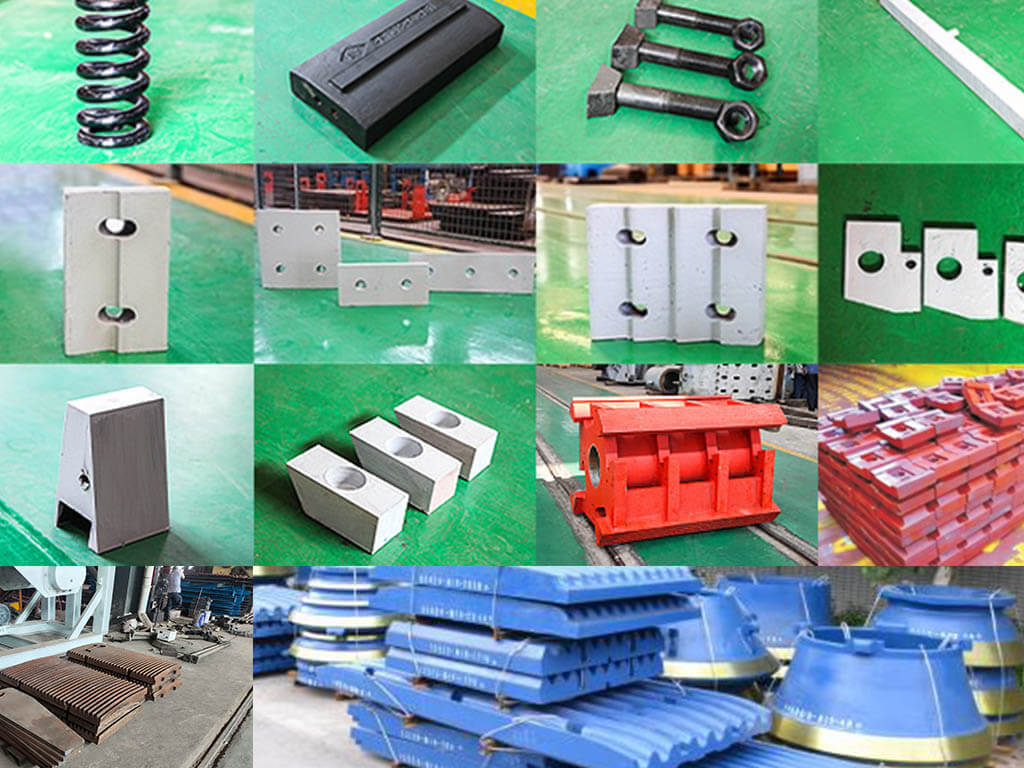
Measurement of wear on jaw plates, concave liners, and mantle liners: Use calipers to measure the remaining height of the tooth tips and compare the results against standard specifications. Excessive wear reduces crushing efficiency; components should be flipped or replaced as necessary.
Wear assessment of blow bars and impact liners: Inspect the striking faces of the blow bars for indentations or chipped edges. Uneven wear can disrupt the rotor’s dynamic balance, leading to severe vibration.
V-belt wear and alignment: Check the underside of the belts for cracks or exposed cords. Use a straightedge to verify pulley alignment; excessive misalignment accelerates belt wear.
Bearing clearance inspection: Use a feeler gauge or dial indicator to measure the radial clearance of the bearings. Excessive clearance indicates bearing wear, necessitating replacement.
Recording wear data and estimating replacement intervals: Log measurement data into maintenance records. Continuously tracking wear trends allows for accurate prediction of replacement timing, helping to prevent unexpected downtime.
3. Fasteners and Connection
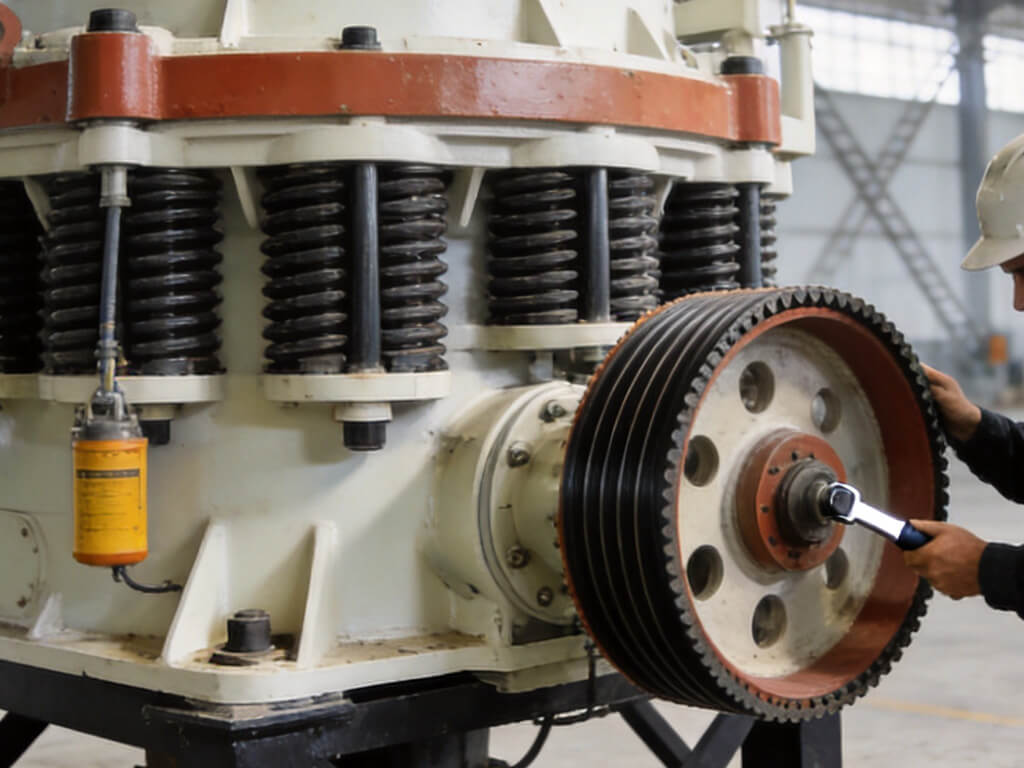
Check all bolt tightening torques: Re-verify critical bolts using a torque wrench. Insufficient torque leads to loosening, while excessive torque may damage threads.
Check anchor bolts for looseness: Inspect the anchor bolts securing the crusher base to the foundation. Looseness can cause the entire machine to shake, compromising crushing stability.
Check liner mounting bolts: Ensure that liner mounting bolts are neither loose nor broken. Detachment of liners can cause severe damage to the crushing chamber and frame.
4. Structural Component Inspection
Weld cracks: Inspect main frame welds visually or via penetrant testing. Promptly repair any hairline cracks to prevent propagation and subsequent structural failure.
Frame deformation: Check frame flatness using a level or the string-line method. Deformation affects component alignment, accelerating wear and vibration.
Condition of shock-absorbing pads/springs: Inspect shock-absorbing pads for cracking or permanent compressive deformation. Failure of these components allows vibration to be transmitted directly to the foundation structure.
Monthly Crusher Maintenance Checklist
1. In-depth Lubrication and Fluid Analysis
Lubricant replacement (if required): Drain the old oil, clean the oil sump, and fill with fresh oil. Impurities in the old oil can accelerate component wear.
Fluid sampling and analysis: Collect an oil sample and send it to a laboratory for analysis. The results indicate the extent of internal wear.
Hydraulic system pressure testing: Connect a pressure gauge to verify that system pressure meets specifications. Insufficient pressure can compromise crushing force output.
2. Assessment of Wear Part Replacement
Jaw plate/liner plate flipping or replacement: Jaw plates can be flipped (top-to-bottom) for continued use if wear is uneven. Replacement with new parts is mandatory if wear exceeds limits.
Hammer/blow bar wear measurement: Measure the remaining thickness of the hammer using calipers. Immediate replacement is required if wear reaches the limit mark.
Screen inspection and replacement: Inspect screens for damage or clogging. Damaged screens can result in output particle sizes exceeding specifications.
3. Structural Integrity Inspection
Main frame crack detection: Inspect critical load-bearing areas of the main frame using dye-penetrant testing. Repair-weld and reinforce immediately if cracks are detected.
Foundation bolt torque verification: Re-check all foundation bolts using a torque wrench. Ensure the torque of each bolt meets the specifications in the equipment manual.
Discharge opening gap calibration: Measure the actual width of the discharge opening after shutdown. Adjust shims or the hydraulic system if the deviation is excessive.
4. Comprehensive Safety System Testing
Emergency stop buttons: Press each emergency stop button to confirm that the equipment immediately cuts power. Manual reset is required after release before the machine can be restarted.
Overload protection device: Simulate overload conditions to test if the protection device activates. Ensure timely shutdown under abnormal operating conditions.
Dust control/noise reduction systems: Inspect the sealing of dust covers and the condition of spray systems. Confirm that noise-dampening and sound-insulation materials are intact and not detached.
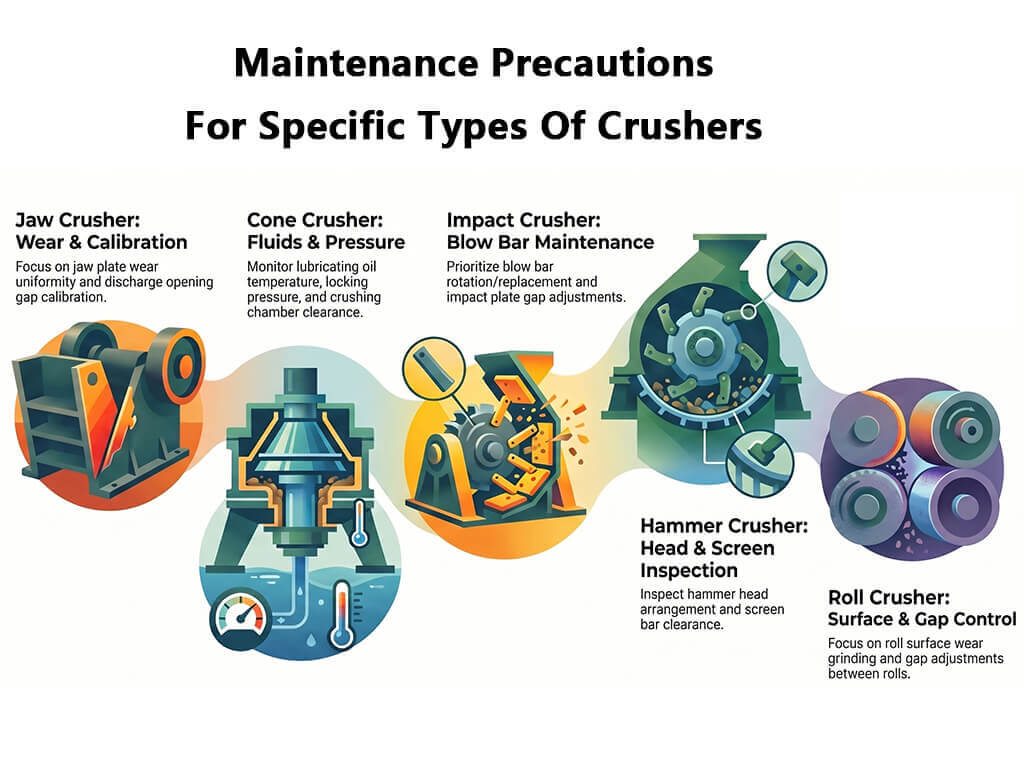
Crusher Type-Specific Maintenance Notes
| Тип дробилки | Key Maintenance Focus |
|---|---|
| Щековая дробилка | Jaw plate wear uniformity, discharge opening gap calibration. |
| Конусная дробилка | Lubricating oil temperature, locking pressure, crushing chamber clearance. |
| Роторная дробилка | Blow bar rotation/replacement, impact plate gap adjustment. |
| Молотковая дробилка | Hammer head arrangement/replacement, screen bar clearance inspection. |
| Валковая дробилка | Roll surface wear grinding, gap adjustment between two rolls. |
Common Crusher Maintenance Mistakes to Avoid
● Over- or Under-lubrication:
Excessive lubrication can rupture seals, while insufficient lubrication leads to dry friction. Adhering strictly to the manual’s dosage guidelines prevents these issues.
● Ignoring Minor Vibrations:
Slight vibrations should not be overlooked. They can gradually loosen bolts and wear down bearings, eventually leading to major equipment failure.
● Failure to Calibrate Sensors Regularly:
Sensor readings tend to drift over time. Lack of calibration can result in missed detections of actual faults or frequent false alarms.
● Using Non-OEM Parts:
The material quality and dimensional tolerances of non-OEM parts are often unreliable. While they may seem cost-effective, they actually accelerate wear and tear on the entire machine.
● Skipping Routine Inspections:
Routine inspections help identify minor issues, such as low oil levels. Skipping them allows small problems to quickly escalate into major failures.
Заключение
Maintenance is not merely a cost; it is an investment that yields the highest returns. A daily, weekly, and monthly дробилка maintenance checklist ensures smooth operation, boosts productivity, и extends the equipment’s service life. Don’t wait until bearings burn out or jaw plates fracture to regret the oversight—integrating this checklist into your daily workflow is your most effective weapon against downtime. Those who excel at preventive maintenance gain a decisive edge in production capacity, safety, and profitability. If you require a customized solution tailored to specific crusher machine models (such as jaw, cone, or impact crushers) or operating conditions, please contact us; JXSC Mining Machinery Factory is ready to create a bespoke maintenance plan just for you!

 English
  Spanish
  French
  Russian