
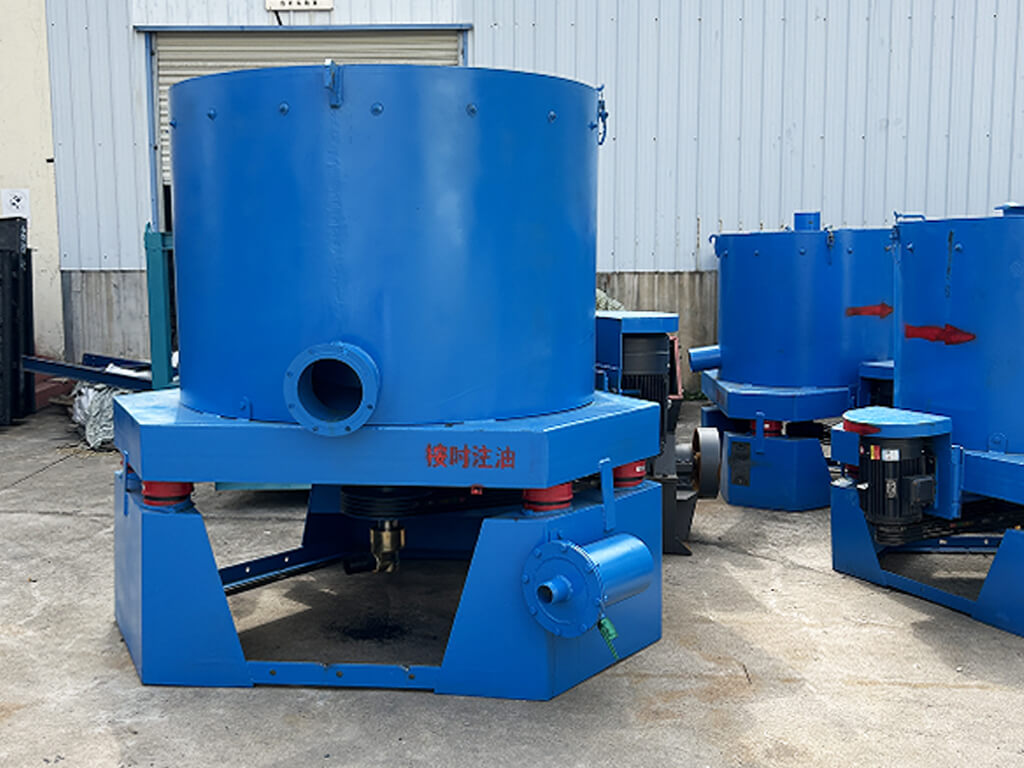
What is a centrifugal concentrator?
A центробежный концентратор, also known as a gold concentrator, is a highly efficient mineral processing device that achieves gravity separation of mineral particles in a centrifugal force field. It is particularly suitable for recovering fine-grained precious minerals that are difficult to recover with traditional equipment. Its core function is to achieve the purification and enrichment of metal minerals through physical separation without the use of chemical reagents. Its advantages lie in three aspects: high-precision separation (capable of separating minerals with a density difference of <0.5 g/cm³), ultra-fine particle recovery (down to 5-micron particles), and continuous and stable operation. Modern centrifugal concentrators have evolved into various types, including different structural designs such as vertical, horizontal, continuous discharge, and intermittent discharge.
Принцип работы
The working principle involves a motor driving a conical drum to rotate at high speed (typically several hundred to over a thousand revolutions per minute), generating a centrifugal force field inside the drum that is tens or even hundreds of times greater than Earth’s gravity. When the mineral slurry enters the drum, denser heavy minerals (such as gold, tungsten, and cassiterite) quickly overcome the resistance of the water flow and settle on the inner wall of the drum, forming a concentrate layer. Lighter minerals with lower density (such as quartz and gangue) are carried along with the slurry flow and discharged from the end of the drum as tailings.
5 common uses of centrifugal concentrators
1. Gold Ore Processing and Recovery
A Revolutionary Expert in Fine Gold Particle Recovery:
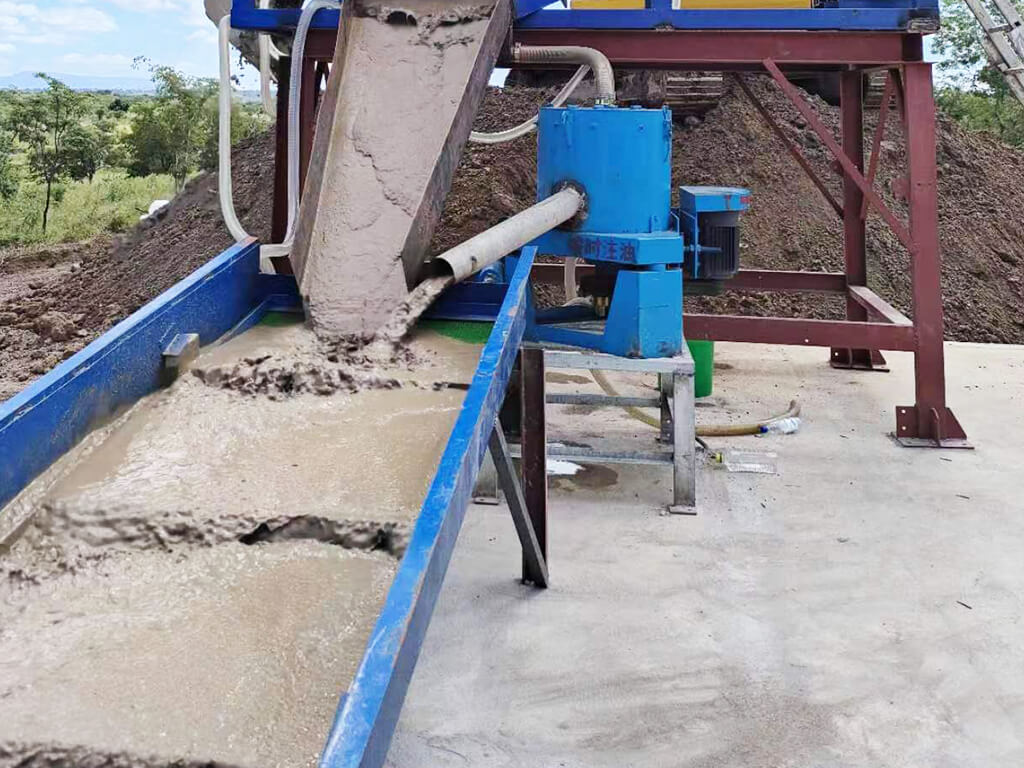
Our professional centrifugal concentrator achieves a recovery rate of 80-95% for micron-sized gold particles. This is mainly due to its unique enhanced gravity field design, which generates centrifugal force equivalent to 300-500 times the acceleration of gravity, allowing even micron-sized free gold particles to be effectively captured. JXSC also supports modular design, allowing for the flexible addition of ore washing machines, shaking tables, and sluice boxes based on processing capacity requirements. These innovations enable the centrifugal concentrator to adapt to both large-scale industrial золото production in large gold mines and the flexible operational needs of small placer gold mines.
Advantages:
The uses of centrifugal concentrators can directly process raw ore or gravity-concentrated rough concentrates without the need for complex chemical reagents, reducing production costs and minimizing environmental pollution from chemical agents. It allows for real-time automatic adjustment of parameters such as pulp concentration and drum speed, making it a key piece of equipment for achieving efficient and environmentally friendly ore processing in modern gold mines. Currently, this equipment has been successfully applied to various types of gold mines, including gold recovery projects in 100+ rock gold mines, oxidized mines, and placer gold mines in countries such as Ghana, South Africa, Senegal, Niger, Zimbabwe, Tanzania, and Burkina Faso.
2. Enrichment of Heavy Metals (Tungsten, Tin, Tantalum, etc.)
A precise catcher of high-density minerals
In the beneficiation process of heavy metal minerals such as tungsten, tin, and tantalum, the density of wolframite can reach 7.2-7.5 g/cm³, the density of cassiterite is 6.8-7.0 g/cm³, while the density of gangue minerals is only 2.6-2.8 g/cm³. These heavy metal minerals are usually embedded in the gangue in the form of fine particles. The centrifugal concentrator, through the strong centrifugal force field generated by high-speed rotation, can cause the denser tungsten, tin, and tantalum mineral particles to settle rapidly, achieving efficient separation from the gangue.
3. Placer Mining (Alluvial/River Sand Deposits)
The Ideal Choice for Mobile Placer Gold Mining
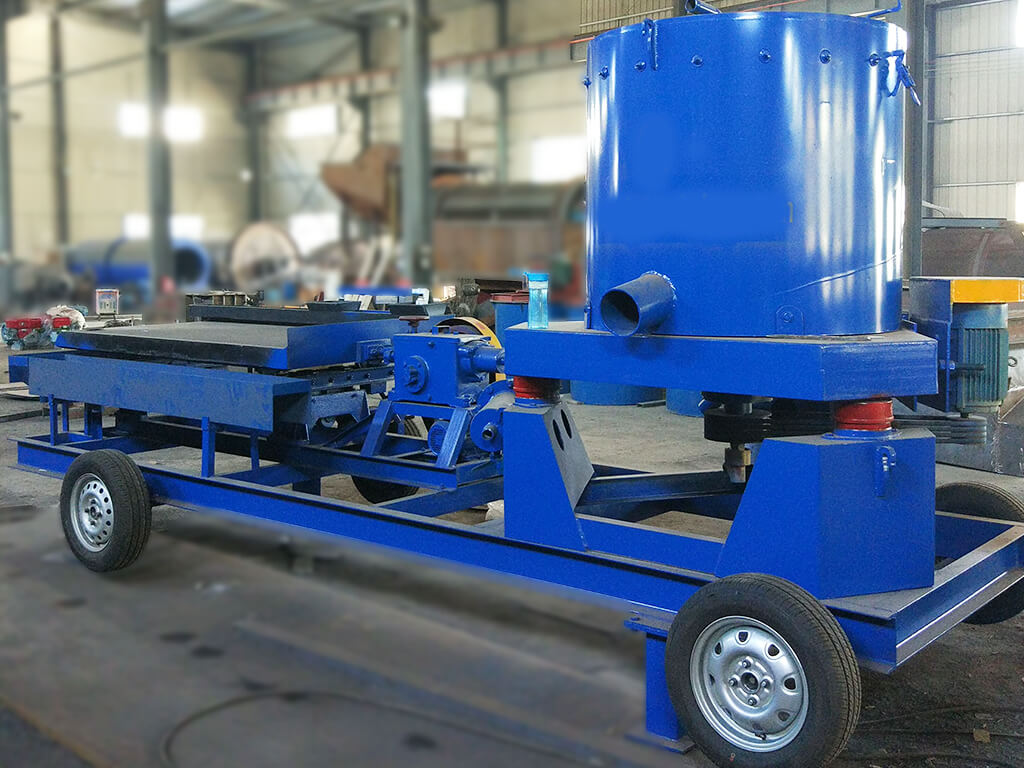
In the field of placer mining, such as the recovery of alluvial gold, beach placers, and riverbed deposits, there is a high reliance on centrifugal separation technology. Compared to traditional gold panning tools (such as spiral chutes and shaking tables), centrifugal concentrators overcome two major challenges in placer mining: the loss of ultra-fine gold particles and interference from clay. The core advantage stems from the centrifugal concentrator’s self-cleaning function and continuous discharge mechanism: after the ore enters the rotating drum through the feed port, centrifugal force causes heavy minerals (such as gold particles and platinum group metals) to cling to the drum wall, while light silt and sand are quickly discharged under the flushing action of high-pressure water, thus achieving efficient separation with zero clogging.
Furthermore, mobile centrifugal concentrators can be installed on mobile mining vehicles and can also be mounted on flotation vessels, land trucks, or small mining sites, making them perfectly suited to complex environments with dispersed mining locations and frequent site changes.
4. Tailings Reprocessing and Resource Recovery
A Green “Gold Rush” for Turning Waste into Treasure
Tailings, the by-product of mining and mineral processing, have long been considered industrial waste, occupying vast amounts of land and posing environmental pollution risks. However, tailings actually contain abundant valuable metals such as gold, silver, copper, tungsten, and tin. Due to their fine particle size and low grade, traditional mineral processing techniques struggle to effectively recover these metals. However, centrifugal concentrators, with their high-efficiency recovery capabilities for ultra-fine particles, can effectively capture the fine-grained metals lost in the tailings, providing an efficient solution for the secondary utilization of tailings resources.
5. Laboratory and Small-Scale Mining
Lab uses of centrifugal concentrators
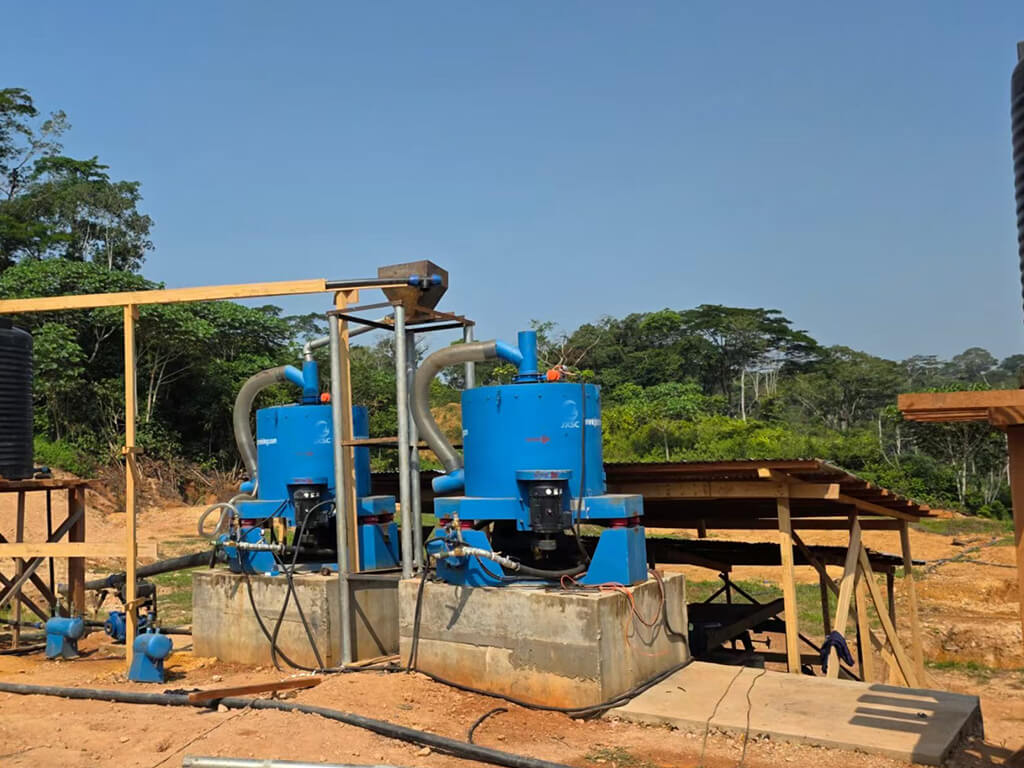
Laboratory mineral processing research typically involves processing small quantities of ore samples, requiring equipment with extremely high demands on size, ease of operation, and separation accuracy. Small centrifugal concentrators are compact and lightweight, and can be placed directly on a laboratory bench, meeting the needs of limited laboratory space. Simultaneously, parameters such as drum speed, feed concentration, and separation time can be quickly adjusted through manual or semi-automatic control systems, facilitating multiple comparative experiments and optimization of mineral processing parameters by researchers.
Compared to other gravity separation equipment
| Тип оборудования | Мощность обработки | Footprint | Automation Level | Applicable Scenarios |
|---|---|---|---|---|
| Centrifugal Concentrator | 0.5-60 t/h | Small | Высокий | Fine-grained slime, low-grade ore |
| Встряхивающий стол | 0.5-2 t/h | Large | Средний | Fine-grained mineral concentration |
| Спиральный желоб | 0.15-10 t/h | Средний | Low | Pre-selection of medium-grained ore |
| Джиг-сепаратор | 1-20 t/h | Large | Средний | Rough-grained ore enrichment |
Compared to traditional gravity separation equipment such as shaking tables and spiral chutes, centrifugal concentrators have a larger processing capacity and offer significant advantages in processing fine-grained minerals and low-grade ores. They have a low lower limit for particle size recovery, effectively recovering fine-grained minerals as small as 37–19 micrometers. Furthermore, they require a small footprint and have a high degree of automation.
How to Choose the Right Centrifugal Concentrator?
(1). Matching Ore Characteristics
● For processing fine-grained ore (<0.074mm), a high-speed model should be selected to enhance centrifugal force. Coarse-grained ore is better suited to low-speed, large-diameter equipment to prevent minerals from being thrown out. High-density minerals (such as gold and tungsten) can use lightweight equipment, while low-density minerals (such as tin sand) require higher rotational speed to ensure effective separation.
(2). Adapting to Production Scale and Needs
● Small mines or laboratories are suitable for portable models with a processing capacity of 0.5-3 t/h, which are lightweight and energy-efficient. Large-scale industrial production requires large equipment with a capacity of 8-60 t/h.
(3). Evaluating Environmental Adaptability and Cost
● Using wear-resistant materials (such as polyurethane lining) can extend service life and reduce maintenance frequency. Furthermore, small mines or individual miners can choose portable equipment; modularly designed equipment is easy to disassemble and transport, allowing for flexible deployment or on-site processing. Consider energy consumption, maintenance costs, and the cost of wear parts to choose the most cost-effective solution.
Perfect solution for recovering fine-grained minerals
Centrifugal concentrators are relatively inexpensive mining гравитационные сепараторы, occupy a small footprint, and can be flexibly arranged according to the actual conditions of the mine. They can even be installed on mobile mining vehicles, enabling on-site processing as mining progresses. Furthermore, centrifugal concentrators are highly adaptable to different types of ore and can process various metal ores such as gold, silver, tungsten, and tin. They also offer high recovery efficiency for fine-grained metals, effectively improving resource utilization and economic benefits for small-scale mines.
Заключение
With their excellent separation efficiency, centrifugal concentrators demonstrate irreplaceable value in primary ore processing, gold processing, placer gold mining, tailings recovery, and small-scale mining. In actual mineral processing operations, JXSC горный машиностроительный завод needs to combine different uses of centrifugal concentrators and then select equipment based on factors such as ore properties, production scale, and separation requirements to achieve optimal separation results and economic benefits.
 English
  Spanish
  French
  Russian