
Have you ever wondered why the processing of sulfide gold ores is so much more complex than that of oxide ores? In gold sulfide ores, gold is encased in layers of sulfides such as pyrite and arsenopyrite, and direct cyanidation often yields very little recovery, which is a major headache for countless mineral processing professionals. Consequently, a scientifically sound configuration of processing equipment and operational workflows is the key to unlocking these “refractory” (difficult-to-process) resources. This article starts with the ore’s essential characteristics, such as sulfur content, arsenic content, and gold particle size. It focuses on the precise equipment configuration at each stage of crushing, grinding, gravity, flotation, pretreatment, leaching, and purification. This article will guide you through a systematic understanding of the complete sulfide gold ore processing equipment chain, clarifying the selection criteria and key points of each step, helping you avoid detours, reduce costs, and truly improve the recovery rate.
What Makes Sulfide Gold Ores Difficult?
Gold Sulfide Ore Characteristics
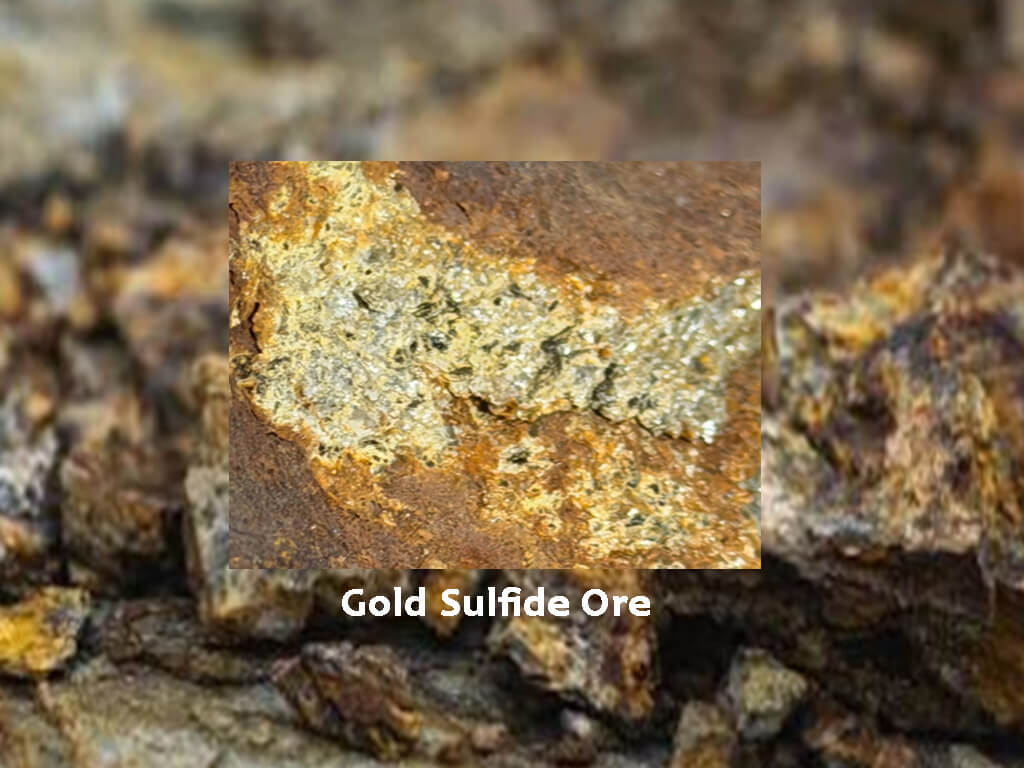
Gold sulfide minerals refer to a class of ores in which gold is present in the form of fine particles in sulfide minerals such as pyrite and arsenopyrite. These ores are widely distributed globally and represent a substantial resource. Furthermore, they often contain impurities like arsenic and copper, which may lead to the generation of hazardous substances during the smelting process.
Unlike oxide minerals where free gold can be directly leached, gold in sulfide minerals is often distributed in fine, micro-grained, or even lattice-like forms. Because some of the gold is tightly encapsulated within the sulfide matrix, it remains difficult to fully liberate even after conventional grinding. Consequently, the processing of such ores involves more complex workflows and higher capital investment, while demanding a greater degree of synergy between equipment and technical processes. In short, while sulfide ores offer significant resource potential, they also serve as a rigorous test of a project’s technical expertise and process capabilities.
Key Processing Challenges:
● Strong Encapsulation: Fine-grained gold is deeply embedded within the crystal lattice of sulfide minerals, making it difficult to expose the gold surfaces through conventional grinding. Breaking down the mineral structure is essential; otherwise, recovery rates will be extremely low.
● Chemical Interference: Sulfide minerals engage in competing reactions with cyanide and oxygen, leading to significantly higher reagent consumption. Furthermore, the presence of elements such as arsenic or carbon in some ores can further inhibit the leaching of gold.
● Environmental Risks: The management of sulfur- and arsenic-bearing waste residues poses a risk of toxic substance release, complicating tailings disposal and necessitating specialized processes to control emissions.
Complete Process Flow for Processing Gold Sulfide Ore
Stage 1: Crushing and Screening
Run-of-mine ore undergoes primary and secondary crushing to reach the particle size required for the grinding circuit. A jaw crusher typically handles the primary stage, followed by a cone crusher for secondary crushing. Screening equipment monitors each stage, automatically returning oversized material for further crushing. An optimized crushing ratio helps minimize energy loss in the subsequent grinding process.
Stage 2: Grinding and Classification
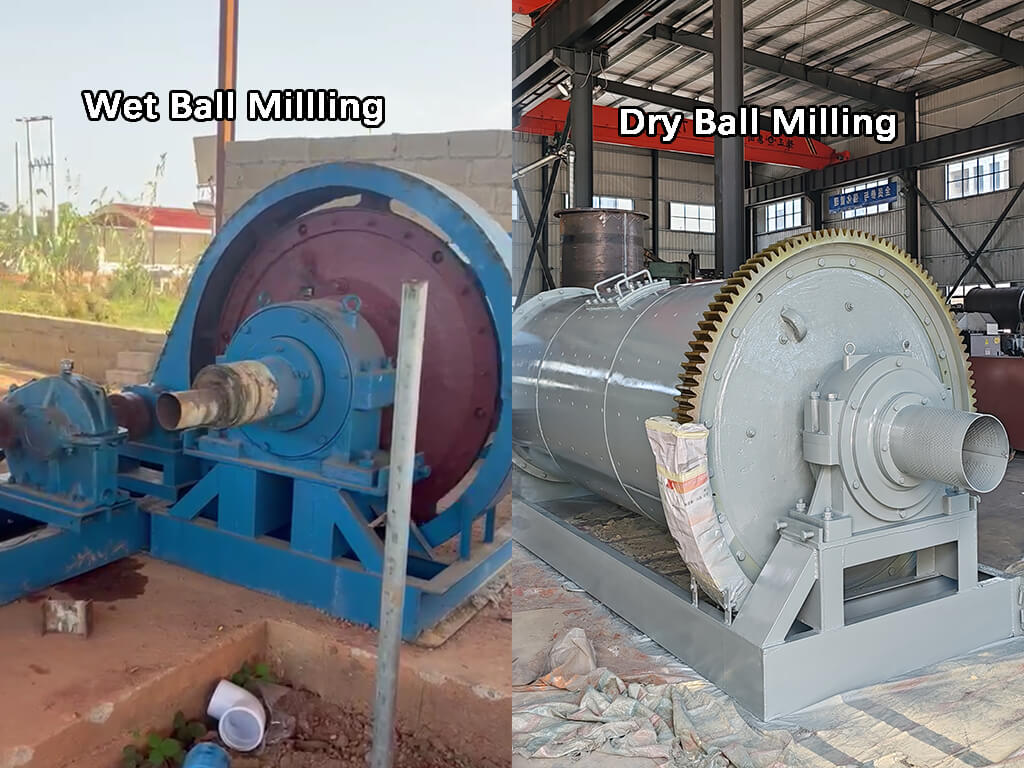
The crushed product enters a ball mill, where it is further reduced in size through the action of steel grinding media. Grinding fineness is crucial for the complete dissociation of gold and sulfides and is the foundation of all stages. Classification devices, such as hydrocyclones, separate the material: particles that meet the size specifications proceed to the next stage, while oversized particles are returned for further grinding to ensure a uniform particle size distribution.
Stage 3: Enrichment via Gravity Separation and Flotation
Coarse, liberated gold particles are best recovered through gravity separation, while fine, encapsulated gold is extracted via flotation. With the aid of collectors and frothers, gold-bearing sulfides are floated to the surface to form a concentrate. This enrichment step significantly reduces the volume of material requiring leaching, while simultaneously lowering reagent consumption and energy costs.
Stage 4: Pretreatment
If gold is deeply encapsulated within sulfide minerals, direct leaching is often ineffective, necessitating a pretreatment step. Roasting uses high-temperature oxidation to decompose sulfides and expose the gold particles. Pressure oxidation achieves the same objective under conditions of high oxygen pressure. Biological oxidation relies on the action of microorganisms and is carried out under mild and environmentally friendly conditions. The choice among these methods depends on the specific characteristics of the ore and an assessment of economic feasibility.
Stage 5: Leaching
Cyanidation is the core process for gold extraction, requiring precise control over cyanide concentration and pH levels. In the Carbon-in-Pulp (CIP) process, activated carbon adsorbs gold that has already been dissolved, whereas the Carbon-in-Leach (CIL) process combines leaching and adsorption simultaneously. Parameters such as leaching duration, reagent dosage, and oxygenation levels must be carefully calibrated.
Stage 6: Gold Recovery
Gold-loaded carbon undergoes desorption (elution), which releases the gold from the activated carbon. The resulting pregnant solution is then subjected to electrowinning, where gold is deposited onto the cathode as crude gold. Crude gold undergoes smelting and refining, ultimately being cast into high-purity gold ingots.
Stage 7: Tailings Management
Tailings generated from the leaching process contain residual cyanides and sulfides and cannot be discharged directly. They must undergo neutralization and oxidation to eliminate the toxicity of cyanide ions. Solid tailings are transported to a tailings storage facility for secure containment, preventing leakage and environmental contamination. Tailings-derived water that meets discharge standards can be recycled back into the production process.
Key Equipment List For Gold Sulfide Ore Processing
1. Crushing Equipment:
En trituradora de mandíbulas is the most common primary crushing unit in mineral processing plants. Known for its simple structure and reliable operation, it is tasked with the coarse crushing of large run-of-mine ore. It offers a moderate reduction ratio and produces a relatively consistent output size.
Trituradoras de cono are used for secondary and tertiary (fine) crushing and are capable of processing harder ores. Combining these two types of equipment creates a standard two-stage crushing circuit.
Equipment selection should be based on parameters such as feed size, throughput capacity, and ore hardness to ensure that production output aligns with the requirements of the subsequent grinding stage.
2. Grinding and Classification Equipment:
Molinos de bolas utilize the impact and grinding action of steel balls to reduce ore to a particle size of less than 0.074 mm. Clasificadores en espiral separate materials based on settling rates within the pulp, enabling precise classification of coarse and fine particles. When integrated into a closed-loop system, these units can achieve a grinding product qualification rate of over 95%.
3. Gravity Concentration Equipment:
Centrifugal concentrators are highly efficient for recovering coarse, free-milling gold. Mesas vibratorias are subsequently used for the precise recovery of fine particles; they feature a simple design and are easy to operate. Capturing coarse gold via gravity concentration early in the process reduces the load on downstream flotation and leaching circuits, ultimately improving overall recovery rates.
4. Flotation Equipment:
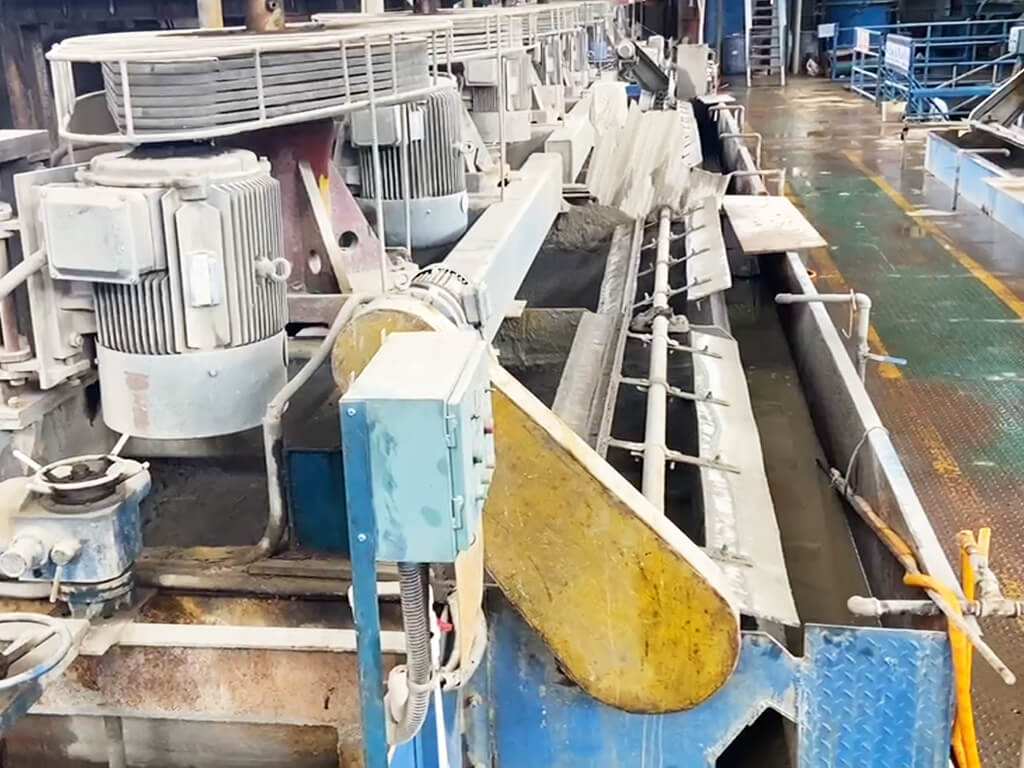
Mechanically agitated flotation cells are the industry standard for processing gold sulfide ores. They use an impeller to mix the ore pulp with chemical reagents, creating a stable froth layer. Automated reagent dosing systems precisely control the addition of collectors and frothers to ensure optimal flotation performance. The reagent system is the key to flotation operations, encompassing the preparation and addition of various reagents such as collectors, frothers, and modifiers. The specific type, dosage, and sequence of reagent addition directly influence flotation results.
5. Pretreatment Equipment:
Roasting furnaces utilize a high-temperature oxidizing atmosphere to facilitate the decomposition of sulfides, thereby exposing gold particles. Pressure oxidation autoclaves operate under conditions of high oxygen concentration, high pressure, and high temperature; while this ensures more thorough reactions, it imposes stringent requirements on materials and process control. Each method has its own specific applications; the choice between them should be made carefully, taking into account the characteristics of the ore and environmental regulatory constraints.
6. Leaching and Recovery Equipment:
Leaching tanks employ agitation and aeration to maintain a uniform pulp consistency and ensure adequate oxygen concentration. The volume and number of tanks must be designed based on the required processing capacity and leaching duration. Activated carbon systems adsorb gold from the solution, facilitating solid-liquid separation and gold enrichment. Electrowinning units recover gold from the pregnant (eluted) solution, with gold depositing onto the cathode as crude gold.
7. Tailings Management Equipment:
Tailings treatment facilities typically include neutralization tanks to eliminate the toxicity of residual cyanides. Oxidation-aeration systems can further decompose harmful components, thereby reducing environmental risks. Espesantes y filter presses are used for the dewatering and thickening of tailings, which reduces the volume requiring storage. Tailings dams and monitoring systems ensure the safety of the storage site and keep seepage under control. Tailings water that meets environmental standards can be recycled back into the process, enabling resource recovery. The integration of appropriate environmental protection equipment has become an essential requirement for the compliant operation of modern mineral processing plants.
How to Select the Right Equipment For Gold Sulfide Ore?
Selection Dimension | Key Considerations | Recommended Equipment | Ventajas |
Tipo de mineral | Gold particle size, whether encapsulated | Gravity equipment for coarse free gold; Flotation machines for fine encapsulated gold | Gravity process is simple with low cost; Flotation offers high enrichment efficiency |
Sulfur/Arsenic Content | High-sulfur, high-arsenic ores are refractory | Requires an additional roasting furnace or pressure oxidation autoclave | Effectively liberates encapsulated gold, improves leaching recovery |
Processing Scale | Daily throughput and number of production lines | Small-scale plants use small mills; large-scale plants use large ball mills | Matches production capacity, avoids equipment idling or shortage |
Investment & Budget | Balance between initial investment and operating costs | Roasting for limited budgets; Bio-oxidation for eco-priority | Balances cost and compliance, considers long-term benefits |
Environmental Requirements | Waste residue and wastewater discharge standards | Equip with tailings neutralization, dewatering and thickener recycle systems | Avoids emission penalties and production shutdown risks |
Conclusión
In the processing of gold sulfide ore, we have systematically sorted out the complete equipment chain and process flow from crushing, grinding, and flotation enrichment to pretreatment, leaching, and gold recovery, as well as tailings treatment, starting from the characteristics of the ore. From primary crushing to concentrate processing, the selection of equipment at every stage must be precisely aligned with the ore’s unique properties (such as sulfur content and gold particle distribution). Especially when dealing with difficult-to-process ores such as those with high sulfur and high arsenic content, a single process is often ineffective. Only by grasping the nature of the ore and taking into account investment budgets, environmental protection requirements, and recycling benefits can the entire production line operate efficiently and produce continuously. If you are facing challenges with process design or equipment selection, please feel free to contact us. JXSC will provide customized process solutions y equipment configuration recommendations tailored to your specific ore characteristics, processing scale, and budget.
 English
 Spanish
 French
 Russian