
From the weaponry and armor of the Bronze Age to the circuit boards found in today’s electronic devices, tin is ubiquitous. But where does tin come from, and what challenges arise during its extraction? Of the approximately 300,000 tons of tin produced each year globally, more than 90% is derived from four specific types of minerals: cassiterite, stannite, cylindrite, and tin-tantalum-niobium-bearing ores. Each possesses a unique chemical composition and crystal structure, which in turn dictates a distinct processing route. Consequently, understanding the physical properties and appropriate processing techniques for these minerals is fundamental to the efficient recovery of tin resources. This article will analyze the 4 major tin-bearing minerals and their processing methods one by one, from gravity separation to pyrometallurgy, clarifying the mystery of tin transforming from rock into pure metal.
What are tin-bearing minerals?
To date, geologists have identified over fifty types of tin-bearing minerals, about twenty of which are of significant value for industrial mining. The tin minerals generally fall into three categories: oxides, sulfides, or silicates. Notable examples include cassiterite (the most economically significant), stannite, and the rarer cylindrite. Most other tin-bearing minerals are either too low in concentration or too limited in quantity to support economically viable extraction, serving primarily as subjects for academic research.
Tin is extremely rare in the Earth’s crust, far less abundant than common metals such as copper and iron. Its average concentration is only about 2 ppm (parts per million), meaning that for every million parts of crustal material, tin accounts for just two parts. This high degree of scarcity has led to tin being classified as a valuable, strategic, and rare metal.
Detailed Explanation of the 4 Tin-Bearing Minerals and Processing Challenges
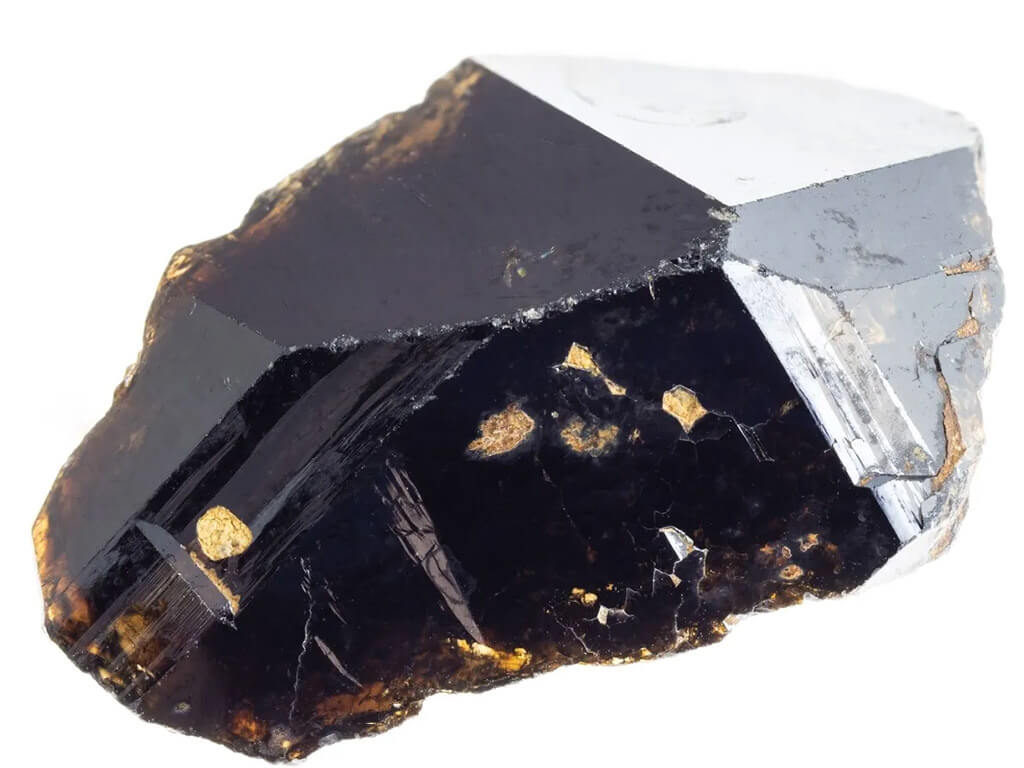
1. Cassiterite
(1) Characteristics:
With the chemical formula SnO₂, cassiterite is the only naturally occurring tin-bearing oxide mineral and has a theoretical tin content of up to 78.77%. Due to its high density, chemical stability, wear resistance, and resistance to oxidation, it has long served as the primary global industrial source of tin, accounting for over 90% of total tin production. From the ancient Bronze Age to the modern electronics industry, cassiterite has remained the cornerstone of the tin supply. Consequently, it is almost invariably the primary target mineral for the vast majority of mineral processing plants.
(2) Distribution:
Cassiterite resources are concentrated in specific regions worldwide, with China, Indonesia, Myanmar, and Peru being the most significant producers. In China, mining areas such as Gejiu (Yunnan) and Dachang (Guangxi) have long histories of extraction; Indonesia’s deposits are primarily alluvial (placer) in nature, while Myanmar has seen notable growth in production in recent years.
(3) Challenges in Mineral Processing:
The primary challenge lies in the fact that while cassiterite is hard, it is also highly susceptible to over-grinding. Any lack of caution during the milling process can result in the creation of excessive fine particles, which severely compromises the efficiency of gravity separation. Because these fine cassiterite particles have low mass and a high specific surface area, they are difficult to capture effectively through conventional gravity-based methods, leading to a significant drop in recovery rates. In addition, the similarity of surface properties with gangue minerals such as quartz and fluorite also brings considerable trouble to subsequent sorting.
2. Stannite
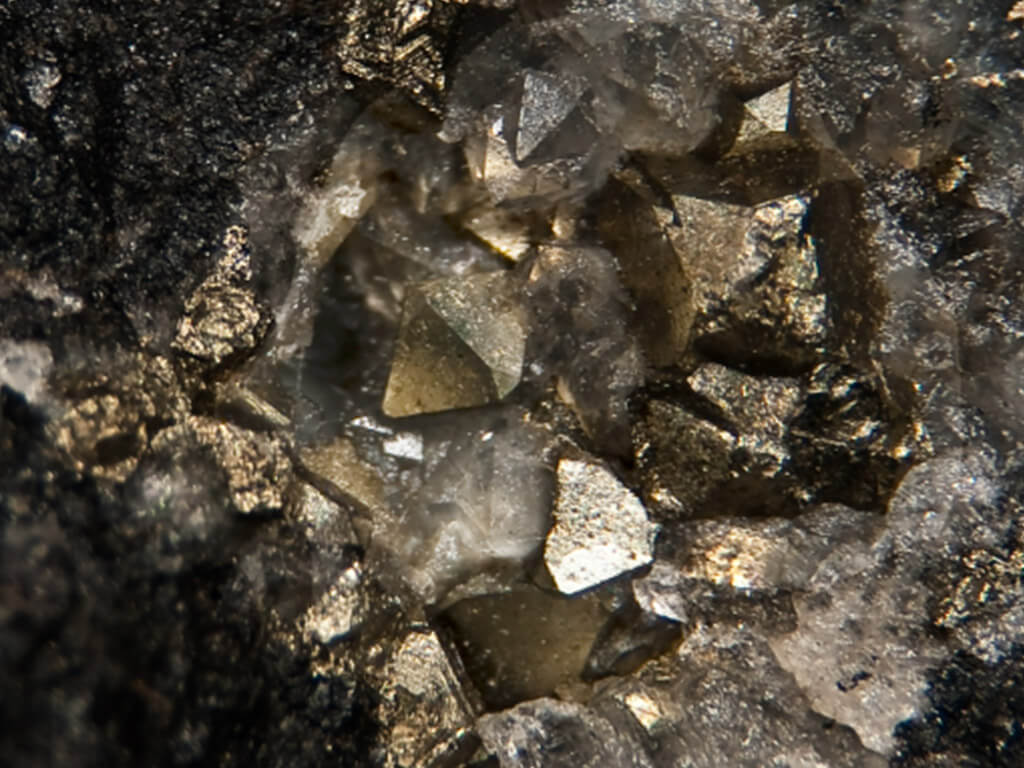
(1) Characteristics
Stannite is a sulfide-type tin mineral with a theoretical tin content of approximately 27%. Its primary distinction from cassiterite—the most common tin mineral—is the presence of sulfur, which fundamentally alters the required processing route. Because stannite frequently coexists with the sulfides of copper, lead, and zinc, both mineral processing and smelting are particularly challenging. Compared to cassiterite, stannite has limited industrial application and is typically recovered only as a by-product in specific mining districts.
(2) Major Deposits
Stannite is primarily found in hard-rock deposits, such as those in Bolivia and Peru. These regions are characterized by complex geological conditions and deeply buried ore bodies, resulting in relatively high extraction costs.
(3) Challenges in Mineral Processing
The difficulty in processing stannite-bearing ores stems from the fact that the mineral is intricately intergrown with various other sulfides; attempting to separate these via flotation often leads to significant interference between the different mineral species. Furthermore, stannite frequently occurs as fine-grained disseminations, making it difficult to achieve full liberation during grinding—a limitation that hinders effective enrichment. Additionally, the presence of numerous associated elements means that even minor process deviations can negatively impact both the grade and the recovery rate of the final concentrate.
3. Cylindrite
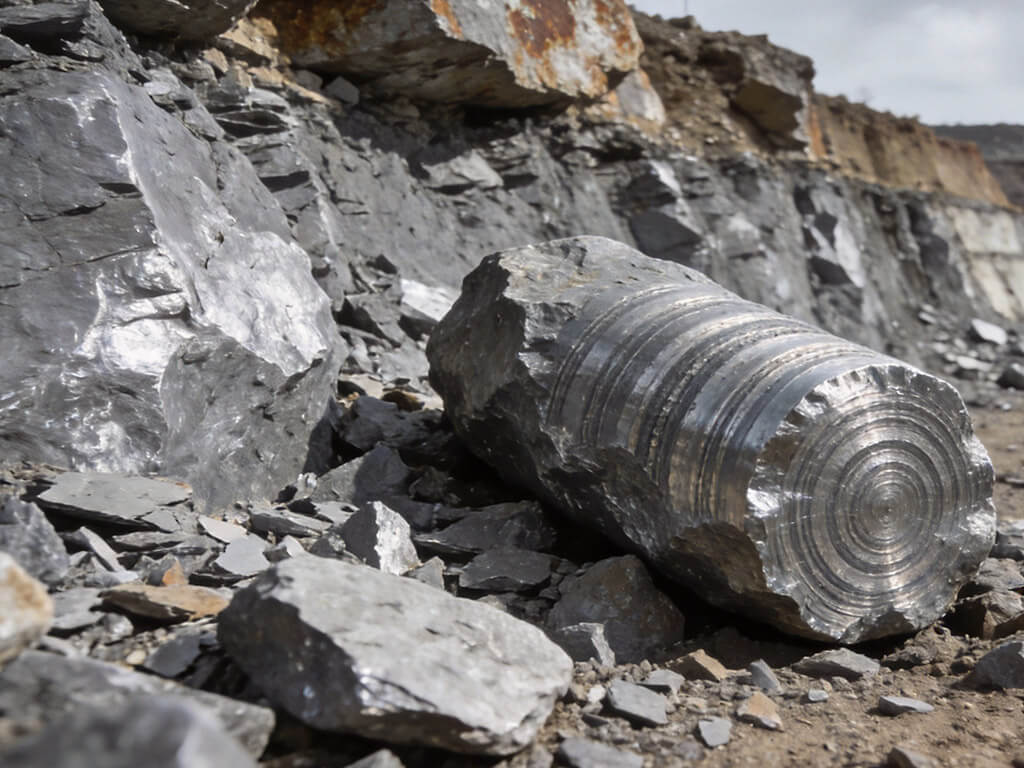
(1) Characteristics:
With the chemical formula Pb₃Sn₄FeSb₂S₁₄, cylindrite is clearly a highly complex mineral. It is a multi-metallic sulfosalt containing lead, tin, iron, antimony, and sulfur. Due to its low tin grade and high extraction costs, its current industrial value is limited; it is typically recovered only as a byproduct from complex ore deposits.
(2) Primary Distribution:
Cylindrite is primarily found in regions such as Bolivia and Germany, where multi-metallic ore deposits provide an ideal environment for its formation and enrichment.
(3) Challenges in Mineral Processing:
The chemical properties of lead, tin, and antimony are so similar that separating them cleanly and effectively is extremely difficult. Furthermore, because the mineral grains are very fine, any lack of precision during the grinding process can easily lead to the loss of tin. Additionally, a high sulfide content increases the consumption of flotation reagents, placing significant pressure on production costs.
4. Tantalum-Niobium-Tin Composite Ores
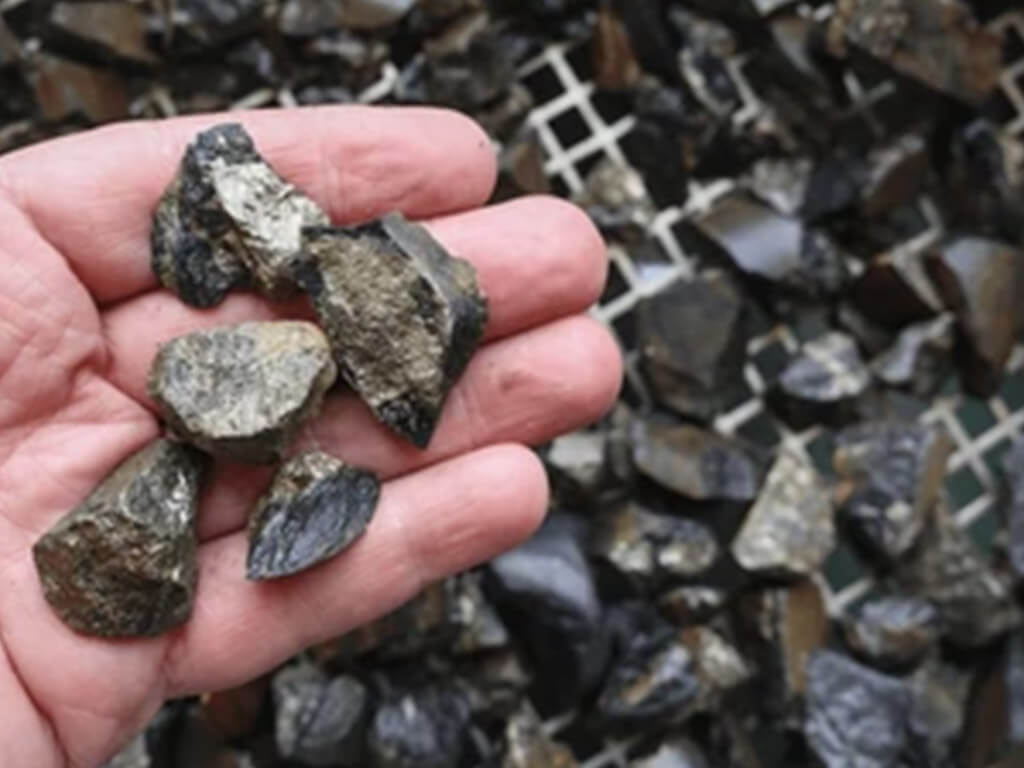
(1) Characteristics:
These deposits are characterized by the co-occurrence of cassiterite (tin ore) with tantalite and columbite (tantalum and niobium ores). While they possess significant economic value, they are notoriously difficult to process. Typically, the tin grade ranges from 0.2% to 1.5%, with a tantalum-niobium oxide content of 0.01% to 0.1%.
(2) Primary Distribution:
Such composite ores are found in the Democratic Republic of the Congo, Nigeria, Australia, and parts of South America. Additionally, they are occasionally discovered in certain pegmatite deposits within China.
(3) Processing Challenges:
The primary challenge in mineral processing lies in the fact that tin, tantalum, and niobium share very similar densities and magnetic properties, making it difficult to separate them using a single, straightforward process. Furthermore, while the mineral grains are often relatively coarse, their intergrowth patterns are complex; if the processing flow is not designed with precision, it can easily lead to the loss of one or more of these metals.
Tin Processing Methods
1. Gravity Separation
● Principio
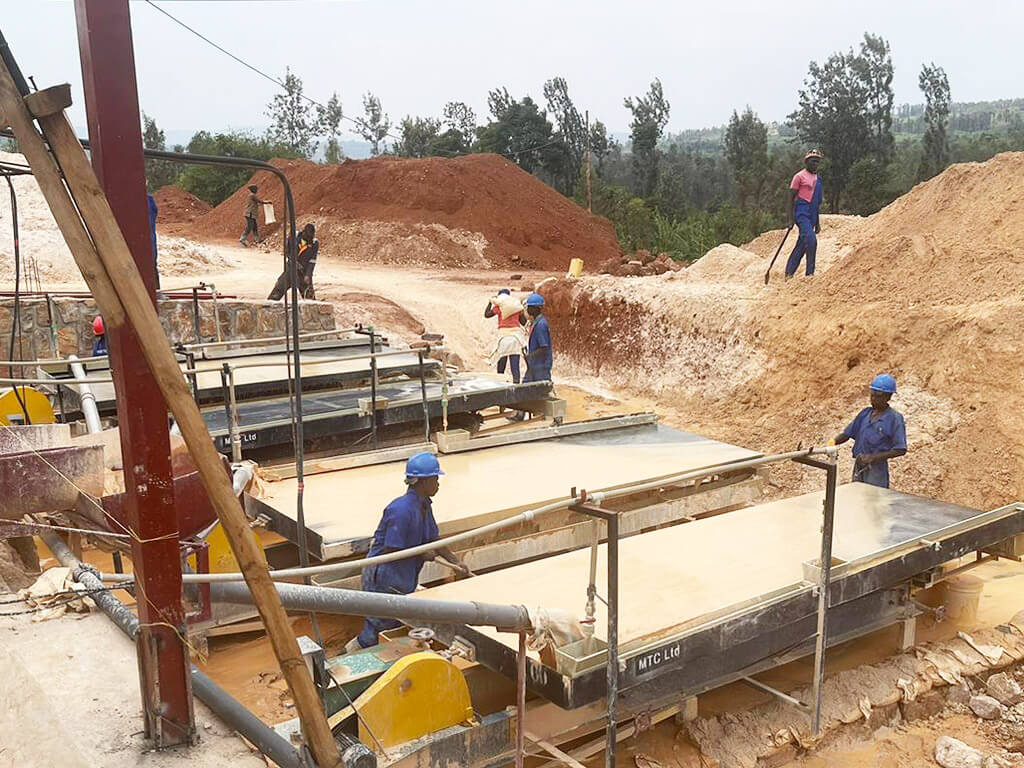
This method achieves separation based on density differences between minerals, without the need for chemical reagents. Since the density of cassiterite (tin ore) is significantly higher than that of gangue minerals, the two can be separated and concentrated through hydraulic action. As a purely physical process, it offers both environmental and cost advantages, making it the most widely used fundamental technique for tin ore beneficiation.
● Main Equipment
Common equipo de separación por gravedad includes jigs, shaking tables, and spiral chutes, each specialized for different particle size ranges. Jigs are typically used for coarser particles, while spiral chutes are frequently employed in alluvial (placer) mining operations. Shaking tables are capable of processing particles in the 0.02–2 mm range and are particularly effective for recovering fine-grained minerals.
● Applicable Scenarios
This method is best suited for the preliminary concentration of alluvial tin deposits and primary tin ores, especially those where the minerals are well-liberated. However, when processing ores with fine-grained dissemination, gravity separation must be combined with flotation to ensure effective recovery.
2. Flotación
● Principio
Flotación utilizes chemical reagents to alter the wettability of mineral surfaces, rendering the surface of cassiterite (tin oxide) hydrophobic. This allows the mineral to attach to air bubbles and rise to the surface for separation. Meanwhile, gangue minerals remain hydrophilic and stay within the pulp, enabling the two components to be separated. This method is particularly effective for recovering fine-grained cassiterite, compensating for the limitations of gravity separation in the fine-particle size range.
● Key Agents
Collectors are mainly hydroxamic acids, such as benzohydroxamic acid and salicylic acid, which are the most widely used. Depressants are employed to suppress interference from gangue minerals, while activators enhance the surface activity of the cassiterite. The optimal ratio of these three types of reagents directly determines the grade and recovery rate of the final concentrate.
● Aplicaciones
Flotation is suitable for ultra-fine cassiterite and complex sulfide-type ores, serving as a crucial supplement when gravity separation is ineffective. For polymetallic ores, such as those containing stannite or cylindrite, flotation is the primary method for achieving separation. However, for ores with a high clay or slime content, a desliming (de-sliming) process is required beforehand; otherwise, the separation efficiency will be compromised.
3. Magnetic and Electrical Separation
● Principles
Separación magnética relies on differences in the magnetic properties of minerals; highly magnetic iron-bearing minerals and wolframite are attracted and removed, while cassiterite—possessing weak magnetic properties—remains behind. Electrical separation, by contrast, utilizes differences in electrical conductivity to achieve separation. These two methods are often employed in tandem as auxiliary processes.
● Equipo clave
A three-disk magnetic separator is typically used to perform staged separation based on magnetic field intensity, allowing for the selective capture of weakly, moderately, and strongly magnetic minerals, thereby effectively separating iron impurities from cassiterite. Electrical separation primarily utilizes high-voltage equipment to precisely remove conductive minerals from non-conductive (insulating) gangue. The specific configuration is determined based on the results of mineral property testing.
● Aplicaciones
These methods are frequently applied to the purification of concentrates following gravity or flotation processes; they are particularly effective for treating tin ores with high iron content. However, electrostatic separation is mainly used for the deep separation of complex rare metal symbiotic ores and for purification processes with high purity requirements, but the equipment investment is relatively large.
4 Main Tin-Bearing Minerals Processing Methods
| Nombre del mineral | Core Process | Main Equipment/Methods | Key Points |
|---|---|---|---|
| Cassiterite | Gravity separation as primary + magnetic separation/flotation | Shaking table, spiral chute, jig machine | Leverage high density to reject gangue; use flotation for fine particles or magnetic separation for impurity removal |
| Stannite | Flotation as primary | Flotation machine (desulfurize first, then enrich tin) | Must first separate associated sulfides such as copper, lead, zinc; reagent ratios are critical |
| Cylindrite | Flotation + gravity separation combined | Flotation machine, supplemented by gravity or magnetic separation | Separate lead-antimony sulfides first, then enrich tin by gravity; add pretreatment if arsenic is present |
| Tin-Tantalum-Niobium Complex Ore | Gravity + magnetic + electrostatic separation | Gravity preconcentration, magnetic separator, electrostatic separator | Density and magnetic properties of the three metals are similar; require multi-stage sequential separation |
Conclusión
Although tin is a rare and precious resource, its beneficiation follows a clear, systematic approach: by analyzing the chemical composition of the ore, one can select the optimal processing equipment and reagent regimes to extract maximum value from this scarce resource. While minerals such as cassiterite, stannite, cylindrite, and complex tin-tantalum-niobium ores all belong to the “tin family,” each possesses distinct processing characteristics. Effective tin ore beneficiation requires methods tailored to the specific properties of the mineral: gravity separation is ideal for high-density cassiterite; flotation is effective for recovering fine-grained tin minerals; and magnetic or electrical separation is well-suited for iron-bearing or complex, multi-mineral ores. If you require assistance with the selection of tin processing solutions o equipment, please feel free to contact us. Let JXSC leverage its professional expertise to help you improve your beneficiation performance and maximize the value of your mineral resources!
 English
 Spanish
 French
 Russian