- Inicio
- Blog
- Solución mineral
- Barite Purification Made Simple: 5 Proven Methods Compared
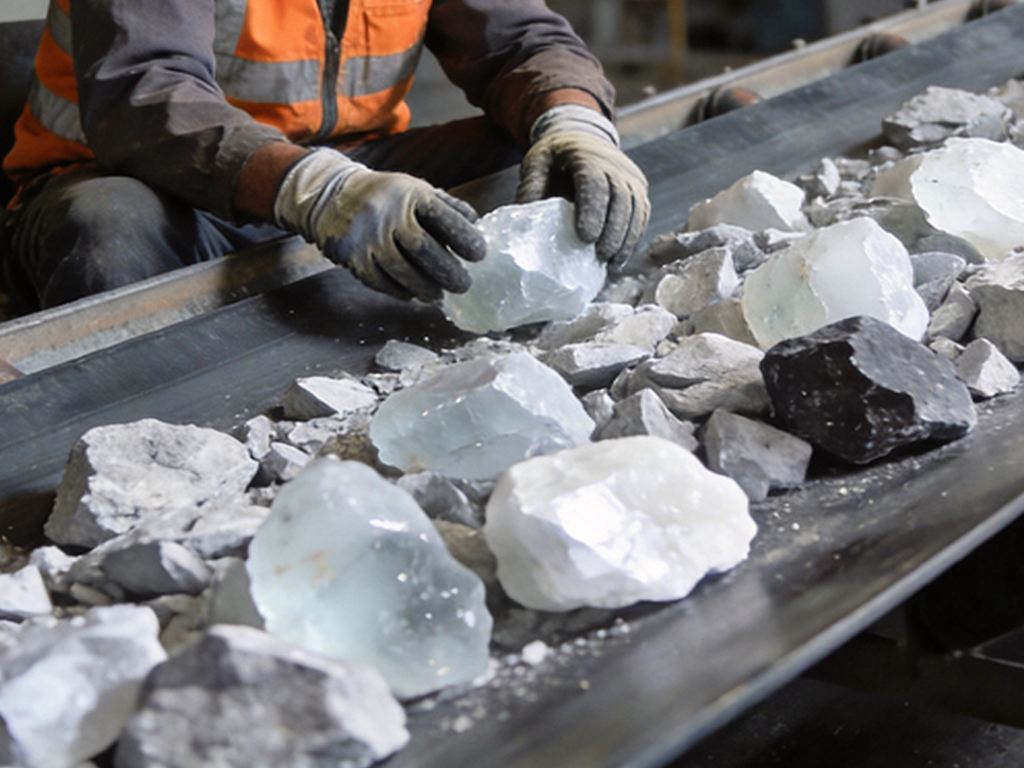
Are you struggling with the challenge of effectively purifying barite ore? As the primary weighting agent for oil and gas drilling fluids worldwide, barite’s market value continues to rise. However, with high-grade deposits becoming increasingly depleted, vast quantities of low-grade ore—characterized by high impurity levels and fine dissemination—are difficult to utilize directly. Mineral processing engineers and investors often face a dilemma when choosing between the 5 proven barite purification methods: flotation, gravity separation, magnetic separation, leaching, and thermal treatment (roasting). This article systematically compares the key parameters of these five methods to help you quickly identify the purification route best suited to your specific ore.
Why Barite Purification Matters?
Impact of Barite Purity on Drilling Mud Density
The purity of barite directly determines the density performance of drilling mud. The presence of impurities lowers the mud’s specific gravity, thereby weakening its ability to balance formation pressure. API standards mandate a minimum specific gravity of 4.2 for drilling-grade barite; consequently, effective purification to remove low-density gangue minerals is essential to ensure drilling safety and prevent blowout accidents.
High-Value Markets for High-Purity Barite
The market value of high-purity barite far exceeds that of drilling-grade products. In the chemical industry, it is used to produce barium salts, while the coatings industry values its whiteness and chemical inertness. Pharmaceutical-grade barite requires a purity of ≥99.5%, as lower purity levels could compromise the safety of X-ray contrast agents. For these high-end applications, prices increase exponentially with each increase in purity. Thus, the level of purification determines product positioning, making the optimization of purification technology the key to driving profit growth in the industry.
Global Barite Resources and Grade Status
Although global barite reserves are abundant, high-grade deposits are concentrated in a few regions, such as India, China, and Morocco. However, easily processed, high-quality, high-grade deposits are dwindling, while the proportion of low-grade, complex ores continues to rise; this underscores the growing importance of advanced barite beneficiation and purification technologies. Furthermore, increasingly stringent environmental regulations are placing greater demands on traditional acid washing and flotation processes, accelerating the industry’s transition toward eco-friendly purification solutions.
5 Proven Barite Purification Methods
Method 1 — Gravity Separation
Principle:
The barite gravity separation method utilizes the density difference between barite and gangue minerals to achieve separation. Barite has a high density of 4.4–4.5, whereas common gangue minerals like quartz and calcite have densities of only 2.6–2.8. Under the influence of water or air currents, denser barite particles settle more rapidly while lighter gangue particles are carried away, thereby achieving effective separation.
Main Equipment:
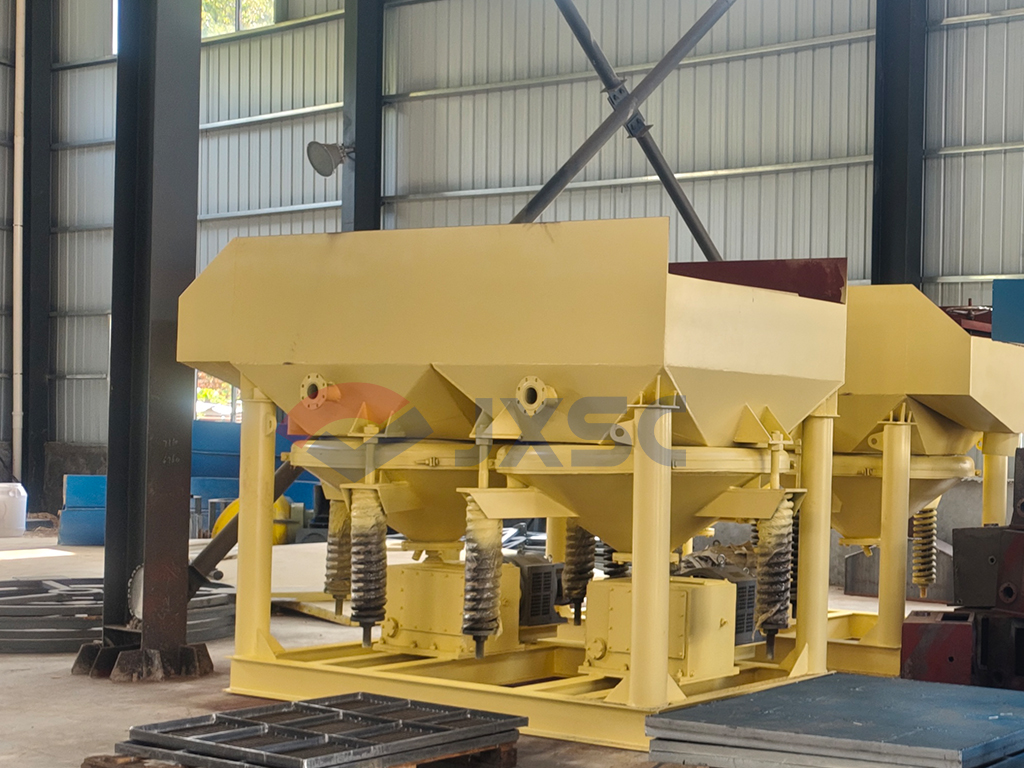
➟Jig separators are suitable for processing coarse-grained ores.
➟Mesas vibratorias allow for precise sorting of medium-to-fine-grained ore.
➟Tolvas en espiral require no external power and are suitable for small-to-medium-scale pre-treatment operations.
These three types of equipment can be flexibly combined to meet varying particle size requirements.
Applicable Ores:
Separación por gravedad is best suited for ores with coarse-grained disseminated barite and a large density difference between barite and gangue, such as quartz-barite ore. Such ores can enter the gravity separation circuit directly after simple crushing and screening; fine grinding is unnecessary, resulting in a streamlined process.
Advantages:
The biggest advantage of the barite gravity separation method is its extremely low operating cost. Separation is achieved using only water and gravity—without chemical reagents—resulting in negligible environmental impact. The equipment is easy to operate and maintain. For coarse-grained barite ores, gravity separation often yields qualified concentrates with minimal investment, making it the preferred choice for small- and medium-sized barite processing plants.
Disadvantages:
The gravity separation method is not ideal for recovering fine-grained ores. Additionally, it struggles to process ores where barite co-exists with heavy gangue minerals; in such cases, it must be combined with flotation processes to achieve the target grade.
Method 2 — Froth Flotation
Principle:
Flotation separates minerals based on differences in surface wettability. Collectors are used to alter the surface hydrophobicity of barite, causing it to attach to air bubbles and float to the surface. Conversely, hydrophilic gangue minerals remain in the pulp, enabling selective separation.
Commonly used reagents:
Collectors commonly used are sodium oleate or oxidized paraffin soap, while inhibitors are water glass. The novel collector EM507 has demonstrated excellent performance and superior selectivity in recent years. Specific reagent regimes must be optimized through repeated testing based on ore characteristics.
Applicable ores:
Flotación is best suited for fine-grained barite. It is particularly effective for processing fine-grained ores associated with calcite and fluorite. Leveraging selective adsorption, it achieves precise separation and can yield a concentrate grade exceeding 95%.
Advantages:
The barite flotation method has a recovery rate of over 90% for fine particles and is highly adaptable. Reagent formulations can be adjusted to handle various complex ores. The process yields high-grade concentrate that meets chemical-grade specifications, making flotation the preferred industrial method for low-grade, complex barite ores.
Disadvantages:
Reagents account for a high proportion of mineral processing costs, the process is complex, and multiple stages of fine selection are required. While wastewater recycling systems can alleviate treatment burdens and ensure residual reagents meet discharge standards, the process demands a high level of technical expertise from operators.
Method 3 — Magnetic Separation
Principle:
Barite is inherently non-magnetic, whereas iron-bearing impurities such as hematite and limonite exhibit weak to strong magnetism. Under the influence of a magnetic field, magnetic impurities are attracted and separated, while the barite passes through, thereby achieving iron removal and purification.
Equipment:
High-gradient magnetic separators are suitable for separating fine-grained, weakly magnetic impurities, whereas permanent magnet drum separators are appropriate for coarse-grained, strongly magnetic ores. The two types of equipment can be used in combination depending on ore characteristics and specific requirements.
Applicable Ores:
Separación magnética is suitable for barite ores containing significant amounts of hematite or magnetite; it is particularly well-suited for applications requiring high product whiteness.
Advantages:
It is a purely physical separation process that requires no chemical reagents and generates no wastewater, making it compliant with strict environmental regulations. It offers excellent iron removal performance and can significantly enhance the whiteness of the barite.
Disadvantages:
Magnetic separation removes only magnetic impurities and is completely ineffective against non-magnetic gangue minerals such as quartz and calcite. Consequently, it is rarely used in isolation; instead, it is typically combined with gravity separation or flotation as an auxiliary method for iron removal from the concentrate.
Method 4 — Leaching
Principle:
The leaching method utilizes acidic or alkaline solutions to selectively dissolve impurities within the barite. Hydrochloric acid dissolves impurities such as iron, calcium, and magnesium, while sodium carbonate reacts with barium sulfate to convert it into barium carbonate. Precise separation of target components is achieved by controlling solution concentration and reaction conditions.
Types:
Acid leaching of barite is employed to remove soluble impurities (e.g., iron, calcium, magnesium), thereby enhancing the mineral’s purity and whiteness; it is commonly used for the purification of pharmaceutical-grade barite. Conversely, alkaline leaching is suitable for the production of chemical-grade barium carbonate.
Suitable Ores:
Leaching is ideal for producing ultra-high-purity (>98%) barite products used in applications such as high-end coatings and pharmaceutical X-ray contrast agents. Chemical leaching allows the purity to be raised to the levels required for these premium applications.
Advantages:
Compared to physical methods, chemical leaching removes a greater range of fine impurities. It meets the quality standards of specialized high-end industries, resulting in products with high added value and significant profit margins.
Disadvantages:
Chemical reagents are expensive and required in large quantities. Waste streams contain heavy metals and residual acids or alkalis, necessitating comprehensive wastewater treatment facilities and incurring high costs. The process is complex and places high demands on equipment and operational expertise, making it best suited for large enterprises with strong technical capabilities.
Method 5: Thermal Treatment (Roasting)
Principle:
Roasting induces oxidation, reduction, or decomposition of impurities within the barite ore. For instance, magnetizing roasting converts weakly magnetic hematite into strongly magnetic magnetite, facilitating subsequent removal via magnetic separation.
Types:
Magnetizing roasting is suitable for iron-bearing ores. In contrast, reducing roasting employs carbon to reduce barium sulfate to barium sulfide—a preliminary step in the production of barium salts such as barium carbonate. These two types address different ore characteristics and product objectives.
Applicable Ores:
Roasting is suitable for refractory barite ores containing carbonaceous or organic matter—materials that are difficult to process using physical separation methods. Its primary application is as a precursor process for barium salt production, where reducing roasting converts barite into soluble barium salt intermediates.
✔ Advantages:
Roasting can process complex ores that cannot be separated by physical beneficiation; it is particularly effective for ores containing carbon or organic matter.
✖ Disadvantages:
High-temperature reactions are energy-intensive, and the roasting process may generate sulfur-containing exhaust gases, necessitating the installation of an exhaust treatment system. Investment, operating, and environmental compliance costs are all high.
Comprehensive Comparison Of 5 Barite Purification Methods
| Métodos | Applicable Particle Size | Concentrate Grade | Recovery Rate | Operating Cost | Investment Threshold | Environmental Friendliness |
|---|---|---|---|---|---|---|
| Separación por gravedad | Coarse (>0.5mm) | 85%-92% | 80%-90% | Low | Low | Alta |
| Froth Flotation | Fine (<0.074mm) | 88%-95% | 85%-96% | Medio | Medium-High | Medium (Reagents) |
| Separación magnética | Medium-Fine | Auxiliary Iron Removal | Depends on Impurities | Low | Medio | Alta |
| Lixiviación | Ultra-Fine | 95%-99% | 90%-95% | Alta | Alta | Low (Wastewater) |
| Thermal Treatment (Roasting) | All Sizes | 90%-97% | 85%-92% | Alta | Alta | Low (Exhaust Gas) |
Choose the Right Method for Your Barite Ore
Separación por gravedad is ideal for coarse-grained ore and offers low operating costs. Flotación can handle complex, fine-grained ores but requires chemical reagents. Separación magnética efficiently removes iron but targets only magnetic impurities. Roasting or leaching should be considered when physical methods prove ineffective; roasting handles refractory ores but entails high energy consumption, while leaching yields ultra-high purity but presents significant environmental challenges. The key lies in selecting the right approach based on ore composition, target product specifications, and investment capacity. There is no universal solution for barite purification, yet choosing the right method is straightforward.
Need a customized barite purification solution? The expert team at JXSC offers support in mineral analysis, process optimization, and equipment selection to help you achieve efficient, cost-effective production.