
- Главная
- Блог
- Информация об оборудовании
- Which Screening Equipment Handles Clay Ore? Use Anti-Clogging Designs
Characteristic analysis of clay ores
● High viscosity: The most prominent challenge in clay ore screening. When the moisture content is between 15% and 30%, a complex water film structure forms between the material particles, generating extremely strong surface adsorption. This characteristic causes the material to adhere to the screen surface or pores, leading to screen blockage. Furthermore, it fluctuates drastically with humidity. For example, below 15% humidity, the material is prone to dust generation but its viscosity is reduced; while above 30%, it completely clumps into mud, making screening almost impossible.
● High fine particle content: Fine particles smaller than 0.075mm typically account for over 40% of clay ore. These fine particles not only easily penetrate screen gaps but also accumulate on the screen surface, forming a “material layer,” further hindering material stratification.
● Humidity sensitivity: Even within the same batch of clay ore, a 5% fluctuation in ambient humidity can significantly alter material flowability, easily leading to a decrease in screening efficiency of over 20%, causing significant instability in the production process.
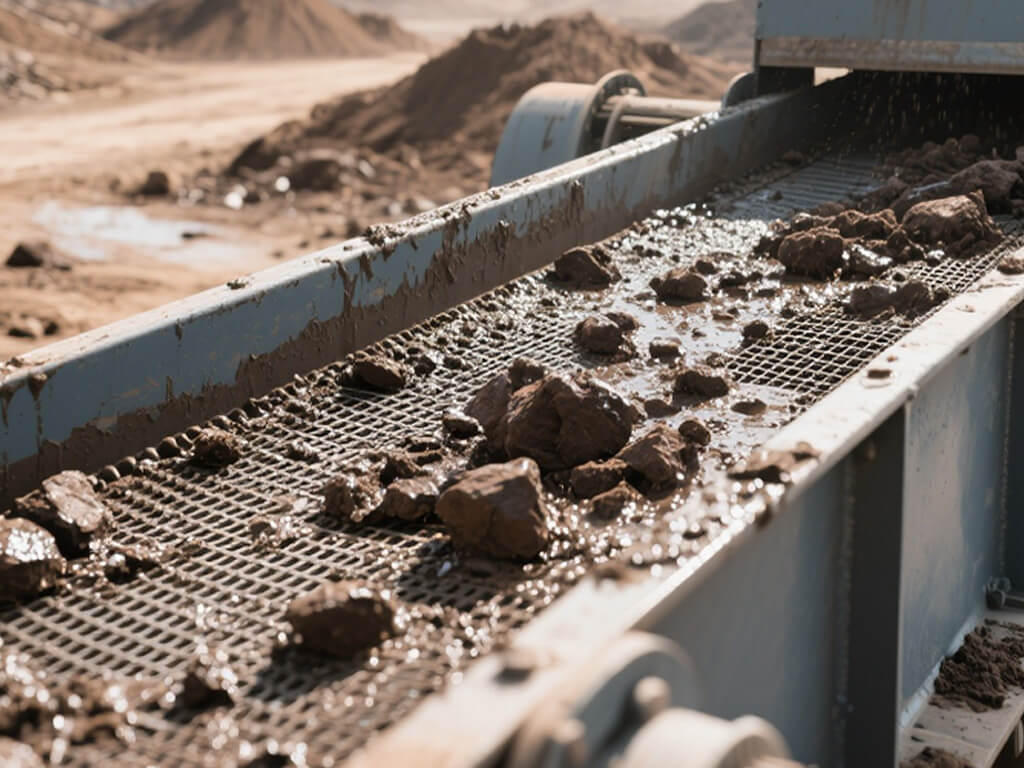
Why are anti-clogging screening equipment needed?
Clay ore, due to its high viscosity, high proportion of fine particles, and sensitivity to moisture, easily clumps and adheres to screens. This leads to frequent clogging of traditional screening equipment and efficiency of less than 50%. For example, single-layer screens are easily covered by adhered material, drum screens are easily clogged by fine particles, and fixed screens are almost ineffective. Frequent shutdowns for cleaning are necessary, increasing labor and maintenance costs.
Anti-clogging screening equipment addresses this by optimizing screen structure (e.g., flexible screens), upgrading vibration systems (e.g., high-frequency low-amplitude vibration), or adding auxiliary devices (e.g., ultrasonic screen cleaning). This fundamentally reduces adhesion, increasing screening efficiency to over 90%, reducing downtime by 70%, lowering labor cleaning costs and equipment wear, while maintaining screening accuracy and throughput. It is the core solution to solving the clay ore screening problem and ensuring continuous production.
Types of screening equipment for handling clay ore
1. High-Frequency Vibrating Screen
Principle:
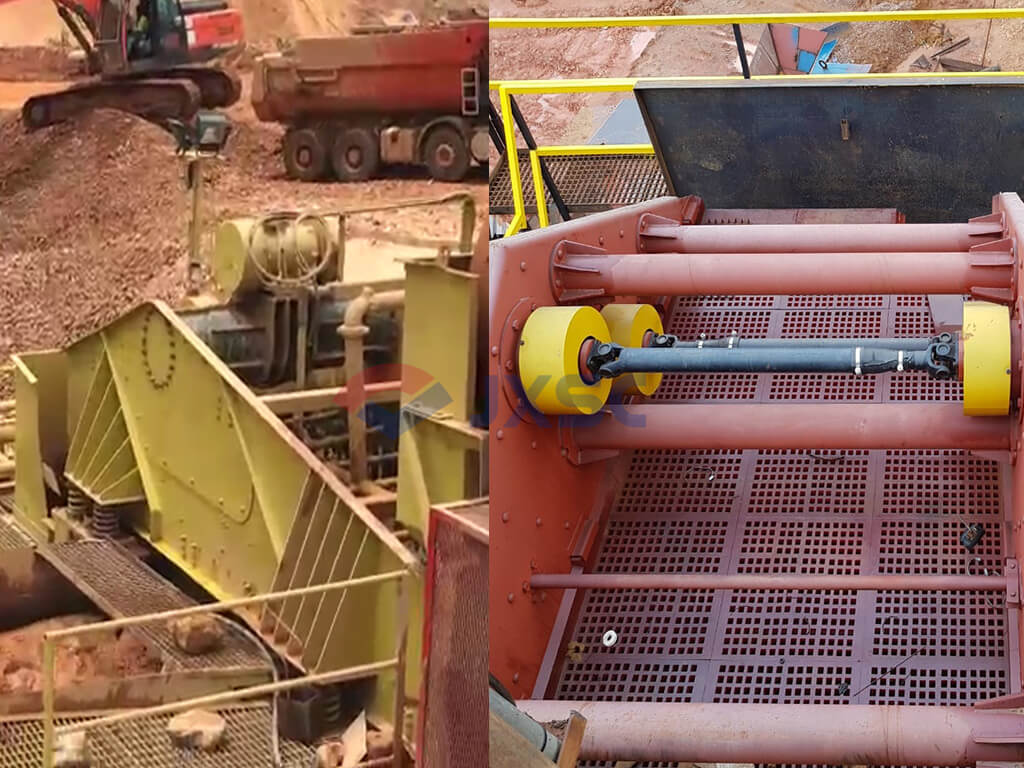
The vibrating screen uses a motor-driven vibrator to generate high-frequency mechanical vibration, causing the screen box and screen mesh to reciprocate periodically. By adjusting the vibration frequency and amplitude, the cohesive force between clay particles can be effectively overcome. During vibration, the adhesion between particles is broken, and fine particles pass through the screen holes, while coarse particles are discharged along the screen surface.
Advantages:
High-frequency vibrating screens, with their unique motion mode, have become the mainstream equipment for processing medium-viscosity clay ore. Their advantage lies in the fact that high-frequency vibration can effectively break up material agglomerates, making it difficult for clay to adhere to the screen surface for extended periods. High-frequency screens optimized for clay ore mainly use elastic polyurethane screen mesh, which has a smooth and elastic surface, making it difficult for clay particles to adhere. Simultaneously, the screen mesh can deform slightly with vibration, further peeling away adhering material. Compared to traditional screening methods, high-frequency vibration can create a “micro-throwing effect” at the screen contact layer, reducing the direct contact time between the material and the screen surface by more than 60%.
Applicable Scenarios:
When the moisture content of clay exceeds 25% or the proportion of fine particles (<0.075mm) reaches more than 50%, high-frequency vibration will actually intensify material compaction, leading to accelerated clogging of the screen holes. Therefore, this screening equipment has a processing capacity of 1-250 TPH and is more suitable for the grading of medium-viscosity ores, such as the primary screening of kaolin, bentonite, and quartz sand.
2. Trommel Screen
Principle:
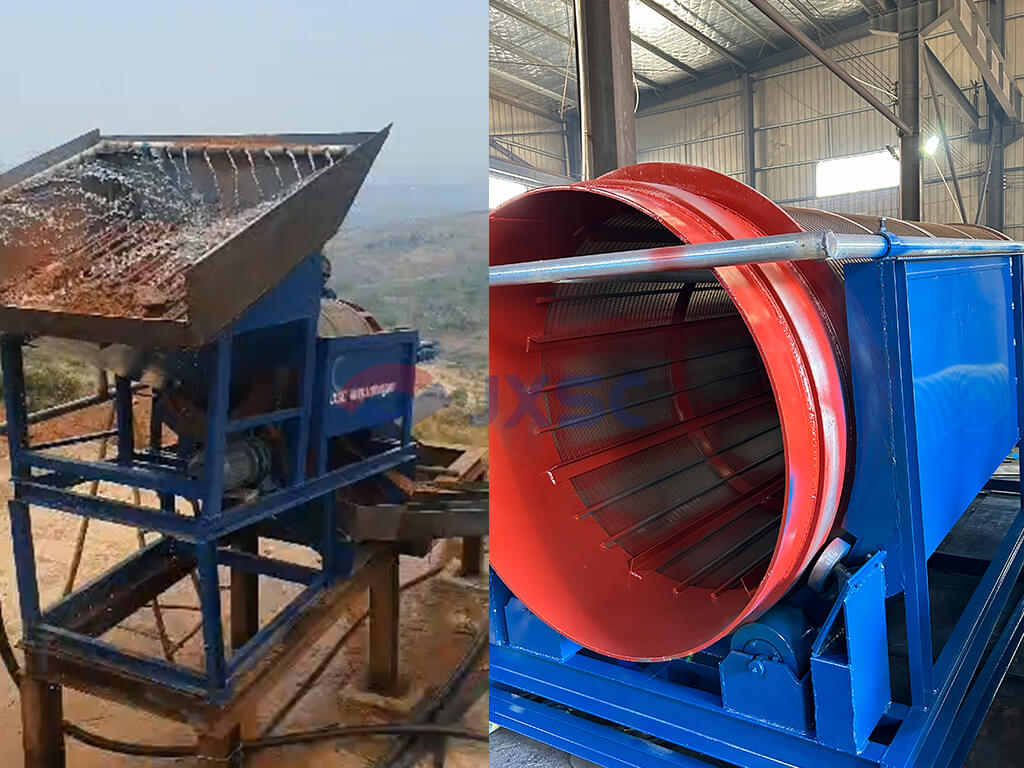
The core of the trommel screen is a rotating cylindrical screen cylinder. Clay material enters from the feed end and rotates in a spiral motion with the screen cylinder. The rotation of the screen cylinder causes the material to tumble and disperse continuously. Fine particles fall through the screen holes into the collection device below, while coarse particles are discharged from the discharge end. A built-in chain cleaning device continuously cleans the screen.
Advantages:
The rotary screen addresses the adhesion problem of clay ore through rotational motion and a self-cleaning design. The screen cylinder rotates slowly at a speed of 5-10 rpm, causing the clay material to tumble continuously inside the cylinder, reducing local adhesion. Simultaneously, the stepped inclination of the screen surface creates stratified flow of material due to acceleration differences, preventing the accumulation of fine particles. Furthermore, scrapers or shot blasting devices installed inside the cylinder automatically clear blockages in the screen holes during rotation.
Applicable Scenarios:
The trommel screen has a processing capacity of 1-200 TPH. Combined with a low-pressure water spray system, it is generally suitable for small-scale or fine-grading screening of low-clay ore. It is suitable for high humidity and large particle low clay minerals, such as coarse screening in mines and separation of clay components in construction waste.
3. Trommel Scrubber
Principle:
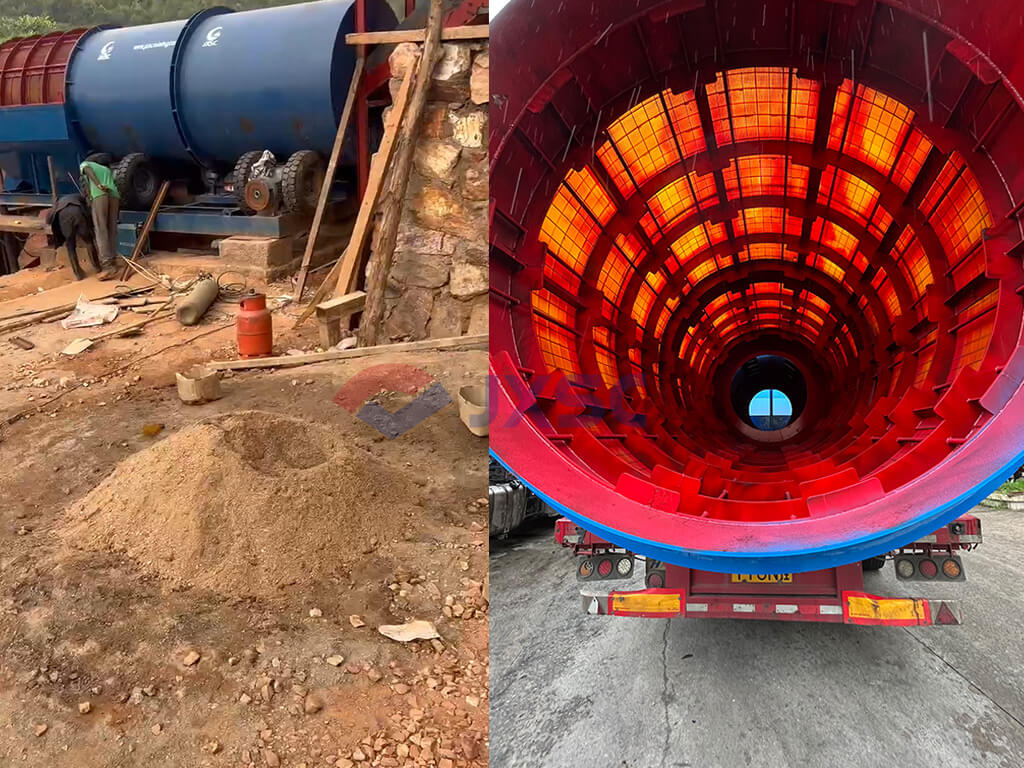
Сайт rotary scrubber cleans and screens clay ore using a rotating drum, internal lifting plates, and a flushing device. Clay material enters the drum and is lifted to a height by the lifting plates as the drum rotates, falling simultaneously. High-pressure water jets wash the surface of the material, separating the clay from the sand and gravel. The separated clay slurry is discharged with the water flow, while the sand and gravel are discharged along the inclined surface of the drum. Some models also have built-in screens for simultaneous particle size classification.
Advantages:
The trommel scrubber adopts a modular design integrating washing, desliming, and screening, effectively removing impurities (such as mud and dust) from clay ore and improving subsequent processing efficiency. The unique dual “mechanical-hydraulic” action of drum rotation and water jet flushing completely solves the problem of clay adhesion, with better anti-clogging performance than simple screening equipment. It has a strong processing capacity for high-viscosity, high-impurity clay ore, with a desliming rate of over 90%.
Applicable Scenarios:
The drum scrubber has a processing capacity of 1-400 t/h, making it particularly suitable for washing and beneficiation operations in large and medium-sized concentrators. It is commonly used to process difficult-to-process clay ores with high viscosity, high impurities, and a mud content >30%. It has significant advantages in mine pretreatment, construction sand washing, sand and gravel desliming, kaolin refining, and tailings reprocessing. Furthermore, it is especially suitable for production scenarios requiring simultaneous washing and screening.
Key technologies in the design of anti-clogging screening equipment
| Equipment Name | Core technologies |
|---|---|
| High-Frequency Vibrating Screen | High-frequency micro-vibration; asymmetrical vibration trajectory; polyurethane elastic screen. |
| Грохот | Rotation + self-cleaning system: built-in scraper/shot device for real-time cleaning of screen hole blockage; gradeable design. |
| Скребковый барабан | Hydraulic flushing + mechanical separation; high-pressure water jet; drum rotation + lifting plate for material propulsion. |
How to Choose Screening Equipment
(1). Understand Clay Characteristics
● Moisture Content:
High-frequency vibrating screens are suitable for materials with a moisture content of 15-22%. For materials with a moisture content exceeding 25%, drum screens or washing machines are recommended due to their stronger self-cleaning capabilities.
● Particle Size:
When fine particles (<0.075mm) account for more than 50%, trommel scrubbers should be prioritized to improve dissociation through hydraulic scrubbing. When coarse particles are dominant, vibrating screens can be selected to improve processing efficiency.
● Viscosity Assessment:
Vibrating screens are suitable for materials with low plasticity index, while high-viscosity minerals require the efficient scrubbing combined with the washing machine. Drum washing machines are also more suitable for scenarios that require both washing and desliming.
(2). Define Objectives
● Large Processing Capacity: Trommel scrubbers are preferred to meet the needs of large-scale washing of high-viscosity minerals.
● Small Processing Capacity: Грохоты can handle small to medium-sized washing lines with low mud content.
● High-Precision Screening: Вибрационные экраны are preferred. Its high-frequency vibration design enables more precise gradation of multiple particle sizes, making it suitable for scenarios with high product quality requirements.
Clay Ores Disasters? Choosing the Right Anti-Clogging Screening Equipment is Key!
For clay ore facing challenges such as adhesion, high moisture content, and clogging, screening equipment offers advantages: vibrating screens for medium viscosity, drum screens for high moisture content, and drum washing machines for high impurities. Whether it’s the precise screening of high-frequency vibrating screens, the self-cleaning properties of trommel screens, or the powerful water washing and dissociation of trommel scrubbers, we can provide the optimal selection to ensure high efficiency and low energy consumption. Our screening equipment has been successfully applied in numerous real-world projects involving gold, tantalum, niobium, tin, copper, iron, diamonds, and chromium ores, ensuring high screening accuracy, stable capacity, and easy maintenance.
Заключение
Are you looking for stable, clog-resistant, and efficient clay ore screening equipment? JXSC supports customized equipment quotations and technical solutions based on your clay ore characteristics, moisture content, throughput, precision, and production capacity requirements, ensuring the equipment perfectly matches your process requirements.
With extensive industry experience and technological advantages, we are committed to providing you with the most suitable screening solutions to help you significantly improve production efficiency and reduce operating costs.
 English
  Spanish
  French
  Russian