
Do you truly understand the overflow ball mill? You may have frequently encountered its name while searching for efficient, reliable grinding equipment, yet remained unclear about what makes it unique. In the fields of mining and mineral processing, the overflow ball mill is widely used for processing ores such as gold, copper, iron, and lead-zinc, thanks to its simple structure, reliable operation, and ability to produce fine discharge particles. However, many plant operators still lack a clear understanding of the overflow ball mill’s working principles, discharge mechanisms, and fundamental differences compared to the grate-discharge ball mill. This article explores the equipment’s working principles to reveal the ingenious design behind it.
What Is an Overflow Ball Mill?
Definition:
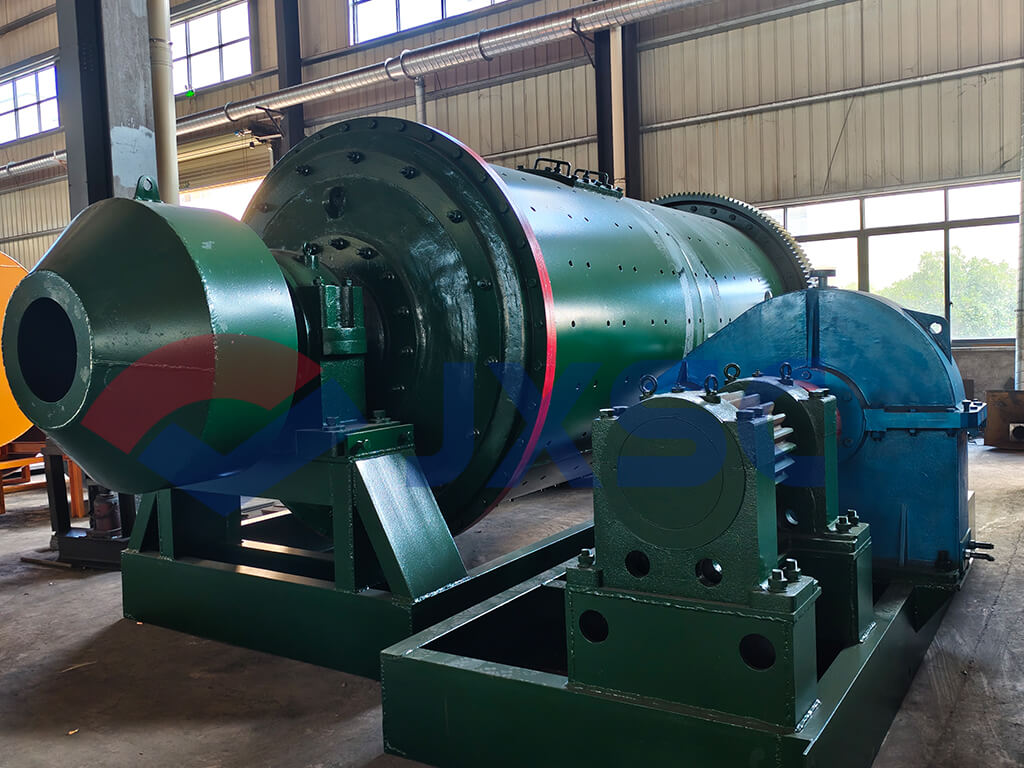
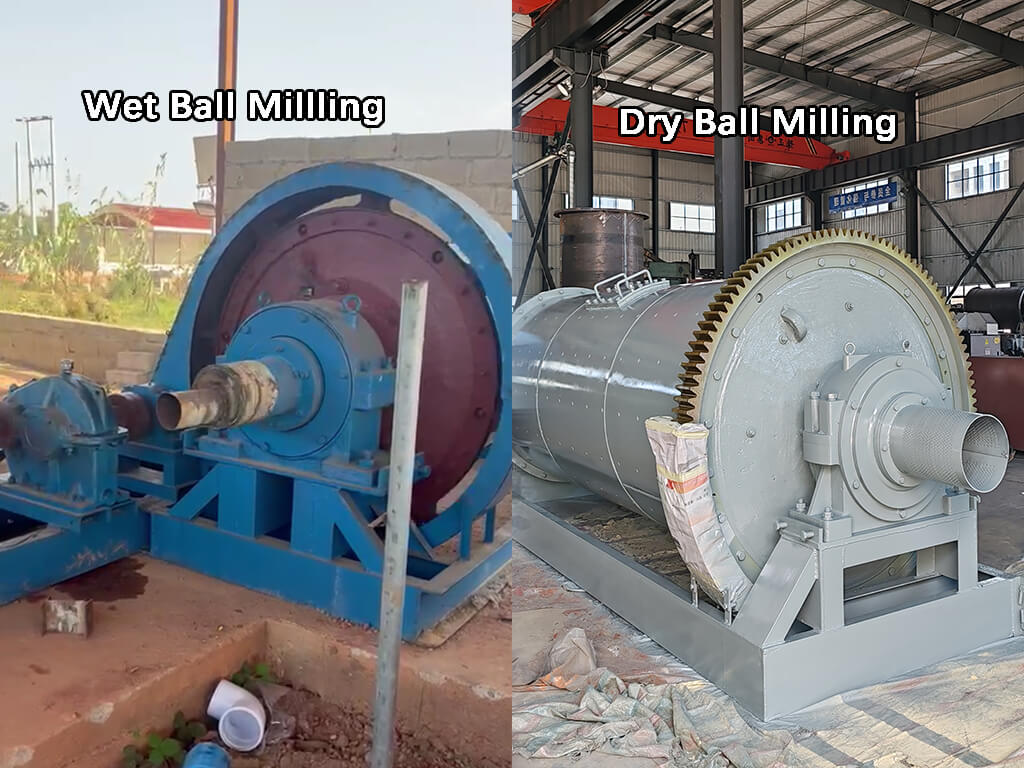
An overflow ball mill is a type of wet fine grinding equipment that discharges material through the natural overflow of slurry. It uses a rotating shell to drive steel balls and ore, pulverizing the ore through impact and attrition. When the slurry level rises above the hollow shaft at the discharge end, the slurry automatically overflows, enabling continuous discharge. The process requires no forced discharge mechanisms, resulting in a naturally simple structure and enhanced operational reliability. In mineral processing plants, it is frequently paired with a classifier to form a closed-circuit grinding system, ensuring the product meets the required particle-size specifications.
Key Components:
▶ Shell and Liner Plates
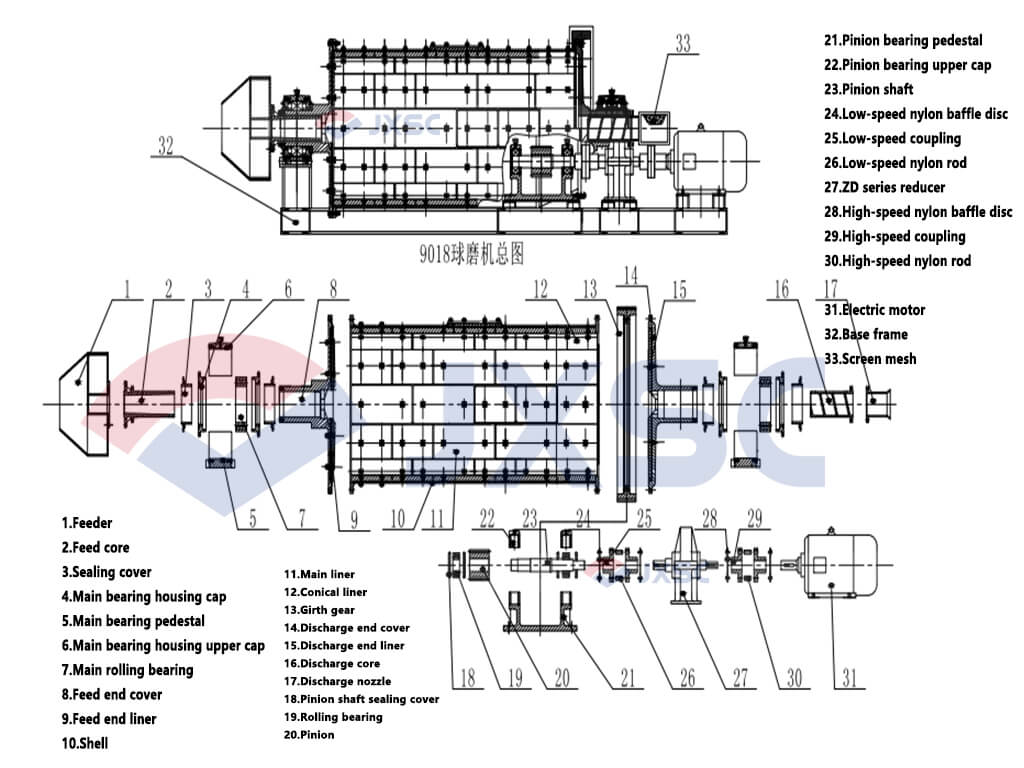
The shell is the rotating body of the ball mill, fabricated from high-strength alloy steel via integral welding. Wear-resistant liners are installed on the inner wall to protect the shell from the impact of grinding media (steel balls). These liners can be replaced individually, thereby reducing maintenance costs. Different liner materials are selected based on ore hardness.
▶ Hollow Trunnions and Reverse Spiral Blades
The hollow trunnions serve as both structural supports and channels for material entry and exit. Reverse spiral blades are installed at the feed end to push any steel balls or coarse particles that spill out with the slurry back into the shell for further grinding.
▶ Main Bearings
The main bearings support the weight of the entire shell and ensure smooth rotation. Modern equipment often utilizes rolling bearings instead of traditional sliding bearings, offering lower frictional resistance and easier startup. These bearings are equipped with lubrication systems to extend their service life.
▶ Drive System
The drive system consists of a motor, a gearbox (reducer), and a pinion gear. Power from the motor is transmitted through the gearbox—which increases torque—to the large ring gear. The ring gear is mounted on the exterior of the shell, driving its rotation. Some large-scale units are equipped with an auxiliary slow-speed drive to facilitate maintenance.
▶ Feeding Device
The feeding device continuously delivers ore and water into the shell. Common types include drum feeders and screw feeders. A stable feed rate is essential to prevent load fluctuations within the shell from compromising grinding efficiency. These devices are typically used in conjunction with a feed chute.
▶ Discharge Device
Overflow-type ball mills rely on the hollow trunnion for natural discharge, eliminating the need for a discharge grate. Slurry overflows from the discharge-end trunnion and proceeds to classification equipment. While this design avoids grate clogging issues, it results in a higher slurry level, which can lead to over-grinding.
▶ Grinding Media:
Typically steel balls; the filling rate is generally maintained between 40% and 45%.
How Does an Overflow Ball Mill Work?
Step 1: Shell Rotation and Grinding Media Lifting
As the shell rotates, the steel balls are carried upward by the liners. An appropriate rotational speed allows the balls to reach a sufficient height; if the speed is too low, the balls cannot be lifted effectively.
Step 2: Trajectory of the Grinding Media
Upon reaching the upper section of the shell, the steel balls detach from the wall and fall along a parabolic trajectory. They strike the ore at the bottom of the shell, generating a powerful impact. This cycle of lifting and falling repeats continuously, pulverizing the ore.
Step 3: Combined Impact and Grinding Forces
Upon reaching the upper section of the shell, the steel balls detach from the wall and fall along a parabolic trajectory. They strike the ore at the bottom of the shell, generating a powerful impact. This cycle of lifting and falling repeats continuously, pulverizing the ore.
Step 4: Slurry Movement from Feed End to Discharge End
Fresh ore and water are continuously fed into the mill, driving the slurry toward the discharge end. The rotation of the shell causes the material to tumble, accelerating its forward movement. A dynamic balance between feeding and discharging is maintained, enabling continuous operation.
Step 5: Detailed Explanation of the Natural Overflow Discharge Mechanism
The slurry overflows automatically once its level exceeds the hollow trunnion, requiring no external assistance. Reverse spiral blades retain coarse particles and steel balls within the shell. Only slurry that has reached the required fineness can discharge smoothly, effectively achieving natural classification.
Overflow-type vs. Grate-discharge Ball Mills: Key Differences
| Comparison Item | Moulin à boulets à débordement | Moulin à boulets à grille |
|---|---|---|
| Discharge Method | Slurry overflows naturally, no grate needed | Forced discharge through grate plate, low slurry level |
| Over-grinding | Higher slurry level, more noticeable over-grinding | Fast discharge, less over-grinding |
| Capacité de traitement | Slightly lower capacity for the same size | Smooth discharge, higher processing capacity |
| Applicable Particle Size | Better for fine grinding (high -200 mesh content) | Suitable for coarse grinding |
| Consommation d'énergie | Higher energy consumption due to fine grinding | Lower energy consumption due to efficient discharge |
| Maintenance | Simple, longer maintenance intervals | More frequent, requires regular grate plate cleaning |
| Applications typiques | Gold ore, copper ore fine grinding | Iron ore, lead-zinc ore coarse grinding |
The choice of model depends on the process flow and the target particle size; For those prioritizing fineness, overflow type ball mill is the better choice; for those prioritizing production capacity, a grid-type ball mill is more advantageous.
Key Benefits of Overflow Ball Mills
● High Grinding Fineness:
The slurry remains in the drum for an extended period, ensuring thorough grinding. The product fineness is uniform and controllable, meeting the requirements for high-precision mineral processing. Overflow ball mills are particularly well-suited for process stages with strict particle size specifications.
● Simple Structure:
The design is streamlined, free from complex internal components such as discharge grates. This results in fewer potential points of failure and high operational stability.
● Low Maintenance Costs:
Routine inspections and parts replacement are quick and convenient. Components feature high interchangeability, minimizing the burden of spare parts inventory.
● Strong Adaptability:
Capable of processing a wide range of ores, including gold, copper, and lead-zinc. It is highly adaptable to wet processing operations and offers flexible, adjustable operating parameters.
● Robust Continuous Operation Capability:
Supports round-the-clock continuous operation without the need for frequent shutdowns. Automatic balancing of feed and discharge makes it ideal for large-scale production.
Main Application Areas of Overflow Ball Mills
Gold Ore Processing:
Overflow-type ball mills are widely used in usines de traitement de l'or for fine grinding. Higher fineness ensures more complete liberation of gold particles, leading to improved leaching rates and greater economic returns. Operating in a closed-circuit configuration with hydrocyclones or spiral classifiers allows for uniform and controllable particle size.
Grinding of Non-ferrous Metal Ores (Cuivre, Lead-Zinc, etc.):
Consistent grinding fineness leads to higher flotation recovery rates. The equipment is reliable and suitable for continuous operation in large-scale processing plants.
Iron Ore Processing:
Iron ore is typically hard, requiring equipment with exceptional wear resistance. Fine grinding of iron ore enhances magnetic separation performance and increases concentrate grade.
Cement Production:
Suitable for grinding both raw meal and clinker. Grinding fineness is flexibly adjustable, and performance is further optimized when used in conjunction with a powder separator.
Conclusion
From its definition and structure to its operating principles and applications, the overflow ball mill holds an irreplaceable position in the mining and industrial grinding sectors, thanks to advantages such as natural overflow discharge, a simple design, and ease of maintenance. Understanding its operating mechanism is key to maximizing equipment potential, reducing energy consumption, and boosting productivity. If you are looking for a highly efficient and reliable ball mill solution, please feel free to contact us for customized mining equipment selection and technical support.
 English
  Spanish
  French
  Russian