
Mining spiral chutes come in a wide variety of materials—so which one should your mine choose? As a core piece of equipment in gravity separation, the material of a spiral chute directly determines processing efficiency, equipment lifespan, and operating costs. In applications such as processing chromite, ilmenite, or gold ore, the service life of a spiral chute can range from two to eight years; the root cause of this disparity is often the material itself. Options include fiberglass-reinforced plastic (FRP), polyurethane coatings, stainless steel, ceramic lining, and carbon steel + composite lining. Making the wrong choice can lead to consequences ranging from substandard recovery rates to premature equipment failure. Consequently, selecting the right material requires a precise balancing of wear resistance, corrosion resistance, and cost-effectiveness. This article provides an in-depth analysis of 4 key spiral chute materials selection, helping engineers and procurement professionals avoid common design pitfalls.
5 types of spiral chute material selection
Currently, the four most widely used spiral chutes materials in the mining industry are fiberglass-reinforced plastic (FRP), polyurethane coating, stainless steel, and carbon steel with a composite liner. Each has its own advantages and disadvantages, making it suitable for different mineral separation scenarios.
1. FRP (Fiberglass Reinforced Plastic)
● Manufacturing Process:
FRP materials spiral chutes are one of the most largement utilisé gravity spiral separators. FRP materials are manufactured by winding continuous glass fiber strands—impregnated with unsaturated polyester resin—layer by layer onto a rotating mold. The winding angle and number of layers can be precisely controlled to meet strength requirements, resulting in a dense, integrated structure after curing.
● Key Advantages:
FRP spiral chutes have a density only one-quarter that of steel; the equipment is lightweight, easy to transport, and convenient to install and maintain.
The resin matrix provides excellent resistance to acids and alkalis, ensuring stable, long-term operation in humid, corrosive environments, such as coastal or riverside locations.
Its overall manufacturing cost is in the low-to-mid range among the five mainstream materials, making it highly cost-effective.
● Limitations:
It has relatively low impact resistance; severe impacts from large mineral particles may cause delamination or cracking.
The resin matrix may soften structurally at temperatures above 60°C, compromising equipment stability; therefore, high-temperature operating conditions should be avoided.
● Optimal Applications:
Thanks to their resistance to seawater corrosion and moderate cost, FRP spiral concentrators are a popular choice for coastal mineral processing operations, such as the separation of coastal placer deposits, zircon, rutile, and ilmenite. They are particularly well-suited for projects with limited budgets that require corrosion resistance in high-humidity, high-salinity, or acidic/alkaline environments where impact loads are relatively low. Furthermore, it is currently the material most frequently used in l'or, copperet chromium beneficiation plants.
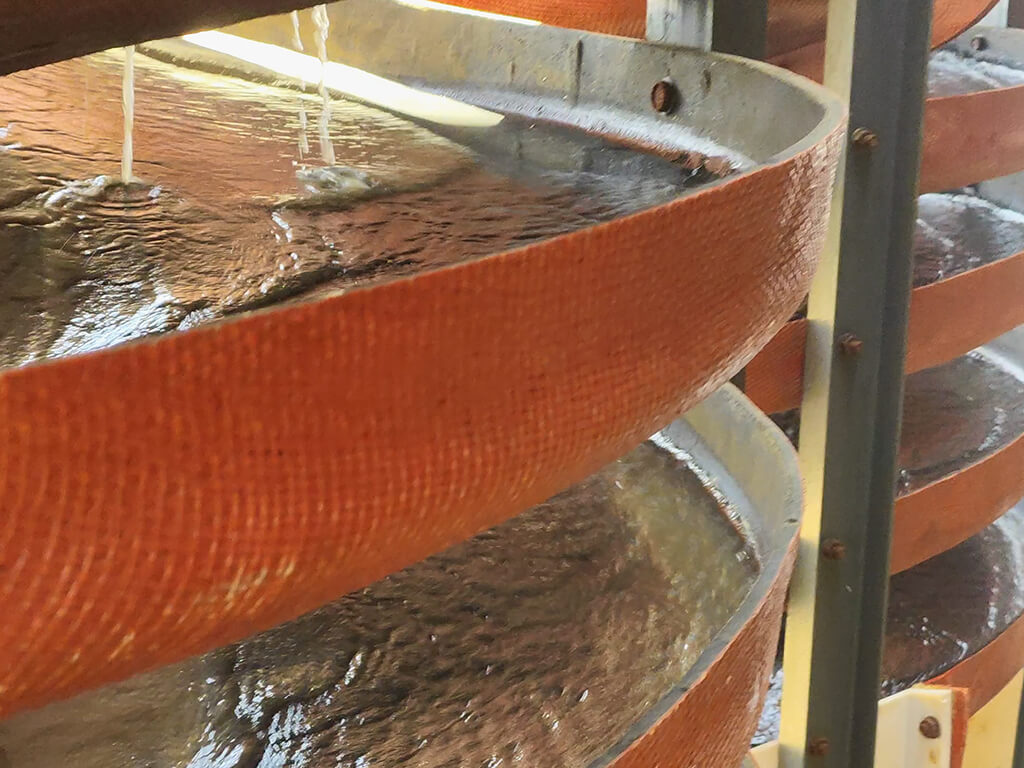
2. Stainless Steel
● Manufacturing Process:
Fabricated from 304 or 316 stainless steel sheet using precision stamping or rolling techniques; primarily used for liners or core components. The 316 grade, containing molybdenum, offers superior corrosion resistance in environments containing chloride ions.
● Key Advantages:
Stainless steel spiral chutes possess extremely high mechanical strength, resist deformation, and maintain the geometric accuracy of the chute surface over the long term.
They offer the best corrosion resistance among all available materials, withstanding exposure to almost all acidic and alkaline media.
The surface is polished to a high finish, making it easy to clean and fully compliant with food-grade hygiene standards.
● Limitations:
The density of stainless steel is approximately four times that of FRP, resulting in heavy individual units. Additionally, friction on the metal surface can generate static electricity; handling and installation are more difficult, and the material properties can affect separation precision.
High raw material costs lead to higher subsequent maintenance expenses.
● Optimal Applications:
Due to their cleanliness and corrosion resistance, stainless steel spiral chutes are the preferred choice for gold ore separation. They also perform exceptionally well in the separation of precious metals, such as platinum-group metals. Furthermore, the hygienic nature of the material minimizes contamination risks, making it suitable for processing food-grade minerals.
3. Polyurethane Coating
● Manufacturing Process:
A high-strength protective layer of polyurethane elastomer is formed by spraying or casting the material onto the inner surface of a carbon steel or stainless steel structural substrate. Additionally, emery particles can be incorporated to enhance wear resistance. The coating bonds firmly to the substrate via chemical bonding, with a typical thickness ranging from 3 to 8 mm.
● Key Advantages:
Excellent wear resistance; it offers a significantly longer service life compared to FRP materials and allows for on-site repair of localized wear.
The smooth coating surface features a low coefficient of friction, facilitating smoother slurry flow and reducing mineral adhesion or accumulation.
It offers good vibration-dampening properties, resulting in low operating noise and minimal equipment vibration.
● Limitations:
Polyurethane is sensitive to ultraviolet (UV) radiation; prolonged outdoor exposure can cause the surface to age and become brittle.
It is unsuitable for high-temperature environments, as the elastomer may soften and deform.
● Optimal Applications:
Polyurethane-coated spiral chutes combine high elasticity, toughness, and wear resistance, ensuring the chute surface maintains its geometric precision over the long term and delivers consistent separation performance. They perform exceptionally well in the processing of hard, highly abrasive minerals such as chromite et tungsten ore.
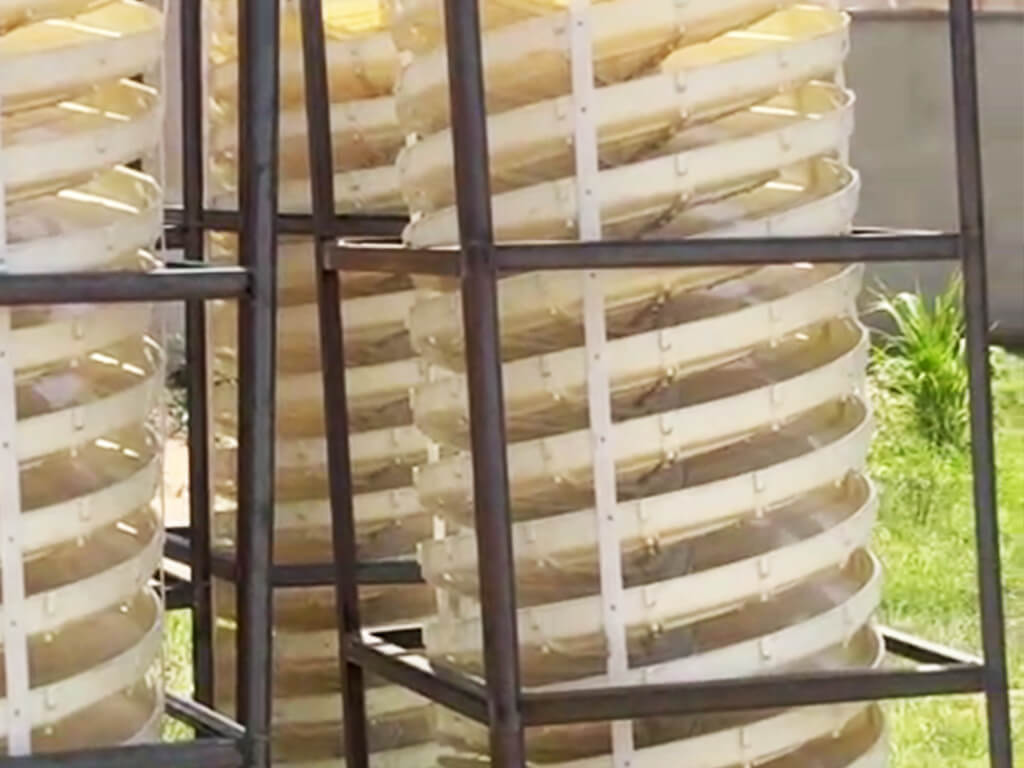
4. Carbon Steel + Composite Lining
● Manufacturing Process:
A structural framework is formed by welding carbon steel plates, while the inner surface is lined with a wear-resistant layer—such as rubber, polyurethane, or ceramic tiles—applied via bonding or vulcanization. The base material provides structural strength, while the lining handles wear and corrosion resistance; the two materials function synergistically.
● Key Advantages:
The carbon steel framework offers high load-bearing capacity and structural strength; combined with the wear-resistant lining, the overall service life is significantly extended.
It exhibits excellent impact resistance, making it suitable for manufacturing large-scale spiral chutes and for processing coarse-grained materials.
● Limitations:
The composite structure places strict demands on the bonding process, which increases manufacturing complexity and costs.
● Optimal Applications:
Carbon steel composite structures are ideal for large-scale, high-throughput mineral processing lines. They effectively withstand the erosive wear caused by coarse particles and high-velocity material flows, making them suitable for medium-to-large-scale roughing stages in operations such as iron and copper ore processing.
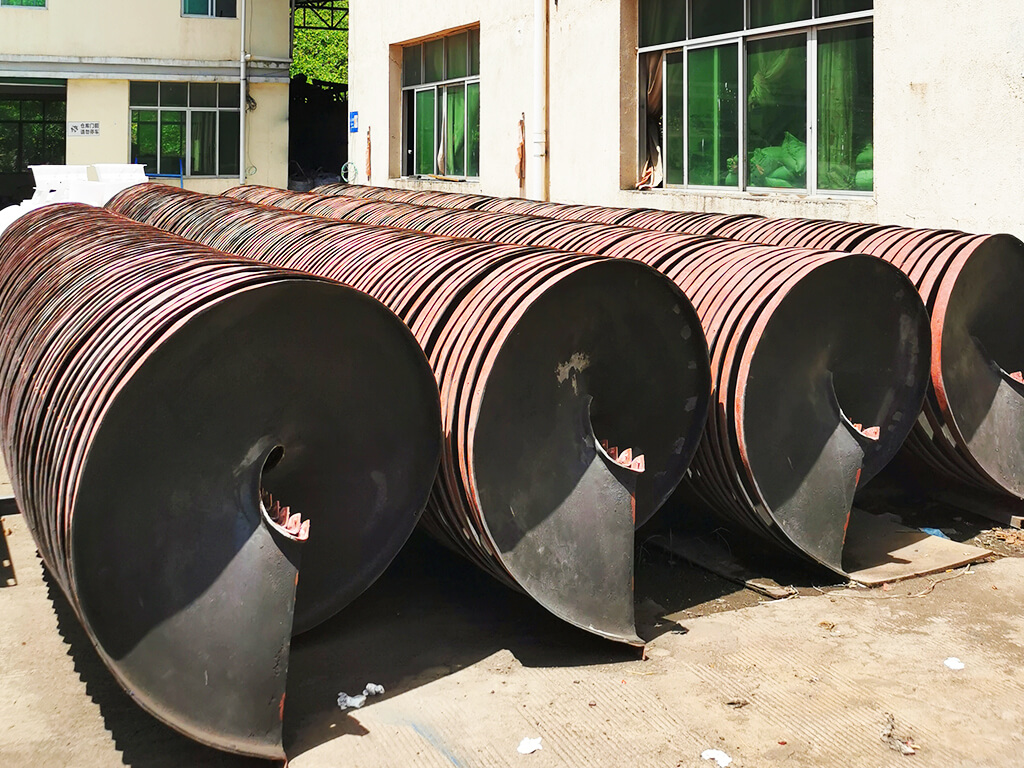
5. Ceramic Lining
● Manufacturing Process:
Ceramic is inherently brittle and cannot serve as a standalone structural component. Construction typically involves bonding high-alumina ceramic tiles onto an FRP or metal substrate. Additionally, some advanced manufacturing methods employ mechanical inlay techniques to enhance the bond.
● Advantages:
Ceramics boast a Mohs hardness of up to 9 and offer wear resistance 5 to 10 times greater than that of polyurethane coatings, making them the most wear-resistant material available for spiral chutes.
They are virtually impervious to acid and alkali media, demonstrating excellent chemical stability.
● Limitations:
Manufacturing costs are high, and improper production can lead to ceramic tiles detaching.
Unsuitable for processing coarse-grained minerals subject to high-impact forces.
Damaged sections require complete replacement, resulting in high labor costs.
● Applications:
Ceramic-lined spiral chutes are primarily used in extreme operating environments characterized by high abrasion and corrosion, such as the beneficiation of certain specialized iron ores and rare metal ores.
In addition to the four materials mentioned above, early spiral chutes were manufactured from high-chromium cast iron or Ni-Hard cast iron using sand casting or precision casting processes, followed by high-temperature quenching to achieve extreme surface hardness. However, due to their excessive weight, poor impact resistance, and susceptibility to rust, these materials have gradually been replaced in mineral processing applications.
Comparison Of Mainstream Spiral Chute Materials
| Spiral Chutes Material Type | Core Advantages | Main Limitations | Best Applications |
|---|---|---|---|
| FRP (Fiberglass) | Lightweight, corrosion-resistant, low cost | Poor impact resistance, not heat-resistant | Coastal placer deposits, ilmenite |
| Polyurethane Coating | Excellent wear resistance, smooth surface | UV sensitive, not heat-resistant | Chromite, tungsten ore, tin ore |
| Stainless Steel | High strength, excellent corrosion resistance | Heavy, high cost, prone to static electricity | Gold ore beneficiation, food-grade minerals |
| Carbon Steel + Composite Lining | High strength, replaceable lining | Complex process, lining may detach | Large-scale plants, coarse minerals |
| Ceramic Lining | Highest wear resistance, excellent chemical stability | Very high cost, brittle, difficult to repair | Extreme high-abrasion conditions |
| Wear-resistant Cast Iron | Extremely hard, excellent wear resistance | Brittle, poor corrosion resistance, heavy | Iron ore roughing, coal pretreatment |
Selecting Spiral Chute Materials Based on Mineral Type
Les choice of chute en spirale material directly impacts separation efficiency, operating costs, and equipment lifespan; five key factors must be comprehensively considered: mineral characteristics, operating conditions, cost-effectiveness, recovery rates, and ease of maintenance. There is no one-size-fits-all solution, as different minerals (such as gold, iron, copper, and quartz sand) impose distinct material requirements. As of 2026, spiral chutes made of polyurethane and fiberglass-reinforced plastic (FRP) offer excellent wear resistance and superior overall cost-performance, making them suitable for the vast majority of mineral processing applications. Please contact JXSC for customized mining equipment material selection or technical consultation; our team of engineers is ready to provide an optimized spiral chute design precisely tailored to your needs, ensuring efficient separation.
 English
  Spanish
  French
  Russian