
Crushing or screening first? This seemingly simple question of process sequence directly impacts production efficiency, equipment wear and tear, and even overall profits. Globally, over 50 billion tons of aggregate are produced annually for infrastructure construction such as highways, bridges, water conservancy projects, and high-rise buildings. However, industry surveys indicate that over 60% of production lines suffer from substandard particle shape, excessive needle-like and flaky content, accelerated equipment wear, and even incur tens of thousands of dollars in additional operating costs due to choosing the wrong crushing and screening process sequence. The debate between “screening before crushing” and “crushing before screening” has long plagued countless mine and aggregate plant managers. Which one is more suitable for your project needs?
What Is "Crush First, Screen Last"?
(1) Definition: Crushing Before Screening
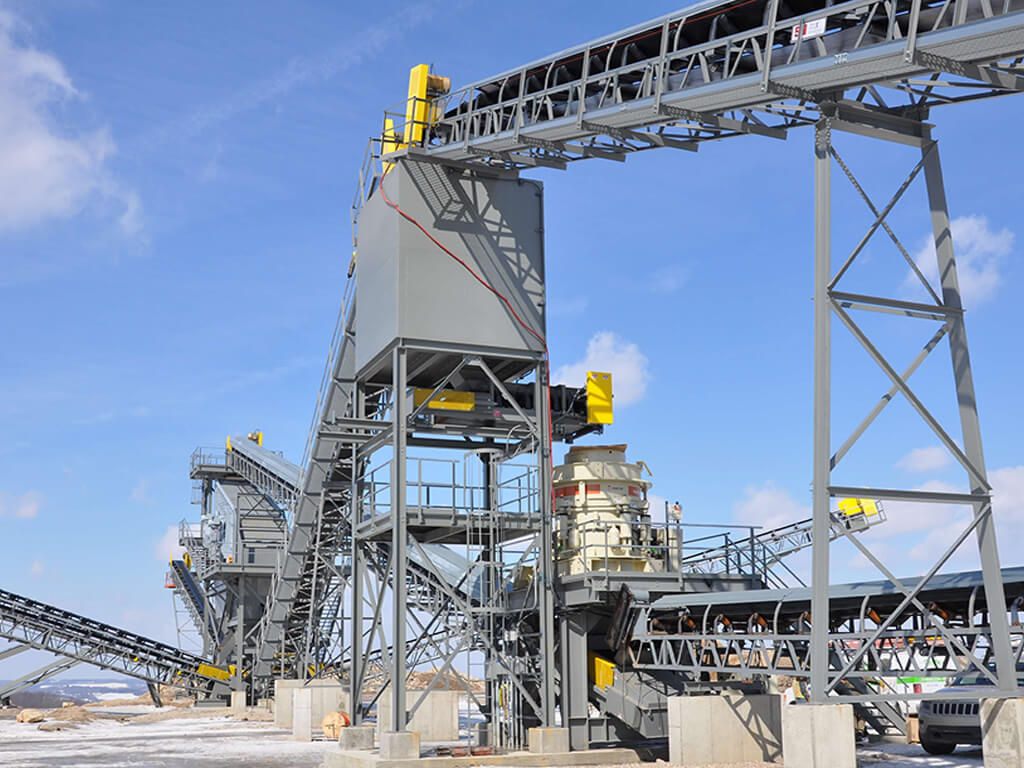
The core logic is “crush first, then screen.” Raw materials from the vibrating feeder undergo primary crushing via a jaw crusher or impact crusher. All materials are then fed directly into a cone or impact crusher via a belt conveyor for secondary crushing, without any screening or diversion. After all materials have undergone secondary crushing, they are then uniformly fed into a vibrating screen for grading and screening. This “centralized crushing first, then unified grading” process design constitutes a typical closed-loop system.
(2) Core Features:
The most significant characteristic of a closed-loop system is that materials circulate repeatedly throughout the entire loop until they reach the required particle size before being discharged, resulting in almost no waste discharge. This means there is no loss of crushed material, leading to extremely high resource utilization. However, the large amount of recycled material results in a high system cyclic load, placing stringent demands on the continuous processing capacity of the equipment, requiring the matching of efficient air separation or magnetic separation devices for impurity removal.
(3) Applicable Scenarios:
Closed-circuit crushing processes result in materials with fewer sharp edges, more regular particle shapes, and lower content of needle-like and flaky particles, thus improving compressive strength. This is particularly suitable for high-grade concrete (C50 and above) and pumped concrete projects. Furthermore, in key projects with strict requirements for aggregate quality, such as hydropower dams, cross-sea bridges, and high-speed railways, pre-crushing followed by screening is almost a standard process.
(4) Analysis of the advantages and disadvantages of crushing first
✔️ Advantages: Reduces screening load and improves subsequent efficiency.
Materials undergo secondary crushing before entering the screening stage, resulting in a more uniform particle size distribution. This significantly reduces the impact and wear on the screen, thereby increasing screening efficiency. Closed-loop circulation ensures all materials reach the target particle size, resulting in a stable finished product qualification rate and reducing additional costs associated with rework and waste disposal.
❌ Disadvantages: High energy consumption and significant equipment wear.
Closed-loop systems require more equipment and have a more complex process flow, demanding higher professional qualifications from operators. Furthermore, all materials, regardless of whether they meet the standards, must undergo secondary crushing, leading to long-term high-load operation of the crusher and persistently high electricity and fuel consumption. It also places higher demands on the equipment’s load-bearing capacity and wear resistance. The replacement cycle for vulnerable parts such as jaw plates, liners, hammers, and screens is shortened, significantly increasing maintenance costs.
What is "Screen First, Crush Last"?
(1) Definition: screening before crushing
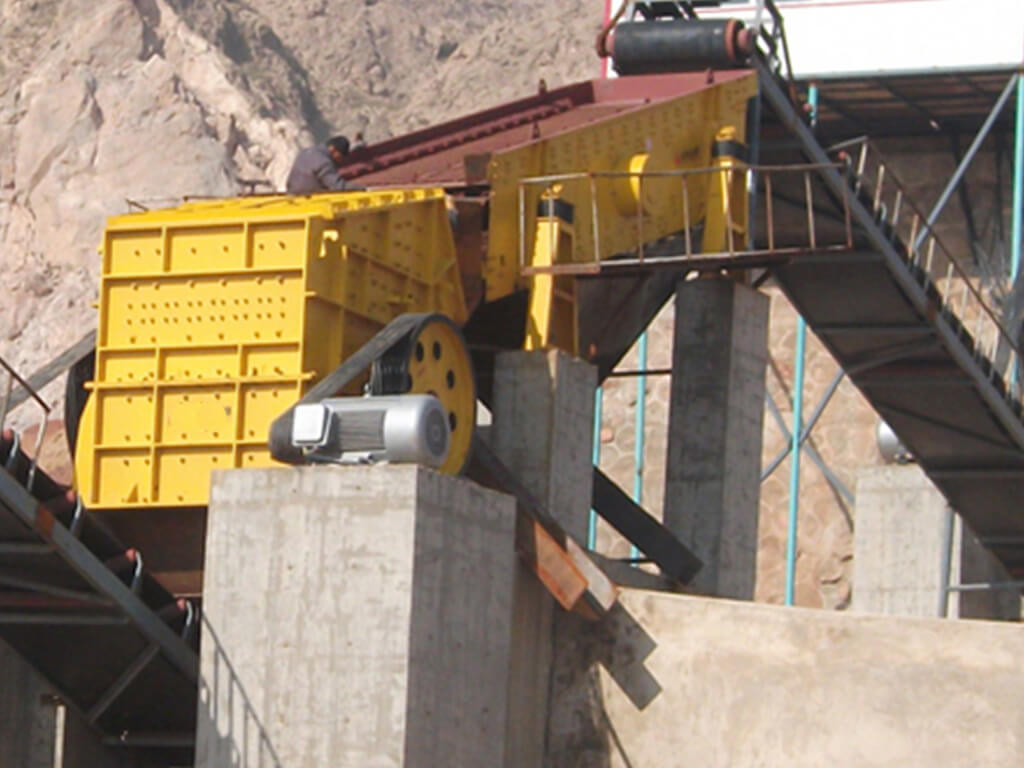
In the “screen first, crush last” process, the material enters the screening stage immediately after coarse crushing. Particles that meet the requirements are directly output as finished products, while larger or unqualified particles enter the secondary crusher for further processing, significantly reducing the amount of material that is repeatedly crushed. This selective crushing method constitutes a typical open-loop system.
(2) Core Features:
The most significant feature of the open-circuit system is that materials are not repeatedly recycled; qualified materials are discharged immediately. Due to the reduction in the amount of material processed by secondary crushing, the output of finished products is significantly increased with the same equipment configuration.
(3) Applicable Scenarios:
The pre-screening and post-crushing process is very suitable for the production of ordinary commercial concrete, building construction, and road base materials, and for projects with relatively relaxed requirements on aggregate particle shape. Although these scenarios are more sensitive to output and cost control, the pre-screening and decolorization system can quickly meet the demand for large quantities of materials at a lower cost.
(4) Analysis of the Advantages and Disadvantages of Screening First
✔️Advantages: Improved impurity removal and reduced crushing costs.
Pre-screening can effectively separate mud, fine powder, and light impurities from raw materials, preventing these impurities from entering the crusher and causing equipment wear and finished product contamination. More importantly, when processing raw materials with high mud content, qualified particles and impurities can be screened out in advance, reducing ineffective crushing and lowering equipment and energy costs.
❌Disadvantages: Screening efficiency is affected by material characteristics.
Some needle-shaped and flaky particles close to the qualified particle size may be mistakenly screened into the finished product, resulting in a less full overall aggregate particle shape than in closed-circuit (crushing before screening) processes, and poor gradation stability. Furthermore, the screening effect is easily affected by factors such as material moisture and viscosity, which may lead to screen blockage or fluctuations in sorting accuracy.
Key Differences Comparison: Crushing or Screening First?
| Comparison Dimension | Crush First, Screen Last (Closed Circuit) | Screen First, Crush Last (Open Circuit) |
|---|---|---|
| Escenario de aplicación | High-grade concrete, key infrastructure projects. | Ordinary concrete, road base fill plant. |
| Product Shape | Well-rounded, low flakiness content. | Higher flakiness content. |
| Main Advantages | High product quality, wide application range. | High output, qualified material discharged directly, less wear. |
| Main Disadvantages | Higher wear, lower output | Poorer particle shape, lower crusher load |
| Maintenance Frequency | Higher (crusher requires more frequent maintenance) | Relatively longer maintenance cycle |
| Screening Load | Low impact, high screening efficiency. | Screen prone to clogging, heavily affected by material moisture. |
| Resource Utilization | No material loss, high utilization rate | Some coarse particles may bypass screening |
| System Complexity | More equipment, more complex process flow. | Less equipment, simpler process flow. |
| Operating Cost | Higher energy consumption, higher cost per ton. | Lower energy consumption, lower cost per ton. |
Experts Advise: In What Situations Should You Choose Which Order?
1. Rock-Type Matters
● For soft rocks such as limestone and mudstone, which are relatively soft and easily crushed, first crushing followed by screening ensures thorough crushing and prevents excessive powder content from affecting the quality of the finished product.
● For hard rocks such as granite and quartzite, which are hard and highly wear-resistant, first screening followed by crushing can remove substandard particles in advance, significantly reducing ineffective wear on the crusher, extending equipment life, and improving overall production efficiency.
2. End-use of the product
● High-grade concrete has strict requirements for aggregate particle shape; needle-like and flaky particles will reduce the compressive strength of concrete. Therefore, the best consideration is a closed-loop process of pre-crushing followed by screening, which can repeatedly reshape the aggregate to ensure that the content of needle-like and flaky particles is lower than the industry standard.
● Ordinary concrete or roadbed materials have relatively relaxed requirements for particle shape, focusing more on output and cost. An open-loop process of pre-screening followed by crushing can reduce repeated crushing steps, resulting in higher output with the same configuration.
● If used in a sand-making production line, it has specific requirements for fineness modulus and stone powder content. Recommended combined processes, such as coarse crushing followed by pre-screening + fine crushing followed by closed-circuit crushing, can ensure sand particle shape and precisely control stone powder content.
3. Cost-Benefit Analysis
● Closed-circuit (crushing first) processes have high equipment investment, requiring additional return conveyor belts and multi-stage screening. However, through circulating crushing, over-crushing can be reduced, resulting in overall efficiency and a higher selling price for the finished product. It is particularly suitable for high-value-added aggregate production, with more substantial long-term returns.
● Open-circuit (screening first) processes have low initial equipment investment and are suitable for sand and gravel plants with limited budgets. Since only unqualified materials enter secondary crushing, the crusher load is reduced, and power consumption and equipment wear are relatively controllable, but the added value of the finished product is lower.
Conclusión
Crush or screen first: which is the right order for you? This core question, which runs throughout the article, has a clear answer: there is no absolutely correct process sequence, only the optimal choice best suited to your operating conditions. While the closed-circuit crushing-screening process produces excellent particle shape, it involves high circulating loads and expensive equipment investment. The open-circuit screening-crushing process, while increasing finished product output, often sacrifices aggregate particle shape. The answer is not static; the specific approach depends on a comprehensive consideration of your lithological characteristics, product application, and investment budget. JXSC Mining Machinery Factory specializes in various sand, gravel, aggregate, and ore crushing & screening solutions. Feel free to contact us anytime for customized process design and equipment support.
 English
  Spanish
  French
  Russian