• Accueil
  • Projet
  • 25TPH Alluvial Tin Ore Gravity Separation Plant In Nigeria

25TPH Alluvial Tin Ore Gravity Separation Plant In Nigeria

This project is a complete solution for a 25TPH (25 tons/hour) alluvial tin ore gravity separation plant customized by JXSC for a Nigerian client. In response to the characteristics of coarse-grained and easily liberated alluvial tin ore, it adopts a reagent-free and environmentally friendly process of “washing and screening + gravity concentration + magnetic separation“. This tin ore gravity separation system is specifically designed to accommodate the actual operating conditions in Nigeria, addressing local constraints such as limited power supply and modest on-site operational and maintenance capabilities. Upon commissioning, the tin ore processing solution can achieve an overall tin recovery rate of 90%+, produce concentrates that meet the grade requirements for subsequent smelting, and ensure low operating costs.

Localisation

Nigeria, Afrique

Matériau

Alluvial Tin Ore With Low Clay

Capacité

25 TPH

Taille de l'aliment

<100mm

Solutions et processus

25TPH Alluvial Tin Ore Gravity Separation Plant

01

Pre-processing, Washing, and Classification:

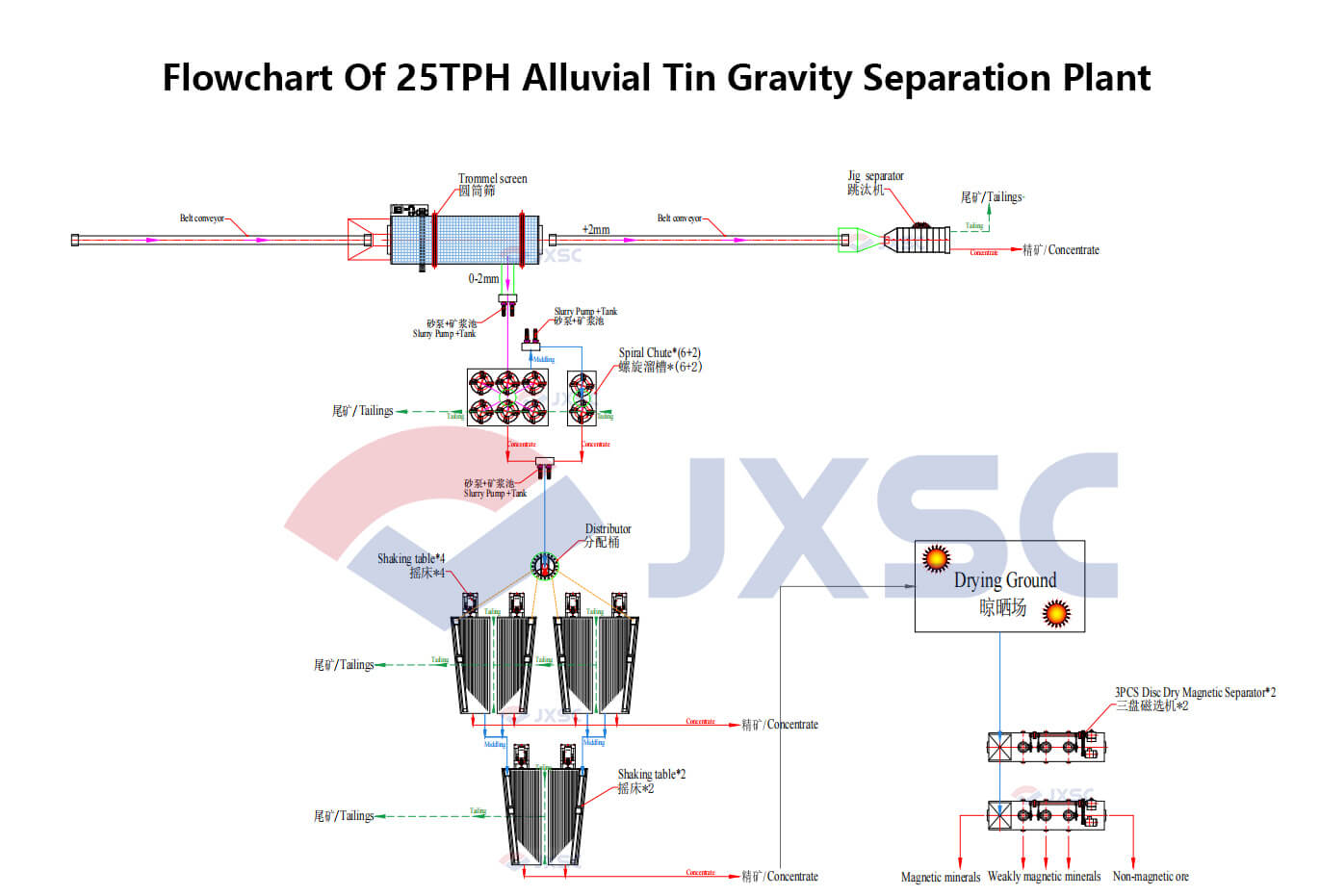
The raw ore is fed via a belt conveyor into a trommel screen to undergo size classification, separating it into two material streams: a +2mm coarse fraction and a 0–2mm fine fraction. Of these, the +2mm coarse fraction is conveyed directly to a jigging machine for coarse-grain beneficiation, yielding a primary coarse tin concentrate, while the tailings are discharged directly.

02

Fine-Grained Rough Separation:

The 0–2 mm fine-grained slurry is conveyed via a sand pump and slurry tank assembly to a battery of eight spiral chutes (configured as 6+2) for rough separation; this process allows for the early rejection of the majority of low-grade tailings, yielding a spiral rough concentrate with an upgraded tin grade.

03

Fine Gravity Separation Stage:

The spiral coarse concentrate is pumped again to the distribution tank via a sand pump, and then evenly fed to four shaking tables to complete the first fine concentration, producing a portion of qualified tin concentrate. The middlings produced from the first fine concentration are sent to two additional shaking tables for a second scavenging and fine concentration process, producing another portion of qualified tin concentrate. The tailings from both processes are discharged separately.

04

Séparation magnétique :

The tin concentrate produced from the entire process is first transported to a drying yard for natural dewatering. Subsequently, it is fed into two three-disc dry magnetic separators, where—based on differences in mineral magnetism—it is separated into three product categories: magnetic minerals, weakly magnetic minerals, and non-magnetic tin concentrate, thereby achieving the simultaneous recovery of associated resources.

Merveilleux ! Partager ce message :

Découvrez nos projets

Recherche de produits

JXSC LOGO foncé

Parlez à nos experts dès aujourd'hui

Nous contacter