
How can you ensure your roller crusher operates efficiently while minimizing wear and the risk of breakdowns? In mineral processing, roller crushers handle the fine-crushing stage, consistently reducing material to a target particle size before it is fed into a ball mill. Whether in mining operations, aggregate plants, or waste processing facilities, roller crushers play a vital role. Although their design may appear simple, these roller crusher 101 involve complex nuances regarding equipment types, crushing principles, wear parts, and routine maintenance. Any oversight in these areas will directly impact output particle size, production capacity, and the cost of spare parts. This article will take you on an in-depth analysis of the operating logic of roller crushers, reveal the replacement cycle of vulnerable parts, and provide a complete solution from installation and commissioning to preventive maintenance to help you save costs and increase production capacity.
What Is A Roller Crusher?
Definition and Structure:
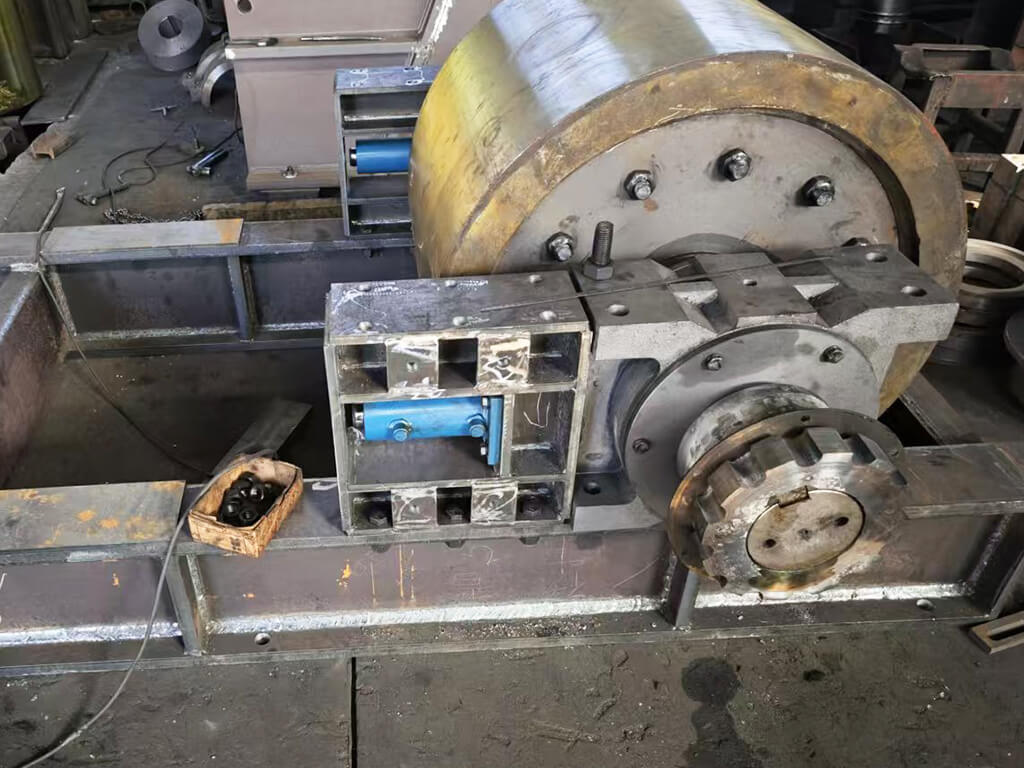
A roller crusher is rock crushing equipment designed for medium and fine comminution; it uses two counter-rotating rollers to compress and shear material. Once fed into the machine, friction draws the material into the “nip” (the gap between the rollers), where crushing occurs. Its core components include rollers, bearings, a compression mechanism, an adjustment mechanism, and a drive system. While the structure is relatively simple, the machine is highly durable, with all components precisely integrated.
Among them, the roller surface is the part that directly contacts the material, and it is usually made of high manganese steel or composite wear-resistant materials to cope with the impact and wear of materials with different hardness. The compression mechanism usually employs springs or a hydraulic system; this not only maintains the pressure required for crushing but also allows the rollers to retract or shift if an excessively hard object enters the machine. The final particle size can be flexibly controlled by adjusting the gap between the rollers, making the equipment highly versatile.
Key Function:
In the processing of construction aggregates or mineral ores, roller crushers are typically employed for secondary or tertiary (intermediate-to-fine) crushing, following the primary (coarse) crushing stage. They produce a low proportion of ultra-fine particles and yield a consistent, well-shaped product, making them ideal for applications with strict requirements regarding the percentage of “fines.” They are particularly well-suited for materials with higher moisture content or slight stickiness, as they are less prone to clogging or buildup.
Advantages:
The discharge particle size can be directly controlled by adjusting the roller gap, making on-site modifications convenient and eliminating the need to replace spare parts. If “tramp iron” (unwanted hard metal objects) enters the crusher, the rollers can retract to accommodate the obstruction, thereby minimizing potential damage to the machine. Furthermore, the enclosed design ensures excellent performance in terms of dust containment and noise suppression.
What Types Of Roller Crushers Are There?
⚫ Single-Roller Crusher:
Features one active (rotating) roll, with a fixed jaw plate or toothed plate positioned opposite it; material is crushed and broken by being compressed between these two surfaces. It is suitable for processing materials of low to medium hardness and is frequently used for substances like coke or coal, where excessive pulverization (fines generation) must be avoided.
⚫ Double Roller Crusher:
Two rollers rotate in opposite directions, one clockwise and one counterclockwise. It is the most common type of crusher in industrial and mining sites. It is suitable for processing medium-hardness ores and construction aggregates, such as in the secondary crushing of limestone or basalt.
⚫ Four-Roller Crusher:
Consists of two sets of double-roll units arranged in series, creating a two-stage crushing system with higher efficiency. It is ideal for production lines with strict requirements for final particle size, particularly for the tertiary or ultra-fine crushing of sand and gravel aggregates.
⚫ Hydraulic Roller Crusher:
Replaces traditional spring-based tensioning mechanisms with hydraulic cylinders. Both the roll gap and the crushing pressure can be set directly via a control panel and monitored in real time. This type is especially well-suited for the precision crushing of medium-to-high-hardness materials and represents one of the most highly automated roll crusher designs available today.
⚫ Mobile Roller Crusher:
Mounted on a tracked chassis or a wheeled trailer, and equipped with an integrated feeder at the front and a discharge conveyor at the rear, this unit can be driven directly to the material stockpile for immediate operation. It is well-suited for mining sites or quarries where material sources are dispersed and transport distances are significant.
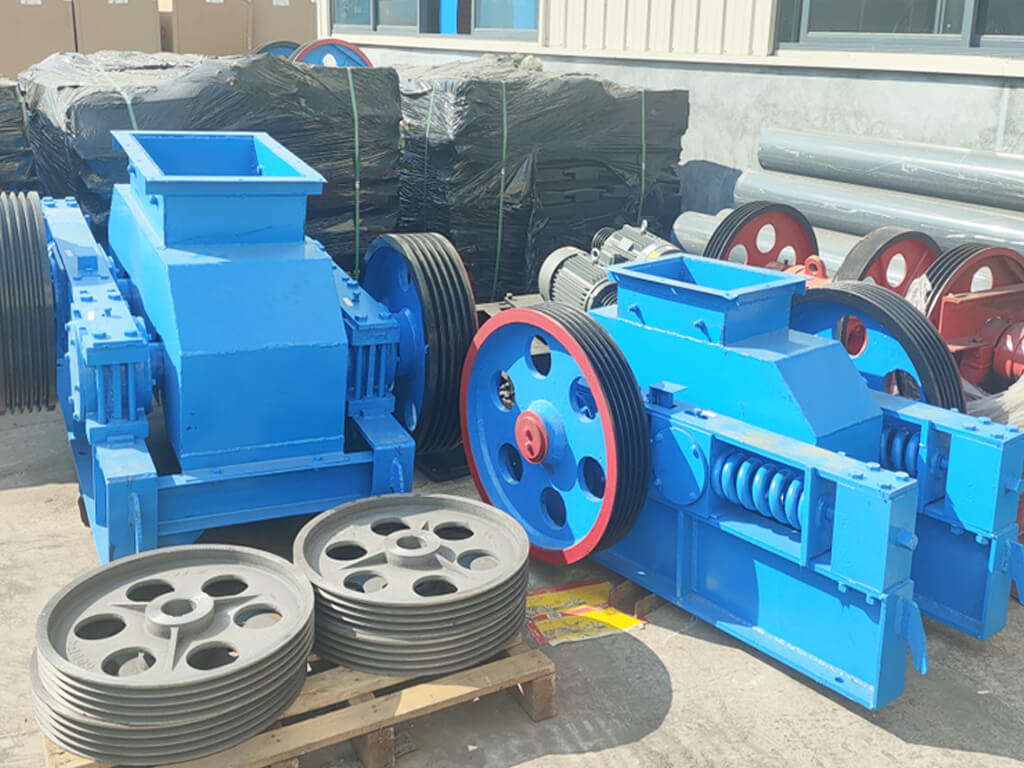
Types of Roller Crushers: How to Choose?
Selection Criteria | Single Roll | Double Roll | Four Roll | Hydraulic Roll | Mobile Unit |
Suitable materials | Raw coal, shale, soft materials | Limestone, shale, coal and other medium-hard materials | Applications requiring fine output in one pass | Lines with strict particle size stability requirements | Sites with scattered material sources requiring relocation |
Target particle size | Medium; low fines ratio required | Commonly tens of millimeters | Can achieve a finer particle size in one pass | Stable output with small fluctuation | Similar to double roll |
Capacité (t/h) | 1.5–70 t/h | 30–150 TPH | 1–100 TPH | ||
Ease of adjustment | Relatively low; shutdown required | Manual gap adjustment on site | Two gaps must be set separately | Pressure and gap adjustable from the panel; convenient | Depends on configuration; limited adjustment |
Investment level | Low | Moyen | Slightly higher | Relatively high | Highest, including chassis and conveyors |
Reasons to choose it | Over-crushing is a concern and output is modest | Best versatility and cost-effectiveness | Saves one process stage and conveying | Strict output requirements and frequent tramp iron | Varying material sources and long haul distances |
How Does A Roller crusher Work?
1. Feeding and Nip:
Material is delivered by a feeding device onto the space above the two rollers, where friction from the roller surfaces draws it into the nip (the wedge-shaped gap between the rollers). If the nip angle is too small, the material may slip; if it is too large, the material may be pushed back (rebound). Ideally, the feed particle size should be 10 to 20 times the width of the roller gap; material exceeding this range requires primary (coarse) crushing beforehand.
2. Crushing and Fine Grinding:
As material enters the gap, it is subjected to pressure, causing it to fracture. Shear forces—generated by the difference in linear velocity between the two rollers—further break the material apart. Hard, brittle materials are primarily crushed by pressure, while tough, ductile materials are broken down through tearing. Toothed rollers are more effective for tearing, whereas smooth rollers are better suited for fine grinding.
3. Discharge and Recirculation:
Crushed material is discharged from the bottom. Particles that meet the required size specifications exit the system, while those that do not are subjected to further crushing until they reach the desired size.
What Are The Wear Parts of A Roller Crusher? Causes and Fixes
Roller Shells (Roller Sleeves):
These components are subject to direct impact and compression from the feed material, leading to the most rapid wear. Common causes include off-center feeding, the presence of hard foreign objects, or an excessively narrow gap. Repairs can be performed by build-up welding using wear-resistant electrodes, followed by surface grinding.
Toothed Plates:
Wear on toothed plates results in inconsistent crushed particle sizes. Once the wear on the tooth tips exceeds 5 mm, the output particle size increases significantly. Utilizing high-manganese steel can substantially enhance the durability of the toothed plates and reduce the frequency of replacements.
Bearings and Seals:
If bearing temperatures exceed 75°C, the equipment must be shut down immediately for inspection. Early signs are often a slow rise in temperature, an increase in vibration levels, and discoloration of the grease, which often appear earlier than abnormal noises.
Drive Components:
Routine maintenance should focus on maintaining proper tension; both excessive and insufficient tension can negatively impact the service life of components. If the elastic element of the coupling cracks, ages and loses its elasticity, or if misalignment causes periodic vibration, it must be replaced in time to avoid damaging the bearings and shaft extension.
How to Maintain A Roller Crusher On A Daily Basis?
Fastener Inspection: Check the tightness of anchor bolts during every shift; retighten them to the specified torque if necessary. On a weekly basis, inspect the security of auxiliary components—such as protective guards and piping supports—to prevent loosening or detachment, which could lead to accidents.
Lubrication and Temperature Control: Replenish grease in measured, specific quantities; do not overfill. Maintain bearing temperatures within 40°C above the ambient temperature; if the temperature continues to rise, shut down the machine.
Roll Gap Verification: Measure the gap width on both sides weekly and compare the results against the set values. Coarsening of the output material is often due to wear and tear that widens the gaps. Timely adjustments should be made to avoid affecting downstream processes.
Roll Surface Maintenance: Clean any material residue adhering to the roll surfaces during every shift, and ensure no hard objects become lodged in the roll gap. If uneven wear is detected on the roll surfaces, adjust the gap between the rolls or replace the roll shells. It is recommended to measure the roundness error of the roll surfaces quarterly; if the deviation exceeds the specified limit, the rolls should undergo professional grinding.
Shutdown and Storage: For long-term shutdowns, clear out all residual material, apply oil to the roll surfaces, and release the tensioning mechanism. Loosen any drive belts to prevent plastic deformation, and conduct a comprehensive inspection before restarting the equipment.
Compared to Other Crushers: Roll Crusher vs Jaw Crusher vs Cone Crusher
Comparison Item | |||
Primary function | Secondary and fine crushing, sand making | Primary crushing (PE series), secondary and fine crushing (PEX series) | Secondary and fine crushing; hard materials and large-scale operations |
Output adjustment method | Roll gap adjustment only; quick on-site size changes | Discharge opening adjustment; shutdown required | Discharge opening adjustment; hydraulic models allow on-line adjustment |
Adaptability to moisture | Good; wet and sticky materials rarely clog | Fair; wet materials tend to stick to the jaw plates | Poor; wet and sticky materials easily clog the chamber |
Unit capacity | Medium: 1.5–70 TPH (double roll), up to 150 t/h (hydraulic type) | High: 1–1120 TPH | High: large models can reach 1450 t/h |
Output particle shape | Relatively regular, few elongated or flaky particles | Coarser; particles mostly angular | Good cubic content; best particle shape |
Typical materials | Medium-hard and brittle materials such as coal, coke, limestone and shale | Primary crushing of various hard rocks and large raw materials | Hard materials such as granite, basalt and iron ore |
Investment and O&M | Low investment, few spare parts, easy roll surface repair | Low investment, simple structure and easy maintenance | High investment; demanding requirements for operation and maintenance |
Conclusion
As highly efficient crushing equipment, roller crushers are widely used for processing materials such as coal, ore, and shale. While their design may appear simple, their actual performance depends on the precise coordination of the entire system. For specialized operating conditions or custom requirements, JXSC Mining Machinery Factory provides professional equipment selection advice and optimization solutions. Please feel free to contact us for further consultation or customized services!
 English
 Spanish
 French
 Russian