
In mining operations, écrans vibrants are essential equipment for material classification; however, industry professionals often face a dilemma when choosing between linear vibrating screens and circular vibrating screens. Which type is more cost-effective, durable, or better suited to the specific characteristics of your ore? Recent industry data indicates that vibrating screens account for 42% of equipment usage in the mining sector, reflecting robust demand. However, if the wrong option is chosen, at best the screening efficiency will be low and the screen will be frequently clogged, and at worst it will drag down the production capacity of the entire crushing line and even bring high maintenance and downtime costs! This article will provide an in-depth analysis of the principles, applicable scenarios, and costs of linear vibrating screens and circular vibrating screens, comparing them from multiple dimensions to help you quickly identify the vibrating screening equipment that truly suits your working conditions, ensuring that every investment is worthwhile.
What is a linear vibrating screen?
(1) Working Principle
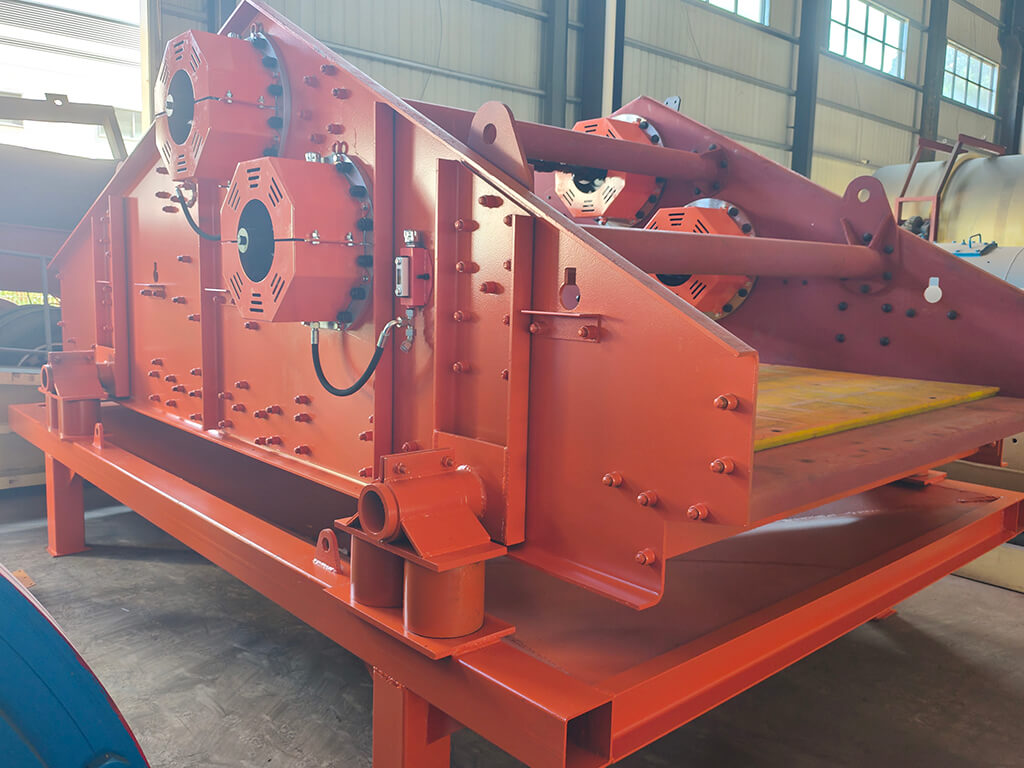
The linear vibrating screen utilizes two vibrating motors rotating synchronously in opposite directions to generate an exciting force. This force moves material on the screen surface in a straight line along a predetermined inclination angle. The forces generated by the two motors’ eccentric blocks cancel each other in the vertical direction while reinforcing each other in the horizontal direction, creating a stable linear vibration source. This causes the material to move toward the discharge end with a bouncing motion, allowing smaller particles to pass through the screen.
(2) Application Scenarios
Linear vibrating screens are suitable for high-precision classification, dewatering, and desliming of medium-to-fine dry materials. They are particularly well-suited for handling sticky or wet materials with a moisture content exceeding 8%, finding their widest application in areas such as the final grading of sand and gravel aggregates, medium recovery (desliming) in coal washing, and the screening of fines from manufactured sand.
● Advantages
Linear vibrating screens offer high processing capacity and screening efficiency; their multi-deck screen design allows a single unit to simultaneously produce multiple product specifications. The installation angle is adjustable to meet the screening requirements of various materials. The vibration motors are easy to replace, and the equipment features a compact footprint and low headroom requirements, making it ideal for space-constrained production line layouts.
● Disadvantages
Linear vibrating screens are less adaptable to wet, sticky, or high-moisture materials and are prone to screen blinding (clogging). While they offer high screening precision, their resistance to sticking and clogging is inferior to that of circular vibrating screens, and they generate relatively high operating noise; consequently, the use of screen cleaning devices or pre-treatment processes is often required to mitigate these issues.
What is a circular vibrating screen?
(1) Working Principle
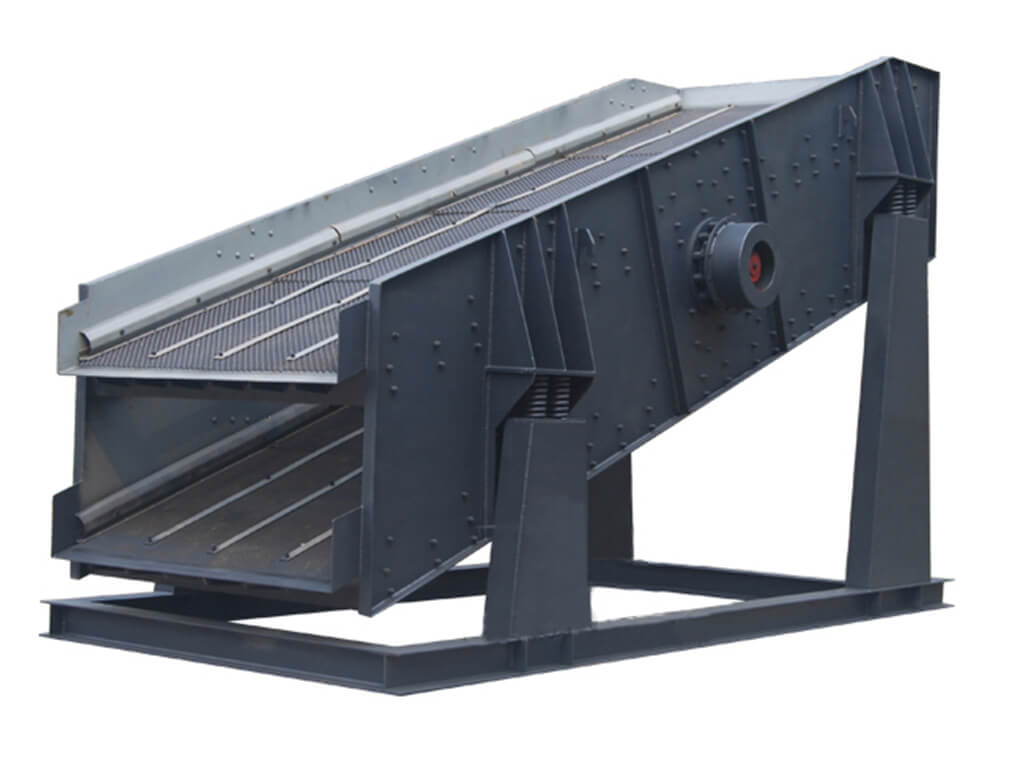
A circular vibrating screen utilizes a single-shaft exciter to drive eccentric blocks in high-speed rotation; the resulting centrifugal force compels the screen box to oscillate along a circular or elliptical path. Material is continuously thrown upward, tumbled, and stratified. The circular motion breaks down the cohesion within the material bed, keeping it loose and allowing large particles to pass through the screen quickly.
(2) Application Scenarios
Circular vibrating screens are suitable for the primary screening and classification of coarse materials characterized by large lump sizes, high specific gravity, and high hardness. They excel in heavy-duty operations, such as mineral processing, aggregate screening in quarries, and pre-screening ahead of crushers, and are particularly well-suited for handling sand, gravel, or minerals with low clay and moisture content.
● Advantages
Circular vibrating screens feature high exciting force and a long stroke, offering strong resistance to screen blinding; even if material particles become lodged in the apertures, the vigorous motion easily ejects them. The screen deck utilizes an arc-transition design, providing a large effective screening area and substantial throughput, making it ideal for high-tonnage, continuous coarse screening processes. Additionally, multi-layer screen decks can be configured to achieve multi-stage classification. The use of rubber springs for vibration damping ensures low noise levels during operation.
● Disadvantages
Screening precision is relatively limited; most units are restricted to single- or double-deck coarse screening, making fine classification difficult. Screening efficiency is significantly affected by material moisture and stickiness; when processing materials with a moisture content exceeding 15%, throughput drops and screen blinding becomes likely, necessitating the installation of additional screen-cleaning devices. The equipment operates with a large amplitude and requires a steep installation angle, placing high demands on the foundation and site conditions. Furthermore, the exciter bearings are subject to heavy loads and rapid wear, resulting in higher technical requirements for maintenance and elevated overall operating costs.
Linear vs Circular Vibrating Screen: A Comprehensive Comparison Across 6 Dimensions
1. Movement Trajectory:
Linear vibrating screens cause material to bounce in a straight line along a fixed direction, resulting in a simple movement path and smooth material conveyance. Circular vibrating screens cause material to tumble in a circular motion; this varied trajectory effectively breaks up the material bed and improves stratification.
2. Screening Efficiency and Precision:
Circular vibrating screens offer superior screening efficiency, as material remains on the screen longer, providing more opportunities for particles to pass through. Linear vibrating screens excel in conveying speed but offer relatively lower screening purity; each type involves specific trade-offs.
3. Suitable Materials:
Linear vibrating screens are suitable for wet, sticky materials—such as coal slime or mineral slurry—with a moisture content exceeding 5%. Circular vibrating screens excel at screening large-particle aggregates and ores, making them particularly well-suited for large-scale sand and gravel operations or mineral processing plants.
4. Processing Capacity:
For a given screen surface area, circular vibrating screens offer higher throughput than linear vibrating screens. However, linear screens provide greater stability in material conveyance during long-distance, continuous operations, making them particularly suitable for multi-stage production lines.
5. Structure, Installation Angle, and Maintenance Costs:
Linear screens feature a shallow inclination angle and a compact footprint; their simple structure facilitates easy maintenance. In contrast, circular vibrating screens require a steeper inclination angle and more demanding site conditions; they impose heavy loads on bearings, resulting in higher maintenance requirements and costs.
6. Energy Consumption and Operating Costs:
Linear screens utilize balanced dual-motor power and require less frequent replacement of wear parts, resulting in more cost-effective overall operation. Circular vibrating screens consume more energy during high-load operation and experience rapid wear on components such as bearings, leading to higher long-term maintenance expenses.
Linear vs. Circular Vibrating Screens: Which Is Right for Your Mine?
| Comparison Item | Tamis vibrant linéaire | Circular Vibrating Screen |
|---|---|---|
| Motion Trajectory | Linear throwing forward motion | Circular/elliptical tumbling motion |
| Screening Efficiency | Fast past, medium efficiency | Highest efficiency |
| Matériaux applicables | Medium-fine dry materials, sticky & wet materials. | Large lumps, coarse materials, low moisture & mud content. |
| Capacité de traitement | High, focused on multi-deck classification | High, focused on high throughput |
| Structure & Inclination | Small inclination angle | Large inclination angle, requires clearance |
| Energy Consumption & Maintenance | Balanced energy use, easy maintenance | High energy consumption, high maintenance threshold |
Conclusion
Sélection screening equipment for mining operations is straightforward, provided the material characteristics and process requirements are the primary considerations. Linear vibrating screens are better suited for the classification of medium-to-fine materials and the handling of wet, sticky materials, whereas circular vibrating screens excel at the pre-screening of coarse materials. Properly matching the equipment to specific operational conditions not only boosts screening efficiency but also reduces maintenance costs and extends equipment lifespan.
For tailoring to your specific mining site, please contact the JXSC technical team, we offer customized screening and classification solutions designed to help you achieve your mining production goals more efficiently and cost-effectively.

 English
  Spanish
  French
  Russian