
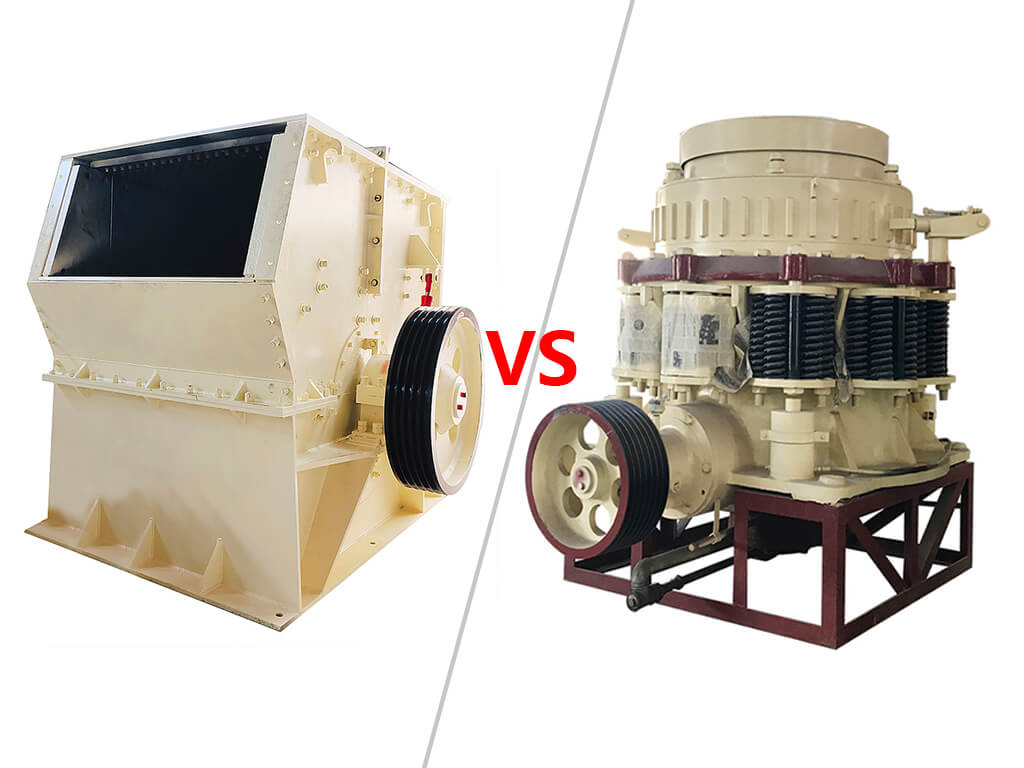
Impact Crusher vs. Cone Crusher: Differences in Operating Principles
Fundamental Principles of Impact Crushers
Upon entering the crushing chamber, material first falls into the center of a high-speed rotating impeller; under the influence of centrifugal force, it is accelerated and flung outward. It either impacts against the wear-resistant liners within the chamber—executing a “stone-on-metal” crushing action—or collides at high velocity with other material simultaneously ejected from the same batch, thereby achieving “stone-on-stone” crushing. After undergoing multiple impacts, the material fractures along its natural cleavage planes, resulting in virtually no additional internal micro-cracks.
Core Components:
The impeller serves as the central mechanism for accelerating the material; it is integrally cast from a highly wear-resistant alloy, enabling it to withstand high-intensity impacts without easily deforming. Furthermore, the liners within the impact crusher—which function as the primary impact surfaces—are manufactured from high-chromium cast iron. These liners can be individually replaced once worn, thereby contributing to lower maintenance costs.
Fundamental Principles of Cone Crusher
The cone crusher uses a unique laminated crushing principle: an electric motor drives an eccentric sleeve via a pulley, causing the movable cone to execute an eccentric gyratory motion. Within the crushing chamber—formed by the movable cone and the stationary cone—the material is continuously subjected to compression and grinding, thereby achieving progressive crushing.
Core Components:
Utilizing high-hardness manganese steel liners, even rocks of extreme hardness can be crushed with high efficiency. This design prevents the rapid wear and tear of core components, ensuring exceptional operational stability.
Impact Crusher vs. Cone Crusher: Applicable Scenarios
● Applications of Impact Crushers
Impact crushers are capable of largely preserving the cubic shape of the processed material, making them ideal for applications where strict requirements exist regarding the shape of the finished product (such as high-speed rail construction, airport projects, and high-grade concrete production). Due to their simple structural design, maintenance and adjustments are relatively convenient; they are particularly well-suited for processing rocks of medium-to-low hardness and for use in small-to-medium-scale sand and aggregate production lines.
● Aplicaciones de las trituradoras de cono
The laminating crushing mechanism inherent to cone crushers offers superior adaptability when processing high-hard, abrasive materials such as granite and basalt. It is especially suitable for large-scale, long-term sand and gravel and aggregate production plants. With slower liner wear rates and a longer equipment lifespan, cone crushers offer superior economic efficiency over the long term.
Impact Crusher vs. Cone Crusher: Core Pros and Cons
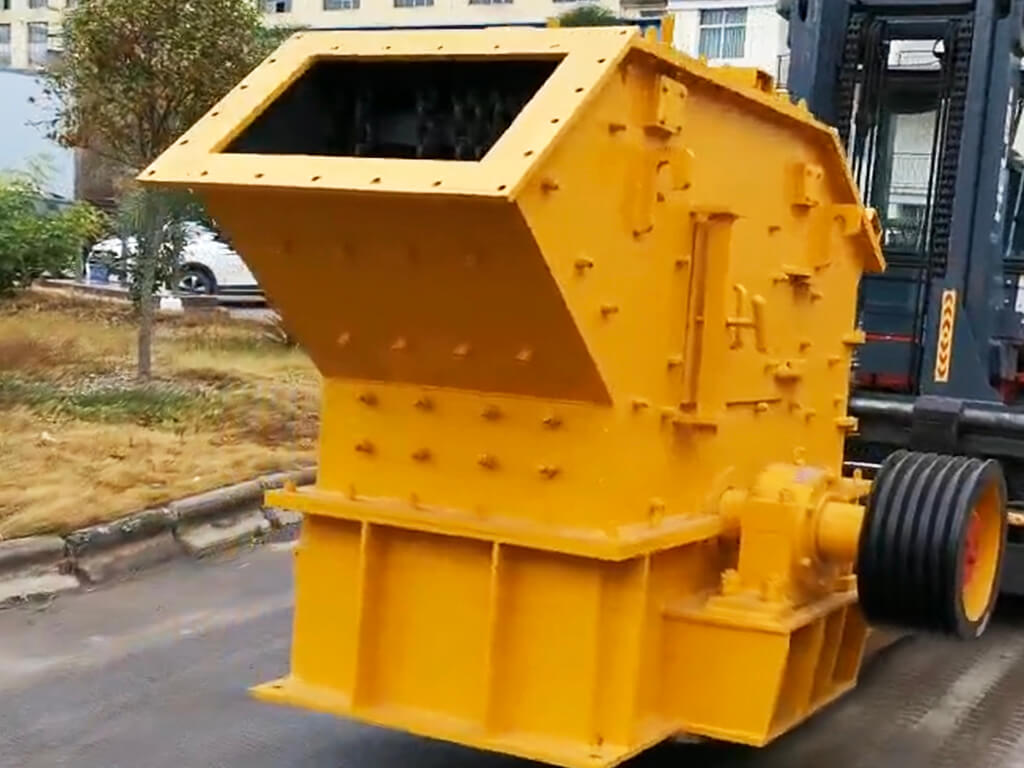
Pros and Cons Of Impact Crusher:
Advantages:
En shape of the finished product is exceptional, characterized by a high proportion of cubical particles and an almost complete absence of irregular, flaky, or needle-like aggregates. This makes it perfectly suited for projects with strict requirements regarding aggregate strength and shape—such as high-speed railways and high-grade concrete structures.
Trituradora de impacto demonstrates excellent adaptability to medium-to-low-hardness materials—such as limestone and recycled concrete—resulting in superior crushing efficiency.
The overall structural design of the impact crusher is simple, and the process for removing and replacing wear parts is highly convenient. This minimizes the time cost associated with production line maintenance downtime and offers greater flexibility in adjusting production rhythms.
Limitations:
Limited Crushing Capacity for High-Hardness Materials: When used to process high-hardness aggregates—such as granite or basalt—the wear rate of the blow bars and impact plates accelerates significantly. This necessitates frequent replacement of wear parts, leading to increased material consumption costs over the long term.
High Energy Consumption: The crushing process requires driving the rotor at extremely high rotational speeds. Consequently, the overall energy consumption is higher than that of crushing equipment with equivalent production capacity, resulting in higher electricity costs over the long term.
Pros and Cons Of Cone Crusher
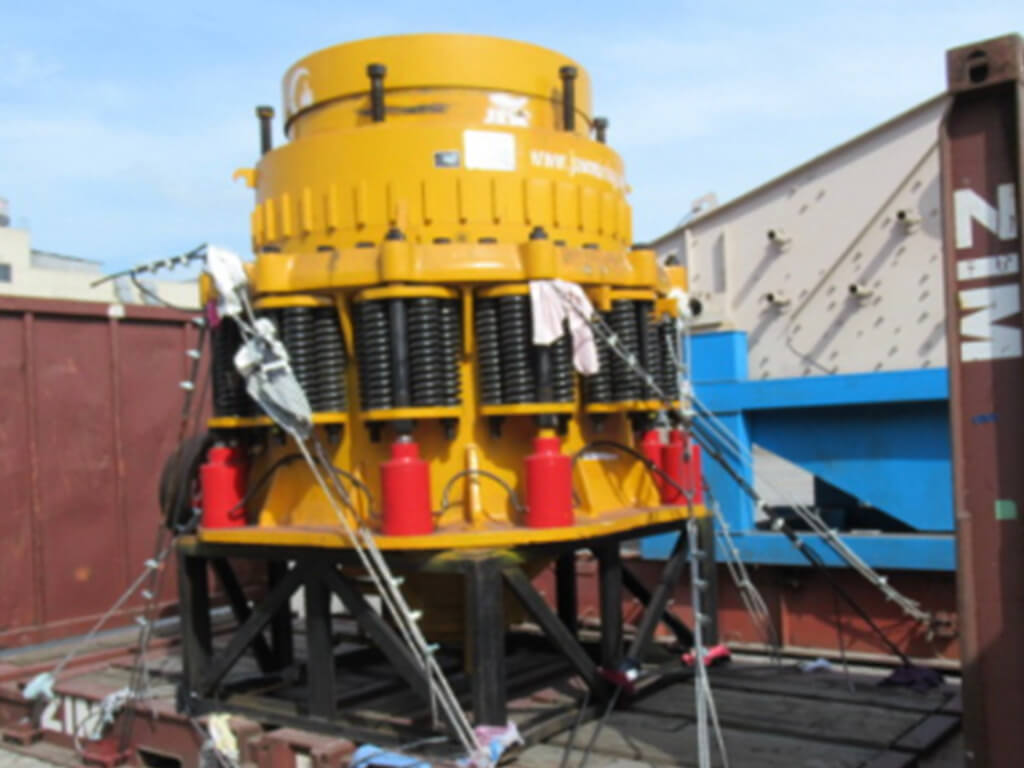
Advantages:
Compared to impact crushers, trituradoras de cono consume less energy when crushing high-hardness materials (such as granite, basalt, and river pebbles). They are particularly well-suited for continuous, large-scale production, enabling reduced operating costs while maintaining high output capacity.
Their wear parts exhibit minimal attrition, making them the preferred crushing equipment for producing high-hardness aggregates.
Overall energy consumption is lower than that of impact crushers with equivalent output capacity; furthermore, wear parts—such as liners—have a longer service life, resulting in lower comprehensive costs over the long term.
By adjusting the discharge opening and utilizing the hydraulic system, the aggregate particle size distribution can be precisely controlled. This makes the cone crusher highly suitable for the fine-crushing stage in the production of manufactured sand and high-standard aggregates.
Limitations:
Less Ideal Particle Shape: Due to the machine’s laminating crushing mechanism, some particles in the finished product may exhibit needle-like or flaky characteristics; consequently, the particle shape of the crushed aggregate is slightly inferior to that produced by impact crushers. For aggregate production projects with extremely stringent requirements regarding finished particle shape, subsequent shaping and sand-making processes are necessary to meet the material specifications of high-standard projects.
High Technical Requirements for Maintenance: Cone crushers are equipped with specialized hydraulic adjustment and protection systems. Routine maintenance and troubleshooting require operators to possess relevant professional knowledge, resulting in a higher technical entry barrier compared to impact crushers.
Comprehensive Comparison: Which One Best Suits Your Aggregates?
| Comparison Dimension | Trituradora de impacto | Trituradora de cono |
|---|---|---|
| Crushing Principle | Impact crushing (stone-on-stone/stone-on-metal) | Compression and lamination crushing |
| Finished Particle Shape Performance | Excellent, high proportion of cubic particles, suitable for high-standard projects. | Good, slightly more needle and flake particles, additional shaping required for high-demand scenarios. |
| Capacity Range | Single machine capacity: 10-350 t/h, suitable for small and medium-sized production lines. | Single machine capacity: 12-1450 t/h, suitable for large-scale aggregate production lines. |
| Energy Consumption per Unit Capacity | Relatively high | Relatively low |
| Preferred Application Scenarios | High-standard aggregate production projects such as expressways and high-speed railway construction. | Hard rock crushing, large-scale manufactured sand production lines. |
| Coste inicial | Low | Relatively high, models equipped with hydraulic systems have higher manufacturing costs |
| Funcionamiento y mantenimiento | Low, simple replacement process for wearing parts | Relatively high, requires professional knowledge of hydraulic systems |
5 Key Factors for Selecting an Aggregate Crusher
① Raw Material Hardness
Trituradoras de impacto are better suited for materials of medium to low hardness, such as limestone and recycled concrete. For highly abrasive materials such as granite and basalt, a trituradora de cono is the recommended choice.
② Finished Product Requirements
If the aggregate requires a cubical particle shape (e.g., stone used for commercial concrete mixing plants), an impact crusher can ensure sharp, distinct edges.
③ Production Costs
Impact crushers consume more electricity and require frequent replacement of wear parts; they are therefore suitable for short-term projects. For long-term operations, a cone crusher is recommended to keep overall costs under control.
④ Capacity Requirements
Cone crushers offer stable throughput and, when integrated with automated systems, can achieve high production volumes reaching thousands of tons per hour. Impact crushers are more suitable for small-to-medium scale operations or intermittent aggregate production lines.
⑤ Environmental Compliance and Maintenance
Impact crushers tend to generate more noise, whereas cone crushers require specialized maintenance expertise. Additionally, in regions with strict environmental regulations, noise reduction and dust suppression systems should be incorporated into the design.
Precisely Select Crushers to Optimize Aggregate Production Efficiency
In actual crushing lines, these two types of aggregate crushers can be used in combination: a cone crusher for secondary crushing and an impact crusher for shaping. This configuration is ideal for large-scale projects that require a balance between high production capacity and specific particle shape requirements. Furthermore, depending on specific needs, the system can be designed as a mobile crushing station—integrating feeding, crushing, and screening functions—to offer flexible adaptability across a wide range of production scenarios.
Conclusión
In aggregate production, impact crushers vs. cone crushers? Both have their respective advantages and characteristics. The optimal choice depends critically on factors such as raw material hardness, desired product shape, production costs, and capacity requirements. Furthermore, due attention must be paid to optimizing noise control, maintenance procedures, and environmental compliance.
● Impact crushers are better suited for projects involving short-term operations, strict requirements for particle shape, medium-to-soft materials, and variable working conditions.
● Cone crushers are the more appropriate choice for long-term production lines, high-hardness raw materials, sand-making applications, and scenarios where energy consumption is a critical consideration.
JXSC offers expert assistance in selecting the right crushing equipment; we invite you to contact us—we will tailor an optimal aggregate crushing solution specifically to your needs, based on your unique raw materials, capacity requirements, budget, and other specific conditions!
 English
  Spanish
  French
  Russian