
- Accueil
- Blog
- Solution minérale
- How To Extract Copper From Ore Efficiently Without Chemicals?
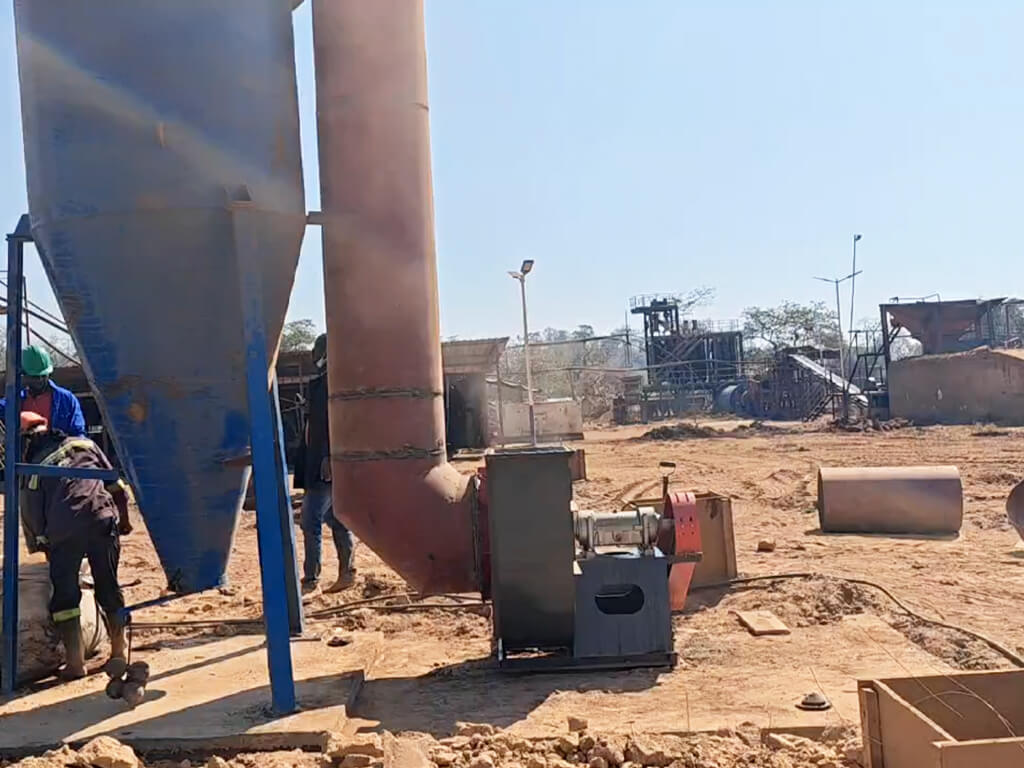
Why is it necessary to extract copper without chemical?
(1). Severe Environmental Pollution
Traditional wet metallurgical processes (such as acid leaching and cyanidation) use high-strength chemicals (sulfuric acid, cyanide), generating large amounts of toxic wastewater and tailings. These pollutants can seep into the soil and groundwater, damaging ecosystems and even affecting the health of surrounding residents. Chemical-free methods can avoid such disasters and reduce the environmental footprint of mining.
(2). Health and Safety
Chemical leaching processes release harmful gases such as hydrogen sulfide and sulfur dioxide, and long-term exposure can cause respiratory diseases or skin corrosion. Using physical gravity separation or bio-metallurgy can significantly reduce occupational hazards.
(3). Stricter Policies and Regulations
Global environmental regulations are restricting the use of toxic chemicals in mining. Chemical-free processes align with sustainable development trends and help mining companies avoid legal risks.
(4). Economic Benefits
Chemical copper refining requires the consumption of large quantities of chemical reagents, resulting in high procurement costs. Many small mining companies using traditional chemical methods to extract copper have low efficiency, or are forced to abandon the mining of low-grade or complex copper ores due to their inability to afford subsequent treatment costs. However, chemical-free technologies such as bioleaching can process low-grade ores, improving resource utilization efficiency.
Extract Copper technology from ore without chemical
1. Copper Gravity Separation
● Principle:
Gravity separation is one of the oldest and most environmentally friendly methods to extract copper ore. Its core principle is to separate copper minerals from associated gangue based on their density differences. In a gravitational or centrifugal field, denser copper minerals and less dense waste rock will exhibit different trajectories due to varying forces. High-density copper mineral particles will settle faster, while the gangue is washed away, thus achieving separation. Common équipement de séparation par gravité includes shaking tables, spiral chutes, and jigs.
● Applicable Ores:
It is particularly suitable for processing high-density oxidized copper ores, such as malachite (density 3.9-4.1 g/cm³) and chalcocite (5.5-5.8 g/cm³). However, it is less effective for sulfide ores (such as chalcopyrite) or ultra-fine particles (<0.1 mm). In practical copper ore processing, the ore needs to be pre-washed, screened, or crushed, and multi-stage separation is required to improve recovery rates. Gravity separation requires no chemical additives, the tailings are easy to handle, and the investment threshold is low for small mining enterprises, making it the most widely used method in the field of mineral processing.

2. Copper Magnetic Separation
● Principle:
Magnetic separation technology utilizes magnetic fields to separate magnetic impurities from copper ore. When crushed ore passes through a magnetic separator, magnetic impurities are attracted to the magnetic poles of the separator, while copper minerals, due to their weak or non-existent magnetism, pass through unimpeded, thus achieving the separation of copper minerals from magnetic impurities. Magnetic separation equipment typically includes drum magnetic separators and high-intensity magnetic separators, with different types of equipment suitable for different ore processing scenarios.
● Applicable Ores:
In copper extraction plants, magnetic separation can be used in the pretreatment step to remove magnetite from the raw ore before entering the flotation process, reducing subsequent reagent consumption by 30%. For pure copper minerals, magnetic separation is primarily used to improve ore purity and cannot directly extract copper. It is particularly suitable for copper ore processing plants troubled by magnetic impurities, and for complex copper ores with high iron content, such as magnetite and pyrrhotite.
3. Electrostatic Separation Method
A chemical-free variant of electrolytic separation
● Principle:
Electrostatic separation utilizes the differences in conductivity of minerals under a high-voltage electric field for separation. Highly conductive minerals, such as native copper, are rapidly repelled by the electrodes due to rapid charge transfer, while insulating minerals, such as quartz, fall freely, achieving efficient separation. Modern electrostatic separators combine gravity and wind force and can process particles ranging from 0.1 to 2 mm.
● Applicable Ores:
It offers extremely high separation accuracy and provides good separation results for some complex and difficult-to-process copper ores. However, it is energy-intensive, and the ore surface must be absolutely dry, but it has significant environmental advantages. It is specifically used for processing ores with significant differences in conductivity, such as high-purity native copper or mixtures of copper oxide ore and gangue. For complex multi-metal ores with complex compositions that are difficult to process using traditional chemical methods, such as copper-tungsten co-existing ores, this chemical-free electrolytic method can effectively extract copper and ensure a high copper recovery rate and product purity.
4. Biohydrometallurgy
● Principle:
Biohydrometallurgy utilizes the bio-oxidation activity of specific bacteria to convert copper sulfide ores into soluble copper ions. The bacteria attach to the mineral surface in an acidic environment, secreting enzymes and iron ions to catalyze the oxidation of sulfides, ultimately producing a leachable copper sulfate solution.
● Applicable Ores:
This process relies on microbial metabolic activity and is suitable for low-grade copper ores, tailings, and some complex copper ores that are difficult to process using conventional methods, such as chalcopyrite, chalcocite, and other copper sulfide ores. It has low energy consumption and no harmful gas emissions, offering significant environmental advantages. However, it is highly susceptible to environmental factors; temperature, pH, and other conditions directly affect microbial activity and thus the extraction efficiency.
Safe and environmentally friendly copper ore extraction solutions
| Méthode | Applicable Particle Size | Coût de l'investissement | Applicable Copper Mineral Types |
|---|---|---|---|
| Séparation par gravité | 1-10mm | Low | malachite, chalcocite |
| Séparation magnétique | 0.1-5mm | Moyen | pyrrhotite, copper-bearing magnetite |
| Séparation électrostatique | 0.1-2mm | Haut | high-purity native copper, complex polymetallic copper ores |
JXSC Extract Copper From Ore Plant
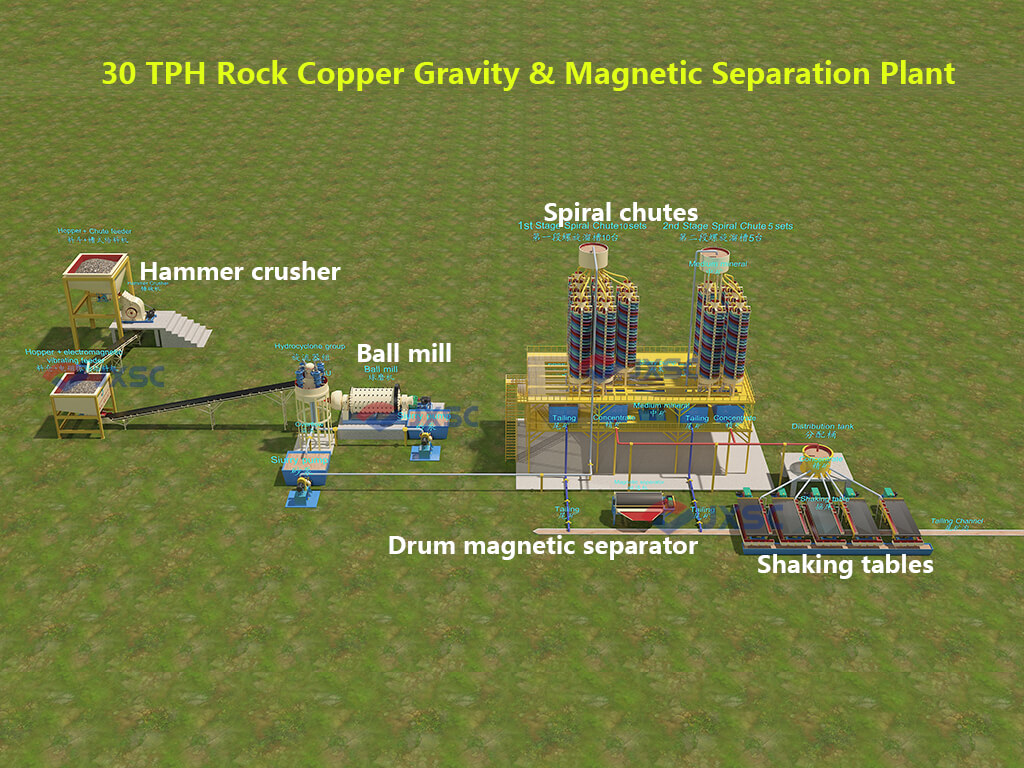
30TPH oxide rock copper extraction plant
This setup is a 30 tph oxide rock copper extraction plant. It is configured with a hopper, feeder chute, hammer crusher, conveyors, fine ore bin, Electromagnetic vibrating feeder, ball mill, hydrocyclone, slurry pump, spiral chute, shaking table, and magnetic separator.
1). Feeding & crushing: The loader feeds the -350mm raw material copper ore to the hopper. The feeder chute will feed the hammer crusher uniformly. The material will be crushed to 25mm by the hammer crusher.
2). Grinding: The 0-25mm output will be transferred to a middle silo by conveyors. And then the electromagnetic vibrating feeder under the silo will feed 0-25mm material to the ball mill to grind it till 0-1mm by conveyor.
3). Classifying: The 0-1 mm output will flow to one pool, and then it will be pumped to a hydrocyclone to separate. The overflow (around 0-0.2mm material ) will be pumped to the first 10 pcs spiral chute to separate. The underflow of the hydrocyclone will be pumped to the ball mill to grind again.
4. Gravity separation:
-The concentrate of the 10 pcs spiral chutes will flow to the 5 shaking tables to separate again. And the middling will be pumped to the other 5 pcs spiral chutes to separate. The concentrate of the 5 pcs spiral chute will be sent to the 5 shaking tables to separate again.
-The concentrate of the tables à secousses will be sent to the magnetic separator to separate. The non-magnetic concentrate is copper. And the tail is the magnetic metal.
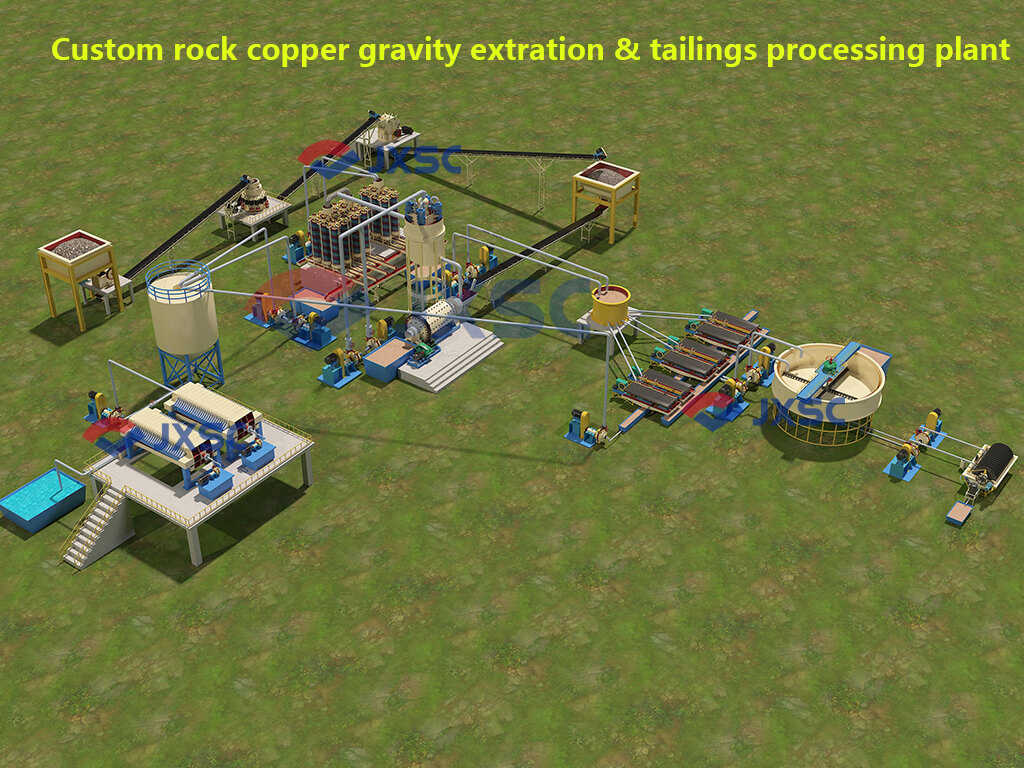
Custom rock copper gravity extration & tailings process plant
This JXSC Setup is a complete set of rock copper processing plant, including crushing, grinding, gravity separation, copper concentrate ore dewatering system, tailing water recycle system, etc.
1) Feeding & crushing: The chute feeder is for feeding raw material to the primary jaw crusher more stably and smoothly. The primary jaw crusher is for crushing big stones to a smaller size, the secondary jaw crusher is for crushing rock to below 30mm, and the impact fine crusher is for crushing to below 10mm, to increase the ball mill’s grinding effect with a smaller model, saving energy and cost.
2) Grinding & classifying: The ball mill is for grinding 0-10mm material to 200mesh working together with a cyclone. Then 200mesh slurry will be pumped to two-stage spiral chutes for primary separation.
3) Gravity separation: All heavy mineral concentrate ore from the spiral chute will go to the shaking table to concentrate again, to reach high-grade copper concentrate.
After getting the copper concentrate ore from the shaking table, the concentrate ore will be pumped into a thickener to make a suitable density concentrate, then go to a plate filter press to filter water and get dry copper concentrate.
4) Tailings dewatering treatment: At the same time, all the tailing material will go to a cone thickener to make suitable density, then go to a plate filter press for recycling the water to use.
This designed plant has a high recovery ratio and effect for the recovery of oxide-type rock copper and many other types of minerals, such as rock chrome ore, rock Mn ore, rock lead-zinc, etc. The plant design can be adjustable according to material conditions and requirements.
Looking for an efficient way to extract copper? Here’s a comprehensive solution! In addition to the physical separation methods mentioned above, environmentally friendly flotation methods can also be used for copper extraction, such as using natural plant extracts (like saponins) instead of xanthates. In practical ore processing, combined processes are often used to improve recovery rates. Typically, gravity separation and flotation are combined to achieve multi-stage, efficient copper recovery, followed by electrolytic deposition to produce 99.99% cathode copper.
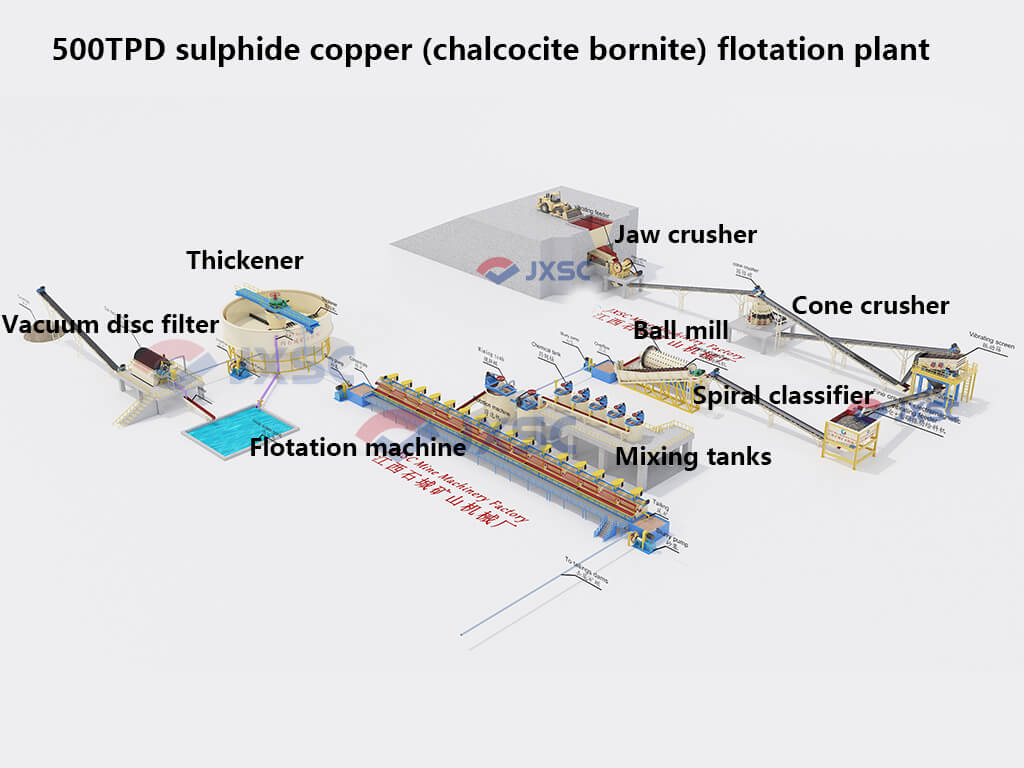
500tpd eco-friendly sulphide copper flotation plant
Conclusion
JXSC copper extraction solutions typically involve screening, crushing, grinding, and classification, gravity separation, flotation, tailings treatment, leaching, and electrolysis. For ores that are difficult to process or costly using conventional methods, a combination of gravity separation and flotation can achieve economical and efficient extraction through optimized process combinations. For ores containing multiple valuable components, a combination of flotation and leaching can recover other metals and efficiently extract copper from the ore, improving the overall utilization rate of resources. By complementing different methods, it is possible to improve copper recovery rates, reduce costs, and minimize environmental pollution, while simultaneously processing complex and difficult-to-process copper ore resources. Whether you are processing conventional ores or complex and difficult-to-process ores, JXSC Mine Machinery Factory supports providing the most economical and environmentally friendly équipement de traitement des minerais et solutions.

 English
  Spanish
  French
  Russian