Depuis 1985, nous sommes devenus la société la plus spécialisée dans les équipements de traitement des minerais.
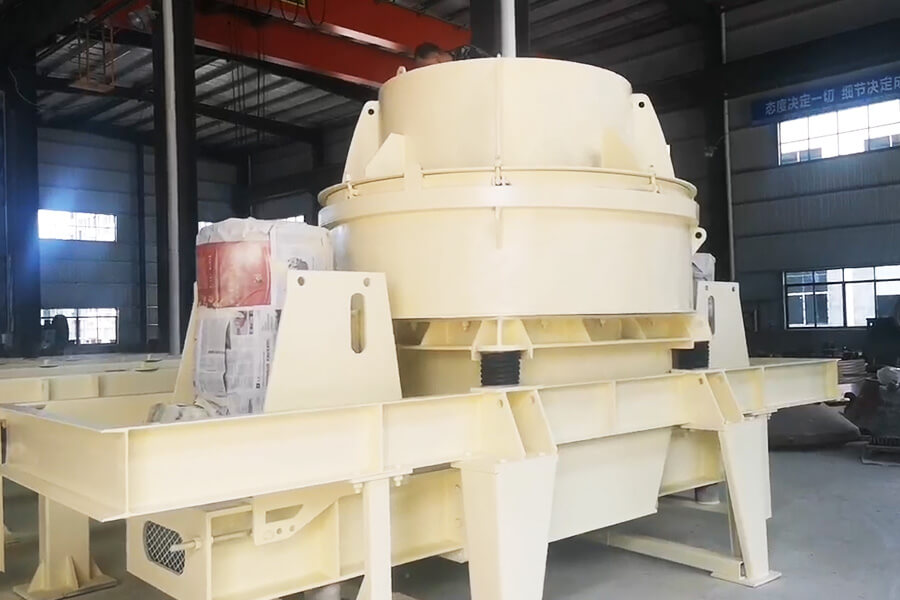
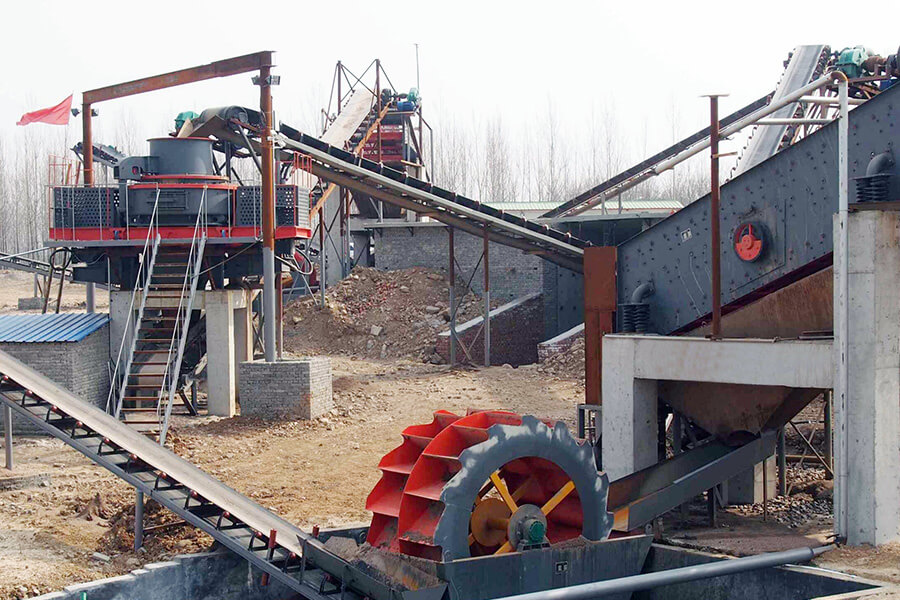
Our VSI sand making machine can produce manufactured sand that meets construction standards, replacing increasingly depleted natural sand. The finished product has a cubic content of ≥90%, excellent particle shape, adjustable fineness modulus, and reasonable gradation, fully meeting the requirements of high-end key projects such as high-speed rail, nuclear power plants, highways, high-speed railways, bridges, and airport runways. It integrates pulse dust removal and noise reduction design, ensuring dust emissions meet standards. The VSI sand making machine is widely applicable to various modern mining fine crushing, sand and gravel, building aggregate, and manufactured sand production lines using river pebbles, granite, and other materials.
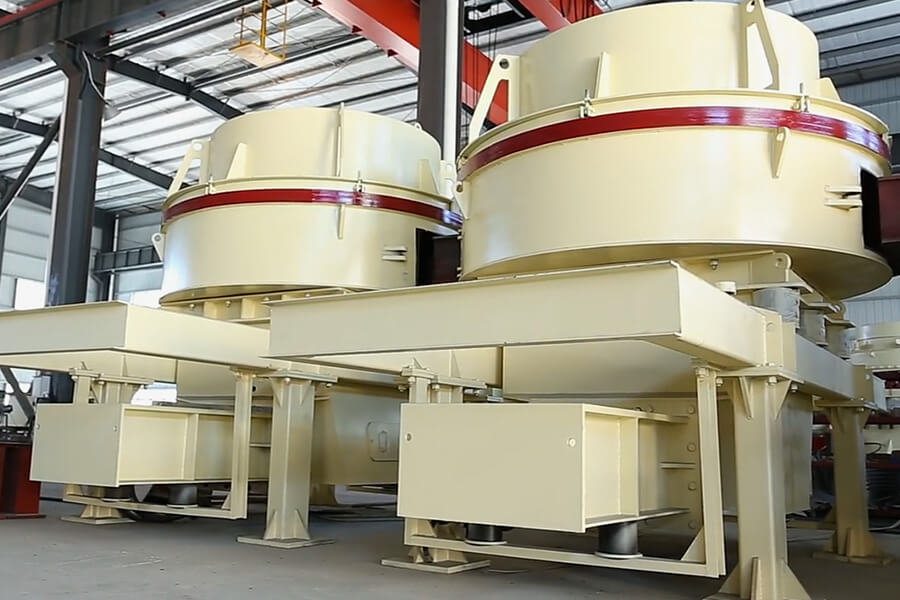
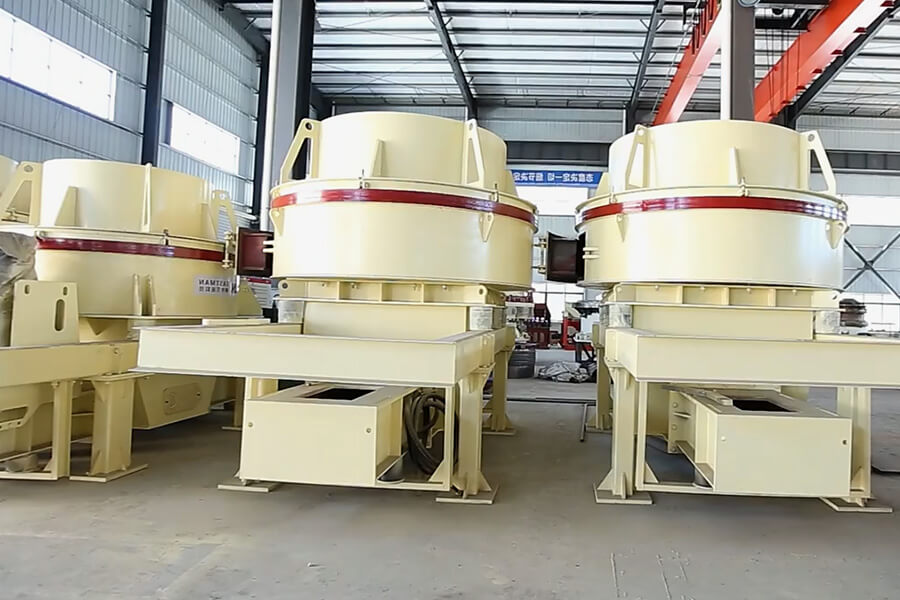
Les VSI sand making machine, also known as a vertical shaft impact crusher, is a high-efficiency equipment that integrates crushing, shaping, and sand-making functions. It is currently the mainstream crushing equipment in the field of artificial sand making and aggregate shaping. It achieves high-speed centrifugal impact on the stone within the crushing chamber, utilizing the “stone-on-stone” or “stone-on-iron” impact principle to crush the material and optimize its particle shape, thereby producing high-quality finished sand. It is widely used in the production of sand and gravel aggregates in construction, mining, quarrying, transportation, water conservancy, and other engineering fields. Examples include various hard rocks, such as natural river pebbles, dolomite, basalt, quartz, and granite waste slag, as well as solid waste materials like ore tailings and construction waste. The produced sand particles have a regular shape, closer to cubic, with uniform particle distribution and a needle-like/flaky content of less than 5%, fully meeting the standards for “construction sand.”
Compared to other broyeurs, the VSI sand making machine incorporates advanced technologies such as a deep-cavity rotor, hydraulic opening, and thin oil lubrication, resulting in high compressive strength. It also features a fully enclosed structure, reducing dust emissions, and is equipped with an advanced automated control system that adjusts crushing intensity according to material hardness. Furthermore, this VSI sand making machine integrates a pulse dust collector and a low-noise system, meeting green and environmentally friendly production standards. It can also be integrated with crushers and feeders to form a mobile crushing and sand making unit, adapting to complex terrain operations and serving as the “heart” of modern sand and gravel production lines. It is also a key piece of equipment for replacing natural sand and achieving resource recycling.
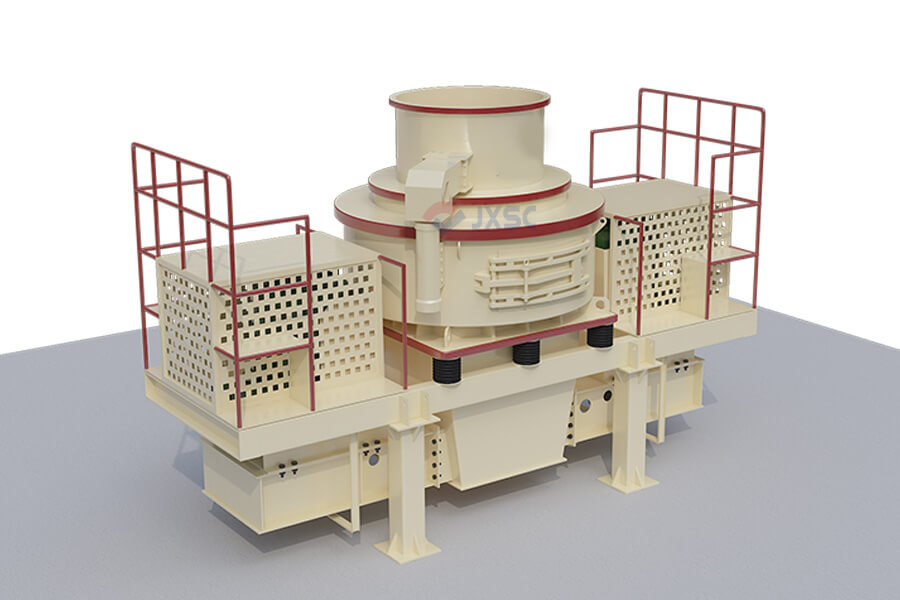
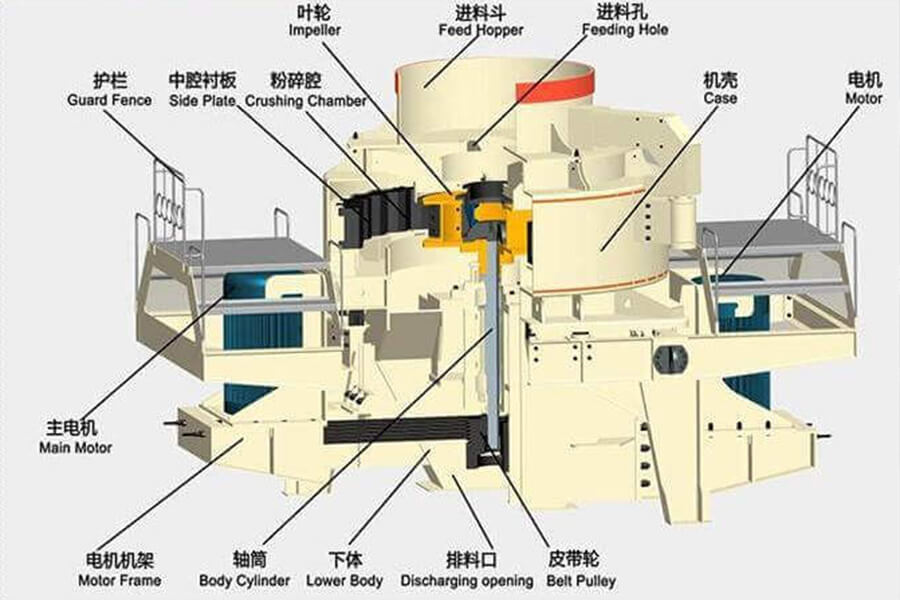
Feeding System:
The feed hopper size is customizable and equipped with a guide vane to control the material speed and direction. The distribution plate can adjust the ratio of center feed to cascade feed.
Crushing Chamber:
There are two types: "stone-on-stone" and "stone-on-iron," which can be switched by changing the liner. The "stone-on-stone" chamber is lined with wear-resistant rubber or a high-chromium plate to form a material lining. The "stone-on-iron" chamber is lined with high-manganese steel impact blocks.
Discharge Port:
Lower structure, screen or adjustable baffle to control the sand particle outlet size; can be equipped with a vibrating discharge device to ensure smooth discharge.
Motor And Transmission:
Variable frequency motors are available to suit different production capacity requirements.
1. Multifunctional adaptability: Applicable to sand making of various soft stones to hard ores, the rotor speed can be adjusted by parameters to meet different particle size requirements.
2. Excellent sand quality: The manufactured sand produced by the JXSC VSI sand making machine has a uniform particle size, a particle shape index as high as 0.85-0.92 (close to natural sand), and low fine powder content (<1%), making it suitable for high-requirement concrete projects.
3. Low wear on vulnerable parts: In “stone-on-stone” mode, wear on vulnerable parts (such as impellers and impact blocks) is reduced by 40%, lowering annual replacement costs.
4. Convenient maintenance: The hydraulic opening device enables rapid maintenance; the thin oil lubrication system eliminates the need for manual lubrication, extending maintenance cycles.
5. Multi-purpose: Switching between “stone-on-stone” and “stone-on-iron” modes is possible by changing the chamber shape.
6. Long lifespan design: Key components are made of high-chromium alloy or ceramic composite materials; the crushing chamber has a ring design, equipped with wear-resistant liners or a natural material layer for self-lining protection.
7. Intelligent control: An Optional PLC system for intelligent monitoring enables remote operation and automated production.
8. Green and environmentally friendly: Integrated pulse dust removal and noise reduction design ensures dust emission concentration ≤30mg/m³, meeting national environmental standards.
9. Flexible adaptation: Can be combined with mobile crushing stations to adapt to complex terrains such as mountains and wetlands, expanding application scenarios.
10. Stable operation: Equipped with vibration sensors and overcurrent protection devices, providing real-time fault warnings and ensuring safe equipment operation.
The VSI sand making machine operates on the principle of high-speed centrifugal crushing technology. After entering the crushing chamber through the feed inlet, the material is accelerated and ejected by the high-speed rotating rotor, colliding violently with the surrounding wear-resistant liners or other materials (i.e., “stone-on-stone” or “stone-on-iron”), thus achieving multiple crushing and shaping processes. During this process, the material is repeatedly impacted and rubbed, ultimately forming cubic sand particles with uniform particle size and fewer sharp edges. Users can control the finished product particle shape and fineness by adjusting the rotation speed, feed rate, and impact plate angle, achieving flexible “one machine, multiple production” capabilities.
| Modèle | Max Feeding Size | Through Put(m3) | 【Soft Material+10%】 Capacity(m3) | Speed of Main Shaft (r/min) | Power(kW) | Dimension (mm) |
| DN-5000 | 35mm | 40-60 | 20-35 | 1700-1890 | 90 | 3800*2180*2425 |
| DN-6000 | 35mm | 60-80 | 30-40 | 1560-1720 | 160 | 4240*2200*2778 |
| DN-7000 | 40mm | 100-120 | 40-50 | 1550-1650 | 132*2 | 4700*2200*2850 |
| DN-8000 | 40mm | 160-200 | 64-80 | 1400-1720 | 160*2 | 5200*2250*3250 |
| DN-8500 | 45mm | 180-200 | 72-80 | 1400-1720 | 200*2 | 5200*2350*3250 |
| DN-9000 | 45mm | 220-250 | 80-96 | 1510-1650 | 250*2 | 5200*2450*3250 |
| DN-9500 | 45mm | 250-270 | 96-108 | 1510-1650 | 280*2 | 5200*2250*3450 |
| DN-10000 | 50mm | 270-350 | 120-180 | 1480-1600 | 315*2 | 5200*2250*3450 |
| Note: the above capacity is based on the loose specific gravity of 1.6t/m3 rock stone | ||||||
It can crush materials with a hardness of ≤9, such as granite, basalt, and quartz. However, raw materials with high clay content require a pre-screening process to prevent clogging.
It is recommended that the moisture content of the material be ≤20%. Excessive moisture content can cause sticking and blockage in the cavity, affecting output. A sand washing machine can be used to pre-treat materials with high moisture content.
Choose “stone-on-stone” for crushing hard materials (such as granite) to reduce wear on vulnerable parts; choose “stone-on-iron” for processing soft materials (such as limestone) to improve crushing efficiency.
For example: hammer crushers et impact crushers rely on hammers for crushing, resulting in finished products with many needle-like and flaky particles and poor gradation; VSI sand making machines shape particles through impact between materials, resulting in better particle shape, lower energy consumption, lower maintenance costs, and more economical long-term operation.
The key indicators are dust (requires a bag filter) and noise (<85dB requires a soundproof enclosure); if a sand washing machine is used, wastewater discharge should also be considered.
Yes, it provides operating condition information to adjust parameters such as rotor speed, impeller diameter, and motor power. For specific selection, please contact JXSC’s professional engineers for a comprehensive evaluation based on material hardness, feed particle size, and finished product requirements.
Yes, the equipment’s operating noise is ≤75 decibels, which is below the environmental noise emission standard limit. However, noise can be further reduced by installing a soundproof cover.