
- Inicio
- Blog
- Solución mineral
- How Can 5 Copper Crushing Solutions Improve Extraction Rates?
Global copper demand is growing, but low extraction rates are leading to resource waste. How can this situation be addressed? The seemingly basic crushing process in copper mining determines the uniformity of ore particle size and the degree of mineral liberation, which are precisely the core factors affecting the efficiency of subsequent grinding, flotation, or leaching. Uneven particle size during crushing can lead to over- or under-grinding in the grinding process, significantly reducing subsequent beneficiation efficiency and causing valuable copper metal to be lost invisibly. This article will break down five efficient copper crushing solutions, helping you accurately match ore characteristics and even increase the extraction rate from 70% to over 90%.
The core challenges of copper crushing
Why is it difficult to increase the copper ore extraction rate?
(1) Ore Hardness and Compositional Complexity
The extraction rate of copper ore is heavily influenced by the ore’s inherent characteristics. For example, primary sulfide ores (such as chalcopyrite) typically have high hardness, requiring high-energy crushing equipment for effective liberation; while oxide ores (such as malachite) are softer but prone to producing slime, affecting subsequent flotation results. Furthermore, ores often contain associated minerals such as quartz and pyrite, whose abrasiveness accelerates crushing equipment wear and reduces production efficiency. Simultaneously, for highly abrasive ores, key components made of wear-resistant materials should be prioritized to extend equipment life and ensure continuous and stable operation. Therefore, selecting a suitable crushing process must comprehensively consider the ore’s hardness, embedding characteristics, and the physical properties of associated minerals.
(2) Insufficient Equipment Adaptability
Many mines currently rely on traditional jaw crushers or cone crushers, but these machines also have shortcomings. For example, jaw crushers have a limited crushing ratio, and their “compression + shearing” crushing principle easily leads to uneven product particle size, resulting in increased load on subsequent grinding stages and increased energy consumption. While cone crushers are suitable for medium and fine crushing, they are prone to clogging with sticky ores. Therefore, there is a need to upgrade to crushing technologies that are efficient, intelligently adjustable, and flexibly adaptable to changes in ore characteristics.
(3) Energy Consumption, Operating Costs, and Environmental Pressures
Typically, the crushing process accounts for 30-40% of the total energy consumption of a copper ore beneficiation plant. Annual electricity costs for crushing alone can reach several million yuan, economically constraining the improvement of extraction rates. Furthermore, the high carbon emissions, dust pollution, noise pollution, and wastewater treatment associated with energy-intensive crushing are increasingly subject to regulatory restrictions, forcing mines to shift towards green technologies. Therefore, some mines are forced to reduce crushing intensity to lower environmental costs, indirectly leading to a decrease in extraction rates.
Why Crushing Matters in Copper Extraction?
Crushing is the “first hurdle” in the copper ore beneficiation process, and its core value lies in achieving optimal ore liberation through physical force. This means ensuring sufficient separation of copper minerals from gangue while avoiding metal loss due to over-crushing, and effectively reducing the processing costs of subsequent flotation or hydrometallurgical processes. In copper beneficiation, the particle size distribution and degree of mineral liberation in the crushing stage directly affect the contact area and reaction rate of the chemical reaction. Therefore, precisely controlling the degree of crushing is a crucial step in improving copper ore extraction rates.
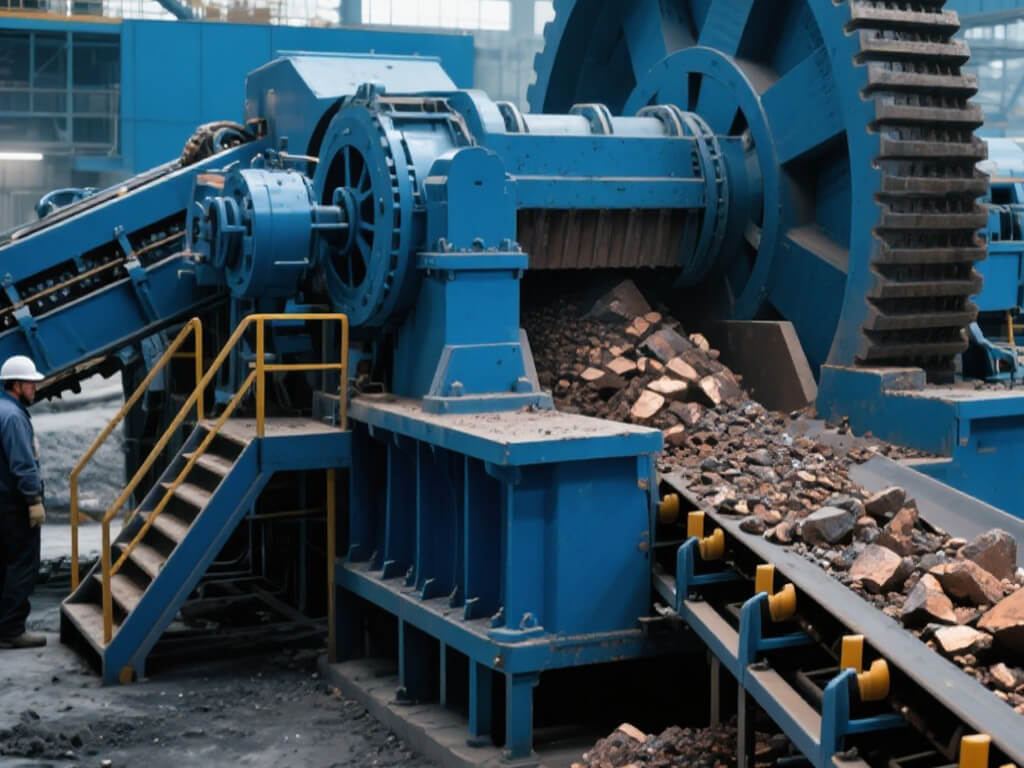
5 Copper Crushing Solutions
Solution1. Multi-Stage Closed-Circuit Crushing
Process:
A three-stage crushing mode is typically adopted: coarse crushing (jaw crusher) + medium crushing (cone crusher) + fine crushing (vertical shaft impact crusher). The ore is first crushed by a jaw crusher (coarse crusher), then fed into a cone crusher (medium crusher) to be crushed to 30-50mm. Afterwards, it is screened by a vibrating screen: “oversized particles” on the screen are returned to the medium crusher or sent to the fine crusher for secondary crushing, while “qualified particles” (e.g., ≤15mm) on the screen are sent to the subsequent grinding stage. Compared with traditional two-stage open-circuit crushing, this closed-loop process of “crushing-screening-return” can strictly control the particle size distribution of the crushed product.
In the optimized coarse crushing scheme for copper ore, it is best to use a large jaw crusher (such as the PE series) to reduce the feed particle size, and then combine it with a multi-cylinder hydraulic cone crusher to achieve layered crushing, improving the product particle size uniformity by 20%. In the medium crushing and shaping scheme for copper ore, a single-cylinder cone crusher can be used to control the particle size, and then a vertical shaft impact crusher can be used to “shape and crush” the ore, reducing needle-like and flaky particles.
Applicable Scenarios:
Porphyry copper deposits are one of the world’s major sources of copper resources. Their ore is characterized by high hardness (Mohs hardness 6-7), fine-grained valuable minerals (typically between 0.05-0.2 mm), and close association between gangue and copper minerals. Therefore, a three-stage closed-circuit crushing process is particularly suitable for this type of high-hardness, fine-grained copper deposit, enabling precise control of the crushing particle size and providing a “uniform and suitable” feedstock for subsequent flotation.
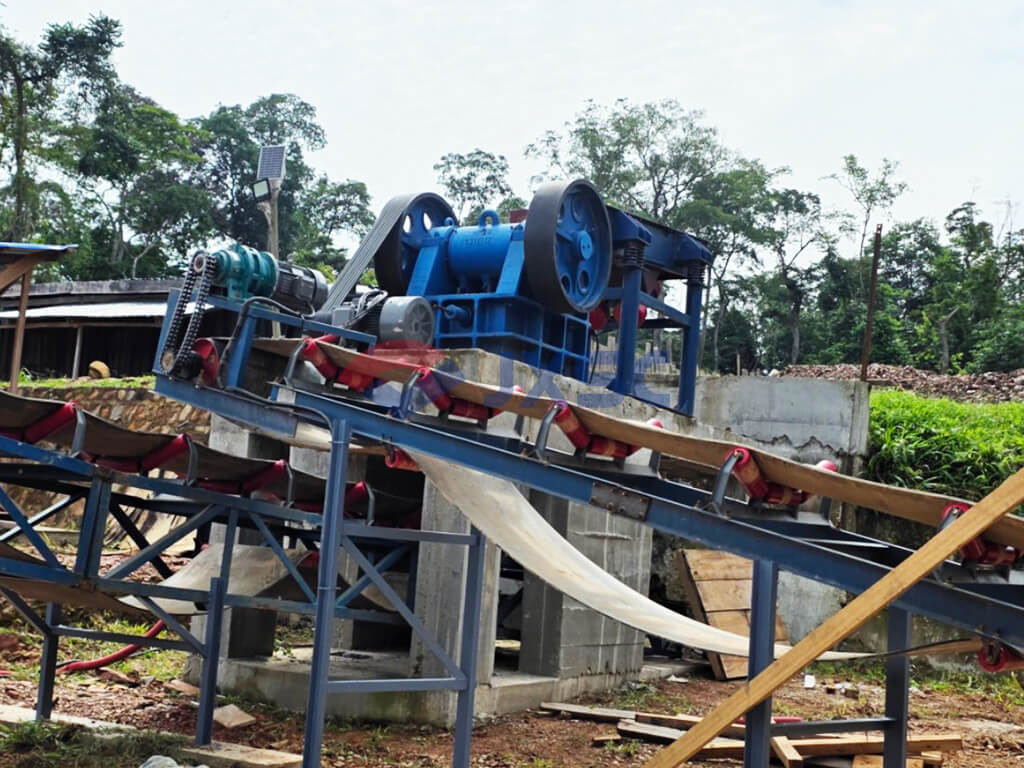
Solution 2. High-Pressure Roller Mill (HPGR) "Laminated Crushing"
Process:
High pressure is applied to the ore using two counter-rotating rollers, creating a “layer” of ore between the rollers. Crushing is achieved through the mutual compression and friction between particles, resulting in a finer product particle size. “Baffles” and “elastic buffer devices” are installed at both ends of the rollers to prevent ore leakage from the roller edges, ensuring uniform force on the roller surface and increasing crushing efficiency by 15%-20%. Only the bonding surfaces between minerals are crushed, rather than forcibly breaking mineral particles, reducing over-crushing by 30%. Furthermore, the bonding force between copper minerals and gangue is weaker than the internal bonding force of the minerals; laminated crushing prioritizes disrupting these bonding surfaces, allowing for the early liberation of valuable minerals and saving significant energy in subsequent grinding stages.
Application Scenarios:
Chalcopyrite and bornite often exist in fine-grained disseminated forms; low-grade ores have a low proportion of valuable minerals, resulting in significant energy waste in gangue crushing. Typically, “more crushing, less grinding” is required to reduce energy consumption. However, the layered crushing technology of high-pressure roller mills exposes copper minerals earlier through ultra-fine crushing, reducing grinding time, and can also improve the utilization efficiency of low-grade ores through its layered crushing principle. It is widely used in pre-grinding pretreatment in large-scale concentrators and can be connected in series with other crushing equipment to improve the overall process liberation efficiency.
Solution 3 . Wet Crushing (for clay-bearing copper ores)
Process:
Before crushing, add an appropriate amount of water to the ore (the amount of water is adjusted according to the clay content, usually 10%-15% of the ore weight) to fully wet and disperse the clay, preventing the formation of large clumps. During the crushing process, water also acts as a lubricant, reducing friction between the ore and the equipment and lowering the risk of clogging. Simultaneously, the moist ore surface is less prone to dust generation, improving the working environment. Dry crushing easily leads to clay clumps clogging the screen; wet crushing can reduce the clump formation rate to below 10%, reducing the loss caused by “clams encasing copper minerals.”
Application Scenarios
Ores with high clay content, such as oxidized copper ores, typically have a clay content exceeding 15%, which easily forms “sticky clumps” when exposed to water or dryness. Therefore, the wet crushing process solves the clay stickiness problem through “water addition,” ensuring smooth crushing and sorting processes.
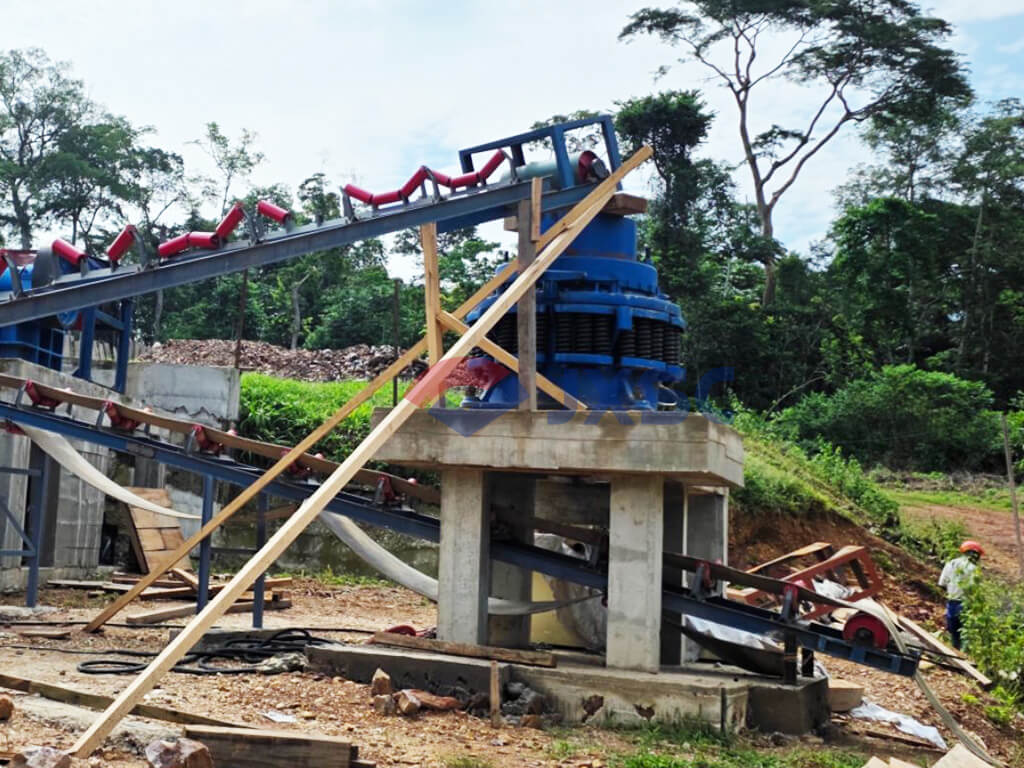
Solution 4. Selective Crushing Process (For Complex Intergrowth Copper Ores)
Process:
After coarse crushing, the ore enters an X-ray separator. The equipment uses the “elemental characteristic signals” from X-rays penetrating the ore to identify the different copper-bearing gangue minerals quickly. High-pressure airflow separates the copper-bearing particles from the gangue. The copper-bearing particles proceed to a subsequent “light crushing” stage (crushed only to the particle size required for individual liberation), while the gangue is discharged directly as tailings. This process reduces energy consumption in gangue crushing, avoids the loss of fine copper particles due to over-crushing, and protects the integrity of the mineral particles.
Applicable Scenarios
Complex intergrowth copper ores, such as copper-lead-zinc polymetallic ores, often exist with gangue minerals (such as quartz and calcite) in a “fine-grained symbiotic, mutually encapsulating” form. Traditional crushing processes cannot distinguish mineral types, causing gangue and valuable minerals to be crushed together. Therefore, the selective “separation before crushing” process is particularly suitable for such ores, precisely focusing on copper-bearing minerals and avoiding gangue interference.
Solution 5. Mobile Crushing Plant (Suitable for Dispersed Ore Bodies)
Process:
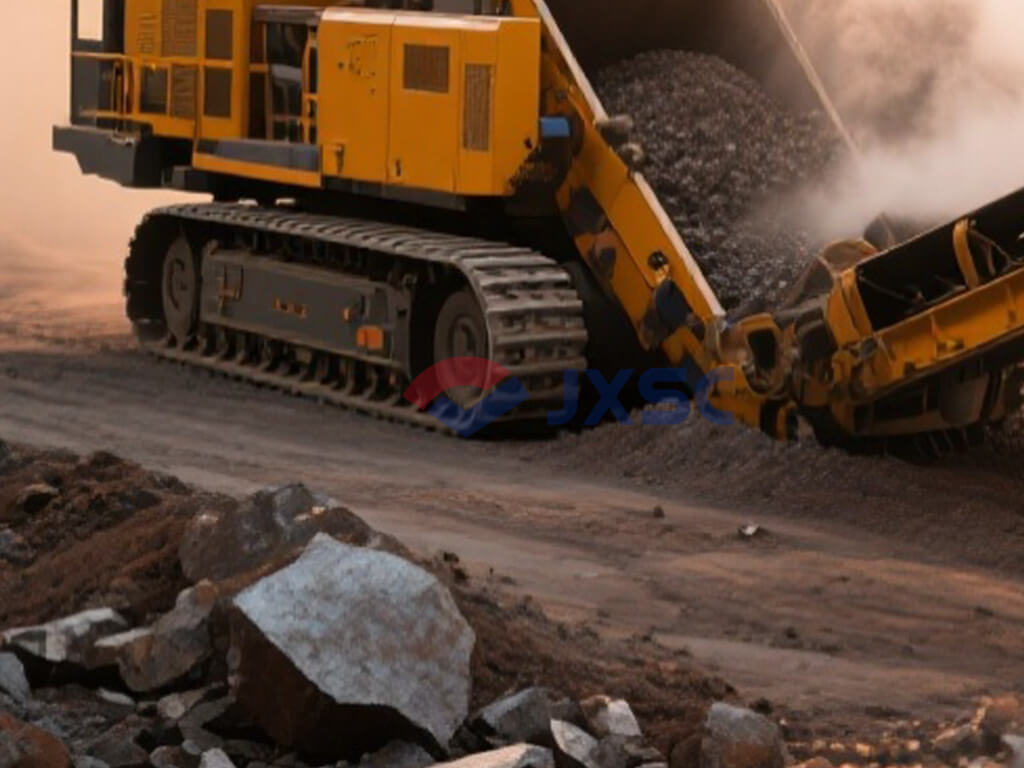
The core technology of a mobile crushing plant is the integrated design of “crushing + screening + conveying“. The main body typically uses a PE jaw crusher (processing capacity 1-1120t/h) as the coarse crushing unit, paired with a double-layer vibrating screen (screening efficiency ≥90%) and a belt conveyor system, allowing the entire process of “coarse crushing-screening-waste rock separation” to be completed directly in the stope. It can be quickly moved within the stope, featuring a modular design; for example, the crushing and screening systems can be quickly changed according to the ore properties (such as hardness and particle size). For example, a trituradora de mandíbulas can be replaced with a trituradora de cono, trituradora de impacto, or trituradora de martillos, fully adapting to the crushing needs of different ore types.
Suitable Scenarios
In open-pit copper mining, ore and waste rock (such as shale and sandstone) are usually distributed in layers or mixed. If all ore is transported to a fixed station for processing, it not only increases transportation costs but also easily leads to a decrease in crushing efficiency due to the high proportion of waste rock. Therefore, wheeled mobile crushing plants are particularly suitable for simultaneous stripping and mining operations in large open-pit mines or for flexible mining in small, dispersed ore deposits. In addition, for mines with complex terrain, JXSC also provides tracked mobile stations that can climb slopes and adapt to dynamic changes in the location of the mining area.
Crushing - A Key Breakthrough in Improving Copper Extraction Rate
In copper ore processing, the crushing stage is the “first gatekeeper” of beneficiation recovery rate. It determines the uniformity of ore particle size and the degree of mineral liberation, directly affecting subsequent extraction efficiency. For different scenarios such as low-grade ore, polymetallic ore, and clay-bearing ore, five efficient solutions can precisely address the challenges: three-stage closed-circuit crushing solves the particle size unevenness problem of high-hardness, finely disseminated ore; HPGR laminar flow crushing reduces energy consumption for low-grade ore through “more crushing, less grinding”; selective crushing achieves mineral pre-enrichment for polymetallic ore; wet crushing solves the problem of mud blockage in clay-bearing ore; and mobile crushing stations adapt to the flexible mining needs of dispersed ore bodies. The core principles for selecting a solution are: matching the ore type (such as hardness and disseminated characteristics), balancing production capacity and cost, and meeting environmental protection requirements. Optimizing the crushing process is a low-cost, high-return technological transformation direction and the “first key” to unlocking efficient copper ore extraction.
Conclusión
Is your mine also seeking a more efficient crushing solution? Choosing the right crushing technology requires comprehensive consideration of ore characteristics, production capacity requirements, and investment costs. JXSC offers customized ore crushing process optimization services, matching the best crushing equipment combination to the characteristics of different mining areas. Contact our technical team to obtain personalized beneficiation optimization solutions, taking your copper ore extraction rate, energy efficiency, and overall benefits to the next level!
 English
  Spanish
  French
  Russian