
- Inicio
- Blog
- Información sobre el equipo
- Gold Trommels: Screening & Classifying Ore
What Are Gold Trommel?
The gold trommel is a cylindrical screening and grading device used in mining. In the gold mining industry, JXSC gold trommels are mainly divided into two types: trommel scrubbers y trommel screens. With their anti-clogging and efficient handling of wet, sticky ores, these trommels are widely used not only in gold mines but also in the beneficiation of copper, diamond, manganese, and chromium ores.
From a structural design perspective, modern gold trommels are often equipped with adjustable tilting devices, allowing the system’s processing speed to be controlled by changing the drum’s tilt angle. Simultaneously, the modular screen design allows users to quickly change screen plates according to different ore characteristics. This flexibility enables the cylindrical screen to adapt to various types of gold mining scenarios, from placer gold to vein gold.
Core Components Of Gold Trommels
Both of these rotary drum screens consist of three main parts: the drum screen, the support frame, and the drive system. The main body is an inclined cylindrical screen, typically containing grading screens of different sizes. A robust steel frame structure provides stable support for the entire device. The drive system includes a motor, reducer, and transmission chain, ensuring the drum rotates continuously and at a uniform speed. These components work together to allow for efficient ore screening during rotation, preventing clogging and ensuring classification accuracy.
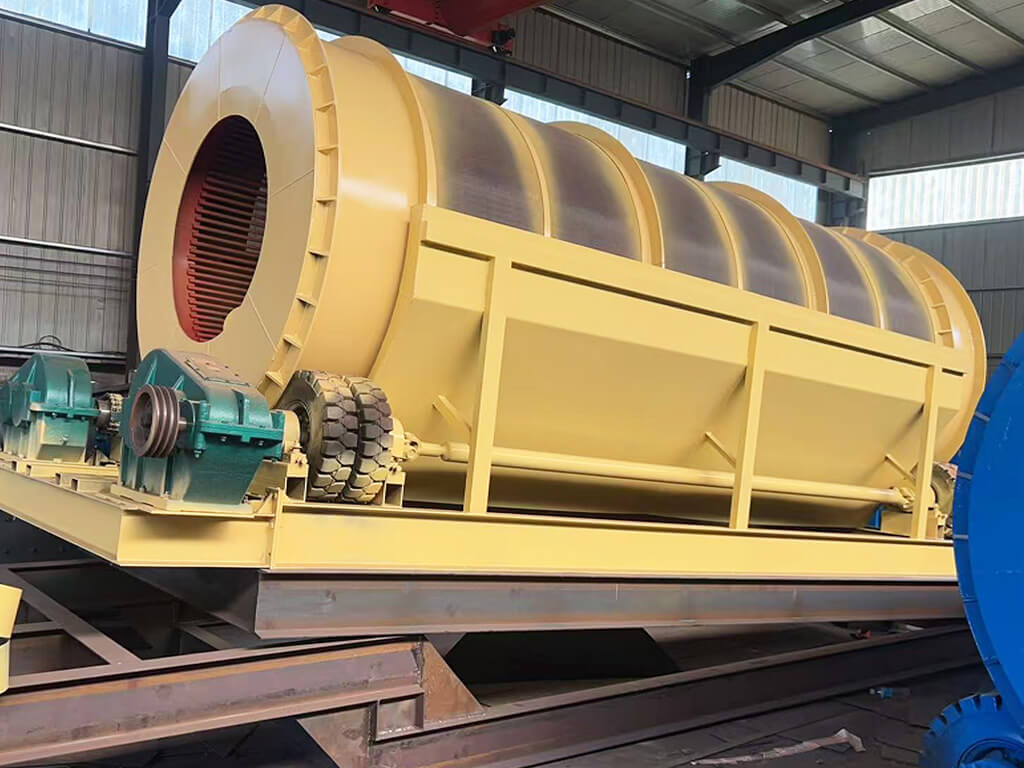
Role in Gold Mining:
In placer gold o rock gold mining, the core function of the gold drum is to separate impurities and classify the ore, paving the way for subsequent refining processes. First, it separates impurities: removing unwanted components such as mud and sand through a screen, reducing the load on subsequent processes. Second, it classifies the ore: grading the ore according to particle size, allowing different particle sizes to enter corresponding crushing, flotation, and other processes, improving overall efficiency. Especially for processing wet or sticky ore, its anti-clogging design prevents accumulation, ensuring continuous production, making it a key piece of equipment for improving recovery rates and reducing costs in complex mines.
How does a gold trommel work?
(1) Feeding Stage: Ore enters the inclined drum via a vibrating feeder. The inclined drum rotates at a constant speed, and the built-in spiral lifting plate continuously lifts and throws the material. This repetitive motion thoroughly tumbles and crushes the ore, while simultaneously propelling it to the discharge end.
(2) Screening Process: As the drum rotates, ore particles smaller than the screen mesh size fall through the screen holes into the lower collection trough. Particles larger than the mesh size are discharged along the inclined direction of the drum.
(3) Multi-stage Classification: Some trommels using a multi-layer screen design, enabling simultaneous classification of 2-3 particle sizes. For example, the upper screen mesh has the largest mesh size to remove large pieces of waste rock, the middle and lower layers have progressively smaller mesh sizes, and the finest layer is specifically for collecting gold particles.
Why are trommels needed in gold mining?
1. High-Efficiency Screening
A Replacement for Traditional Manual Processing
Manual screening is not only inefficient but also highly dependent on the operator’s experience and skill. However, automated trommel screening increases efficiency by tens of times. More importantly, its stable mechanical speed and standardized screening process effectively avoid the errors and instabilities inherent in manual operation, significantly improving the consistency of screening quality. This not only drastically reduces labor costs but also ensures precise quantitative recovery of gold.
2. Large Capacity
Matching Modern Large-Scale Gold Mining
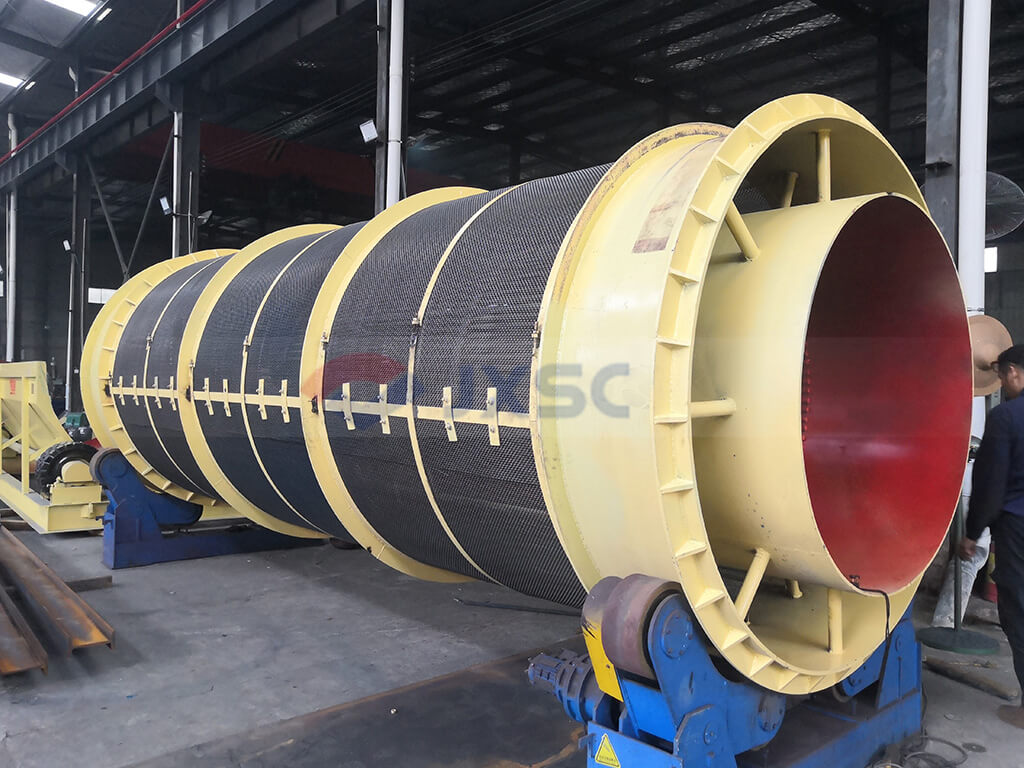
Its unique drum design (typically 0.5-2 meters in diameter and 1.3-5.5 meters in length), combined with an inclination angle of 15-35 degrees, allows for continuous and efficient processing of large batches of raw materials ranging from 1-400 tons per hour. In particular, the integrated automatic feeding system supports 24-hour uninterrupted operation. For different ore characteristics, parameters such as screen layers, drum speed, and inclination angle can be adjusted to ensure optimal processing results for various types of raw materials, from placer gold to hard rock ore.
3. Precise Classificiation
Adapting to Subsequent Beneficiation Processes
Gold ore beneficiation processes have strict requirements on ore particle size: different particle sizes require different beneficiation processes (e.g., gravity separation for coarse particles, flotation/cyanidation for fine particles). If the ore particle size is mixed, it will lead to low processing efficiency or reduced recovery rates in subsequent equipment. By using rotating drums and screens with different apertures, the ore is quickly separated into multiple particle size grades (e.g., coarse ≥20mm, medium 5-20mm, fine ≤5mm).
Process Value:
● Coarse-grained ore directly enters a jig/shaking table for equipo de concentración gravimétrica.
● Medium-grained ore enters a ball mill for further grinding.
● Fine-grained ore enters a flotation cell or cyanidation tank to extract gold.
This precise grading avoids the resource waste of a “one-size-fits-all” approach, ensuring that each subsequent beneficiation step achieves optimal results.
4. Impurity Removal
A Prerequisite for Improving Gold Recovery Rates
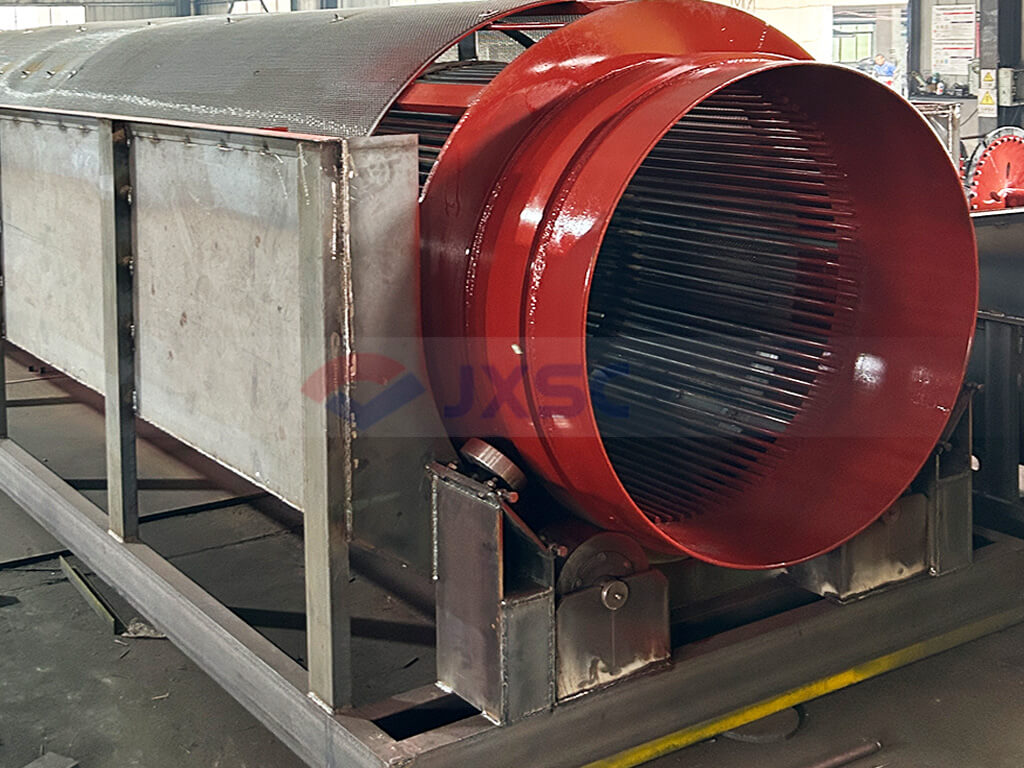
Gold ore often contains a large amount of ineffective impurities such as mud, sand, gravel, and waste rock (especially in placer gold or oxide ore). These impurities dilute the gold concentration, interfere with the effectiveness of subsequent beneficiation reagents, and reduce the recovery rate. Gold trommels utilize the centrifugal force of the rotating drum and the filtering effect of the screen to separate fine particulate impurities (such as mud and silt) through the screen openings, leaving behind the gold-rich, effective ore.
Process Value:
In placer gold mining, gold trommels can separate sand particles from gold particles (gold particles are heavier and remain on the screen or enter the enrichment stage), reducing the processing load of subsequent gold panning equipment. After vein gold ore is crushed, the cylindrical screen can remove surface-attached mud, preventing mud from encapsulating gold particles and preventing them from being adsorbed by reagents, directly improving the recovery rate of the cyanidation process.
Types and Selection of JXSC Gold Trommels
JXSC’s gold trommel scrubbers and trommel screens both belong to the category of rotary mineral screening and grading equipment. While the processing capacity of rotary drum washing machines can reach 1-400T/H, and that of rotary drum screens is 1-200T/H, their functional focuses differ.
Trommel Scrubbers VS. Trommel Screens
● Trommel scrubbers integrate washing and screening functions, with a built-in high-pressure water spray device to remove impurities such as clay and silt from the ore surface. Suitable for ores with high mud content, effectively breaking down agglomerated materials.
● Cribas trómel focus on particle size classification and screening, separating ore into 2-3 particle size grades through multiple layers of screens with different apertures. Primarily suitable for processing ores with lower mud content or pre-washed ores.
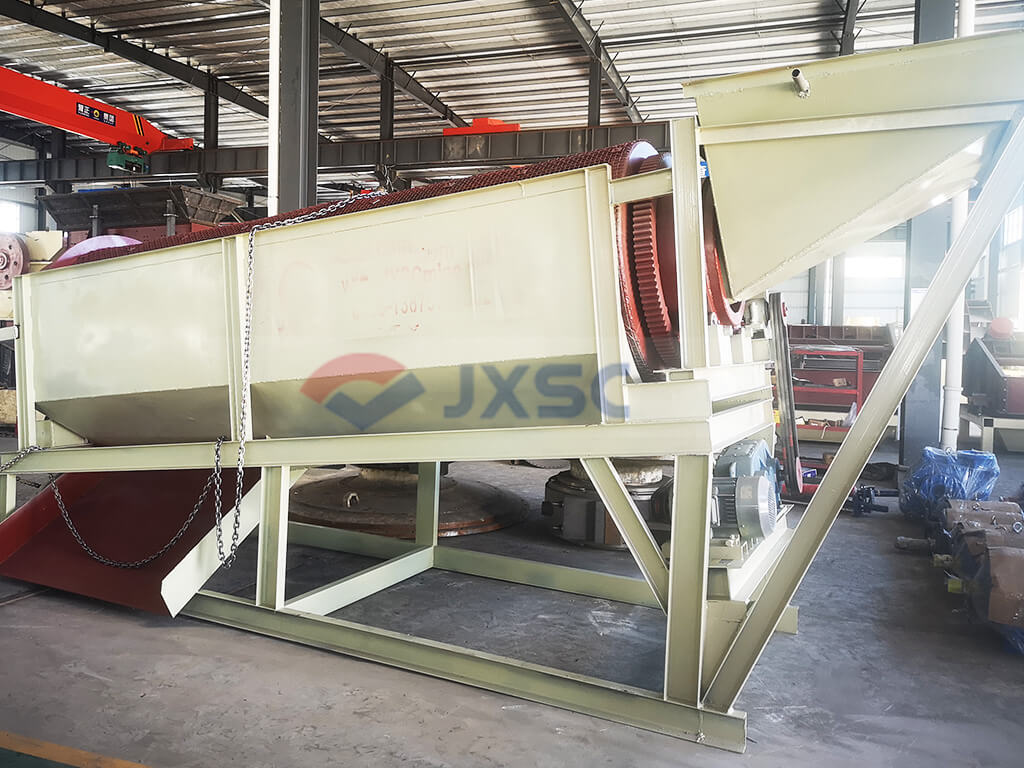
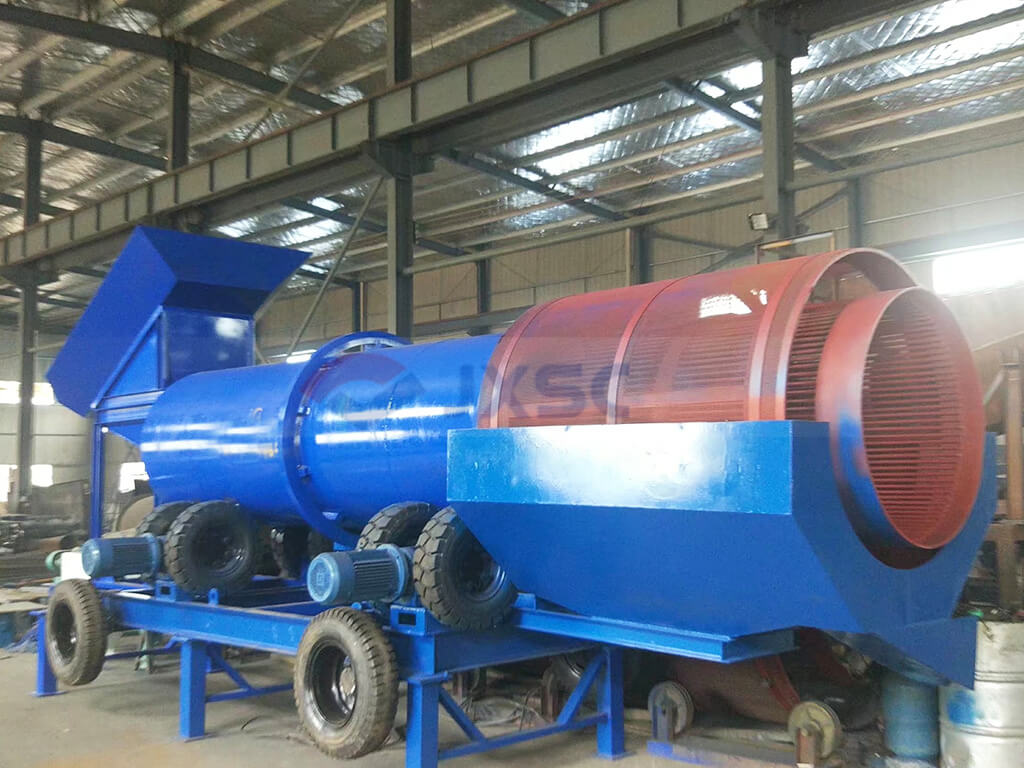
Fixed/Portable Gold Trommel:
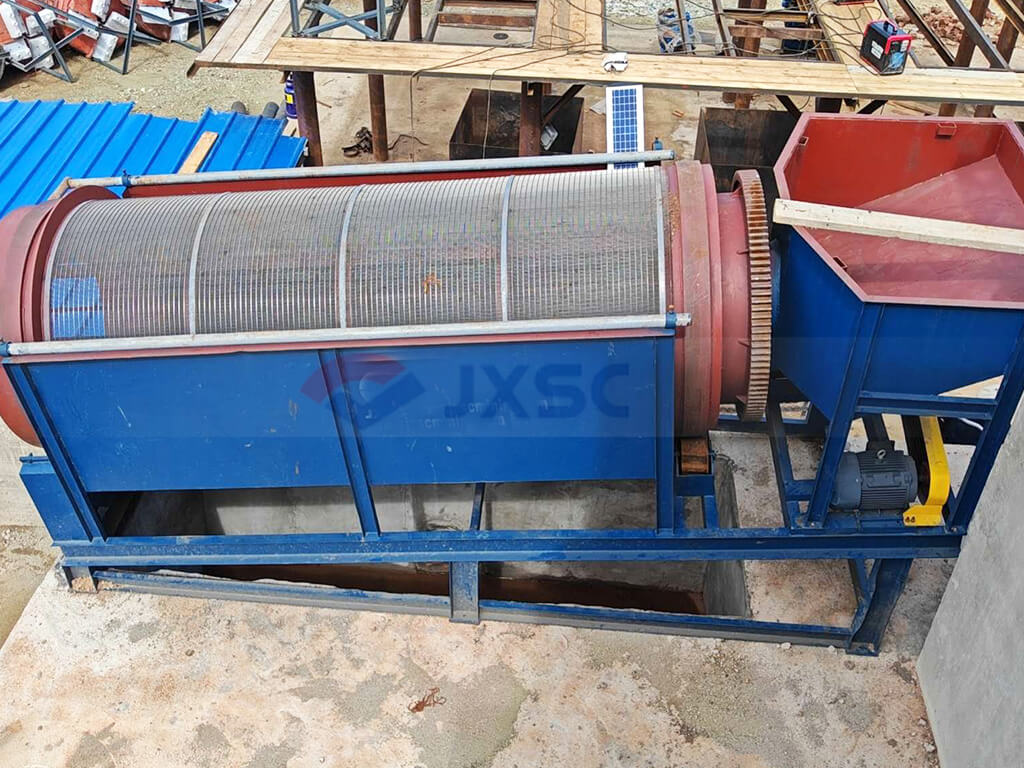
● JXSC supports customized fixed or portable rotary trommel. Fixed rotary drums are suitable for long-term operation in large mines, with a stable machine body.
● Portable gold trommels are designed for small mine sites or mobile operations, allowing for relocation with the mine site and flexible adaptation to temporary mine sites or field exploration scenarios. No complicated installation is required; simply plug it in to use. It is an ideal choice for small-scale mining or mobile exploration.
| Types Of Gold Trommel | Applicable Scenarios | Core advantages |
|---|---|---|
| Fixed trommel scrubber | Large-scale mines operate for extended periods and have high mud content. | Sludge removal rate ≥92%, processing capacity 1-400t/h. |
| Portable trommel scrubber | Small mobile mining sites, dispersed mineral resources | Towing and relocation, rapid installation |
| Fixed trommel screen | Large-scale mine grading and pretreatment | Grading accuracy ±0.5mm, intelligent frequency conversion |
| Portable trommel screen | Small-sized, multi-location/temporary operation, testing | Dual power, compact size, easy operation |
The gold trommels described above provide precise raw materials for subsequent flotation or gravity separation processes. They can also be used in conjunction with other equipment to significantly improve mineral processing efficiency. Most models also support dual-power drive (electric motor or diesel engine) to adapt to different power conditions in different operating environments. Both types have their advantages, and the selection should be based on a careful consideration of raw material characteristics and production process requirements.
How to Choose the Right Trommel for Your Gold Mine?
Cylinder screens are crucial pre-processing equipment in the gold mining process, bridging upstream and downstream stages. When selecting a gold drum screen, three key factors should be considered: production requirements, raw material characteristics, and the operating environment. For example, clayey ore is best suited for drum washing machines with high-pressure spraying, while dry drum screens are more suitable for placer gold mines in arid regions. Furthermore, details such as high-quality anti-corrosion coatings and easily replaceable screens should also be taken into account.
The Key to Efficient Gold Mining: Trommel Screens/ Trommel Scrubbers
In the gold mining process, gold trommels has become the core screening and grading equipment in modern gold panning due to their high-efficiency screening, large-capacity processing, and ultra-high recovery rate. Compared to traditional manual screening, mechanized drum screens can operate continuously for 24 hours, adapting to the washing and screening stages of various placer mineral processing plants. Multi-layer grading screens ensure a recovery rate of over 95%. Simultaneously, their automated design significantly reduces labor costs, making them suitable for small and medium-sized mines as well as large-scale industrial mining. Need to further improve the efficiency and economic benefits of gold mining? JXSC Mining Machinery ofrece customized gold trommel solutions, tailoring the optimal configuration to the specific characteristics of your mine. Feel free to contact us anytime for professional mineral processing equipment and technical support to maximize your gold recovery!

 English
  Spanish
  French
  Russian