
What impact do impurities in silica sand have on industrial production? Why is purification technology so important? In many industrial applications, the purity of silica sand directly determines the quality of the final product. Whether manufacturing high-transmittance glass, photovoltaic cells, or precision casting, the presence of impurities can cause a series of problems. For example, iron oxides can cause glass to yellow, aluminum impurities can reduce refractoriness, and organic contaminants can lead to porosity in castings. Today, with the surge in demand for high-purity silica sand from the photovoltaic and semiconductor industries, the efficient removal of impurities has become a key focus. However, different impurities require different removal methods. The following will reveal targeted solutions for 4 common silica sand impurities (clay, iron oxide, feldspar, mica), completely solving the purification challenge.
4 common silica sand impurities and their hazards
For industries that rely on silica sand as a raw material, such as glass, ceramics, and photovoltaics, the various impurities present in natural silica sand are the primary culprits behind increased production costs and unstable product quality. The 4 most common silica sand impurities include clay/sticky, iron oxide, feldspar, and mica.
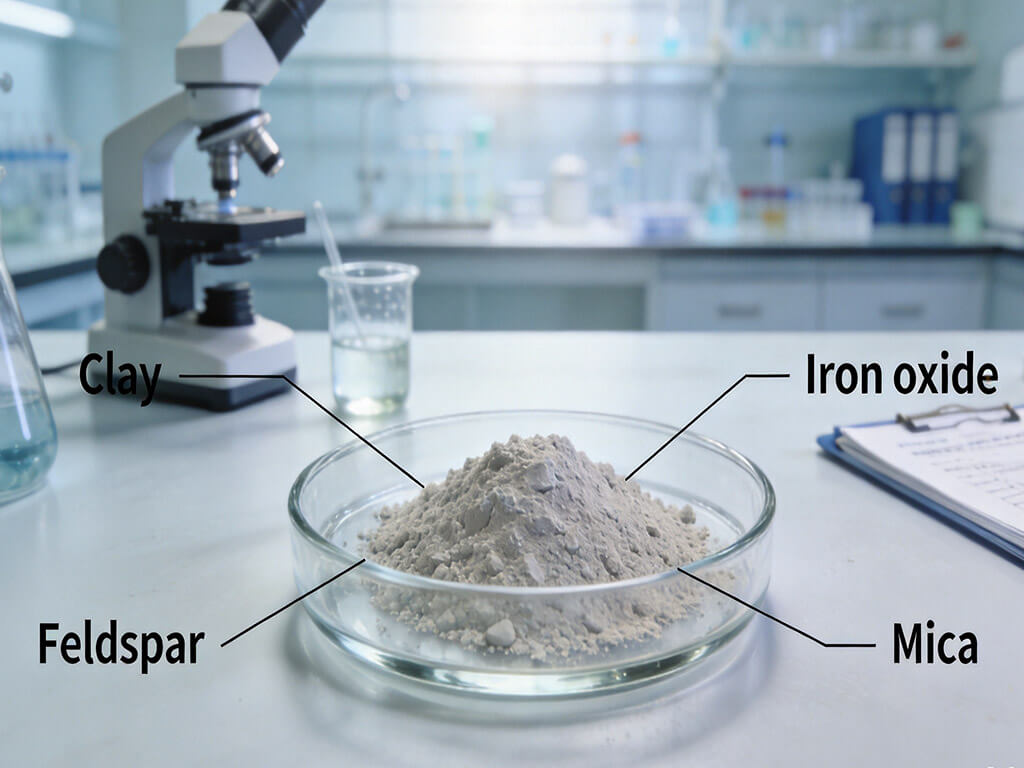
(1) Iron Oxides
There are three main types of iron oxides in silica sand: thin-film iron, which is adsorbed on the surface of sand particles in the form of an extremely thin iron oxide film, accounting for about 60%-80%. Encapsulated iron exists in the cracks or interior of quartz particles, usually associated with hematite or ilmenite. In addition, heavy mineral iron, such as magnetite, ilmenite, and limonite, exists independently, accounting for about 5%-15%.
Harmful Effects:
In glass production, if the iron content of silica sand exceeds 0.02%, it will cause the finished glass to have a noticeable yellow-green tint and reduced transparency. In ceramic production, its impurities affect the whiteness of silica sand and cannot meet the appearance requirements of high-end products such as sanitary ware and building ceramics. Furthermore, photovoltaic glass applications often require an iron content of <0.01%; exceeding this standard will affect the photoelectric conversion efficiency of photovoltaic modules.
(2) Clay and Mud Impurities
Silica sand contains abundant clay and mud impurities, mainly formed during the weathering of the original ore (kaolin, montmorillonite, etc.). These impurities adhere to the surface of the silica sand particles, and some are embedded in the sand in clumps. The particle size is usually less than 0.1 mm, and their proportion in the original ore is generally around 5%-15%.
Harmful Effects:
The presence of these impurities directly lowers the overall SiO₂ grade of the silica sand. During silica sand processing, fine mud easily clogs the mesh of screening equipment, increasing equipment wear and leading to a decrease in production capacity. Simultaneously, fine mud also coats the surface of silica sand particles, hindering the contact between subsequent magnetic separation and flotation reagents and the target impurities.
(3) Feldspars
Mainly potassium feldspar and sodium feldspar, with densities (2.65 g/cm³) and hardness (Mohs 6-6.5) similar to quartz. Feldspar is the main source of alumina in silica sand, difficult to separate using traditional gravity separation, and is one of the most difficult impurities to separate in silica sand purification.
Harmful Effects:
Higher melting temperatures are required during glassmaking, increasing energy consumption. It also affects the flatness and light transmittance of the glass, failing to meet the performance requirements of high-end products such as automotive and electronic glass. Furthermore, the alkali metal components in feldspar can cause “stripe” defects in the glass.
(4) Mica Impurities
Mica is an aluminosilicate mineral with a platy structure, often found alongside clay impurities in silica sand ore. It has a low Mohs hardness of only 2-3, making it easily ground into finer flakes during crushing and screening.
Harmful Effects:
The platy structure of mica impurities in silica sand disrupts the uniformity of the sand particles, leading to a non-compliant particle size distribution. In applications such as casting and refractory materials, this reduces the density of the product, making it prone to cracking after molding. Furthermore, mica has a lower refractoriness than silica sand, significantly reducing the product’s high-temperature resistance.
Best Removal Methods For Different Silica Sand Impurities
1. Iron Oxide Impurity Removal
Magnetic Separation + Gravity Separation Process:
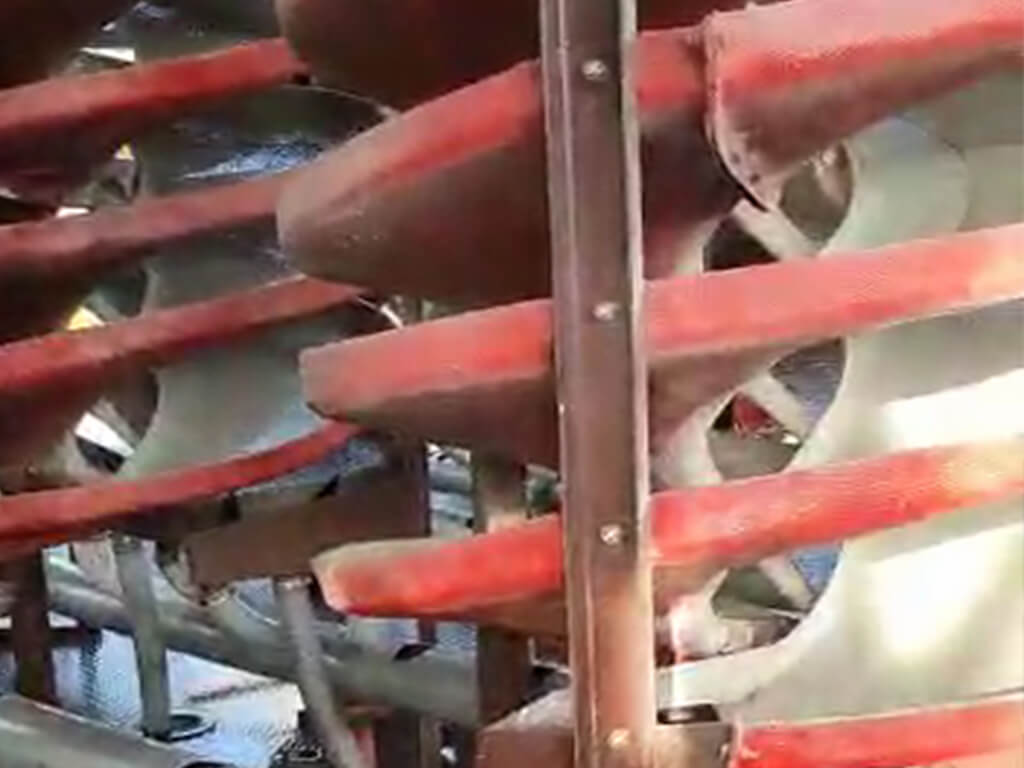
High-gradient separadores magnéticos are preferred for effectively removing fine-grained ferromagnetic minerals, such as magnetite, from silica sand. The magnetically separated material then enters a vertedero en espiral, where density differences further separate weakly magnetic heavy mineral impurities such as ilmenite and limonite.
Optimization Suggestions:
This silica sand iron oxide removal process can remove 80%-95% of iron impurities. If the raw ore has a high iron content, it is recommended to add a secondary magnetic separation and adjust the magnetic field parameters to improve separation efficiency. For applications requiring higher purity, such as photovoltaics and semiconductors, if weakly magnetic iron impurities encapsulated in a quartz lattice are present, an acid leaching process can be added after this process for deeper treatment.
2. Clay/Mud Impurity Removal
Scrubbing + Grading and Desliming Process:
For clay and mud impurities, the most economical and efficient treatment method is a combined process of “high-intensity scrubbing + grading and desliming.”
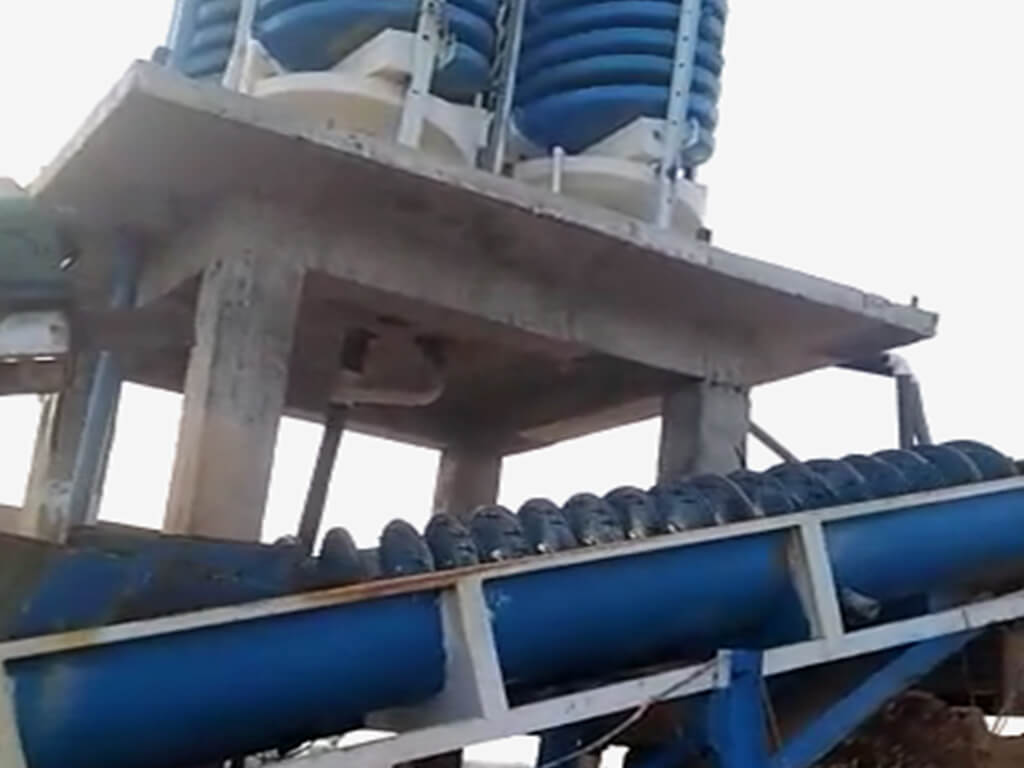
First, the high-speed agitation of a high-intensity scrubbing machine utilizes the shearing and frictional forces between sand particles to completely peel the mud film adhering to the quartz surface from the sand particles, breaking up clay clumps. The scrubbed slurry is then fed into a hydraulic classifier, where the difference in settling velocity between particles of different sizes is used to initially separate fine mud smaller than 0.074mm from qualified sand particles. Finally, it enters the desliming hopper for final mud-sand separation.
Advantages:
This silica sand clay impurity removal process requires no chemical additives, resulting in low operating costs and the removal rate of over 95% of surface clay impurities. Scrubbing is an essential pretreatment step for silica sand production lines with a raw ore mud content exceeding 5%-15%, reducing the load on subsequent sorting equipment in the purification process.
3. Feldspar/Mica Impurity Removal
Flotation Process:
Feldspar and mica have highly similar physicochemical properties to quartz, making them difficult to separate effectively using conventional physical methods. Flotación is currently the most mature industrial solution.
● Fluorinated flotation adjusts the pulp pH to 2-3 using HF, increasing the hydrophilicity of the quartz surface. Then, amine collectors are added to make the feldspar and mica surfaces hydrophobic, allowing them to be carried away by air bubbles for separation. This process is highly efficient but requires comprehensive environmental protection facilities.
● Fluorine-free flotation uses a sulfuric acid system combined with a novel composite collector, eliminating the need for hydrofluoric acid. This fully complies with current environmental regulations and is more suitable for areas with strict policy controls.
Optimization Suggestions:
Both processes can reduce the Al₂O₃ content in silica sand to below 0.02%, meeting the standards for sand used in photovoltaic glass and high-end refractory materials. However, note that mica, due to its flaky nature, is prone to foam entrainment, necessitating the addition of a degassing device.
4. Removal of Trace Impurities
Acid Leaching + High-Temperature Treatment:
For trace impurities such as inclusions and dissolved metal ions within the quartz lattice that cannot be removed by conventional processes, a combined chemical-physical process of “acid leaching + high-temperature treatment” is required.
The overall impurity removal rate reaches 99.9%, and high-purity silica sand of 4N-6N grade can be prepared. However, the waste liquid must be strictly treated according to regulations during the silica sand removal process to avoid secondary pollution.
Conclusión
From the combination of magnetic and gravity separation for iron oxides, to the efficient scrubbing of clay/mud, and the harmless flotation of feldspar/mica, each process step directly affects the final purity of silica sand. For trace deep impurities, the synergistic effect of acid leaching and high-temperature treatment can purify silica sand to meet the needs of high-tech industries.
Scientifically selected processes not only improve silica sand quality but also reduce energy consumption and environmental risks. Fábrica de maquinaria minera de JXSC has over 40 years of experience in implementing silica sand purification technology and can customize full-process solutions based on the characteristics of the raw ore, ensuring environmental compliance and controllable operating costs. For further optimization of your silica sand production line or to obtain customized impurity removal processes, please contact us. We will provide customized, energy-efficient professional soluciones para el tratamiento de minerales y equipment configurations based on your raw material characteristics and production needs.

 English
  Spanish
  French
  Russian