
The Core Challenges of Kimberlite Diamond Process
Ore Characteristics:
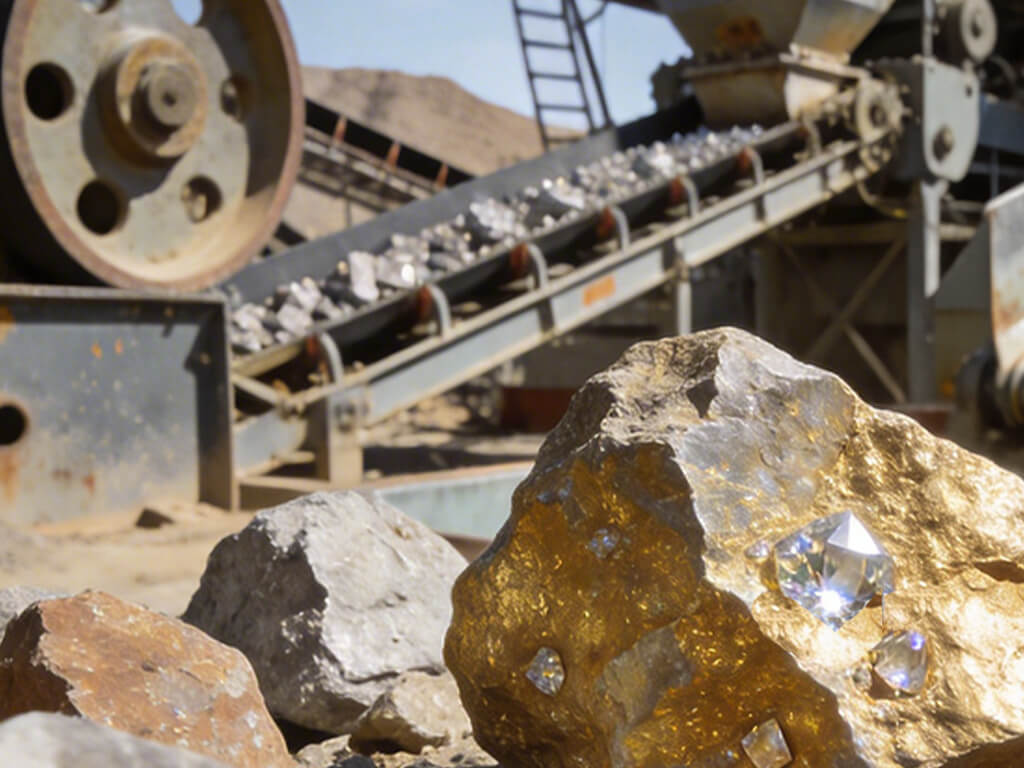
Kimberlite possesses a complex mineral composition, and the hardness of its associated gangue minerals varies significantly. Contains magnesium-rich minerals such as olivine and pyroxene and is susceptible to weathering. The diamonds embedded within range in size from large, gem-quality crystals measuring in centimeters down to fine grains merely tens of microns across. Being inherently brittle, diamonds are highly susceptible to cracking during the mechanical crushing and friction processes within processing equipment; even the slightest damage can directly diminish the value of a gem-quality diamond by more than 40%.
Constraints in the processing:
A core challenge in kimberlite diamond processing is that sufficient crushing and grinding forces are required to completely separate the diamond from the gangue. However, excessive force risks fracturing high-value diamond crystals; when large diamonds shatter, they are downgraded from jewelry grade to industrial abrasives—a loss that far outweighs the gains derived from recovering additional fine-grained diamonds.
If the crushing particle size is too coarse, diamonds remain encapsulated within the host rock and are discarded as waste; conversely, if it is too fine, the diamonds are prone to breakage. Insufficient sorting precision results in diamonds becoming entrained in the tailings and subsequently lost. Furthermore, if the flow rate of the mineral slurry is too rapid, it may sweep away diamonds before sorting is complete; conversely, if it is too slow, it will drag down overall production efficiency.
High-Recovery Kimberlite Diamond Process Equipment
1. Diamond Crushing Equipment
Kimberlite—the host rock for diamonds—possesses a Mohs hardness of 10; it is extremely hard yet prone to fracturing under heavy impact. In the primary crushing stage, equipment selection can be tailored to the required production capacity, typically utilizing jaw crushers for coarse crushing and cone crushers for fine crushing.
● Jaw Crusher:
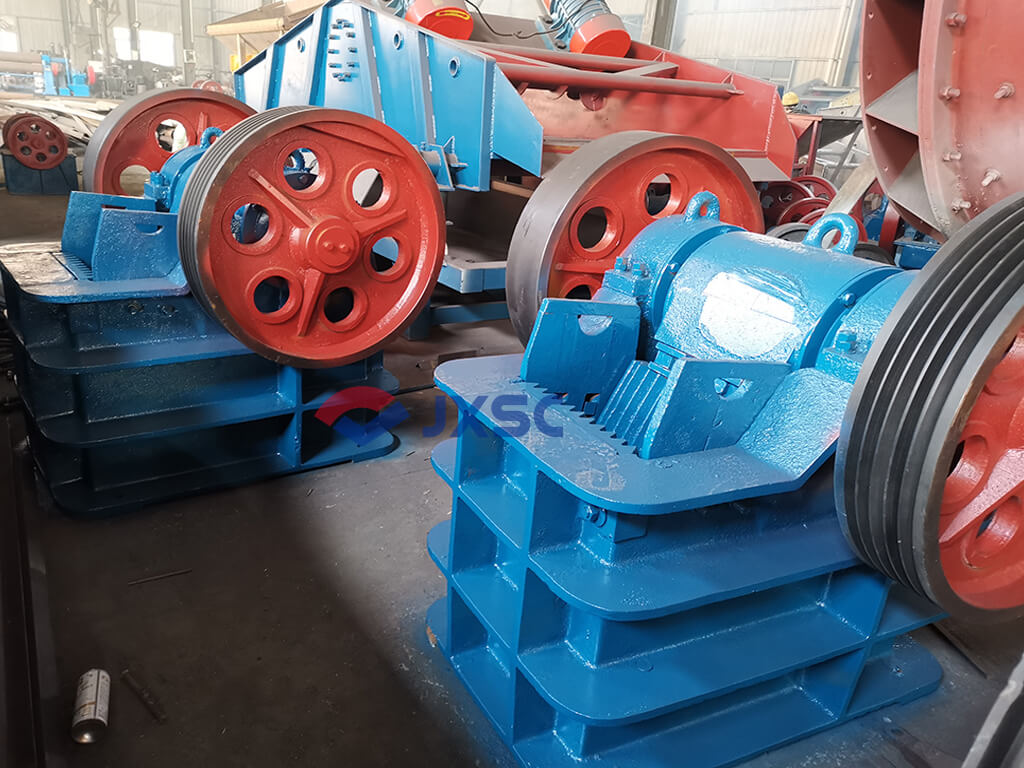
This is the preferred equipment for the primary crushing stage of kimberlite. It crushes ore through the uniform compressive action of a moving jaw against a stationary jaw. Compared to impact-style crushing equipment, the trituradora de mandíbulas reduces the risk of diamonds fracturing due to external mechanical impact by over 70%.
● Trituradora de cono:
Primarily used for the secondary and tertiary crushing of kimberlite, this trituradora de cono employs a laminated crushing principle; the ore is crushed within the crushing chamber through uniform, multi-directional compressive forces. It offers a finer range of adjustable discharge sizes and can maintain the output particle size tolerance within ±5%.
Both types of Kimberlite diamond crushing equipment crush ore through uniform compression, thereby significantly reducing the likelihood that diamonds fracture under external mechanical impact. This approach ensures the preliminary liberation of the ore while preventing large diamond crystals from sustaining cracks through direct collision with hard metal components, thereby mitigating the risk of diamond value depreciation at the source.
2. Diamond Washing & Screening Equipment
After crushing, the ore must undergo efficient classification to prevent the intermingling of materials of different particle sizes, which would compromise sorting accuracy. Kimberlite diamond mines often contain high levels of clay; thus, the washing stage primarily focuses on removing surface impurities and slime. The critical objective of the screening stage is to ensure classification precision—specifically, to prevent oversized particles from entering the sorting process (thereby increasing energy consumption) and to prevent undersized particles from being lost in the tailings.
● Rotary Scrubber:
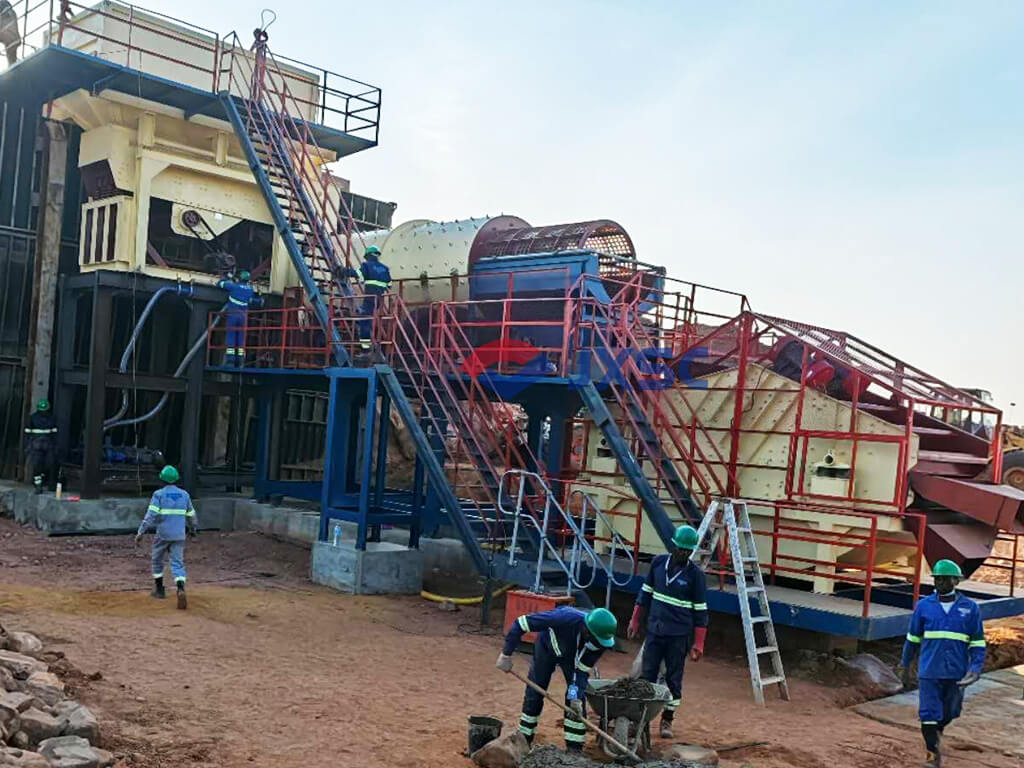
By utilizing the rotation of a drum to induce friction and scouring among the ore particles, this machine efficiently removes slime adhering to the ore’s surface, thereby preventing issues such as subsequent screen clogging and diminished sorting accuracy. The inner walls of the rotary scrubber are lined with wear-resistant rubber to prevent accidental chipping or scratching of the diamonds. During the washing process, large diamond crystals exceeding 5 cm in size can also be pre-screened and recovered, thereby reducing the risk of abrasion during subsequent processing stages; the washing efficiency exceeds 98%. Capable of simultaneously performing both washing and preliminary screening, this device serves as an indispensable piece of upstream diamond process equipment for kimberlite mining areas characterized by high clay content.
● High-Frequency Vibrating Screen:
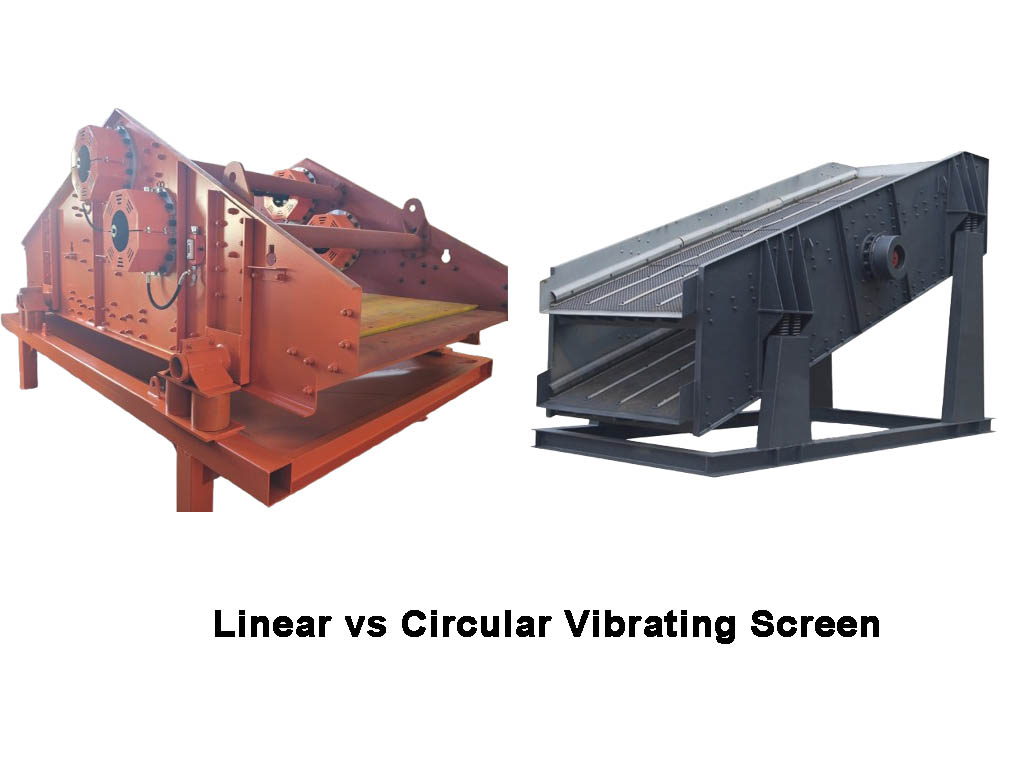
En high-frequency vibrating screen is primarily responsible for the particle-size classification of the ore following the crushing stage. By employing a vibration mode characterized by high frequency and small amplitude—combined with wear-resistant, anti-clogging polyurethane screen panels—it achieves efficient stratification and screening of ore particles across various size ranges. Ore that meets the specific size requirements for sorting is conveyed to the next processing stage, while oversized ore is returned to the crushing section for secondary processing; the classification accuracy of this equipment exceeds 95%.
3. Diamond Recovery Equipment
● Jig Gravity Separation:
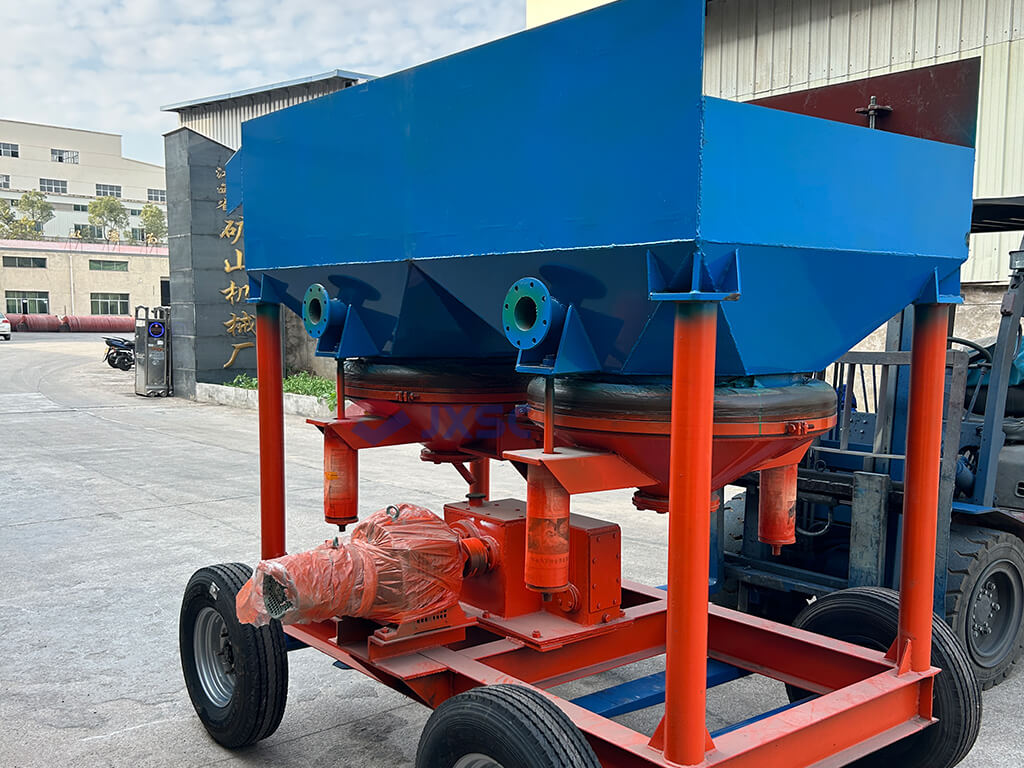
In the processing of kimberlite diamonds, the jig separator is the most widely utilized process during the rough beneficiation stage. It primarily leverages the density difference between diamonds and gangue minerals to achieve stratification and separation within a pulsating water flow. This method allows for the direct recovery of coarse-grained diamonds ranging in size from 0.5 mm to 50 mm, with a rough recovery rate exceeding 85%. Its core advantages lie in its simple equipment structure and low operating costs, making it particularly suitable for small to medium-sized mines. It also serves as a core piece of gravity separation machinery within kimberlite diamond processing facilities.
Additionally, we offer mobile jig units equipped with trommel scrubbers, enabling the easy and simultaneous completion of small-scale diamond washing, screening, and sorting operations in a single step. However, due to limitations in sorting precision, jigging machines typically require integration with subsequent fine beneficiation equipment (such as X-ray sorters) to achieve high overall recovery rates.
● Heavy Media Separation:
Heavy Media Separation (DMS) achieves the efficient separation of diamonds from gangue by adjusting the density of a ferrosilicon or magnetite powder suspension; this causes the lower-density gangue minerals to float while the higher-density diamonds sink. This method can achieve recovery rates exceeding 90%, though it entails higher capital investment in equipment and higher costs for the heavy media itself. It is particularly well-suited for kimberlite ores containing finely disseminated diamond particles. When large-scale mines utilize this diamond process equipment, the rough recovery rate can be boosted to over 95%. Modern heavy media cyclone systems incorporate intelligent control technology, offering high sorting precision and the ability to dynamically adjust media density to adapt to varying ore characteristics.
● Magnetic Separators:
Magnetic separation is employed to remove magnetic minerals (such as ilmenite, garnet, etc.) from the ore, thereby minimizing interference caused by impurities. Drum-type magnetic separators are highly effective at removing fine-grained, weakly magnetic minerals, thereby enhancing the purity of the material before subsequent sorting stages.
4. Diamond Fine Recovery Equipment
● X-ray Sorters:
These machines utilize the characteristic fluorescence emitted by diamonds when exposed to X-rays to identify and sort them. They achieve an identification accuracy of up to 99.5% for diamonds with grain sizes ranging from 0.1 mm to 30 mm. This technology is particularly well-suited for the recovery of fine-grained diamonds.
● Photoelectric Sorters:
These machines perform sorting based on spectroscopic characteristics (specifically color and transparency) and are better suited for ultra-fine-grained diamonds ranging in size from 0.03 mm to 0.1 mm.
Both types of equipment enable the non-destructive and highly efficient extraction of diamonds. When selecting diamond fine recovery equipment, it is essential to base the choice on the grain-size range of the concentrates produced during upstream processing and on the required production capacity. Furthermore, priority should be given to equipment equipped with intelligent recognition systems; these systems can automatically learn the specific characteristics of the ore, thereby reducing the rate of false positives and ensuring that the overall recovery rate during the final fine recovery stage remains consistently above 99%.
5. Tailings Treatment or Secondary Recovery
The tailings treatment stage serves a dual purpose: to facilitate the secondary recovery of residual diamonds while simultaneously ensuring compliance with environmental regulations. Gravity separation equipment—such as centrifuges and shaking tables—can be employed to recover fine-grained diamonds from the tailings, thereby boosting the overall recovery rate by an additional 2% to 5%.
Furthermore, the remaining tailings—following the recovery process—must undergo treatment in dewatering sreen to reduce their moisture content to below 10%. These dewatered tailings can then be repurposed as construction aggregates or mine backfill materials, thereby avoiding the land occupation and environmental pollution typically associated with direct stockpiling.
Conclusión
Selecting the appropriate kimberlite diamond process equipment is the key to achieving the highly efficient recovery of every single diamond. This process spans from the efficient primary crushing performed by jaw and cone crushers to the precise classification and washing carried out by high-frequency vibrating screens and drum scrubbers. Subsequently, through the multi-tiered recovery stages—utilizing jigs, Dense Medium Separation (DMS), and magnetic separators—every step directly impacts the final diamond recovery rate. Furthermore, the intelligent application of X-ray sorters significantly enhances sorting precision. The secondary recovery and environmentally responsible treatment of tailings also generate additional value for the mining operation.
Whether you operate a small-scale site or a large-scale diamond mining process project, Fábrica de maquinaria minera de JXSC offers tailored equipment configurations and process optimization solutions designed to help you substantially boost recovery rates and minimize unnecessary resource loss. If you require customized kimberlite process equipment and beneficiation solutions specifically adapted to the unique ore characteristics of your mine site, we invite you to contact us; let us empower your mining operations to achieve efficient and sustainable development!
 English
  Spanish
  French
  Russian